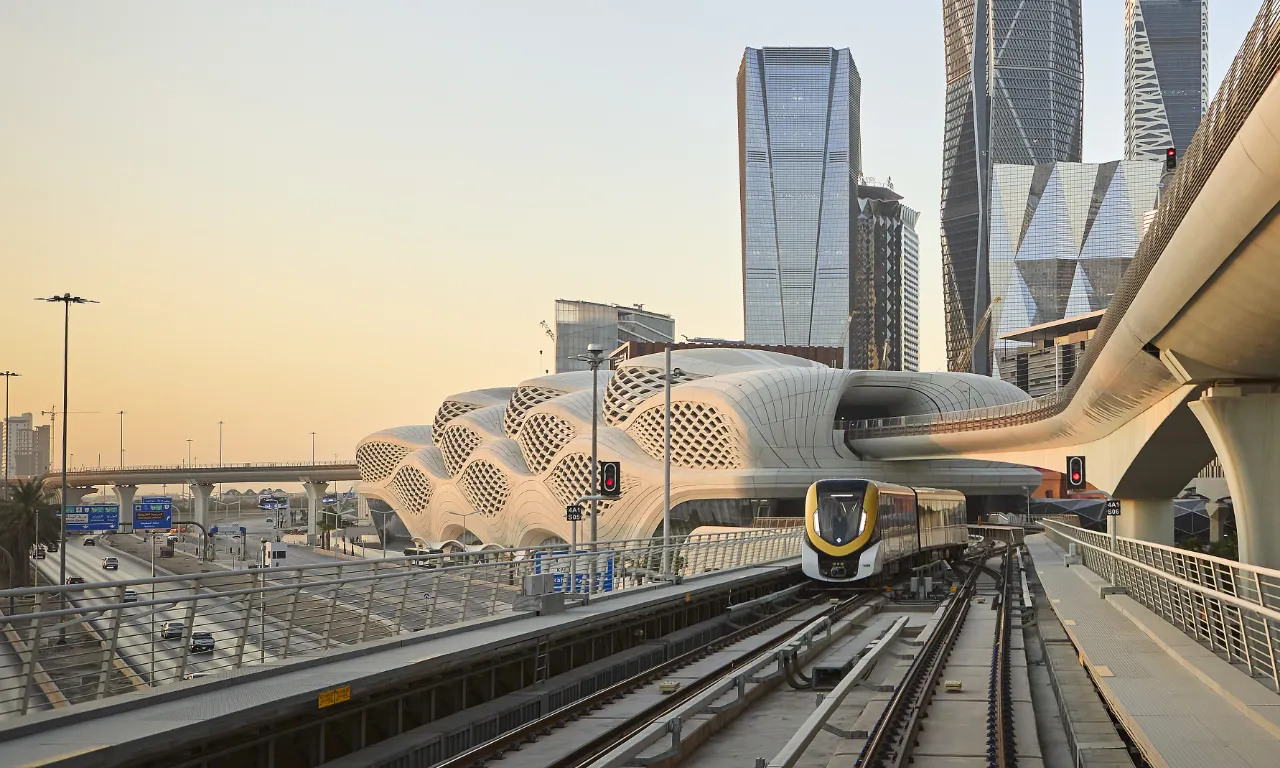
The new Riyadh metro, designed by Zaha Hadid Architects, demonstrates that transport spaces should be just as inspiring as our most magnificent museums and temples.
A subterranean symphony is how Riyadh’s Metro merges future and function.
In the heart of the Arabian Peninsula, where shifting dunes meet a rising skyline, Riyadh has long been a city defined by horizontal vastness.
For decades, the capital vibrated to the singular, mechanical rhythm of the automobile. The desert sun baked asphalt arteries that stretched into the horizon, wide and unyielding.
A quiet revolution has rewritten the city’s geography. Beneath the surface and soaring gracefully above it, Riyadh Metro emerges.
It is not merely an engineering triumph or a network of steel and concrete. It is a profound architectural poem.
It is a living testament to how futuristic technology can be harnessed to serve human transit, while elevating the daily commute into an encounter with pure art.
Spanning 176 kilometres of fully automated, driverless tracks, this massive network is a masterful dance between functional infrastructure and breathtaking aesthetics.
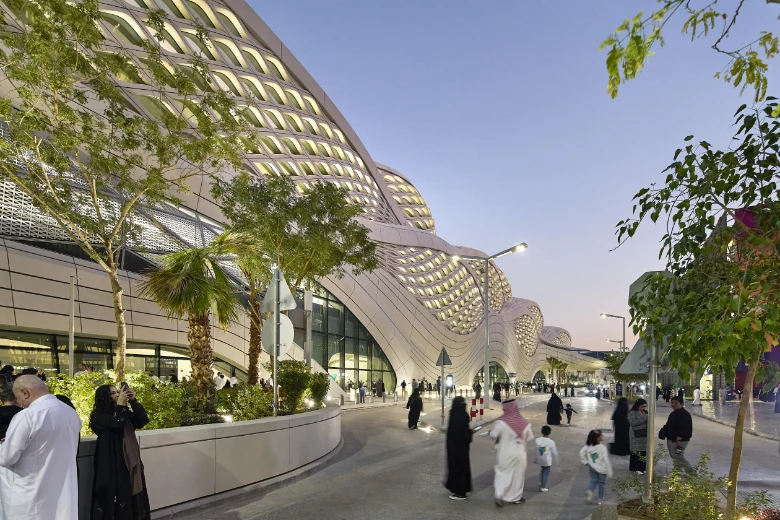
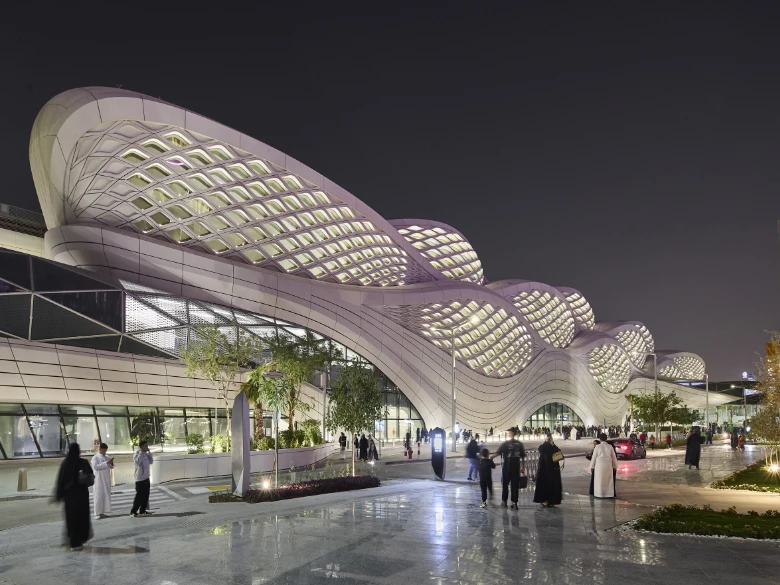
Arteries of light and motion
To understand the Riyadh Metro is to understand the poetry of movement.
Six lines cut through the earth like ribbons of liquid light. They pierce the subterranean darkness and emerge onto elevated viaducts, weaving through the metropolis like the calligraphy of a futuristic scribe.
In this system, AI liberates the system from human error. The driverless trains glide with a ghostly, effortless grace, guided by invisible digital minds.
This automated precision removes the chaotic friction of traditional urban transit, replacing it with an unbroken, flowing rhythm.
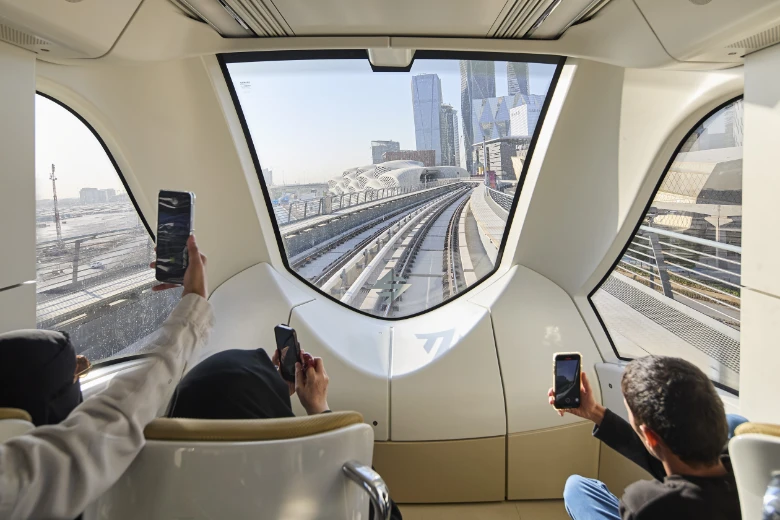
Yet, the technology never feels cold or sterile. The train interiors are meticulously designed sanctuaries, divided into classes that offer distinct spatial experiences.
Soft, indirect LED illumination mimics the natural transitions of daylight, while geometric patterns etched into glass and metal diffuse the glare.
Large, panoramic windows transform the passing cityscape into a dynamic, moving canvas.
The commute becomes an act of meditation, a seamless transition from one urban destination to the next, wrapped in absolute comfort.
Sanctuaries of the desert: the icon stations
Where the tracks meet the earth, the metro reveals its true architectural soul.
The stations are not merely transit hubs; they are civic monuments, modern palaces of public utility designed by the world’s most visionary architects.
They act as visual anchors across the city, capturing the essence of Saudi Arabia’s natural heritage and projecting it into a bold, hyper- modern future.
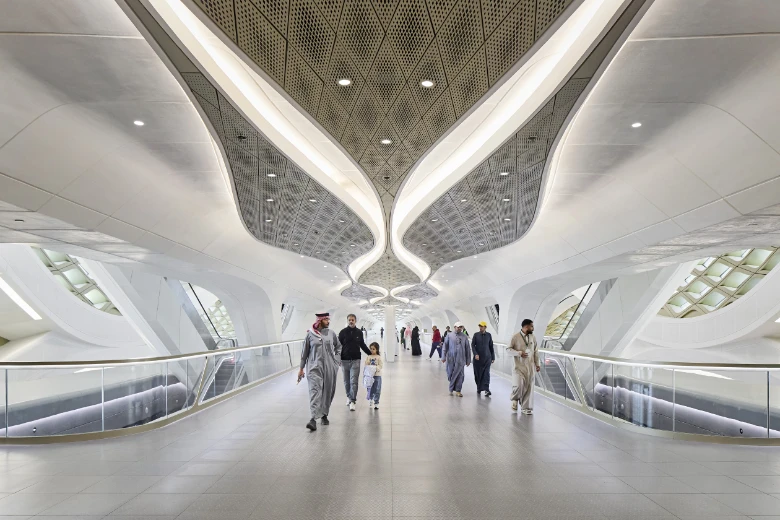
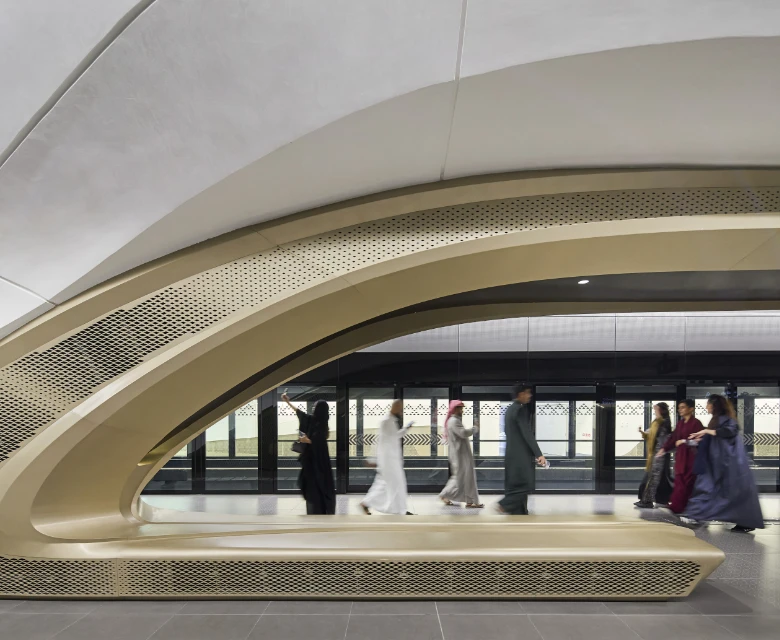
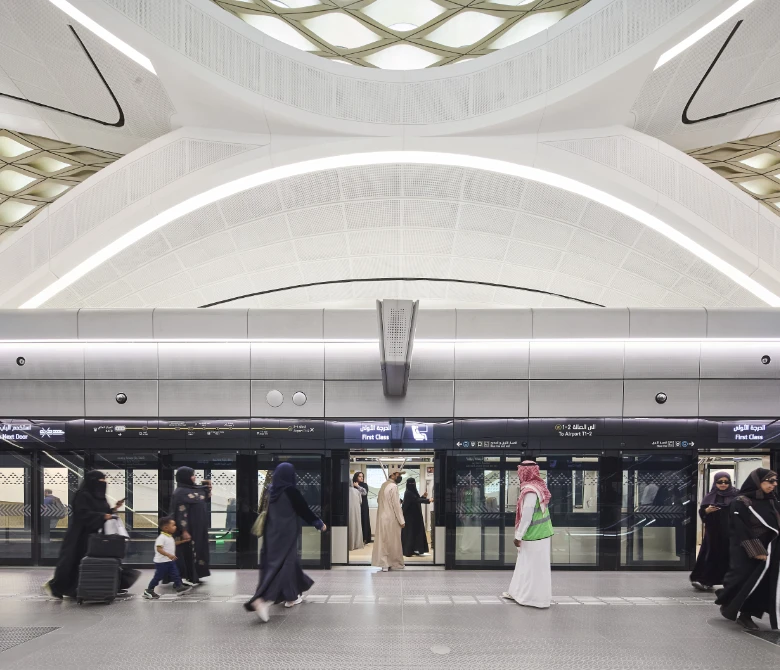
Living Dune: King Abdullah Financial District (KAFD) Station
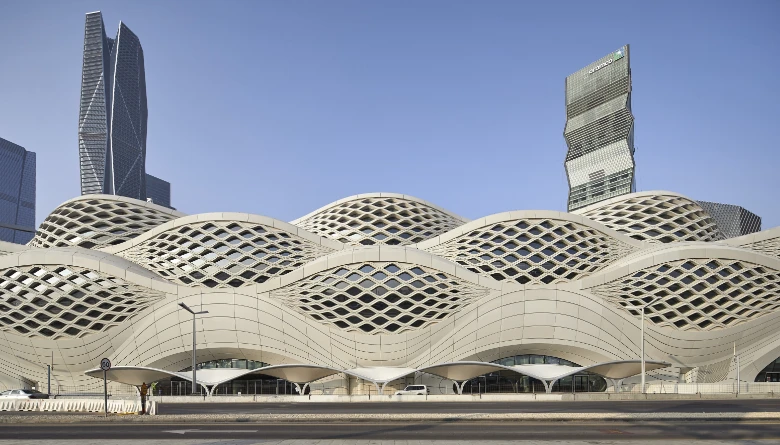
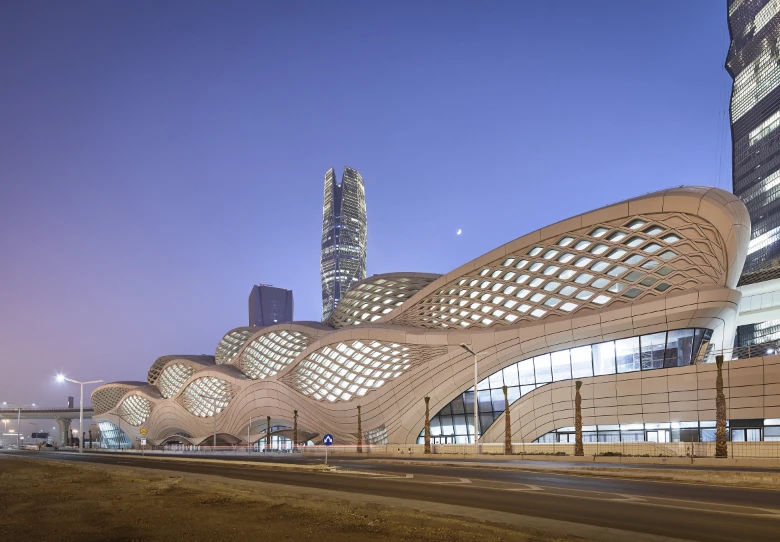
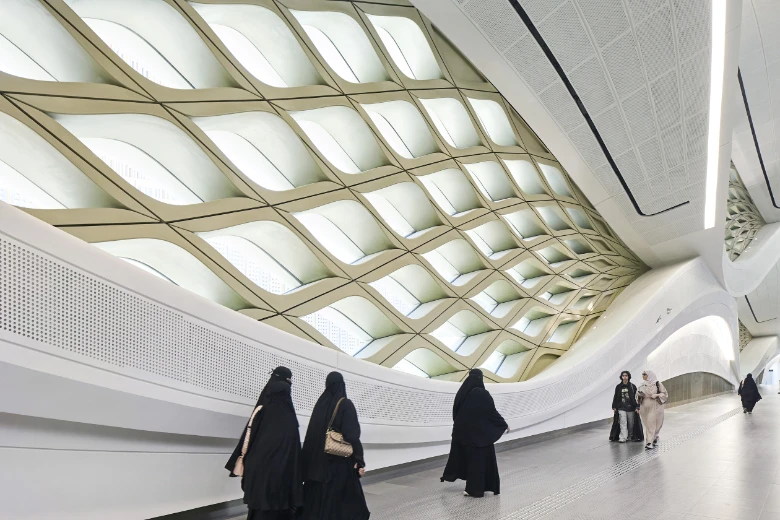
Designed by the legendary Zaha Hadid Architects, the KAFD Station stands as the undisputed crown jewel of the network.
It is a structure born from the wind, mimicking the fluid, undulating forms of desert sand dunes patterns generated by frequent desert breezes.
A complex, sine-wave pattern of swooping concrete and glass mimics frozen motion.
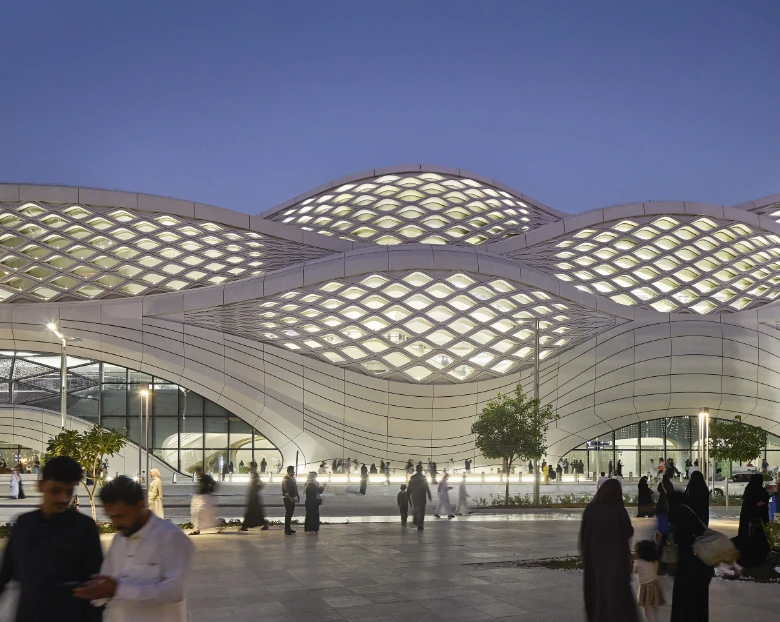
The Canopy is an intricate web of geometric perforations that filters the harsh Arabian sun into soft, dappled light.
The Interior is a continuous, three- dimensional space where floors melt into walls, and walls soar to become ceilings.
Inside, the air is cool and the scale is cathedral like.
Walkways loop and dive through the atrium like pathways through a canyon. Here, structural engineering becomes indistinguishable from sculpture.
The building breathes, handles immense foot traffic and naturally channels air and light, proving that high technology can possess a deeply organic soul.
An Oasis of Light
Olaya Station is a masterclass in bringing nature into the urban grid.
Above ground, the station manifests as a sweeping, undulating glass roof that rises out of a newly created public park like a crystalline wave.
A subterranean oasis where the boundary between city park and underground transit dissolves.
The Lightwell is a massive, central glass atrium that floods the deepest platforms with natural daylight.
Commuters descending to their trains look up to see palm trees and open sky, erasing the claustrophobia traditionally associated with underground travel.
It is a space that honours the historic role of the oasis: a place of rest, cooling and revitalisation.
Olaya is a brilliant manifestation of practical sustainability. The green roof insulates the structure below, while immense glass canopy is treated with advanced ceramic fritting to reject solar heat while welcoming its luminescence.
A Modern Fortress
In the historic heart of Riyadh, Norwegian Snøhetta Architects have crafted a station that bridges the ancient and the futuristic.
Qasr Al Hokm Station honours the mud-brick architecture of traditional Najdi fortresses while utilising cutting-edge materials.
Monolith: A giant, polished stainless-steel canopy hovers over a sunken oculus, acting as a massive mirror that reflects the historic surroundings.
Sun Pipe: A monumental architectural funnel that scoops up the bright Saudi sun and hurls it deep underground, illuminating the lowest platforms.
Symbolism: A beautiful bridge between heritage and ambition, planting a stake of futuristic design directly into the city’s historical soil.
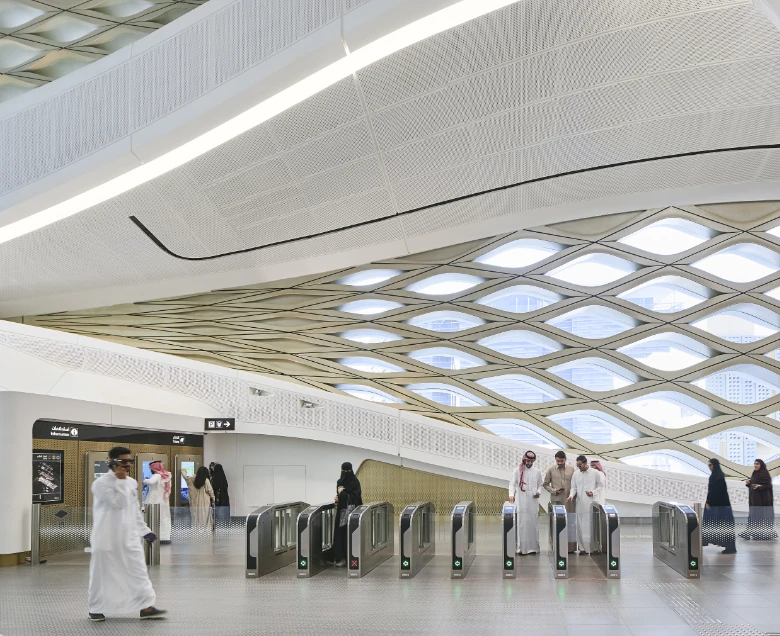
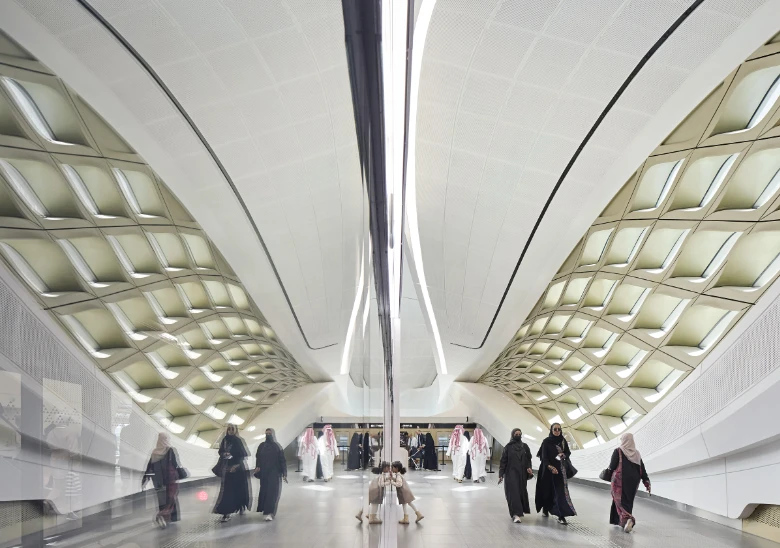
Geometry of Harmony
Across all 85 stations, a unified design language whispers to the passenger.
The architecture employs traditional Islamic geometric motifs, updated for the twenty-first century through computational design.
Hexagons, stars and interlocking lines are cast into ultra-high- performance concrete panels and laser-cut steel screens.
These geometric patterns are not merely decorative flourishes; they serve a vital, dual purpose:
Passive thermal control: The screens act as modern mashrabiya, casting intricate shadows that drastically reduce solar heat gain while maintaining visual connection with the outside world.
Intuitive way finding: The architecture flowing lines naturally guide the human eye.
Intricate ceiling grooves point toward platforms and shifting wall textures signal exits.
The building itself speaks to the traveler, rendering heavy signage obsolete through the sheer poetry of form.
A dreamed
vision realised
It represents the ultimate realisation of what XXI century Architecture must strive to achieve. By weaving automated speed, green technology and breathtaking structural art into a single tapestry, Riyadh has built more than a metro.
The creation is a subterranean gallery of light, soaring monument to human mobility and a functional masterpiece that will inspire generations of travellers to come.