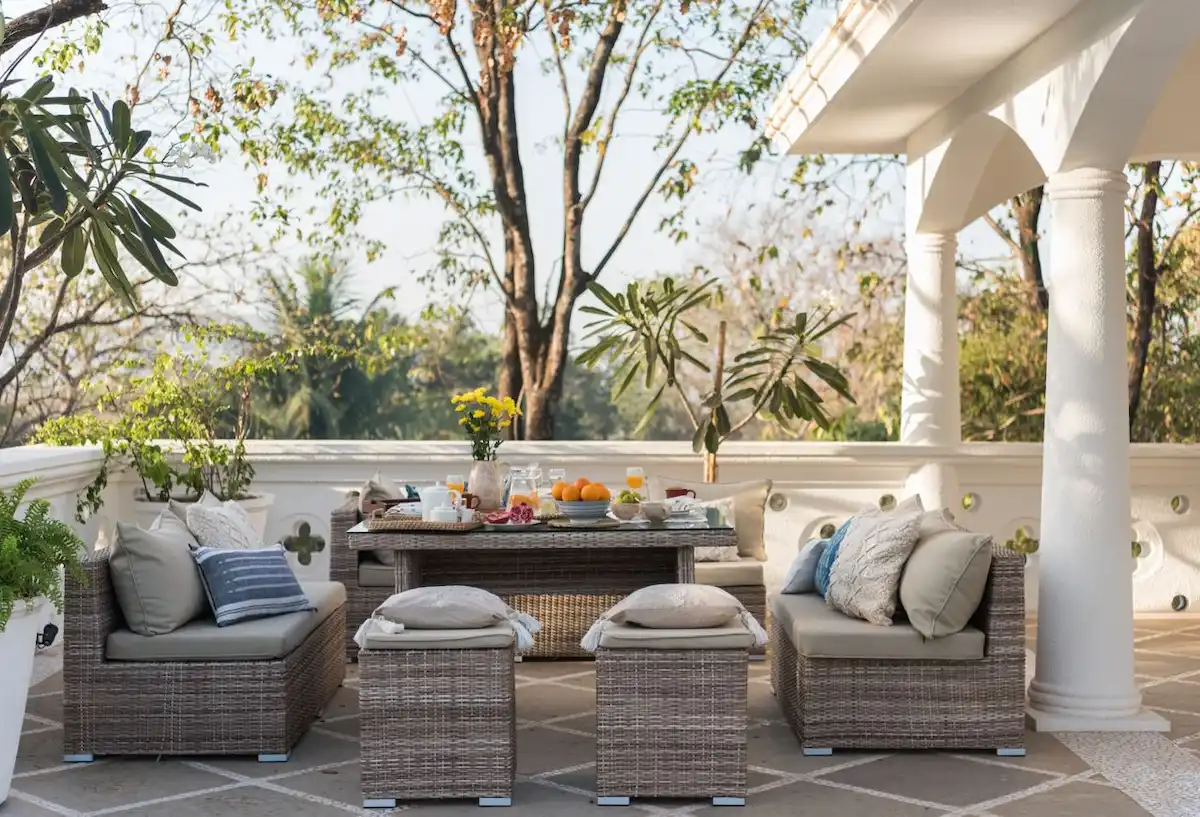
The line between inside and out has become beautifully, irrevocantly blurred. What was once the backyard—a patch of grass for weekend barbecues and plastic lawn chairs—is undergoing a profound transformation.
It’s becoming a room without a ceiling, a sanctuary without walls, and a gallery without a formal curator. This shift is not merely about aesthetics; it’s a deep, cultural response to our collective need for connection, tranquility, and personal expression.
The objects we choose to place in these open-air settings are no longer just functional. They are statements, sculptures, and storytellers.
They are the artifacts of a new way of living, one that values quiet moments, authentic materials, and the simple, profound beauty of a life lived in closer harmony with the natural world.
This evolution is driven by a desire for spaces that do more than serve a purpose; we crave spaces that stir the soul. The modern patio, terrace, or garden is an extension of our interior life, reflecting our tastes, our values, and our aspirations.
The furniture we select is the primary medium for this expression. It’s about finding pieces that resonate, that feel as though they have a history or a future, and that invite not just rest, but reflection.
We are moving away from the disposable and the generic, and toward the enduring and the unique. This is a quiet revolution, happening one thoughtfully chosen chaise lounge, one sculptural side table at a time.
It’s a movement that celebrates design not as a luxury, but as an essential tool for crafting a more meaningful and beautiful existence.
The pieces we choose are dialogues with our environment, shaping how we experience the light of dawn, the warmth of the afternoon sun, and the quiet intimacy of a starlit evening.
The evolving soul of the open-air room
The way we perceive our outdoor spaces has fundamentally changed. The pandemic certainly accelerated this, forcing us to look to our immediate surroundings for the escape and restoration we once sought elsewhere.
But the seeds of this change were planted long before. It’s a reflection of a broader wellness movement, a growing awareness of the profound impact our environment has on our mental and emotional state.
We are actively designing our lives for more peace, more intention, and more beauty, and our outdoor spaces have become the new frontier for this personal work.
This isn’t about keeping up with trends; it’s about tuning in to a deeper, more primal need for sanctuary. It’s about creating a personal haven that nurtures and inspires, a space that feels uniquely and authentically our own.
From backyard escape to personal sanctuary
The concept of the backyard as a simple “escape” feels outdated. Today, it’s about creating a destination—a sanctuary that we don’t need to leave home to find.
This shift in mindset has elevated the role of every element within the space. The focus is now on crafting an immersive experience, a holistic environment that engages all the senses.
The sound of a small water feature, the scent of night-blooming jasmine, the feel of weathered wood under your fingertips—these are all integral parts of the design.
The furniture, in this context, becomes the anchor for these experiences. It’s not just a place to sit; it’s a place to read, to meditate, to converse, to dream.
This transformation is about intentionality. A well-designed outdoor sanctuary is curated, not just decorated. Each piece is chosen for its ability to contribute to a specific feeling or function.
A deep, enveloping sofa encourages long conversations under the stars. A sleek, minimalist daybed offers a place for solitary reflection. A rustic, communal dining table becomes the heart of family gatherings.
The goal is to create zones of experience, each with its own distinct purpose and mood, that together form a cohesive and deeply personal retreat.
This is where the power of designer outdoor furniture truly shines, offering not just durability but a level of artistry and comfort that can turn a simple patio into a profound extension of the self. It’s about investing in pieces that will not only withstand the elements but will also enrich our daily lives for years to come.
Biophilia: more than a trend, a spiritual anchor
The term “biophilia,” which describes our innate human tendency to connect with nature, has become a cornerstone of modern design. But in the context of our outdoor spaces, it’s more than just a design principle; it’s a spiritual practice.
It’s the conscious act of weaving the natural world into the fabric of our daily lives. This goes far beyond simply placing a few potted plants on the deck.
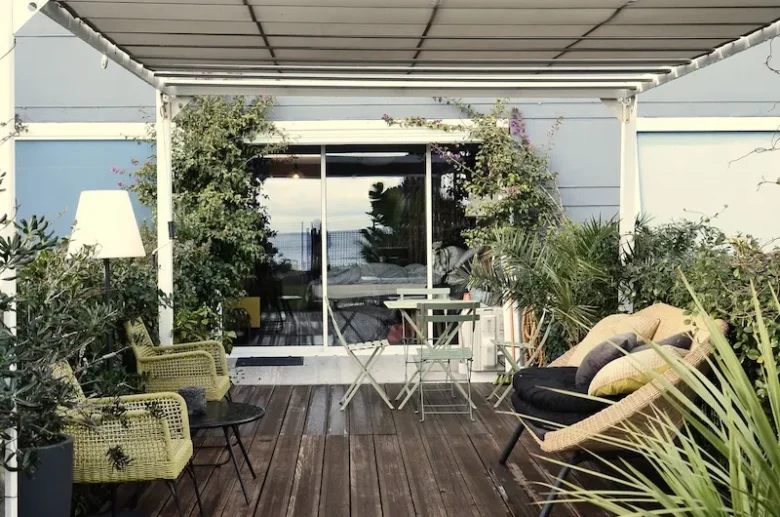
It’s about making choices that honor and celebrate the materials, forms, and patterns of nature. It’s about creating a seamless dialogue between the built environment and the living world around it.
This philosophy manifests in the choice of materials. We are seeing a powerful movement toward natural, honest materials that age gracefully and tell a story over time.
Think of teak that silvers with exposure to the sun, stone that gathers a soft patina of moss, and metals that develop a rich, earthy rust.
These materials connect us to the cycles of nature and remind us of the beauty of imperfection. The forms of the furniture itself are also becoming more organic.
We see chairs with the gentle curve of a river stone, tables that mimic the branching structure of a tree, and loungers that follow the contours of the human form.
These are not just objects; they are echoes of the natural world, designed to make us feel grounded and at peace. Embracing biophilic design in our outdoor spaces is an act of self-care, a way of creating an environment that calms the nervous system, sparks creativity, and fosters a deeper sense of connection to the world we inhabit.
Erasing the threshold: the seamless flow of living
The most innovative homes today are those where the distinction between indoors and outdoors is almost imperceptible. Expansive glass walls slide away, polished concrete floors flow from the living room onto the terrace, and design motifs are carried from one space to the other.
This seamless transition creates a sense of expansiveness and freedom, making the entire property feel like one integrated living environment.
The key to achieving this effortless flow lies in the careful selection of outdoor furnishings that rival their indoor counterparts in terms of sophistication, comfort, and style.
The era of flimsy, uncomfortable patio sets is over. Today’s high-end exterior collections are crafted with the same attention to detail and quality as luxury interior furniture.
We are seeing a rise in fully upholstered outdoor sofas with deep, plush cushions made from advanced, weather-resistant fabrics that are indistinguishable from fine indoor textiles.
Outdoor rugs, once a novelty, are now essential for defining seating areas and adding a layer of texture and warmth underfoot. Lighting has also become a critical element, with sculptural, portable lamps and sophisticated, layered lighting schemes creating ambiance and drama after dark.
The result is an outdoor living room that feels just as inviting and stylish as the one inside. This approach not only doubles a home’s usable living space but also fundamentally changes how we interact with our environment, encouraging a more fluid and connected lifestyle where the beauty of nature is an ever-present part of our daily experience.
The language of form and material
The objects we surround ourselves with speak a silent language. In the realm of outdoor design, this language is articulated through form and material.
The choices a designer makes—the curve of a chair’s arm, the texture of a tabletop, the finish on a metal frame—all contribute to the overall narrative of a piece and the space it occupies.
We are currently witnessing a fascinating evolution in this language, a move toward materials that are not only durable and sustainable but also rich with character and history.
At the same time, forms are becoming more expressive and sculptural, challenging our traditional notions of what outdoor furniture can be.
This is a conversation about tactility, about permanence, and about the emotional resonance of the things we choose to live with. It’s about celebrating the inherent beauty of raw materials and the transformative power of visionary design.
Materials with a past and a future
The materials palette for contemporary outdoor furnishings is a compelling blend of timeless classics and cutting-edge innovations.
There is a renewed appreciation for materials that tell a story, that show the marks of time and weather, and that connect us to the earth.
This focus on authenticity and longevity is a direct response to a culture that has for too long favored the disposable. We are now seeking pieces that will endure, both physically and aesthetically.
Here are some of the key materials shaping the narrative of modern outdoor design:
- Reclaimed and FSC-certified teak: Still the gold standard for its natural oils and incredible durability, teak is now often sourced from reclaimed structures or sustainably managed forests. Its ability to weather to a beautiful silver-gray patina makes it a living material that evolves with its environment.
- Powder-coated aluminum: Lightweight, rust-proof, and endlessly versatile, aluminum provides the structural backbone for many modern designs. New powder-coating techniques allow for a vast spectrum of colors and finishes, from soft, matte textures to high-gloss sheens, enabling designers to create pieces that are both strong and visually delicate.
- High-performance concrete (HPC): No longer just a construction material, HPC is being used to create stunningly sculptural tables, benches, and planters. It can be cast into complex shapes and pigmented to a wide range of colors, offering a sense of permanence and earthy minimalism.
- Woven performance fibers: The classic wicker look has been reimagined with advanced synthetic fibers that are resistant to UV rays, moisture, and mildew. These materials allow for intricate, hand-woven patterns that add a layer of artisanal texture and warmth, but with none of the maintenance of natural rattan.
- Recycled and bio-based plastics: Pushing the boundaries of sustainability, innovative companies are transforming ocean plastic, recycled bottles, and even plant-based polymers into beautiful and durable furniture. These pieces are not just functional; they are powerful statements about conscious consumption and environmental responsibility.
Sculptural silhouettes: when furniture becomes art
There is a growing movement that treats outdoor furniture not as a mere accessory, but as functional sculpture. Designers are breaking free from conventional forms and creating pieces that are as captivating to look at as they are comfortable to use.
These are objects that command attention, that start conversations, and that elevate an outdoor space from the mundane to the extraordinary.
This approach blurs the line between the disciplines of art, design, and craft, resulting in pieces that are both provocative and profoundly beautiful.
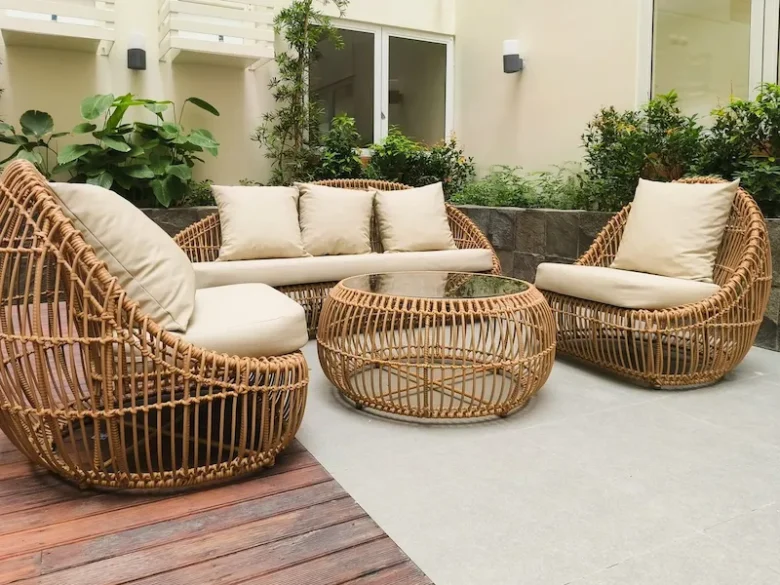
Think of a lounge chair formed from a single, fluid ribbon of bent metal, its form a study in line and shadow. Or a modular sofa system composed of pebble-like shapes that can be arranged and rearranged into endless configurations, inviting play and interaction.
Or a dining table with a base of interlocking geometric solids, creating a dynamic tension between stability and movement. These are not just places to sit or eat; they are focal points that define the character of a space.
They challenge our expectations and encourage us to see our surroundings in a new light. This trend is not about novelty for its own sake.
It is about a deep exploration of form, balance, and materiality. It’s about creating objects that have a powerful presence, that engage with the landscape, and that bring a sense of wonder and delight to the everyday act of living outdoors.
The artisan’s hand in a digital age
In a world increasingly dominated by mass production and digital fabrication, there is a powerful and growing desire for the unique, the imperfect, and the human.
The touch of the artisan’s hand is becoming the ultimate luxury, a mark of quality and authenticity that cannot be replicated by a machine.
This reverence for craftsmanship is having a profound impact on the world of high-end outdoor furnishings, with a renewed focus on traditional techniques and meticulous attention to detail.
We are seeing this in the intricate weaving on the backs of chairs, the hand-polished finish on a stone tabletop, and the subtle variations in a glazed ceramic side table. These are the details that give a piece its soul.
They tell a story of time, skill, and human ingenuity. This movement is not a rejection of technology; in fact, it often works in harmony with it.
A complex form may be initially shaped by a computer-controlled machine, but it is the final hand-sanding, finishing, and assembly that give it life.
This blend of old and new allows for a level of precision and artistry that was previously unimaginable. By choosing pieces that celebrate craftsmanship, we are not just acquiring a beautiful object; we are supporting a tradition of skill and creativity.
We are investing in a story, and we are bringing a piece of that human story into our own personal sanctuary.
Curating your personal narrative outdoors
Creating a truly compelling outdoor space is an act of curation, much like assembling a collection of art or a personal library. It’s about selecting pieces that speak to you, that reflect your history, and that combine to tell a unique and personal story.
The most memorable and moving spaces are not those that look like they were pulled from a catalog page, but those that feel like a genuine expression of the people who inhabit them.
This requires moving beyond the idea of the “matching set” and embracing a more eclectic, layered, and personal approach. It’s about trusting your instincts, being willing to take risks, and understanding that the most beautiful spaces are those that evolve over time. Your outdoor area is a canvas; the furniture, lighting, and accessories are your palette.
The art of the imperfect arrangement
The era of the perfectly matched, seven-piece patio dining set is giving way to a more sophisticated and dynamic approach to furnishing outdoor spaces.
The goal is to create vignettes—thoughtful groupings of furniture and objects—that are visually interesting and emotionally resonant.
This is the art of the imperfect arrangement, a design philosophy that celebrates contrast, texture, and personality over sterile uniformity. It’s about mixing materials, styles, and even eras to create a space that feels collected and authentic.
Here are a few strategies for mastering this approach:
- Mix your materials: Instead of an all-teak or all-metal set, try pairing a rustic wooden dining table with sleek, modern aluminum chairs. Combine a woven sofa with a smooth concrete coffee table. This contrast in textures creates visual depth and a more curated feel.
- Vary your seating: Surround a dining table with a mix of chairs and a bench. This not only adds visual interest but also creates a more casual and communal atmosphere. In a lounge area, combine a structured sofa with a pair of more sculptural, low-slung armchairs.
- Play with color and pattern: Use outdoor pillows, throws, and rugs to introduce pops of color and pattern. Don’t be afraid to mix different patterns, as long as they share a common color thread to tie them together. These textile elements are an easy and effective way to inject personality and can be changed with the seasons.
- Incorporate vintage or found objects: A weathered antique bench, a collection of terracotta pots, or a unique piece of driftwood can add a sense of history and soul that new pieces alone cannot provide. These are the elements that make a space truly your own.
Painting with light: the unsung hero of atmosphere
Light is arguably the most important, yet often most overlooked, element in outdoor design. The way a space is lit can completely transform its mood, turning a bright, functional daytime area into an intimate, magical retreat after sunset.
A thoughtful lighting scheme is not just about visibility; it’s about painting with light and shadow, highlighting architectural features, accentuating the beauty of plants, and creating a profound sense of atmosphere. A well-lit outdoor space extends the hours you can enjoy it and fundamentally changes the experience of being in it.
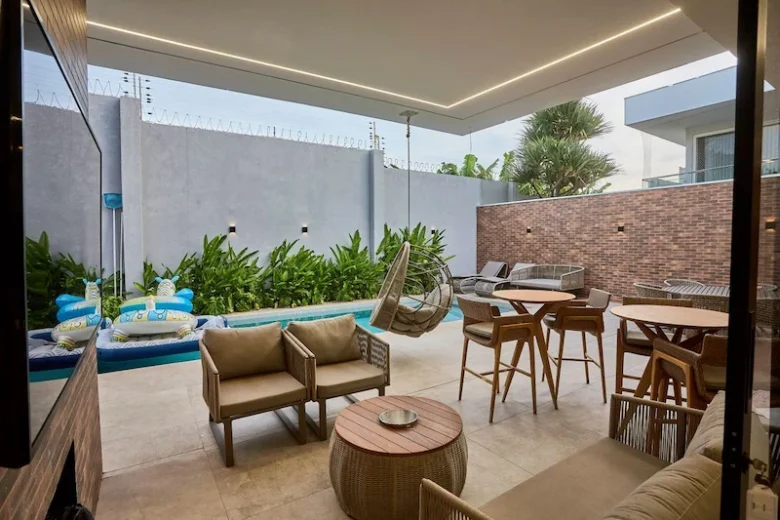
Effective outdoor lighting is all about layers. Start with the functional layer: path lights to ensure safe passage, and task lighting over a dining or grilling area. Next, add the accent layer.
Use uplights to cast a dramatic glow on a beautiful tree, a textured wall, or a piece of sculpture. This creates focal points and adds depth to the landscape. Finally, introduce the ambient layer.
This is the soft, overall glow that sets the mood. String lights, outdoor lanterns, and even candlelight can create a warm and inviting atmosphere.
The rise of portable, rechargeable LED lamps has been a game-changer, allowing you to bring a beautiful, intimate pool of light wherever you need it—to a side table, the center of a dining table, or a quiet corner of the garden.
By thinking of light as a design material, you can craft an outdoor environment that is as captivating and enchanting by night as it is by day.
Invisible integration: technology that serves, not shouts
As our lives become more intertwined with technology, it’s only natural that our outdoor spaces should follow suit. However, the goal is not to turn your garden into an outdoor office, but to seamlessly integrate technology in a way that enhances the experience of being outside without detracting from the connection to nature.
The best outdoor tech is invisible; it serves its purpose quietly and elegantly, making your life easier and more comfortable without demanding your attention.
This is about harnessing technology to support a lifestyle of ease and relaxation, not to create another source of digital distraction.
The focus is on subtle, high-performance solutions. Think of sleek, minimalist outdoor speakers that blend into the landscape, delivering high-fidelity sound without being an eyesore.
Consider radiant heating elements discreetly built into the overhead structure of a pergola, extending the seasons you can comfortably sit outside.
Modern designer outdoor furniture is also beginning to incorporate this philosophy, with pieces that feature subtle, weather-proofed USB charging ports or integrated, low-level LED lighting that casts a soft glow from beneath a sofa or side table.
The idea is to have the convenience of modern life at your fingertips, but in a way that feels organic and unobtrusive. It’s technology in service of tranquility, allowing you to stay connected if you wish, but on your own terms, without sacrificing the peace and beauty of your personal sanctuary.
Our team at Neomania Magazine sees this subtle integration as a key hallmark of truly sophisticated contemporary living.
The journey of transforming an outdoor space is a deeply personal one. It’s an exploration of how we want to live, what brings us joy, and how we can create a deeper connection with the world around us.
The pieces we choose are more than just furniture; they are the facilitators of memory, the silent witnesses to our lives, and the physical embodiment of our desire for beauty and peace.
This is not about consumption, but about conscious creation. It’s about building a narrative, piece by piece, that reflects who you are and who you aspire to be.
The stories we tell here are meant to do more than just inform; they are designed to stir something within you. We believe that engaging with thoughtful design can be a transformative experience, one that opens your eyes to new possibilities and enriches your perspective.
If you feel that pull, that sense of being transported by the narrative of these objects and inspired to reflect on the aesthetic possibilities in your own life, then you understand the essence of what we do.
We invite you to continue this journey with us. Subscribe to Neomania Magazine and receive a constant source of stories that challenge, excite, and inspire.