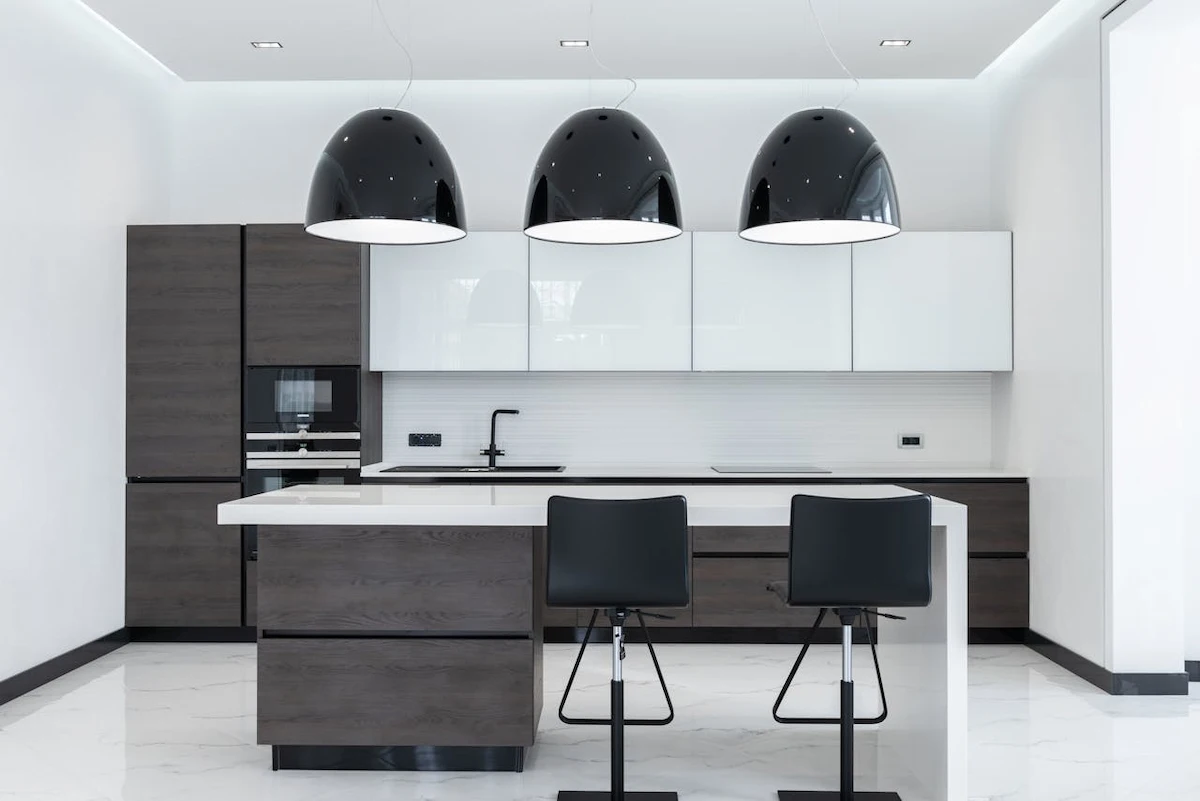
The modern home is no longer a collection of isolated boxes. Walls have come down, and the boundaries between where you cook, where you work, and where you relax have blurred into a single, fluid environment.
This shift toward open-plan living has brought a specific challenge to the forefront: the kitchen. While it is the heart of the home, it is also a place of utility, noise, and occasional clutter.
This is where hidden kitchen design steps in, offering a way to maintain the functionality of a high-end culinary space without sacrificing the visual purity of your living area.
You might have noticed how the most sophisticated interiors today feel more like galleries than traditional residences. This aesthetic is achieved by treating appliances and workstations as elements that can be tucked away when they aren’t needed.
A concealed kitchen allows the architecture of the room to speak for itself, creating a sense of calm and order that is hard to achieve when stainless steel ovens and cluttered countertops are constantly on display.
The evolution of the concealed kitchen
For a long time, the kitchen was a service area, hidden away in the back of the house. As it moved into the center of social life, it became a status symbol filled with professional-grade tools.
However, the current trend is moving toward a more refined approach. People are looking for ways to integrate these tools so they don’t disrupt the flow of a beautifully designed room.
You are seeing a return to the “hidden” aspect, but this time it’s driven by a desire for minimalism and multi-functional spaces rather than social hierarchy.
This design philosophy works particularly well in urban environments where every square foot matters. In a studio apartment or a compact loft, a visible kitchen can dominate the entire living experience.
By using concealed kitchens, you can transform a cooking zone into a sleek wall of cabinetry in seconds. This flexibility is what makes the concept so appealing to a new generation of homeowners who value both style and substance.
Hardware that makes the magic happen
The success of a hidden kitchen depends almost entirely on the quality of the hardware. You can’t just put standard doors in front of a stove and expect it to work.
The movement needs to be effortless and the fit must be precise. Pocket doors are the most common solution. These are doors that open and then slide back into a recessed “pocket” on the side of the cabinets, keeping the walkway clear while you cook. When you’re finished, you simply pull them out and close them, and the kitchen vanishes.
Another option gaining popularity is the use of large-scale folding or “bifold” systems. These can cover an entire run of cabinets with just two or three panels.
The engineering behind these systems has improved significantly, allowing for massive panels that move with a light touch. As you saw earlier with the rise of open-plan layouts, the goal is to make the transition between “active” and “passive” states as smooth as possible.
Materials that blend into the background
To make a kitchen truly disappear, the materials you choose for the exterior must match the surrounding architecture. If your living room features oak paneling, your kitchen cabinetry should use the exact same wood and finish.
This creates a seamless “monolithic” look. When the doors are closed, it looks like a decorative wall rather than a functional storage unit.
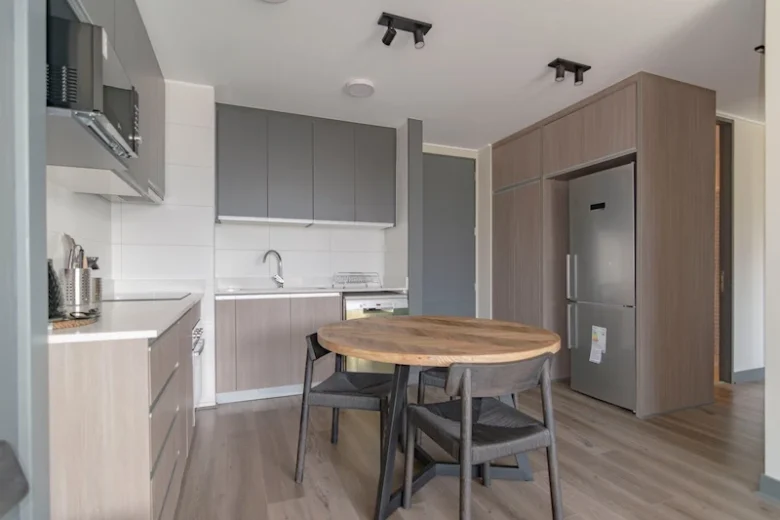
This approach requires a high level of craftsmanship, as the grain of the wood or the texture of the stone needs to line up perfectly across the panels.
You might also consider using matte lacquers or soft-touch finishes. These materials don’t reflect light in a way that draws attention to the seams between doors.
If you prefer a more industrial look, metal finishes like brushed brass or blackened steel can turn the hidden kitchen into a focal point of the room—a piece of sculpture that just happens to hold a refrigerator and a microwave.
Later in this article, we will look at how lighting plays into this material choice to enhance the overall effect.
The invisible chef: integrated technology
Technology has finally caught up with the aesthetic demands of hidden kitchen design. One of the most impressive developments is the “invisible” induction cooktop.
These systems are installed directly beneath a porcelain or stone countertop. There are no visible burners or glass plates. You simply place your pot on the designated area of the counter, and it starts to heat.
When you’re done, the surface remains flat and can be used as a prep area or even a dining table.
Integrated appliances have also become much more sophisticated. Refrigerators and dishwashers now come with “press-to-open” technology, eliminating the need for handles.
This allows for a completely flat facade. Even the ventilation has changed. Instead of a bulky hood hanging from the ceiling, you can use downdraft extractors that sit flush with the cooktop and only rise when they are needed. These small details are what separate a standard kitchen from a truly concealed one.
Designing for small urban spaces
In smaller homes, a hidden kitchen isn’t just a luxury; it’s a practical solution for living better. When your dining table is also your desk, having a sink full of dishes in your peripheral vision can be distracting.
By closing the doors on the kitchen, you mentally “leave” the workspace and enter a relaxation mode. This psychological boundary is vital in modern life, where the lines between work and home are increasingly thin.
You can also use concealed kitchens to hide specific zones. For example, a “breakfast station” can house the coffee machine, toaster, and mugs. You use it in the morning, and then hide the crumbs and the cords for the rest of the day.
This keeps your main countertops clear and reduces the visual “noise” of the room. It’s about creating a space that adapts to your needs throughout the day.
The balance between beauty and usability
While the goal is to hide the kitchen, you must ensure it remains easy to use. A common mistake is making the concealment so complex that it becomes a chore to get a glass of water.
To avoid this, you should think about the “frequency of use.” Items you use constantly, like the fridge or the sink, should be the easiest to access.
Perhaps the fridge has a dedicated panel that doesn’t require opening a larger set of doors, while the stove and prep area are behind the main sliding panels.
Lighting is another factor you should keep in mind. When the kitchen is “open,” you need bright, functional task lighting. When it’s “closed,” the exterior should be lit in a way that complements the rest of the room.
LED strips hidden within the pocket door tracks or under-cabinet lighting that turns on automatically when the doors open can make the space feel much more intuitive.
As you may have noticed in this article, the best designs are the ones that anticipate your movements.
Maintenance and longevity
Because hidden kitchens rely on moving parts, you need to invest in high-quality components. Cheap hinges or tracks will eventually sag or stick, ruining the clean lines of the design.
It is also important to consider ventilation within the concealed cabinets. Ovens and refrigerators generate heat, and if they are behind closed doors, that heat needs somewhere to go.
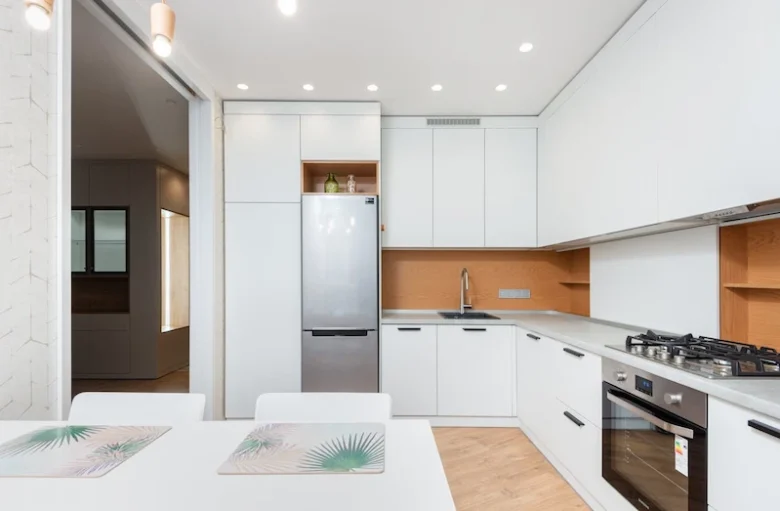
Most high-end systems include built-in venting paths to ensure your appliances don’t overheat.
Cleaning is also a bit different. Since the surfaces are often large and flat, fingerprints can become more visible, especially on dark or glossy finishes.
Choosing “anti-fingerprint” laminates or natural woods with a matte sealer can help keep the kitchen looking pristine with minimal effort. At the end of the day, a hidden kitchen should make your life easier, not more complicated.
Creating a narrative with your space
Every home tells a story about the people who live there. A hidden kitchen suggests a lifestyle that values order, reflection, and the beauty of the “unseen.”
It’s a provocative choice because it challenges the traditional idea of what a home should look like. Instead of showing off your tools, you are showing off the space itself.
This creates a sense of mystery and intrigue for guests, as the room can change its character depending on the time of day or the occasion.
You might find that once the visual clutter of the kitchen is gone, you become more aware of the other details in your home—the way the light hits a piece of furniture, the texture of a rug, or the view from a window.
This is the true power of minimalist design. It doesn’t just remove things; it makes the things that remain more meaningful. We’ll look at this in more detail later when we discuss the psychological impact of architectural silence.
The future of the concealed kitchen
As we look forward, the trend toward concealment is only going to grow. We are seeing more experimentation with “kinetic” furniture—islands that slide to reveal hidden sinks, or walls that move to reshape the entire floor plan.
The kitchen is becoming a piece of high-tech furniture rather than a fixed room. This flexibility allows you to live in a way that is more aligned with your actual habits rather than following a layout designed decades ago.
The use of sustainable materials is also becoming a priority. Recycled wood composites, stone veneers, and eco-friendly lacquers are being used to create these large-scale panels.
This means you can have a cutting-edge, hidden design that is also kind to the planet. It’s a win-win for the modern, conscious homeowner who doesn’t want to compromise on aesthetics or ethics.
Practical tips for your project
- Measure twice: Concealed systems require precise tolerances. Work with a professional who understands the specific hardware you are using.
- Think about the “landing zone”: When you take something out of the fridge, you need a place to put it down. Ensure there is a small section of counter that is always accessible.
- Don’t forget the outlets: Hide power strips inside the cabinets so you can use small appliances without cords trailing across the floor.
- Match the floor: If your kitchen island is meant to disappear, consider using the same flooring material for the base of the island to make it look like it’s floating.
Building a hidden kitchen is an investment in your daily well-being. It’s about more than just hiding a toaster; it’s about reclaiming your living space and creating an environment that feels intentional and serene.
Whether you are living in a sprawling penthouse or a cozy urban flat, the principles of concealed kitchens can help you create a home that is truly your own.
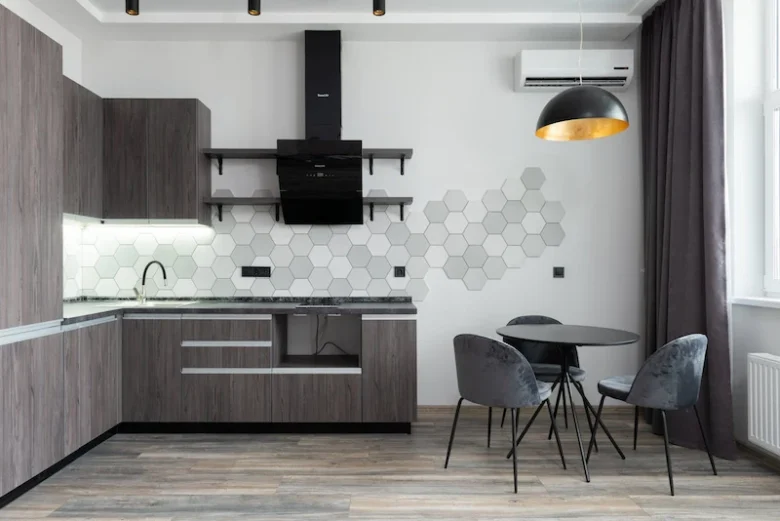
The shift toward these “quiet” spaces reflects a broader cultural desire for peace in an increasingly noisy world. When you step into a room where the kitchen has been elegantly tucked away, you feel an immediate sense of relief.
The visual noise is gone, and you are left with the essence of the architecture. This is why hidden kitchen design is more than just a trend; it is a fundamental shift in how we think about the relationship between our tools and our lives.
As you explore these possibilities, you might find yourself questioning other traditional elements of your home. Why stop at the kitchen? Hidden storage, concealed home offices, and integrated entertainment systems all follow the same logic.
The goal is to create a space that serves you, rather than a space you have to serve. It’s a refined, direct approach to living that prioritizes your experience above all else.
The beauty of a hidden kitchen lies in its ability to surprise. It’s a functional work of art that only reveals its true nature when you decide it’s time to cook. This level of control over your environment is a luxury in itself.
It allows you to host a dinner party where the focus remains on the conversation and the atmosphere, rather than the pots and pans simmering in the background. It’s about creating moments that are uninterrupted by the mundane details of daily life.
If you find this perspective on design and lifestyle inspiring, there is so much more to discover. At Neomania Magazine, we believe in looking beyond the surface of trends to find the soul of every project.
We explore the risks, the questions, and the spiritual essence of modern aesthetics to bring you stories that move and challenge you.
Our selection is vibrant and provocative, designed for those who want more than just information—they want to be moved.
You can become part of this community and gain access to a world of refined insights and breathtaking narratives. Let yourself be transported by the stories we tell and the beauty we uncover.
Reflect on how these ideas can transform your own world and the spaces you inhabit. Subscribe to Neomania Magazine today and join us in our search for the extraordinary in the everyday.