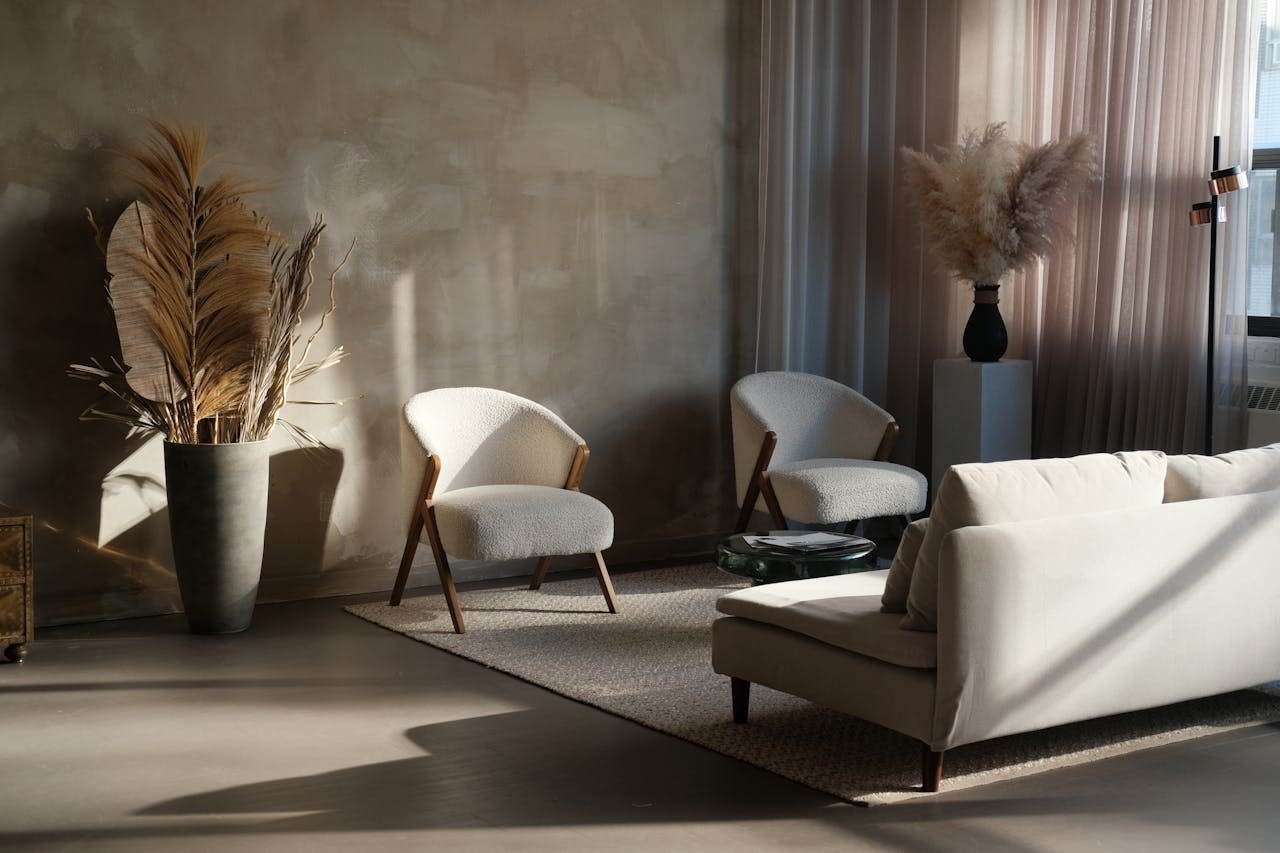
Our digital feeds present a world of polished perfection. Our algorithms serve us an endless scroll of flawless faces, pristine interiors, and impossibly perfect landscapes.
In response, our homes are pressured to become showrooms, staged and sterile, wiped clean of any evidence of a life actually lived.
But a quiet and powerful philosophy offers a radical alternative: wabi-sabi. It’s not a decorating trend to be consumed and discarded; it’s a worldview, a gentle rebellion against the cult of the new and the tyranny of the flawless.
It is the art of finding profound beauty in the humble, the weathered, and the perfectly imperfect. In an age of digital gloss, wabi-sabi is the necessary return to the real.
This ancient Japanese ethos, rooted in Zen Buddhism, is perhaps one of the most misunderstood concepts in contemporary design. It has been co-opted and diluted into a commercial aesthetic—a catch-all for anything rustic, minimalist, or vaguely “zen.”
But its true essence is much deeper. It challenges the very foundations of Western notions of beauty, which have long equated perfection, symmetry, and grandeur with value.
Wabi-sabi, in contrast, asks us to slow down, to observe closely, and to find a more resonant, more authentic kind of beauty in the subtle and the overlooked.
It is a philosophy that teaches us to accept the natural cycles of growth and decay, to appreciate the stories embedded in the objects we live with, and to find a deep sense of peace in the authenticity of an imperfect world.
The soul of the concept: beyond the aesthetic
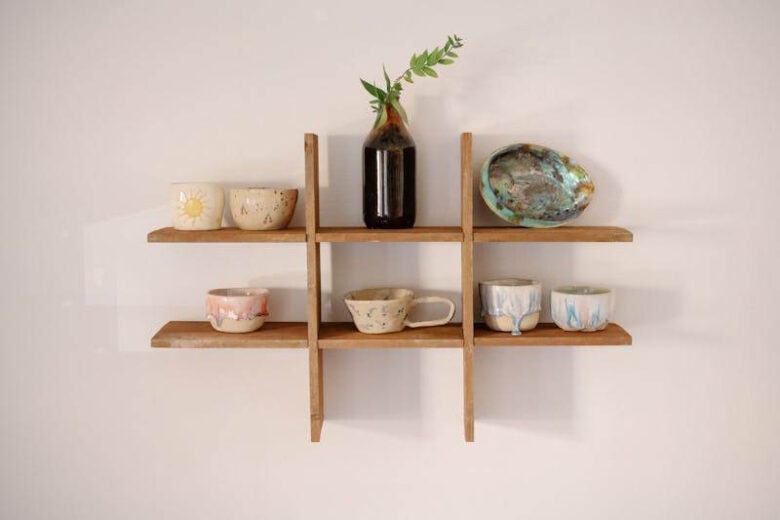
To grasp wabi-sabi, one must first understand that it is not a style to be applied, but a feeling to be cultivated. It is composed of two distinct but intertwined concepts that, together, form a powerful lens through which to see the world.
Wabi: the humble beauty of simplicity
Wabi speaks to a kind of quiet, understated elegance found in simplicity. It is the feeling of contentment that comes from needing less.
In design, wabi translates to uncluttered spaces, the absence of ornamentation, and a focus on the essential nature of things. It is the beauty of a humble, handmade ceramic bowl, its form dictated by the hands of its maker and the nature of the clay.
It represents a spiritual richness that arises from a life of material modesty. A wabi space is calming, grounding, and free from the anxiety of aspiration. It doesn’t shout for attention; it invites quiet contemplation.
Sabi: the patina of age and impermanence
If wabi is about the beauty of simplicity, sabi is about the beauty of time. Sabi refers to the patina, the wear, the visible repairs, and the graceful decay that objects acquire with age.
It is the recognition that the story of an object—its history of use and care—is a vital part of its beauty. Think of the smooth, worn handle of a favorite wooden tool, the moss growing on an old stone lantern, or the faded color of a well-loved piece of linen.
Sabi honors the inevitable process of impermanence. It doesn’t mourn decay; it finds a melancholic, profound beauty in it, reminding us of the transient nature of all things.
What wabi-sabi is not: debunking the clichés
In its journey to the West, wabi-sabi has been burdened with numerous misconceptions. It is crucial to understand what it is not. It is not shabby chic, with its contrived distressing and romanticized clutter.
Wabi-sabi is disciplined and intentional. It is not merely rustic or farmhouse style; its simplicity is rooted in a deep philosophical tradition, not just rural aesthetics.
Most importantly, it is not a look that can be manufactured. Buying a pre-distressed table or a factory-made “wabi-sabi” vase misses the point entirely. The authenticity of age and use cannot be faked. It must be earned over time.
The language of imperfection: translating ethos into design
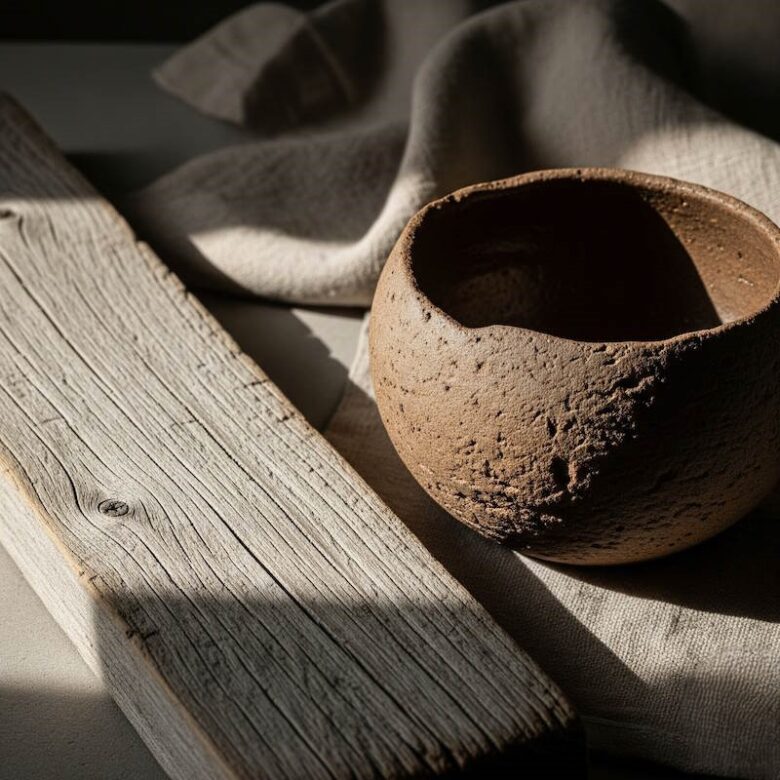
While wabi-sabi is a mindset, it has a distinct visual and tactile language. This language is not built on rules of perfection but on principles that honor authenticity, nature, and the passage of time.
The primacy of natural, asymmetrical materials
The wabi-sabi interior is built from the ground up with materials that are honest, unpretentious, and connected to the earth. Wood, stone, clay, plaster, linen, cotton, and bamboo are foundational.
These materials are chosen for their texture, their inherent irregularities, and their ability to age gracefully. A slab of wood is valued for its unique grain and knots.
A plaster wall is appreciated for the subtle variations left by the trowel. This focus on natural materials is paired with a deep appreciation for asymmetry.
In nature, perfect symmetry is rare. Wabi-sabi embraces this, valuing the irregular forms of handmade objects and the organic arrangement of elements within a space, breaking free from the rigid geometry of the man-made world.
A muted palette pulled from the earth
The colors of wabi-sabi are the colors of the natural landscape. The palette is muted, subtle, and calming, drawn from shades of stone, soil, wood, and cloudy skies.
Think of earthy browns, soft grays, warm beiges, and muted greens. There are no loud, jarring colors demanding attention. This restrained palette creates a serene and cohesive atmosphere, allowing the textures of the materials and the play of light to become the primary focus.
It is a color scheme that doesn’t distract but rather grounds the inhabitant, fostering a sense of peace and tranquility.
The dance of natural light and shadow
Light is a key material in any wabi-sabi space. The design seeks to harness natural light, not to flood a room with harsh brightness, but to create a dynamic interplay of light and shadow.
The way light changes throughout the day, raking across a textured wall or filtering through a linen curtain, is a central part of the room’s character.
It is a gentle, daily reminder of the passage of time. Shadows are not seen as voids but as an essential counterpart to light, creating depth, mystery, and a sense of calm.
This careful modulation of light enhances the textures of the natural materials and contributes to the overall contemplative mood.
The antidote: why we crave wabi-sabi now
The resurgence of interest in wabi-sabi is not an accident. It is a direct and necessary response to the anxieties and pressures of contemporary life. It serves as a powerful antidote to the cultural obsession with perfection, consumerism, and digital artifice.
A counterpoint to digital perfectionism
We live our lives through screens that present a filtered, curated, and impossibly perfect version of reality. Social media platforms like Instagram have cultivated a powerful aesthetic of flawlessness that has bled into our expectations for our own lives and homes.
Wabi-sabi is a form of aesthetic resistance. It offers a sanctuary from the pressure to be perfect. It tells us that a crack in a vase, a stain on a table, or a wrinkle in a linen sheet is not a flaw to be hidden but a mark of authenticity—a sign of life.
It is a form of digital detox for our physical spaces, allowing us to exist in an environment that is as real and imperfect as we are.
The quiet rebellion against consumer culture
The modern economy is built on a cycle of relentless consumption. we are encouraged to discard the old and embrace the new, to constantly chase fleeting trends in fashion, technology, and home decor.
Wabi-sabi is a quiet but profound rebellion against this mindset. It champions the idea of “slow design,” encouraging us to invest in fewer, better things and to keep them for a lifetime.
It finds value not in novelty but in longevity. By teaching us to appreciate the beauty of wear and tear, it frees us from the endless cycle of wanting more, fostering a deeper sense of gratitude for the things we already possess.
Wabi-sabi vs. minimalism: the critical difference
On the surface, wabi-sabi and minimalism share a common appreciation for simplicity and uncluttered spaces. However, their underlying philosophies are fundamentally different.
Western minimalism often strives for a pristine, almost clinical perfection. Its lines are clean, its surfaces are smooth, and its goal is often a kind of abstract, machine-like purity.
Wabi-sabi, on the other hand, is warm, organic, and deeply human. While minimalism is an act of intellectual subtraction, wabi-sabi is an act of emotional appreciation.
Minimalism seeks to eliminate all that is non-essential; wabi-sabi seeks to find beauty in what remains, including its imperfections. A minimalist room might feel cold and anonymous; a wabi-sabi room feels warm, personal, and soulful.
The philosophy in practice: contemporary interpretations
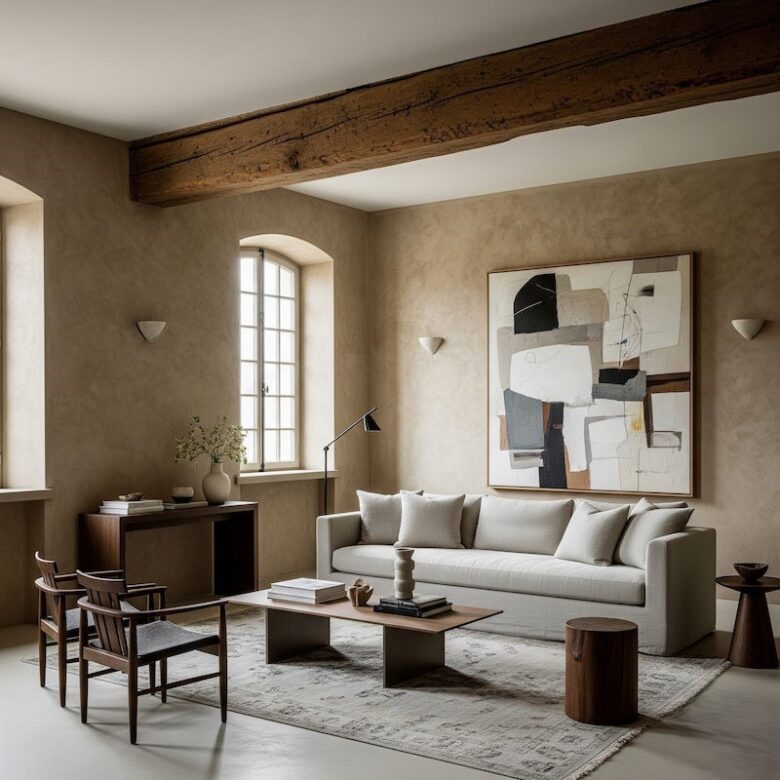
While its roots are ancient, wabi-sabi has been thoughtfully interpreted by contemporary designers who have brought its quiet beauty to a global audience, demonstrating its timeless relevance.
The master’s touch: how axel vervoordt defined the look
Perhaps no single person is more responsible for introducing the wabi-sabi ethos to the West than the Belgian designer and antiquarian Axel Vervoordt.
His influential work combines a deep respect for history with a minimalist’s eye, creating spaces that are serene, soulful, and profoundly beautiful.
He masterfully blends ancient objects with contemporary art, and rough, weathered textures with clean architectural lines. His interiors are not decorated; they are curated environments that feel as though they have evolved organically over centuries.
Vervoordt showed the world that a philosophy of imperfection could be the ultimate form of luxury.
The wabi-sabi home as a sanctuary
To live in a wabi-sabi home is to inhabit a sanctuary. It is an environment that encourages mindfulness and introspection. The lack of clutter calms the mind. The natural materials ground the body.
The celebration of imperfection removes the pressure to maintain a flawless facade. It becomes a space that accepts you as you are and evolves with you over time.
It is a home that is meant to be lived in, not just looked at—where a wine stain on a wooden table or a chip on a favorite mug becomes part of the family’s shared history.
Finding the wabi-sabi object
Incorporating wabi-sabi is less about buying things and more about re-evaluating the things you already have. A wabi-sabi object is one that is authentic, unpretentious, and tells a story.
It could be a smooth stone found on a beach, a piece of driftwood, a handmade ceramic bowl from a local artisan, or a piece of furniture inherited from a grandparent.
It is about choosing objects that have a personal resonance and a quiet integrity, rather than mass-produced items designed to be trendy.
A manifesto for mindful living: it’s not what you buy
Ultimately, wabi-sabi is a practice. It is a way of seeing and being in the world that extends far beyond interior design. It is a manifesto for a more mindful, authentic, and sustainable way of life.
Cultivating an eye for imperfect beauty
The first step in living wabi-sabi is to retrain your eye. It is about learning to find beauty not in the grand and the perfect, but in the small, the humble, and the overlooked.
It is the beauty of a crack in the sidewalk where a weed is growing, the intricate pattern of peeling paint on an old door, the delicate tracery of a spider’s web.
It is a shift from passive looking to active seeing, a conscious choice to find beauty in the everyday reality of the world around us.
The art of mending and keeping
In a disposable culture, the act of mending is a radical one. The Japanese art of kintsugi—repairing broken pottery with lacquer mixed with powdered gold, silver, or platinum—is a perfect metaphor for the wabi-sabi spirit.
Instead of hiding the cracks, kintsugi highlights them, celebrating the object’s history of breakage and repair as a beautiful and integral part of its story.
This practice teaches us to see damage not as an end, but as an opportunity for transformation. It encourages us to care for our possessions, to extend their lives, and to honor their history.
Embracing the story that time tells
At its very core, wabi-sabi is about making peace with impermanence. It is an acceptance of the natural, unstoppable flow of time and the beauty that it brings.
It teaches us that things are more beautiful for being fragile, for being destined to change and eventually fade. By embracing this truth in our homes and in our lives, we can let go of the anxiety of trying to hold back time and instead find a deep and lasting sense of peace in the graceful, imperfect, and ever-unfolding story of the present moment.
The beauty in imperfection is just one of the profound ideas shaping our world. At Neomania, we explore the philosophies that define the future. Subscribe and change the way you see.