Let’s be honest for a moment. When was the last time you were truly bored?
I don’t mean “stuck in a meeting” bored or “scrolling-through-Instagram-with-a-glazed-expression” bored. I mean genuinely, profoundly, “nothing-to-do-and-nowhere-to-be” bored. The kind where you just stare at a wall, watch dust motes dance in a sunbeam, or let your mind drift without a destination.
If you can’t remember, you’re not alone. In our world, every single second is a commodity to be filled, optimized, and monetized.
We listen to podcasts at 1.5x speed while commuting, answer emails while waiting for coffee, and “relax” by binge-watching a critically acclaimed series that everyone is talking about. We have become masters of filling the void.
And yet, we feel overwhelmed, creatively stuck, and strangely disconnected from ourselves.
This is why the “luxury of boredom” has emerged as a radical new concept. It defines true disconnection as a rare and valuable commodity in our modern, stimuli-saturated society.
It refers to the scarce opportunity to let the mind wander without a specific goal, free from work emails, social media feeds, or entertainment queues.
In a culture obsessed with productivity, intentionally choosing “nothingness” has become the new status symbol for mental clarity, creativity, and genuine self-reflection.
It’s an intentional rebellion against the noise. And in the world of Neomania—where we believe that good design and a good life are about intentionality—this “empty” space is the most valuable structure you can build.
The “productivity paradox”: how did we learn to fear downtime?

Our deep-seated fear of inactivity is a relatively new invention. We’ve been conditioned by two powerful forces: the “hustle culture” and the “dopamine economy.”
First, let’s talk about hustle culture. For the past decade, we’ve been fed a narrative that our value is inextricably linked to our output.
The “rise and grind” mentality, the side hustle, the gig economy—they all promote a reality where any time not spent producing is time wasted.
We perform our productivity for the world, posting about our 5 AM workouts and our weekend projects. In this framework, boredom isn’t just a missed opportunity; it’s a moral failure. It’s “lazy.”
This cultural pressure created the perfect market for the second force: the dopamine economy.
Your smartphone, and the apps on it, are not neutral tools. They are brilliantly engineered systems designed to capture and hold one thing: your attention.
Every “like,” every notification, every infinite-scrolling feed is a tiny, unpredictable reward. This is what we call “cheap dopamine.” It’s a quick, low-effort hit of pleasure that makes your brain feel like it’s accomplishing something.
The problem? Your brain loves it. It’s easy, it’s fast, and it’s always available.
The gratification that comes from true boredom, on the other hand, is deferred. It’s subtle. The “a-ha!” moment of a new idea, the feeling of processing a complex emotion, the clarity of a long-term goal—these things take time. They require you to push through the initial discomfort of under-stimulation.
This creates the “Productivity Paradox”: in our relentless quest to optimize every moment, we’ve destroyed the very conditions our brains need for genuine insight and restoration. We’ve become so addicted to the feeling of being busy that we’re terrified of the quiet required for actual thinking.
As the author and computer science professor Cal Newport argues in his essential book, Digital Minimalism, a life of meaning requires solitude. He states, “Solitude is the state of being free from input from other minds.” This doesn’t mean you have to be physically alone, but it does mean you must be free from the deluge of external stimuli.
We’ve traded this essential, generative solitude for the cheap buzz of a notification, and we are paying the price in our mental well-being and creativity.
What are the scientific benefits of “doing nothing”?
When you finally put the phone down and embrace the void, you aren’t “doing nothing.” You are, in fact, allowing your brain to perform some of its most critical functions. Embracing boredom isn’t just relaxing; it’s a vital cognitive function.
The science is clear: letting your mind wander is a neurological superpower.
Unlocking creativity:
Have you ever wondered why your best ideas strike in the shower, on a long drive, or right before you fall asleep? You can thank your brain’s “Default Mode Network” (DMN). Neurological studies have shown that the DMN is a web of interacting brain regions that becomes active when you are not focused on an outside task.
This is your brain’s internal “brainstorming” mode. It gets to work connecting disparate ideas, retrieving old memories, and simulating future possibilities. When you are bored, you are giving your DMN the space it needs to make those unexpected, creative leaps.
Improving self-reflection:
Without the constant input of other people’s opinions, achievements, and curated lives, you are finally forced to check in with your own. Boredom is a mirror.
It allows you to process your emotions, to think through a recent argument, to assess your career goals, to write the story of yourself. This autobiographical processing is essential for building a coherent sense of identity and making intentional life choices.
Boosting problem-solving:
When you hit a wall on a complex problem, the worst thing you can do is “push through.” The best thing you can do? Go for a walk.
A “bored” or “incubating” mind wanders, and in its wandering, it often stumbles upon solutions that focused, analytical effort cannot find. It allows your subconscious to take the lead, trying out new combinations and patterns in the background.
Restoring attention:
Your brain’s capacity for focused attention (the kind you need for “deep work”) is a finite resource. Constant stimulation, multitasking, and context-switching fatigue this system, leading to “attention fatigue.”
You feel frazzled, foggy, and unable to concentrate. Boredom acts as a mental reset. It’s the neurological equivalent of a palate cleanser, allowing your prefrontal cortex to rest and recharge. When you return to a task after a period of true boredom, your ability to focus is sharper and more sustainable.
The Neomania angle: boredom as “negative space” in human design
At Neomania, we understand structure. We live and breathe the belief that good design makes life better. And in the world of design, art, and architecture, the most important element is often the one that isn’t there: negative space.
In a logo, it’s the space around the letters that creates the icon. In architecture, it’s the “void” of a room that allows for movement and makes the structure functional.
In a painting, it’s the unpainted canvas that gives the subject balance and power. In music, it’s the silence between the notes that creates the rhythm.
Negative space isn’t empty. It’s an active component that defines, shapes, and gives context to everything else.
This is exactly how we see boredom.
We see boredom not as a void, but as an active containment structure for the mind. It is the “negative space” of human consciousness. It’s the framework that allows ideas to have room to form, to breathe, and to connect.
The hustle culture we live in promotes a life of “mental clutter.” It’s like a room stuffed with furniture from floor to ceiling—no-frills, no hierarchy, no room to move or think. It’s overwhelming and unusable.
The luxury of boredom is the ultimate act of “human design.” It’s about consciously curating your mental environment. It’s choosing to create intentional, beautiful, empty spaces in your mind so that your thoughts, ideas, and emotions have a place to land.
Without this “luxury” of mental white space, our lives become a cacophony of information without hierarchy, meaning, or peace. True luxury isn’t about adding more; it’s about having the clarity and confidence to embrace the space between.
How can you cultivate the luxury of boredom in a busy life?
We understand. Knowing boredom is good for you is one thing. Actually doing it in a life filled with real responsibilities is another. It requires intention, practice, and a willingness to be uncomfortable.
Achieving true boredom isn’t passive; it’s an active choice. Here are practical steps to start building this “negative space” into your life’s design.
- Schedule “nothing time” This may sound counter-intuitive, but you need to plan for spontaneity. Put it in your calendar just like a meeting or a workout: “15-Minute Boredom Date.” During this time, the rules are simple: no phone, no books, no podcasts, no tasks. You are allowed to do nothing. Sit on your porch. Stare out the window. Lie on the floor. At first, this will feel incredibly strange and you’ll feel a powerful urge to “be productive.” This is the withdrawal. Sit with that discomfort. It’s the sign that it’s working.
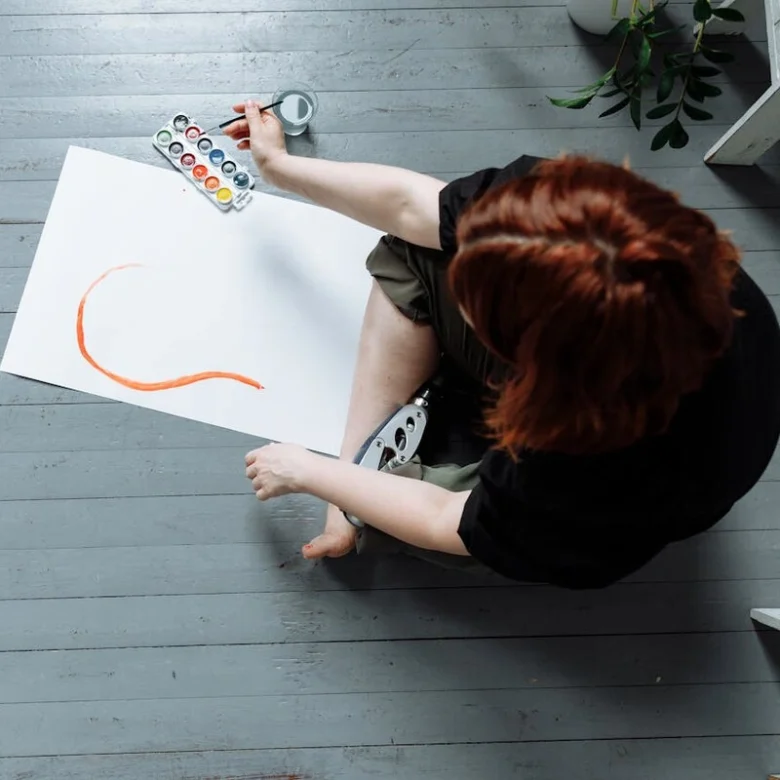
- Practice analog hobbies Engage in activities that use your hands and don’t require a screen. Think gardening, knitting, watercolor painting, whittling, baking bread, or even just doodling on a piece of paper. The key here is to do it without a “productivity” goal and, crucially, without headphones. Don’t listen to a podcast while you’re gardening. Just garden. Listen to the birds. Feel the dirt. The goal isn’t the finished sweater or the perfect loaf of bread; the goal is the process—a low-stakes, tactile activity that occupies your hands just enough to let your mind wander freely.
- Implement a digital detox (with Friction) Willpower alone is weak. The most effective method is to create friction—to design your environment to make disconnection the path of least resistance.
- Create tech-free zones: The dining table and the bedroom are the two most important. These spaces should be sacred, reserved for connection (with others or yourself) and rest.
- Implement tech-free times: The first hour of the day and the last hour before bed are non-negotiable. Don’t let the world’s noise be the first thing you hear and the last thing you see.
- Use the “out of sight” method: When you’re working, put your phone in another room. When you’re watching a movie, leave it on a charger far away. The simple act of having to get up to retrieve it is often enough friction to stop the mindless “check-in.”
- Resist “productive procrastination” This is perhaps the most difficult and most rewarding step. We’ve trained ourselves to fill every “micro-moment” of downtime with “junk stimulation.” Waiting in line at the grocery store. Waiting for the elevator. Sitting at a red light. These are the moments we instinctively reach for our phones. Resist. Acknowledge the urge, and then consciously choose to do nothing instead. Look around. Notice the architecture of the building you’re in. Observe the people around you. Be present in that “in-between” moment. This is how you rebuild your “boredom muscle,” one small rep at a time.
Frequently asked questions (FAQs) about the luxury of boredom
As you start this practice, you’ll naturally have questions. Here are the most common ones we hear.
What is the difference between boredom and relaxation?
This is a fantastic question. Think of it this way: Relaxation is about actively reducing stress, while boredom is about actively reducing stimuli.
Relaxation is an activity, often a restorative one: getting a massage, taking a hot bath, or meditating. The goal is to feel calm and recovered. Boredom is the absence of activity or input.
Its goal isn’t necessarily to make you feel “calm”—in fact, it can sometimes feel uncomfortable or agitated at first. But this is the state that leads to mental wandering and new ideas. You need both, but they are not the same.
Does scrolling social media count as boredom?
No. Emphatically, no. This is the critical distinction. Scrolling, swiping, or watching videos is passive consumption of stimuli. It’s often what we do when we feel the first pang of boredom, but it’s the antidote, not the experience.
This is often called “junk boredom.” You’re filling the void with low-nutrition content. True, “luxury” boredom is characterized by a profound lack of input. It’s the empty canvas. Social media is just scribbling all over it so you don’t have to face the emptiness.
Is boredom necessary for children?
Yes. It is not just necessary; it is foundational. In our desire to give our children every advantage, we often over-schedule them and hand them a screen the second they say, “I’m bored.”
This is a massive disservice. When a child is bored, they are forced to look inward or outward—to their own imagination or the physical world around them.
This is how they invent new games, build forts from couch cushions, discover a passion for drawing, or learn to negotiate and play with a sibling. Boredom is the engine of imagination, self-reliance, and the ability to self-entertain. These are foundational skills for a creative and resilient life.
For so long, we’ve treated boredom as a problem to be solved, an emptiness to be filled. But the luxury of boredom is not about wasting time; it’s about reclaiming it.
In the new age of artificial intelligence, endless content, and hyper-connectivity, your focused attention and your original thoughts are your most valuable, most human assets. The greatest act of personal optimization may be, paradoxically, to choose to do nothing at all.
Boredom is not a sign of failure. It is the essential, elegant, and powerful structure required to build a mental life that is creative, considered, and truly your own.
So, the next time you have a spare ten minutes, we challenge you: Don’t fill it. Don’t optimize it. Don’t even “relax.”
Just be. And see what happens.