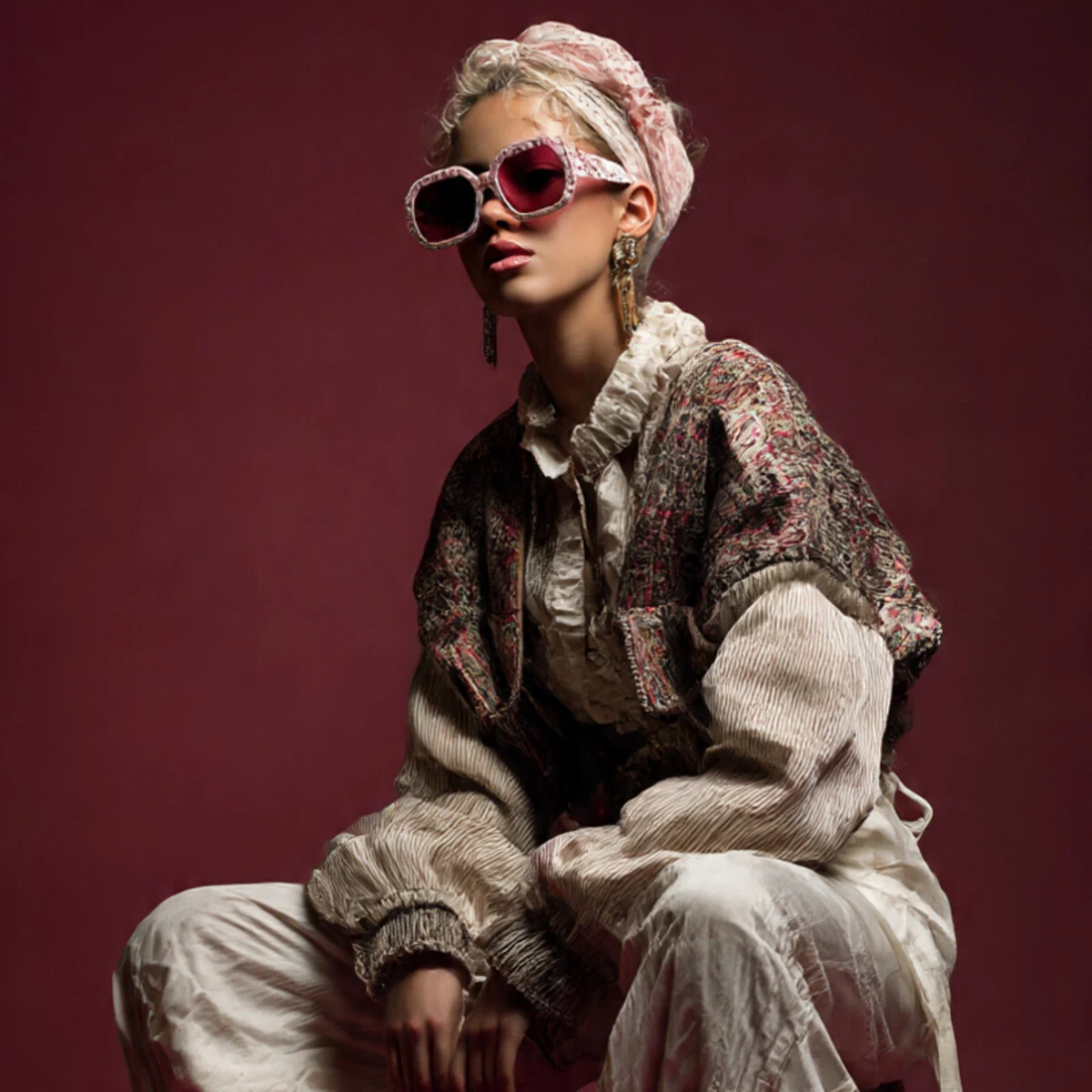
A fashion archetype is your style’s core identity. It’s the consistent personality, the “why,” behind your clothing choices. Think of it as your style’s soul. It could be “The Rebel,” “The Classic,” “The Romantic,” or something in between.
Unlike a fleeting micro-trend (we’re looking at you, “Coastal Cowgirl”), your archetype is timeless. It’s the intrinsic part of you that’s drawn to a leather jacket, a perfectly simple silk blouse, or a wild, eclectic print.
Discovering this archetype is, without question, the most powerful secret to building a cohesive, sustainable, and deeply personal wardrobe. It’s the key to shopping smarter, editing your closet with intention, and finally feeling truly, authentically yourself in everything you wear.
This isn’t just another style guide. This is a map back to you.
Why understanding your archetype matters more than following trends
In our hyper-connected world, we’re drowning in “cores” and “aesthetics.” One minute it’s “Balletcore,” the next it’s “Gorpcore.”
This endless cycle, what I call the “trend treadmill,” is designed to make you feel perpetually behind, encouraging you to consume, discard, and consume again. It’s exhausting, expensive, and deeply unsustainable.
Your fashion archetype is the antidote.
When you understand your core style identity, you’re no longer a victim of the algorithm. You become a curator.
This isn’t just theory; it’s the most practical shopping tool you will ever possess. Think of it as a compass. When you’re faced with a decision—in a store or online—you can ask a simple question: “Does this honor my archetype?”
- If you’re a Minimalist, you can admire a bold, sequined bomber jacket on someone else (perhaps a Dramatic archetype) and feel zero pull to own it. You know it’s not part of your story.
- If you’re a Romantic, you can skip the sterile, beige-on-beige influencer trend, because you know your soul thrives on soft textures and delicate prints.
This knowledge transforms your relationship with fashion. You stop buying clothes and start investing in your identity. The result?
A wardrobe where every single piece works together, a massive reduction in impulse buys, and a profound sense of confidence that no “it” bag can ever provide. You’re no longer just getting dressed; you’re communicating who you are before you even say a word.
The 7 core fashion archetypes explained
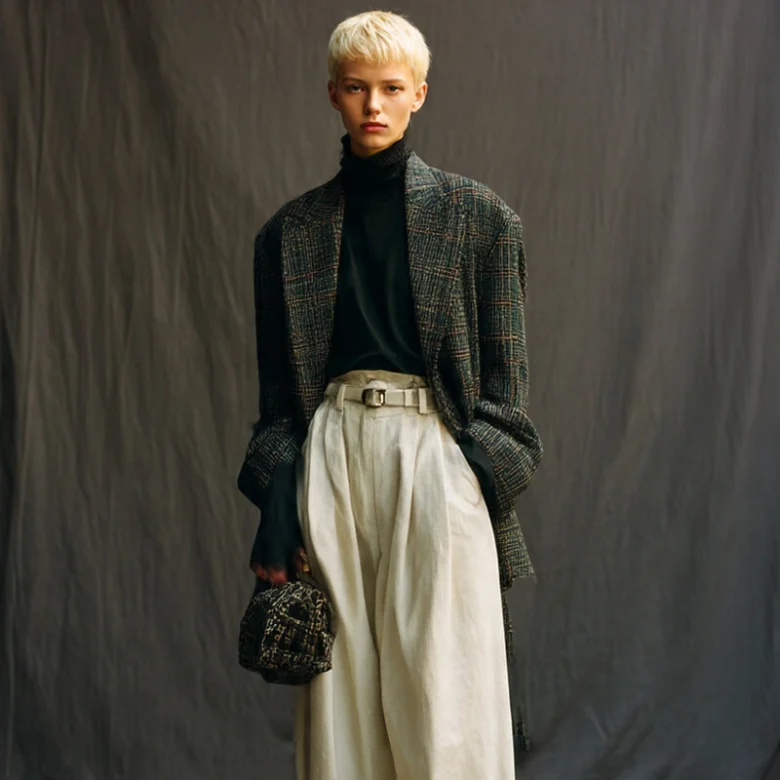
While your personal style will always be a unique fingerprint, most of us have a dominant archetype (or a primary/secondary mix) that acts as our “true north.” We’ve broken down the seven core identities. See which one makes you feel seen.
1. The classic (the timeless)
If your style icons are people who look as elegant today as they did 30 years ago—think Grace Kelly, Lauren Hutton, or the modern mastery of Ralph Lauren and The Row—you are likely a Classic.
You believe in doing things right, and your philosophy is “buy once, wear forever.” You aren’t interested in fleeting trends; you’re investing in permanence.
Quality and craftsmanship are your love languages. This translates into a wardrobe built on timeless silhouettes: the perfect trench coat, a crisp white button-down, and tailored high-waisted trousers.
Your style conveys competence and an understated, confident grace, which, as fashion psychologist Dr. Carolyn Mair notes in The Psychology of Fashion, is often deeply linked to projecting trustworthiness.
You gravitate towards a structured leather handbag and a timeless navy blazer, knowing these pieces will serve you for decades.
2. The rebel (the trailblazer)
You are the rule-breaker, the iconoclast. You see fashion as a tool for disruption and a reflection of your counter-culture heart. Your icons are the originals: Vivienne Westwood, Patti Smith, and the modern deconstruction of Rick Owens.
Your core philosophy is “I’d rather be interesting than pretty,” and you are allergic to “basic.” Your style is a visceral reaction against the status quo, whether it’s loud and punk-inspired or a quieter, more intellectual deconstruction.
As styling expert Andrew Gelwicks, author of The New New, often implies, this is about “fashioning a statement,” where your clothes become your chosen armor.
This identity is built on pieces like a perfectly worn-in leather moto jacket (your second skin), distressed denim, combat boots, and vintage band tees, all grounded in a healthy dose of black.
3. The romantic (the dreamer)
You are guided by emotion, beauty, and a touch of nostalgia. You want to feel something in your clothes, creating a world that is soft, poetic, and beautiful.
Your icons are Florence Welch, brands like Chloé and Zimmermann, and the ethereal heroines of pre-Raphaelite paintings. Your philosophy is “beauty for beauty’s sake.”
You are drawn to fashion that tells a story, that feels like it’s from another, more magical time. This isn’t about practicality; it’s about fantasy.
Your wardrobe is filled with lace, ruffles, puff sleeves, and soft floral prints. You gravitate toward flowing maxi-dresses, velvet, and a color palette of soft pastels, creams, and rich jewel tones, accessorized with delicate, meaningful pieces like a treasured locket.
4. The minimalist (the purist)
As a Minimalist, you are the master editor. You find power in serenity, clarity, and precision, and your icons are Jil Sander, Carolyn Bessette-Kennedy, and the quiet architecture of brands like COS or Lemaire.
You are not about less; you are about better. Your philosophy is “less is more.” For you, true luxury is found in clean lines, negative space, and exceptional fabric. You seek to remove noise, not create it.
Your style is calm, intentional, and intellectually serene, built from a tight edit of black, white, grey, navy, and camel. This translates into key pieces like the perfect black turtleneck, monochromatic sets, wide-leg neutral trousers, and sculptural jewelry, which serves as your primary form of expression.
5. The creative (the eclectic)
You are the artist, the collector, the magpie. Your body is a canvas, and getting dressed is your art form. You see connections where others don’t, drawing inspiration from fearless icons like Iris Apfel, Dries Van Noten, and the print-clashing genius of Gucci under Alessandro Michele.
Your philosophy is “more is more, and contrast is king.” You dress from the heart, unbound by rules of color, print, or decade. You find joy in the mix—a 1970s vintage blouse with an avant-garde skirt, bold patterns clashed with wild abandon.
As the iconic stylist Garance Doré often illustrates, this je ne sais quoi is just deep confidence in one’s own unique cocktail of style.
Your wardrobe is a treasure chest of vintage finds, statement eyeglasses, and unique color combinations. Your “basic” is a leopard-print knit.
6. The natural (the effortless)
You prioritize ease, comfort, and authenticity above all else. You want your clothes to feel as good as they look. You are unfussy, tactile, and connected to the earth, like your icons Jane Birkin and the “California cool” of Jenni Kayne.
Your philosophy is “comfort is non-negotiable.” Your style is an extension of your “slow living” lifestyle, which is reflected in your wardrobe.
As noted in WGSN’s global trend forecasts, this speaks to a powerful macro-movement towards wellness. You choose natural, breathable fabrics and have a low tolerance for anything restrictive.
Your key pieces include lived-in linen, soft-wash denim, oversized chunky knits, and simple leather sandals, all in a color palette derived from nature: sand, terracotta, and olive green.
7. The dramatic (the statement-maker)
You are the performer. You don’t just enter a room; you arrive. You see fashion as performance art and a source of joy, power, and transformation. Your icons are the ones who make headlines: Lady Gaga, the architectural genius of Mugler, the surrealism of Schiaparelli.
Your philosophy is simple: “Why blend in when you were born to stand out?” You aren’t dressing for other people’s comfort; you are dressing for the feeling.
As the late, great Vogue editor André Leon Talley said, “Fashion is a language.” You speak it fluently and at full volume. Your wardrobe is defined by bold shoulders, structural shapes, head-to-toe sequins, vibrant, saturated colors, and avant-garde accessories. You are not afraid of a cape.
How to discover your true fashion archetype (a 3-step guide)
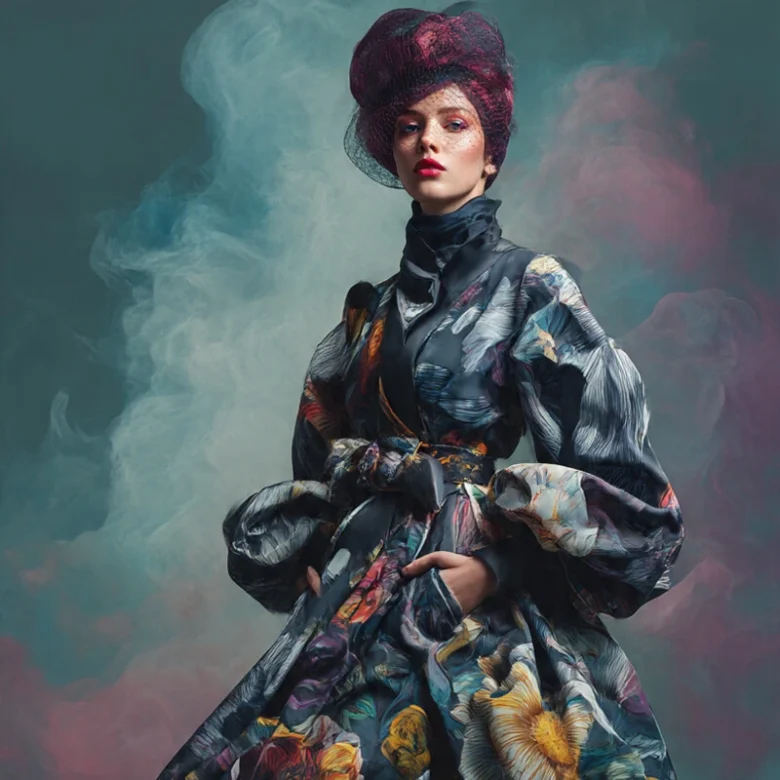
Okay, so you’re seeing yourself in one or two (or three) of those descriptions. Now what? How do you find your true, dominant archetype? This isn’t a 10-question quiz. This is an intimate, personal excavation.
Step 1: the ‘gut reaction’ audit (analyzing your closet)
This is where you have to be radically honest with yourself. Go to your closet, pull out the 10-15 pieces you truly love to wear. The items you reach for when you want to feel powerful, beautiful, or just 100% you.
Now, put aside the “meh” items, the “it-was-on-sale” items, and the “I-should-wear-this” items.
Look at your “hell yes” pile. What is the common thread?
- Don’t just look at the item (a “blazer”).
- Look at the adjective. Is it a structured blazer (Classic)? A deconstructed blazer (Rebel)? A sequined blazer (Dramatic)? A soft linen blazer (Natural)?
- Look at the feeling. Do these clothes make you feel powerful? Secure? Creative? Soft?
The answers to these “why” questions are the first clue to your archetype’s DNA.
Step 2: beyond pinterest—finding your style DNA
Here’s a hard truth: Your Pinterest board is probably lying to you.
Most of us use Pinterest for aspiration, not authentication. We pin images of a life we think we want, or outfits that look great on a specific model. But that doesn’t mean they align with our soul.
I want you to try a new kind of mood board. Instead of searching for “outfits,” I want you to search for feelings and textures.
Create a new, secret board. On it, pin:
- Architecture that gives you a gut reaction (Is it the raw concrete of Brutalism? The ornate curves of a Parisian facade?)
- Art that you can’t look away from (Is it a chaotic, colorful Basquiat? A serene, minimalist Agnes Martin?)
- Interiors, textures, landscapes, and colors.
- Film stills that capture a mood you love.
When you’re done, look at the board as a whole. What is the undeniable feeling? Is it Serene, Clean, and Structural (Minimalist)? Is it Raw, Dark, and Moody (Rebel)? Is it Lush, Soft, and Fantastical (Romantic)?
This “vibe” is your true Style DNA. This is the filter you should use, not a board full of random outfits.
Step 3: using ai for brainstorming (and why the final edit must be human)
We live in the future, so let’s use the tools. Once you have your “Style DNA” words from Step 2 (e.g., “Romantic,” “Moody,” “Intellectual,” “Strong”), you can use AI as your personal brainstorming intern.
Go to a tool like ChatGPT or Gemini and feed it your words.
- Try prompts like: “What style icons or fashion designers combine the words ‘Classic,’ ‘Rebels,’ and ‘Tailored’?”
- Or: “I’m a ‘Natural’ archetype, but I want to add a ‘Dramatic’ edge. What are some ways to do that?”
The AI will give you fantastic starting points. But—and this is the most important part—the final edit must be human.
AI is designed to find patterns and give you a polished average. It cannot replicate the magic of your unique, human experience. It can’t replicate that weird, amazing vintage jacket your grandmother gave you. It can’t replicate the soul.
Use AI for the data, but use your heart for the final curation. You are the Editor-in-Chief of your own style.
Archetypes vs. aesthetics: why ‘cottagecore’ isn’t an archetype
This is the single most important concept to grasp, and it’s where most people get confused.
An Aesthetic (like Cottagecore, Gorpcore, Dark Academia, Clean Girl) is the “what.” It’s the current execution of a style. It’s a collection of items, colors, and silhouettes that are popular at a specific moment in time.
An Archetype (like The Romantic, The Rebel, The Classic) is the “why.” It’s your core personality. It’s the stable, underlying motivation for your choices.
Here is the “Aha!” moment: Your Archetype is permanent. Your Aesthetic is temporary.
Let’s use an example. You might be a Romantic Archetype at your core. Your “why” is a deep love for beauty, fantasy, and emotion.
- In 2024, you might express that “why” through the Cottagecore Aesthetic (the “what”). You wear gingham, prairie dresses, and carry a woven basket.
- But in 2028, you might express that exact same Romantic core through the Dark Academia Aesthetic—tweeds, moody colors, and poetic silhouettes.
- In 2032, you might be expressing it through a futuristic, “space-age” romanticism.
The execution (the aesthetic) changed with the trends, but your why (your archetype) remained the same.
When you know your archetype, you can play with aesthetics without losing yourself. You can pick and choose elements from a trend that align with your core identity, and discard the rest. You are in control, not the trend.
Frequently asked questions (FAQs) about fashion archetypes
Can I be a mix of two fashion archetypes?
Absolutely. In fact, most people are. The most compelling, dynamic personal style often lives in the tension between two archetypes.
This combination is what makes you unique.
Classic + Rebel: A perfectly tailored blazer… worn with combat boots and a vintage tee.
Minimalist + Dramatic: A sleek, monochromatic outfit… punctuated by one massive, sculptural piece of jewelry.
Natural + Creative: An easy linen dress… layered over a clashing-print turtleneck with colorful, beaded necklaces.
Your primary archetype is your foundation. Your secondary archetype is your “spice.”
Does my fashion archetype change over time?
Your core archetype is usually as stable as your core personality. If you’re a born Rebel, you’re probably not going to wake up at 50 and suddenly be a pure Minimalist.
However, your archetype absolutely evolves. It matures with you. Major life events—a new career, moving to a new city, becoming a parent—will refine how your archetype is expressed.
Your “Rebel” heart at 22 might have expressed itself in a ripped band tee and a septum piercing. At 42, that same Rebel heart might express itself in an asymmetrical, avant-garde blazer for the boardroom or a commitment to wearing only emerging, disruptive designers. The spirit is the same; the execution has evolved.
How do I shop for my archetype without getting bored?
This is a brilliant question. Your archetype is not a prison; it is a filter. It’s designed to liberate you from the noise, not to bore you.
The cure for boredom is to go deeper, not wider.
Instead of buying more things, you now have the focus to find the perfect thing.
If you’re a Minimalist, instead of buying another black sweater, use your filter to obsess over finding the perfect sculptural silver earring that will elevate all 10 of your black sweaters.
If you’re a Classic, use your filter to find a trench coat with an unexpected lining or a modern, oversized cut.
If you’re a Natural, explore artisanal designers from around the world who work with hand-woven, organic materials.
Your archetype gives you a framework. Within that framework, there is an entire universe of creativity to explore. It’s the ultimate path to true, sustainable, and joyful personal style.
Now, go open your closet. It’s time to meet yourself.