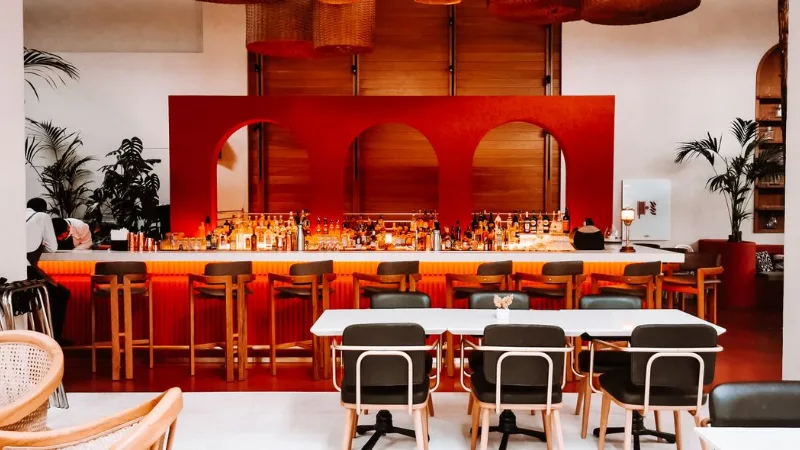
The usual story treats the idea as a recent export of cocktail culture: a dim room, expensive speakers, a crate of records and a bartender who also curates the music. It sounds like something born in Brooklyn or East London a few years ago. The record says otherwise.
The format has roots that reach back almost a century, to Japan, where cafés devoted to the act of listening began to appear in the late 1920s.
That gap between perception and history matters. It changes how you read a room when you walk into one, and it changes what you should expect from it. A space built around reverent attention to an entire album is a very different proposition from a lounge where music is one ingredient among cocktails, food and conversation. Both are legitimate. They simply answer different desires.
What follows is a comparison of the main approaches to shared listening, where each one comes from, and the criteria that help you decide which kind of room suits the evening you have in mind.
A century-old ritual, not a passing fashion
In Japan the model has a name: the kissa, short for a café or bar dedicated to listening to music in the company of others. The defining traits are a focused, almost devotional attention and very little talking. National Geographic describes jazz kissas as a purely Japanese invention, with origins in the late 1920s and a golden age that ran through the 1960s and 1970s.
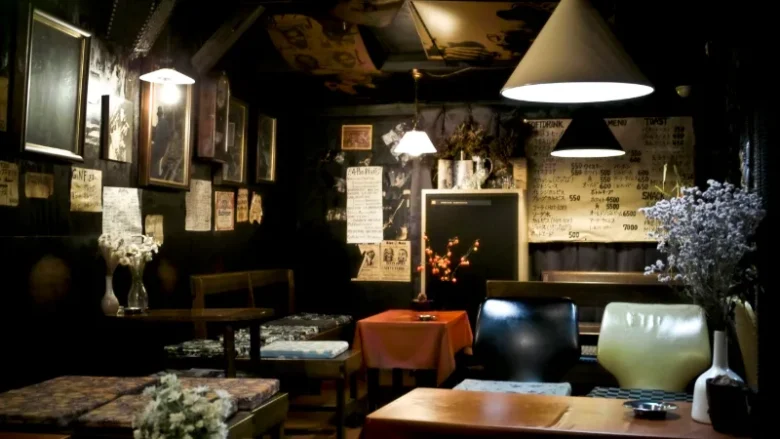
Jazz was not the only starting point. Café Lion, established in 1926, was created for listening to classical music. The detail of the date is worth keeping in mind whenever someone describes these rooms as a novelty. The architecture of the experience, a shared space organized around a sound system and a curated collection, existed long before the LP era.
Why the first rooms existed
Early kissas solved a practical problem. Until the 1960s, few jazz artists toured Japan, so hearing the music live was rare. Imported LPs, meanwhile, were prohibitively expensive for most listeners. A café with a serious collection and a good system offered access that was otherwise out of reach.
Owners took on a role closer to that of a teacher than a host. They chose what to buy, what to play and in what order, and in doing so they shaped the taste of a generation of listeners. This is the part of the story that often gets lost when the format travels abroad: the original kissa was a place of education as much as pleasure.
Jazz after the war
The music itself had a complicated path. Jazz resurfaced in Japan after World War II, and in the 1950s U.S. servicemen stationed near Tokyo brought records over from the States. Those discs fed a hunger that the kissas were perfectly placed to satisfy. A single copy of a new album, played in a café, could reach many attentive listeners.
That multiplier effect explains why the format flourished precisely when access was scarce, and why it lost ground once scarcity disappeared.
Dig and the discipline of silence
If one room embodies the strict version of the ritual, it is Dig. Photographer Hozumi Nakadaira founded it in Tokyo in 1961, and it became legendary for its house rules. Talking was not allowed. Playback was loud. The lights were dimmed and the windows were taped over, all to encourage concentration on the music and nothing else.
Read today, those measures look almost radical. They are also a lesson in interiors. Every design decision at Dig served one purpose: removing distraction. No view to the street, no glare, no conversation competing with the record. The room was an instrument tuned for attention, and the people inside accepted the bargain willingly.
This is what many Western visitors picture when they hear about Japanese listening culture. It is accurate for traditional venues like Dig, where the no-talking rule was strict. It is not a universal rule, and treating it as one creates false expectations in both directions: some people avoid these rooms because they fear a monastic atmosphere, and others walk into a cocktail lounge expecting a sanctuary.
Another habit separates the kissa owner from the club DJ. Most owners play entire records rather than single tracks. The album is respected as a complete work, with its sequencing, its pauses and its quieter passages intact. For a listener used to playlists and shuffle, sitting through a full side without skipping is part of the experience, and often the part that lingers longest.
Not every kissa is about jazz, and not every one is silent
The jazz kissa is the most famous variant, but the family is broader. There are “ongaku” kissas, a term that refers to music in general, devoted to rock, classical or Brazilian music. Some are astonishingly specific.
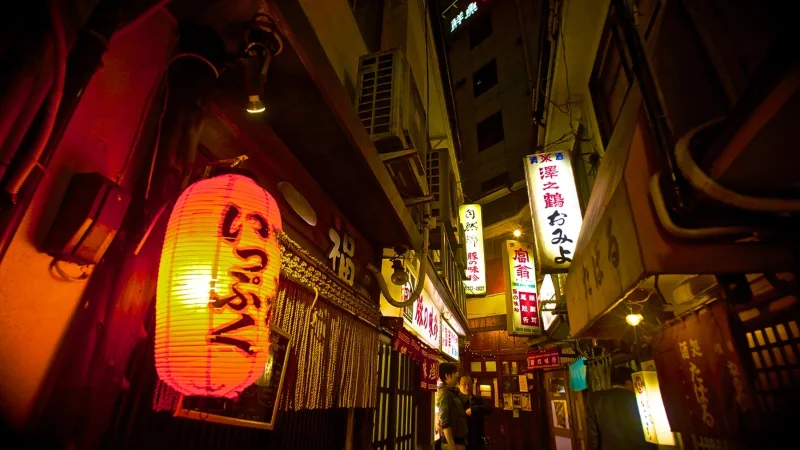
In Tokyo, a bar called Slow Hand plays only Eric Clapton’s output from 1968 to 1972. That kind of narrow focus would be hard to sustain in a market driven by footfall, yet it reflects the same impulse as Dig: a room built around a conviction.
Scale is another surprise. According to National Geographic’s 2026 feature, about 400 kissas remain across Japan. The figure is an approximation drawn from a magazine feature rather than an official census, but it signals a living culture rather than a museum piece. Many of these rooms date back to the 1960s heyday. Basie, in Ichinoseki, has stood for 56 years, a lifespan that most hospitality concepts never approach.
Longevity like that tells you something about the format’s resilience. A room that has played records for more than half a century has outlived several generations of audio technology, several music industry crises and countless changes in nightlife habits. Its regulars come for something that does not depend on fashion.
Decline, return and the numbers behind vinyl
The kissas declined as home audio systems became more accessible. Once a good turntable and decent speakers fit into an ordinary living room, and records became affordable, the original reason to visit faded. Why travel across the city to hear an album you could own and play whenever you wanted?
The past decade has reversed part of that story. Young record collectors and audiophiles have brought renewed interest to the format, and they are not only visiting surviving rooms but carrying the idea abroad. The motivation has shifted.
Today the appeal is less about access and more about atmosphere, shared attention and the pleasure of hearing music on a system most people could never install at home.
Vinyl itself has been on a long upswing, at least in the American market. According to the RIAA’s 2025 year-end report, U.S. vinyl sales passed $1 billion in 2025, up 9.3% on 2024 and the 19th consecutive year of growth. The same RIAA figures put U.S. unit sales at 46.8 million LPs against 29.5 million CDs in 2025.
Those numbers describe the United States, not Spain or France, and they say nothing directly about how many people visit listening rooms. Still, they help explain the cultural climate. A format that keeps growing for nearly two decades creates a public that values the physical record, the ritual of the turntable and the full-album experience. That public is exactly the audience these rooms attract.
Four formats face to face
Once the idea left Japan, it split into several directions. Western venues borrow the kissa model, but they often blend it with cocktails, food and conversation. None of these variants is a degraded copy. Each makes a different choice about what matters most in the room.
The traditional kissa
This is the purest form. Attention is the product. Talking is discouraged or forbidden, the owner chooses the records, and albums play in full. The food and drink offer is secondary, sometimes minimal. You go to listen, and the room is designed to help you do nothing else.
The genre-specific room
Here the curatorial voice is even stronger. A single genre, a single era, sometimes a single artist defines the program. Slow Hand is the extreme case. The reward is depth: you hear records you would never encounter elsewhere, played by someone who knows them intimately. The risk is obvious. If the genre is not yours, the evening may feel long.
The cocktail hi-fi bar
This is a version found in European capitals. Design, mixology and high-fidelity sound share the stage. Conversation is allowed, often encouraged, though the sound system remains the centerpiece. It suits a night out with friends, a date or an after-work drink where music sets the tone without demanding silence.
The record café
A daytime cousin of the format, built around coffee and a large collection. The mood tends to be relaxed and the tempo slower. It works well for a solitary afternoon, a book and an album, and it often doubles as a place to learn about records you might later want to own.
| Format | Talking | Music program | Food and drink | Best for |
|---|---|---|---|---|
| Traditional kissa | Minimal or forbidden in strict venues | Full albums chosen by the owner | Secondary | Deep, focused listening alone |
| Genre-specific room | Usually quiet | One genre, era or artist | Secondary | Specialists and devoted fans |
| Cocktail hi-fi lounge | Allowed, often encouraged | Curated, more flexible | Central: cocktails, sometimes food | Social evenings with good sound |
| Record café | Relaxed | Large collection, varied | Coffee-focused | Daytime listening and discovery |
The table simplifies, as any comparison does. Each venue sets its own rules, and policies on talking, reservations or requests vary from room to room. The house conventions are usually clear within minutes of arrival, and they are worth respecting even when they differ from what you expected.
How to choose the right room for the evening
The most useful question is not which format is better, but what you want the music to do for you. A few criteria make the decision easier.
- Your relationship with silence. If an hour without speaking sounds like a gift, the traditional model will reward you. If it sounds like a constraint, a cocktail lounge will feel more natural.
- Company. Shared silence works beautifully alone or with one person who shares your taste. Groups usually do better where conversation is part of the deal.
- Your appetite for the unfamiliar. Owner-curated rooms push you toward records you did not choose. Genre-specific rooms push even harder. If you want comfort, look for a broader program.
- Time of day. Record cafés suit the afternoon; strict listening rooms and hi-fi lounges come alive in the evening.
- What you want to take home. Some visitors leave with a list of albums to buy, others with a memory of a single track heard at the right volume. Both are valid, but they point to different rooms.
A practical case helps. Say two friends want to celebrate a birthday with good music and good drinks. A strict kissa would frustrate them, and they would frustrate everyone else. A cocktail lounge with a serious sound system gives them what they want.
Now picture someone who has just discovered a 1970s jazz record and wants to hear the full catalog of that label on a proper system. That person belongs in a curated, quieter room, ideally one whose owner can explain what is playing.
Volume deserves a mention too. In the tradition Dig represents, loud playback was part of the point: it filled the room and left no space for distraction. Other venues favor a gentler level that allows conversation. Neither approach is more authentic. They are tools for different kinds of attention.
The objection: isn’t this just vinyl nostalgia?
The skeptical reader has a fair point to raise. Vinyl is fashionable, design-conscious bars are fashionable, and the combination can look like a marketing formula. Dim lights, wooden shelves, a vintage amplifier on display: the aesthetic is easy to copy.
History is the best answer. A format that began in the late 1920s, survived a war, flourished for decades, declined with the spread of home audio and then returned with a new generation is not a fad. Fads do not have a 56-year-old example still operating. What is new is the setting, not the idea.
The more honest version of the objection concerns quality. Not every room that adopts the vocabulary delivers the experience. The difference shows in a few signals: whether albums are played in full or chopped into a playlist, whether someone in the room clearly knows the collection, whether the space has been arranged for listening or merely decorated to look like it was. A Japanese listening bar of the old school is built around all three tests. A new venue earns that standing one evening at a time.
Another common doubt concerns pretension. Some people feel that rules about silence are snobbish. In practice, the rule is meant as a courtesy to the music and to other listeners. The rule is not a test of knowledge. It is a courtesy to the music and to the person in the next chair.
Reading a room through its design
Because the experience depends so heavily on the space, interiors tell you a great deal before the first record ends. Dig’s taped windows and low light were functional decisions. In contemporary venues, similar choices appear in subtler forms.
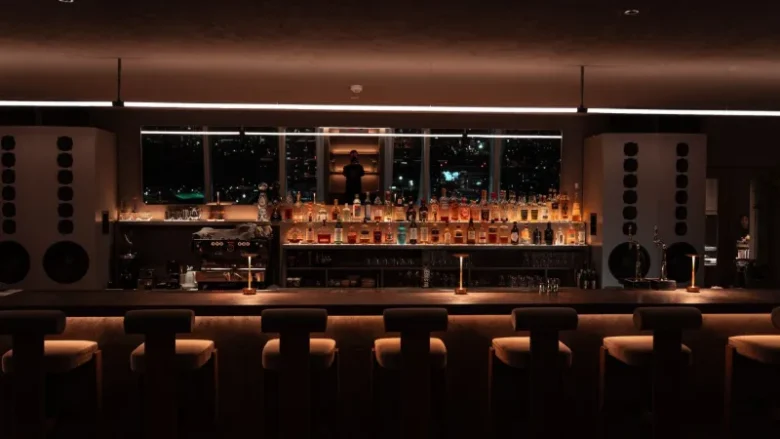
Seating is the first clue. Chairs oriented toward the speakers, rather than toward each other, signal a room built for listening. Clustered sofas and long communal tables suggest a social space. Neither is wrong, but the furniture announces the house philosophy more clearly than any sign on the door.
Light is the second. A kissa tends to keep things dim and even, without flashes or sudden changes that would pull the eye away from the sound. A cocktail lounge may play with light more theatrically, using it to create mood around the bar and the shelves of records.
The visibility of the collection is the third clue, and perhaps the most poetic one. In many rooms, the records are displayed like a library, spines facing the guests. That wall of sleeves is both decoration and promise: it tells you that the music here is chosen, not streamed at random. For anyone interested in contemporary design, these rooms offer a fascinating case study in how materials, light and furniture can serve a sense rather than the eye.
Acoustics remain the invisible layer. Soft surfaces, rugs, curtains and the books or records on the walls all affect how sound behaves in a space. Specific treatments and equipment depend on each room and on the specifications of each manufacturer, so there is no universal recipe. What matters to the listener is the result: clarity, warmth and the feeling that the music is in the room with you rather than coming from somewhere far away.
Where the idea lives in Madrid and Paris
The concept has found its way into European capitals, often in hybrid form. In Madrid, El Willy Hi-Fi, at Calle de Campoamor 12, describes itself as a hi-fi bar, combining vinyl, design, cocktails and high-fidelity sound. It belongs clearly to the social branch of the family, where the drink in your hand matters almost as much as the record on the platter.
Paris offers a different flavor. Sound and Coffee, in the Passage des Panoramas, presents itself as a coffee shop and listening bar with about 15,000 records. The setting is significant: the covered passages of Paris already invite a slower pace, and a café built around a large collection fits that rhythm naturally. It is closer in spirit to the daytime record café than to the strict Tokyo model.
These two examples show that the concept exists in both cities, each adapted to local habits. Neither is a replica of a Japanese room, and neither tries to be. They translate the core idea, shared attention to recorded music, into the vocabulary of European nightlife and café culture.
Anyone hoping to find a vinyl listening bar run with the discipline of Dig will find that the European interpretations tend to soften the rules, which suits many visitors perfectly.
For the curious, a good approach is to visit with the format in mind rather than the label. A venue may call itself one thing and behave like another. Watch how the owner chooses the music, how guests behave, and how loud the room plays. Within a few minutes, you will know which branch of the family you are sitting in.
What these rooms say about how we listen now
The renewed interest in shared listening says something about the moment. Music has never been easier to access. Almost any recording can be summoned in seconds, on a phone, through earbuds, in the background of everything else we do. Abundance has made attention scarce.
The early kissas answered a scarcity of records. The new ones answer a scarcity of focus. That inversion is the most interesting thing about the revival. People are not paying to hear music they cannot find elsewhere; they are paying, in time and in a drink or a coffee, for an environment that helps them listen the way they used to, or the way they never have.
There is also a social dimension that streaming cannot replicate. Hearing a record in a room full of strangers who are paying the same quality of attention creates a quiet bond. Nobody needs to speak for that connection to exist.
It is closer to the experience of a concert hall or a gallery than to that of a bar, and it explains why these spaces attract people who care about art, design and beauty in their wider lives.
The format will keep evolving. Some rooms will lean further toward hospitality, others will return to the austerity of the originals. The best of them will remember where the idea came from: a café in which a carefully chosen record, played from beginning to end, was treated as something worth an hour of your undivided attention.
Following the culture of listening, issue after issue
At NEOMANÍA Magazine we follow these shifts in culture with the same curiosity we bring to design, interiors, art and travel. As an independent, bilingual magazine published in English and Spanish, with offices in Marbella, Madrid and Paris, we cover international events such as Milan’s Salone del Mobile, Maison&Objet Paris, Art Basel and La Biennale di Venezia, and we publish exclusive interviews with designers alongside reportage on contemporary art and projects. Our issues are also available to download, so each story can be read at your own pace, perhaps with a record turning in the background.
If you want more stories that look beyond the surface of trends, with poetry, emotion and a global view, subscribe to read every issue of NEOMANÍA, and if your brand would like to reach this audience through our pages, get in touch with our team to request the media kit and talk about advertising.