It began not with a sketch, but with a press release that sent ripples through the gilded world of luxury. Hermès, the centuries-old bastion of leather craftsmanship, announced a partnership to create a bag from a mushroom.
Not long after, Stella McCartney, a lifelong champion of animal-free fashion, debuted the “Frayme Mylo™,” the world’s first luxury handbag crafted from mycelium, the root-like structure of fungi.
These were not mere product launches; they were declarations. The line between nature and nurture, between the farm and the laboratory, had been irrevocably blurred.
For decades, the fashion industry has been grappling with its original sin: an insatiable appetite for resources that leaves a trail of environmental devastation.
Sustainable fashion, with its focus on organic cotton and recycled plastics, offered a form of penance. But biotech fashion proposes something far more radical: absolution. It asks not just how we can make fashion less bad, but how we can create it in a fundamentally different way.
This is the new frontier where Silicon Valley’s obsession with disruptive tech meets haute couture’s quest for the sublime. Is this lab-grown luxury a fleeting trend for the eco-conscious elite, or the beginning of a genuine industrial revolution that will reshape every closet on Earth?
The science behind the style: what exactly is biotech fashion?
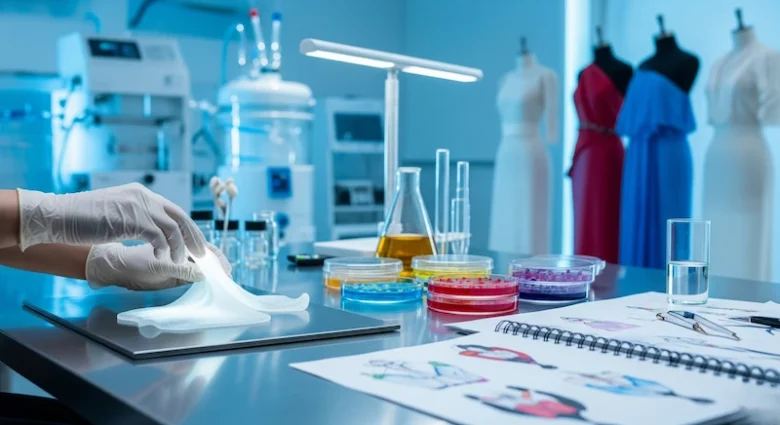
The term “biotech fashion” conjures images of sterile labs and bubbling beakers, a world seemingly removed from the tactile artistry of a design studio.
Yet, the two are becoming increasingly intertwined. At its core, biotech fashion, or bio-couture, is a design discipline that leverages living organisms—or their synthesized biological components—to create textiles, dyes, and even entire garments.
It’s a shift from a resource-extractive model to a generative one. Instead of harvesting a field or skinning an animal, designers are learning to cultivate their materials from the ground up.
From lab to runway: defining bio-couture
Bio-couture is the ultimate expression of bespoke design. It treats biological processes as a new form of craftsmanship. Visionaries like Suzanne Lee, founder of the BioCouture project, were among the first to demonstrate this potential by growing sheets of bacterial cellulose in vats of green tea, later drying and cutting them into primitive garments.
While early experiments were more conceptual than commercial, they proved a powerful point: we could grow clothing just like we grow our food.
This process allows for an unprecedented level of control, enabling the design of a material’s properties—its strength, drape, texture, and breathability—at a molecular level. Genetic code is becoming the new pattern-making tool.
Mycelium, algae, and yeast: the new raw materials
The stars of this new material world are often humble organisms, supercharged by science. Mycelium has emerged as the leading contender in the race to replace leather.
Companies like Bolt Threads and MycoWorks have developed proprietary processes to grow dense mats of fungal fibers that, when finished, yield a material—Mylo™ and Reishi™, respectively—that is virtually indistinguishable from premium animal leather in look and feel.
Meanwhile, yeast is being bioengineered to become a microscopic factory for complex proteins. By inserting a specific DNA sequence—such as that from a spider—into yeast and then feeding it sugar in a fermentation tank, companies can produce vast quantities of silk protein, which is then spun into a high-performance yarn stronger than steel by weight.
Algae, too, are being harnessed not just for creating bioplastics and foams for footwear, but for producing vivid pigments, offering a non-toxic, water-saving alternative to the chemical-heavy dyeing industry.
More than sustainable: the promise of enhanced performance
While sustainability is the primary driver, the promise of biotech extends far beyond just being “eco-friendly.” It’s about creating materials that outperform their traditional counterparts.
Lab-grown spider silk, for example, offers unparalleled strength-to-weight ratios, making it ideal for applications from performance outerwear to medical sutures.
Biomaterials can be engineered to be inherently water-repellent, flame-retardant, or antimicrobial without the need for chemical coatings.
The goal isn’t just to replicate nature, but to augment it, creating a new class of materials that are both environmentally responsible and functionally superior.
The pioneers: key players in the bio-fabrication space
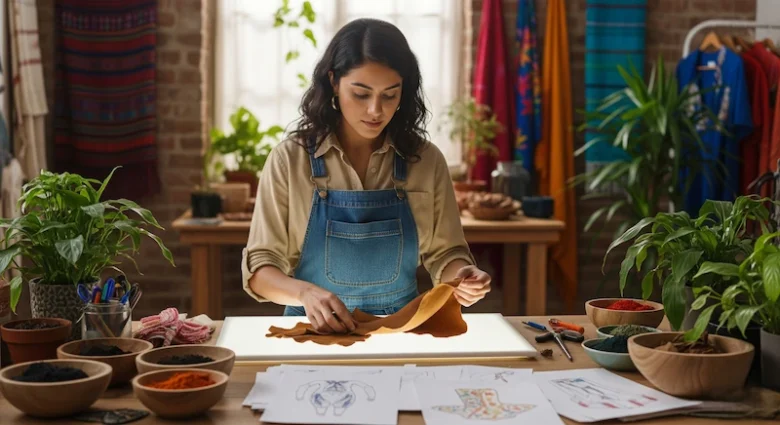
This revolution is being driven by a new ecosystem of scientists, entrepreneurs, and designers who are fluent in the languages of both biology and branding. They are the new materialists, and they are building the textile mills of the 21st century.
Bolt Threads & Mylo™: the startup that seduced luxury brands
Perhaps no company epitomizes the biotech fashion movement more than California-based Bolt Threads. After years of developing lab-grown spider silk (“Microsilk”), they pivoted to a more commercially viable material: mycelium.
Their product, Mylo™, became an instant sensation, not because it was simply a vegan alternative, but because it was a high-quality, luxurious material in its own right.
Their strategy was brilliant: instead of starting at the low end of the market, they formed a consortium with giants like adidas, lululemon, Kering (the parent company of Gucci and Saint Laurent), and Stella McCartney. By aligning with brands synonymous with quality and innovation, they positioned mycelium leather not as a compromise, but as an upgrade.
Modern meadow’s “Zoa”: engineering collagen without the cow
New Jersey’s Modern Meadow is taking a different, though equally ambitious, approach. They are bio-fabricating collagen, the primary protein that makes up animal leather.
Using a proprietary strain of yeast, they produce collagen through fermentation. This protein can then be assembled into a “bio-leather” material called Zoa™, which can be customized in its liquid form before it’s even turned into a solid textile.
This means properties like thickness, color, and texture can be precisely controlled, and the material can be “grown” into specific shapes, drastically reducing the waste associated with cutting hides.
It represents a shift from processing a raw material to programming one from the start.
The visionaries: designers like Iris van Herpen fusing tech and couture
While startups are building the material supply chain, designers are exploring the aesthetic and philosophical implications. Dutch designer Iris van Herpen stands in a class of her own, a true bridge between the worlds of high fashion and speculative science.
Her breathtaking couture creations often incorporate 3D printing, laser cutting, and complex digital modeling, but her inspiration is deeply organic.
Her work visualizes the invisible forces of nature—sound waves, magnetic fields, neural networks. While not always using biomaterials directly, her process and aesthetic embody the biotech spirit: a deep respect for natural systems, augmented and made manifest through cutting-edge technology.
She proves that this new frontier is as much about poetry as it is about proteins.
High-fashion meets high-tech: landmark collaborations
The true test of any new technology is its adoption. In fashion, this means being embraced by the tastemakers who define what’s next.
The recent wave of collaborations between biotech startups and established fashion houses signals a critical turning point, moving these materials from the lab bench to the runway.
Stella McCartney: Championing Cruelty-Free Innovation
Stella McCartney has been the industry’s conscience for over two decades, building a luxury brand on a steadfast commitment to cruelty-free, sustainable practices.
Her early adoption of Mylo™ was a powerful endorsement. By crafting a high-end handbag from mycelium, she sent a clear message to the luxury sector: the future of desirable materials does not have to involve animals.
Her involvement has been more than a simple product collaboration; it has been a form of advocacy, lending her credibility and brand power to legitimize the entire bio-fabrication movement.
Adidas and the quest for the biodegradable sneaker
In the sportswear arena, the race for innovation is relentless. Adidas has been at the forefront, exploring biotech solutions to tackle the massive waste problem generated by the footwear industry.
Their collaboration with Bolt Threads resulted in the “Stan Smith Mylo,” a concept sneaker that replaced the traditional leather upper with mycelium leather.
Even more ambitiously, their “Futurecraft Biofabric” concept explored a shoe made entirely from lab-grown spider silk, a material designed to be 100% biodegradable.
These projects prove that biotech applications extend beyond luxury, offering scalable solutions for mass-market products where performance and sustainability are paramount.
Beyond apparel: the untapped potential in accessories and footwear
While dresses and jackets capture the imagination, the most immediate impact of biotech materials may be in accessories. The luxury handbag and high-end sneaker markets are ideal entry points.
These are products where consumers are willing to pay a premium for innovation and a compelling story. They are also items where the performance characteristics of a single material are critical.
Companies like VitroLabs, which is cultivating lab-grown leather from animal cell lines, are targeting this space directly. By proving the viability of biomaterials in these demanding product categories, they pave the way for broader adoption in ready-to-wear apparel.
The unseen hurdles: can biotech scale beyond the hype?
For all the optimistic press releases and futuristic prototypes, the path from lab to mass market is fraught with challenges. The vision is compelling, but the reality is complex, involving immense technical, economic, and psychological hurdles.
The cost factor: from millions in funding to an affordable T-Shirt
The single biggest obstacle is scale, and by extension, cost. Fermentation tanks, sterile lab environments, and teams of PhD-level scientists require enormous capital investment.
While venture capital has poured hundreds of millions into leading startups, the cost per square foot of these new materials remains significantly higher than their traditional counterparts.
The challenge is moving from creating small, bespoke quantities for a concept car or a runway piece to producing millions of yards of fabric at a price point that can compete with cotton, polyester, or even conventional leather.
This will require massive breakthroughs in bioprocess engineering to improve yields and reduce production time.
The green debate: are lab-grown materials truly sustainable?
The sustainability narrative is powerful, but it’s not without its critics. Questions are being raised about the true lifecycle impact of these materials.
Growing organisms in a lab requires significant energy to power bioreactors and maintain sterile conditions. The “feedstock” for fermentation—often sugar derived from corn or sugar cane—has its own agricultural footprint.
A comprehensive, transparent lifecycle analysis (LCA) is needed for each new material to compare its total environmental impact (from energy use to water consumption to end-of-life biodegradability) against conventional options. The “green” label must be earned, not just claimed.
Consumer psychology: the challenge of marketing “lab-grown” as natural
Perhaps the most subtle hurdle is psychological. How do you market something as both technologically advanced and naturally derived?
The word “lab-grown” can evoke feelings of the artificial or the unnatural, while words like “vegan” can sometimes carry connotations of being a less-durable substitute.
Brands face a delicate balancing act. They must educate consumers, framing these materials not as synthetics, but as a purer, more controlled form of nature.
The narrative must shift from “fake leather” to “real mycelium,” celebrating the material for what it is, not just for what it replaces.
Your future wardrobe: what biotech means for you
Assuming these hurdles can be overcome, the long-term vision is nothing short of transformative. This movement will change not only how our clothes are made, but what they can do and what we do with them when they are no longer wanted.
Self-healing, color-changing: clothes that do more
The next generation of biomaterials will be embedded with functionality. Imagine a jacket woven with living microbes that can repair small tears by producing a natural adhesive.
Picture a dress with patterns that change color in response to sunlight or temperature, powered by chromogenic bacteria. Or performance wear that incorporates bioluminescent proteins for nighttime visibility, eliminating the need for reflective tapes.
This is the promise of responsive, “living” textiles that adapt to us and our environment.
A truly circular closet: the end of landfill fashion
Biotech offers the clearest path to a truly circular fashion economy. Materials can be designed for disassembly from the outset. A garment could be made from a single biomaterial that is fully compostable, returning to the earth as nutrients for new life.
Alternatively, the biological components could be broken down by enzymes and re-formed into new textiles, creating a closed-loop system with zero waste. This would spell the end of landfill fashion as we know it.
The coming reality of hyper-personalized, grown-to-order clothing
The ultimate expression of this paradigm shift is hyper-personalization. Instead of buying clothes off the rack in standardized sizes, you could have garments “grown” to your exact 3D body scan.
The material itself could be customized, with different properties—more breathability here, more strength there—integrated into a single, seamless piece of fabric.
This made-to-order model would eliminate overproduction and waste, creating a system where clothing is only made when it has a specific owner waiting.
Biotech fashion has officially graduated from a fringe scientific experiment to a serious creative and commercial endeavor. It is a compelling synthesis of our age’s defining forces: the urgent need for sustainability, the relentless drive of technological innovation, and our timeless desire for beauty and self-expression.
The journey ahead is long, and the challenges of scale and perception are real. But the vision—of a world where our clothes are cultivated, not extracted; where they are alive with function, not just inert fabric; and where they return to the earth as gracefully as they were created—is no longer the stuff of science fiction. It is the blueprint for the future, being woven, programmed, and grown in laboratories today.
Being woven, programmed, and grown in laboratories today. Don’t just watch this future unfold. Understand the science and design behind it with Neomanía Magazine. Subscribe.
[mailerlite_form form_id=3]