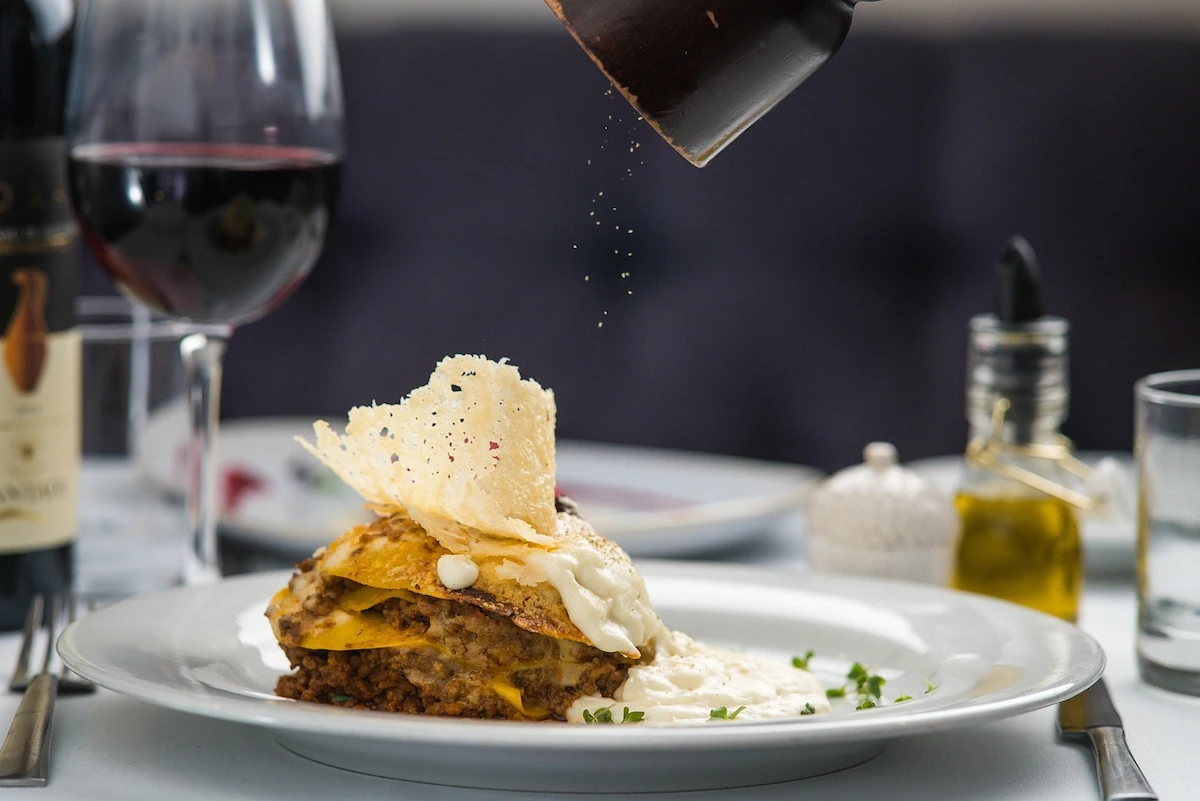
We often think of food as a purely physical experience. The crunch of a fresh apple, the warmth of a soup, the tangy zest of a lemon.
But what if I told you that the most important organ for taste isn’t your tongue, but your brain? Our perception of flavor is a complex symphony conducted in our minds, influenced by sight, sound, smell, and even memory.
This is where a fascinating new world opens up, one where virtual gastronomy satisfies real hunger for new experiences, if not for calories.
This isn’t about replacing your favorite restaurant with a headset. Instead, it’s about expanding the very definition of a meal. It’s a blend of science, technology, and culinary art that explores how digital tools can create, enhance, or completely transform our eating experiences.
By tapping into how our brains process sensory information, virtual gastronomy is creating some truly mind-bending possibilities that feel straight out of the future.
What exactly is virtual gastronomy?
At its core, virtual gastronomy uses technology like Augmented Reality (AR) and Virtual Reality (VR) to manipulate our perception of food and drink.
It’s built on decades of research into how our senses collaborate to form what we call “flavor.” The goal isn’t just to show you a picture of a steak; it’s to make you feel the sizzle, smell the aroma, and experience the ambiance of a five-star steakhouse, all while you might be eating a simple piece of tofu.
This works because our brains are surprisingly easy to trick. When what we see, hear, and smell aligns, our brain fills in the gaps. If all your senses are telling you you’re eating a rich chocolate cake, your brain might just believe it, triggering a genuine sense of satisfaction and pleasure.
This powerful idea is supported by two key scientific fields: neurogastronomy and gastrophysics.
The science behind the sensation: Meet neurogastronomy and gastrophysics
To really get what makes virtual gastronomy work, we have to look at the science that powers it. This isn’t just tech wizardry; it’s a deep understanding of human psychology and physiology.
The concepts of neurogastronomy and gastrophysics are the foundation for every immersive experience in this new culinary world.
Neurogastronomy: Your brain on food
Neurogastronomy is the study of how our brain creates the sensation of flavor. It reveals that taste—the signals from our taste buds for sweet, sour, salty, bitter, and umami—is only a small part of the story. Flavor is actually a fusion of taste, smell, touch (texture and temperature), sight, and even sound.
Think about it:
- Sight: A bright red strawberry looks sweeter and juicier than a pale one. Food presented beautifully on a plate often seems to taste better.
- Smell: Up to 80% of what we perceive as flavor comes from our sense of smell. That’s why food tastes so bland when you have a cold.
- Sound: The sizzle of fajitas or the crunch of a potato chip enhances the experience. Researchers have even found that people perceive chips as fresher and crispier when the crunching sound is amplified.
Neurogastronomy shows that by controlling these sensory inputs, we can influence the brain’s perception of flavor. This is the key that virtual gastronomy turns to unlock its potential.
Gastrophysics: The environment on your plate
If neurogastronomy is about the brain, gastrophysics is about everything outside of it—the environment, the plate, the cutlery, the lighting. Coined by Professor Charles Spence of Oxford University, this field explores how external factors subtly alter our eating experience.
Here are some fascinating findings from the world of gastrophysics:
- Yogurt eaten with a heavy spoon is perceived as creamier and more expensive.
- Mousse served on a white plate can taste sweeter than the exact same mousse served on a black plate.
- Drinking from a blue glass can make water seem more refreshing.
When you combine the brain-focused insights of neurogastronomy with the environmental tweaks of gastrophysics, you get a powerful toolkit. Technology like AR and VR becomes the ultimate instrument for controlling every single one of these variables, creating a perfectly curated immersive experience for the diner.
The tools of the trade: AR and VR in the kitchen
So, how does this all come to life? The magic happens through Augmented and Virtual Reality. While they might sound similar, they play very different roles in crafting these new culinary adventures. Both are about merging the digital and physical worlds, but they do it in distinct ways.
Augmented Reality (AR): Enhancing the world on your table
Augmented Reality (AR) doesn’t take you to a new world; it brings the digital world into ours. Using your phone or a pair of smart glasses, AR overlays graphics, sounds, and information onto your real-world surroundings. In a restaurant setting, this has some amazing applications.
Imagine pointing your phone at a menu, and instead of just text, a 3D model of the dish appears on your table, steaming and glistening. Or a virtual chef could pop up to tell you the story behind the ingredients.
AR enhances reality, adding layers of information and entertainment to a traditional meal. It can make dining more interactive, educational, and fun without removing you from the social atmosphere of being with others.
Virtual Reality (VR): Crafting entirely new dining worlds
Virtual Reality (VR), on the other hand, is all about full immersion. You put on a headset and are transported to a completely different place. The restaurant disappears, and suddenly you’re eating on a beach in Thailand, a space station orbiting Earth, or a fantasy forest. In this controlled environment, every single sensory input can be managed.
A VR experience could pair the taste of a briny oyster with the virtual sound of crashing waves and the salty smell of the ocean.
This total control allows creators to design multi-sensory journeys where the food is just one component of a larger narrative. This is where virtual gastronomy can truly explore its potential to create emotional, memorable experiences that go far beyond just eating.
Can virtual gastronomy actually satisfy real hunger?
This brings us to the big question. It’s an exciting concept, but can a digital experience truly satisfy a physical need? The answer is nuanced. Physically, no.
Your body needs calories, vitamins, and minerals to function, and no VR headset can provide that. You still need to eat actual food.
However, from a psychological standpoint, the answer is a lot more interesting. Hunger isn’t just an empty stomach; it’s also a craving, a desire for a specific sensory experience.
This is where virtual gastronomy shines. It can satisfy the psychological side of hunger by delivering the sights, sounds, and smells our brain associates with satisfaction.
Studies have shown that the perceived portion size can affect how full people feel. If AR can make a small, healthy portion of food look larger and more decadent, it could potentially help with portion control.
Similarly, for people with severe dietary restrictions or allergies, VR could allow them to safely experience the essence of foods they can’t eat.
Imagine someone with a dairy allergy getting to “experience” the creaminess of ice cream through a carefully designed combination of a dairy-free sorbet and a powerful virtual simulation. The potential for therapeutic and quality-of-life applications is enormous.
Pioneering the future: Real-world examples of virtual dining
This isn’t just theory; innovators around the world are already experimenting with these ideas.
- Project Nourished: A California-based lab that is one of the pioneers in this space. They use a combination of VR, aromatic diffusers, and 3D-printed food (made from nutrient-rich, low-calorie substances like agar) to replicate all sorts of eating experiences, from steak to apple pie.
- Sublimotion (Ibiza, Spain): Often called the most expensive restaurant in the world, Sublimotion uses a “hybrid reality” room where the walls are screens, and VR headsets are part of the multi-course meal. Each dish is a chapter in a story, with the environment changing to match the food.
- Aerobanquets RMX: An art installation and dining experience by artist Mattia Casalegno. Diners wear VR headsets and are served a series of uniquely shaped bites. The virtual world they see is designed to enhance or alter the flavor of what they are eating, creating a conversation between the real and the virtual.
These projects show that the answer to whether virtual gastronomy satisfies real hunger is evolving. It satisfies our hunger for novelty, for art, for connection, and for experiences that push the boundaries of what we thought was possible. It’s a new form of culinary expression.
What’s next for the digital plate?
As technology like haptic feedback (the sense of touch) and advanced scent diffusion becomes more sophisticated and accessible, these experiences will only get more realistic and powerful.
We might see AR-enhanced cookbooks that guide you step-by-step in your own kitchen or VR training programs for aspiring chefs to practice complex techniques without wasting ingredients.
The journey of virtual gastronomy is just beginning. It challenges our very perception of what food is and what a meal can be. It’s a testament to human creativity, proving that our appetite for innovation is just as strong as our appetite for a good meal.
It’s not about leaving real food behind, but about adding incredible new layers to one of humanity’s oldest and most important rituals.
Exploring the intersection of technology and culture is what we live for. The way these new ideas are reshaping our most fundamental experiences, like eating, is a sign of a vibrant and creative future. It’s a future we’re excited to discover alongside you.
If exploring the edge of culture, design, and lifestyle excites you, then you’ll feel right at home with us. Subscribe to Neomania Magazine and never miss a beat on the trends that are shaping our world.