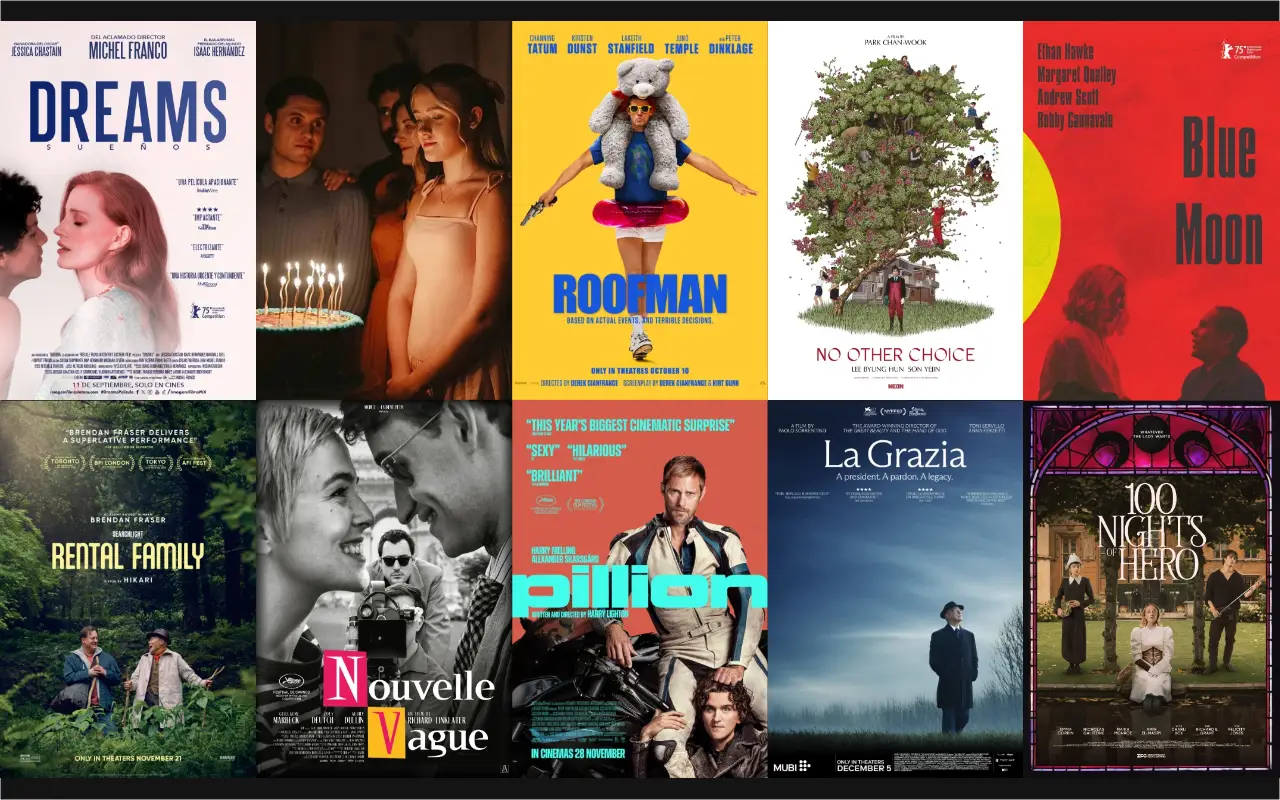
We arrive at the third and final part of this selection dedicated to the thirty most compelling films showcased at Cannes, Venice and London in 2025. If the first instalment whetted the appetite and the second confirmed the artistic strength of the year, this last chapter connects both to deliver a fitting conclusion: a finale filled with risk, desire, tragedy, satire, elegance and sheer creative force.
In this final section, we explore films 21 to 30, a collection that blends pure auteur cinema, social critique, stories of power and inequality, emotional experimentation, historical reconstruction and a closing piece brimming with imagination and wit.
A perfect farewell to a trilogy that celebrates the finest in contemporary filmmaking and invites readers to continue exploring, questioning and enjoying the art that defines our time.
Dreams

Dreams traces the fault lines between love and power with unsettling precision. Jessica Chastain plays a wealthy American woman who starts a foundation in Mexico, only to find herself drawn to a young ballet dancer whose talent seems to crystallise everything she wants to believe about hope, beauty, and renewal.
Chastain bares more than she ever has before — body and soul. The love scenes are daring, yet the real exposure lies in how her character reveals her contradictions: generous but self-serving, empathetic yet unwilling to risk her comfort. She falls for him deeply, but on her terms. She wants him to stay in Mexico, where she can visit, support, and admire him without consequence — love that never threatens her world.
When the dancer, restless and idealistic, tries to enter America illegally to be with her, the film’s title folds in on itself. His dream becomes her dread. Despite her power, she does nothing to help. The gulf between privilege and yearning becomes unbearable.
Is she bound by her family’s expectations, or simply too accustomed to a love that doesn’t cost her anything real? And why does he still chase the American dream, when it’s that very dream that keeps him outside?
Dreams lingers long after the credits — a haunting dissection of love wrapped in illusion. It’s about what happens when desire meets hierarchy, when the giver of opportunity becomes the keeper of distance. The question isn’t whether they love each other — it’s whether they ever could.
No Other Choice

It’s actually refreshing to see Lee Byung-hun doing something completely different from Squid Game. Here he’s not some slick or menacing figure — just a normal man, family man, who seems to have it all together until life throws him off track. He loses his steady job after decades, and suddenly that perfect life starts to crumble.
What comes next feels too real — the fight to get another job, same line, same pride, same struggle — only now it’s brutal. It’s not interviews anymore, it’s a war zone.
Every other man becomes competition, and to survive you have to almost eliminate them. Literally.
The film turns that madness into a black comedy — the kind of Korean humour that sits between tragedy and sarcasm. You laugh, but it’s uneasy, because it’s close to home. It’s about survival, but also about how easily we can lose our humanity chasing it.
It’s sharp, funny, and painful all at once. Very Korean, very commercial, and somehow still personal.
Retreat

There’s something quietly disturbing about Retreat — it starts like a sanctuary and ends like a sermon gone wrong. A shelter built for the disabled, the deaf, the forgotten ones. It feels like home at first, a refuge for those who’ve been rejected, a patchwork family stitched together from pain.
But slowly, the warmth turns heavy. What looked like care becomes control — gentle voices become commands. They’re not living; they’re being managed. Sheep in a field they thought was freedom. Then comes the newcomer, full of good intentions, falling right into the same spell — believing in the comfort that’s built on manipulation.
The film plays almost like a silent piece. Sound comes and goes, echoing the characters’ partial hearing — sometimes there, sometimes swallowed. That choice makes it unsettling, like you’re never sure whether to listen or to just feel.
By the end, it’s all tragedy — a reminder of how innocence can be weaponised, how kindness can be used to cage. One of their own finally sees it for what it is, but truth here isn’t liberation. It’s just clarity before collapse.
A haunting film — sad, tragic.
Roofman
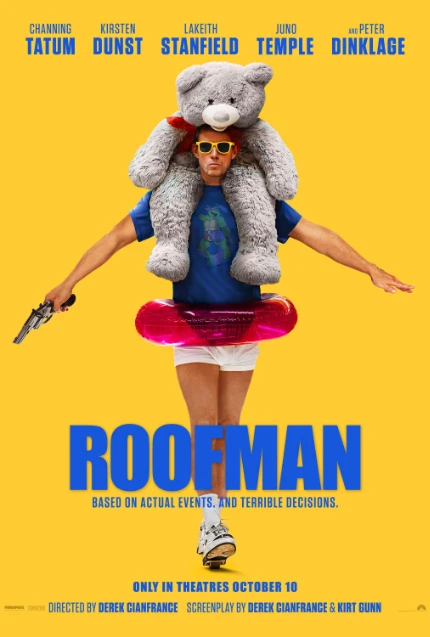
A typical American commercial film with its built-in moral lesson, Roofman is “based on a true story,” but what lingers isn’t the usual Hollywood redemption arc. It’s the unease.
The film follows a former military serviceman — a husband, a father of three — who can’t seem to hold his life together after service. With no job and no clear place in the world, he turns to robbery, not out of greed but to provide for his family.
He’s smart, even careful — escapes once, tries again with a new love and her children, convinced he can start over after one last heist. But his brilliance becomes his trap.
A good criminal, the film calls him. But what does that mean? Can someone driven by necessity, not malice, really be a criminal?
You end up feeling both for him and against him. He’s guilty, yes, but human first. The story makes you question whether crime is always about right and wrong — or sometimes about who gets cornered, and who gets away.
Blue Moon
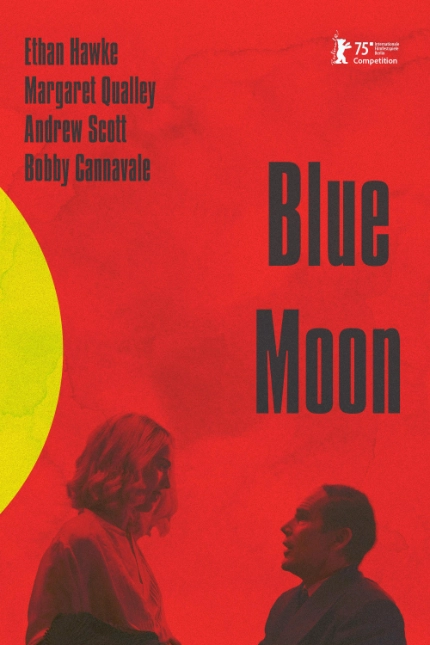
Richard Linklater brings us Ethan Hawke as we’ve never seen him before — his portrayal of Larry is so layered, so lived-in, it’s worthy of an Oscar. Opposite him, the initially unrecognizable Margaret Qualley is magnetic, oozing charm.
Screenwriter Robert Kaplow’s sharp, lyrical script makes Blue Moon gripping even if you only listened to the dialogue alone — every line lands like music.
A delicious film for writers, and for writers-to-be.
Rental Family

Japanese culture, respectful, disciplined, and reserved as it is, holds a quiet fascination. Yet the idea of renting a relationship—whether to apologise or to help a child get into a school that requires a father—feels strikingly contradictory, doesn’t it?
Brendan Fraser plays a once-successful actor living in Japan, an endearing figure whose warmth and empathy often go beyond what’s expected. Through him, the film explores how human connection can be both genuine and performed, raising questions about what family and friendship really mean.
With moments of gentle humour and emotional depth, Rental Family becomes a touching reflection on empathy, belonging, and the fragile balance between authenticity and appearance. A quietly funny, feel-good film that lingers longer than you expect.
Nouvelle Vague
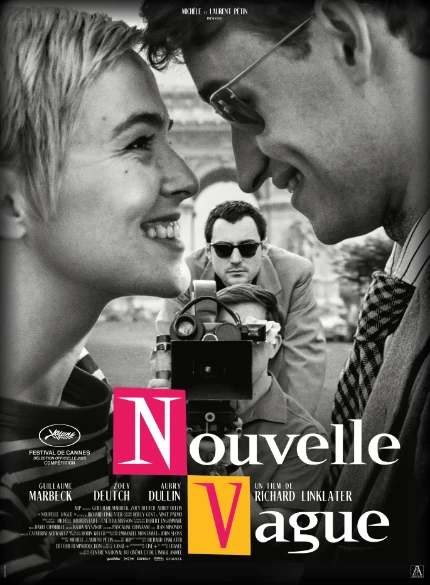
Richard Linklater takes us back to the revolutionary era of French cinema, led by the enigmatic Jean-Luc Godard, along with a remarkable group of cinephiles and film greats—from François Truffaut to Roberto Rossellini, Jean Cocteau, and Jean-Paul Belmondo—who shaped the movement.
Almost like a satire, the film moves from scene to scene—through theatres, metros, meals, drinks, and endless cigarettes—capturing the rhythms of life and the peculiar charm of the time.
With humour and style, the film impeccably recreates its era: every street, every car, every costume feels authentic, as if we’ve stepped into the Paris of Godard’s world.
The story hints at how Jean-Luc Godard may—or may not—have actually filmed, but the truth matters less than the evocation. It’s a film that immerses you in the spirit of an age, playful, precise, and utterly evocative.
Pillion
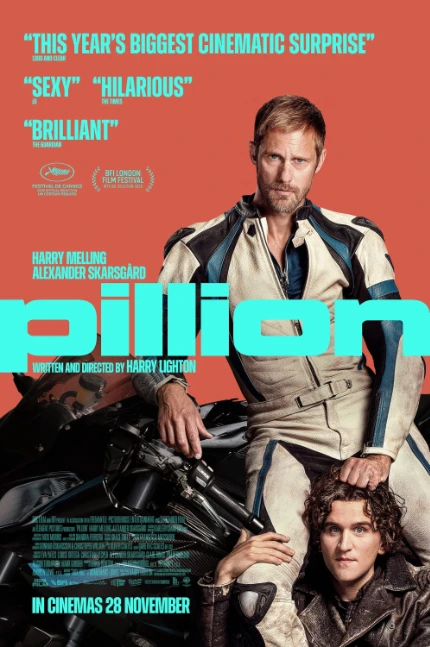
A film that delves into the complexities of dominance and submission, exploring whether such dynamics stem from a desire for control, a manifestation of past trauma, or a genuine expression of love.
The film poses profound questions: Is one truly open to submission, or is it a facade? Is it a fetish, a kink, or a way to love unconditionally? What does it mean to be a Dom? To control, command, and possess someone—does it arise from psychological issues, perhaps rooted in childhood trauma, or is it a kink undertaken without weakness, where falling in love becomes a vulnerability?
Both lead actors, Harry Melling and Alexander Skarsgård, portrayed their characters to perfection. Melling’s portrayal of Colin captures the essence of a man discovering his place in a world of dominance and submission, while Skarsgård’s Ray embodies the enigmatic and commanding presence of a Dom.
Pillion invites viewers to open their minds to a different level of relationship dynamics, challenging conventional perceptions and exploring the depths of human connection.
La Grazia
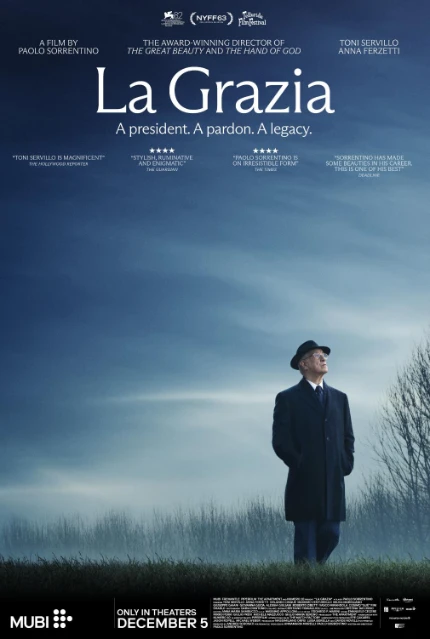
In La Grazia, Sorrentino reminds us what makes Italian cinema so distinct — that effortless marriage of art and absurdity, philosophy and play. It’s a film where beauty never arrives alone; it comes hand in hand with irony, melancholy, and wit.
There’s Coco, the art critic, whose dry humour slices through the film’s grandeur with delicious precision — a reminder that even in the temple of art, someone must laugh. Then the Pope, uttering lines that sound half divine revelation, half existential sigh. And between them, the President — not just a political figure, but a symbol, standing motionless before a projection of a modern dance recital pulsing with electro music.
And then that moment — the astronaut, suspended in silence, a single tear breaking free and floating in the void. It’s pure Sorrentino: grace in isolation, absurdity in awe.
Like Fellini before him, he turns life’s chaos into poetry. La Grazia isn’t just watched — it’s felt, argued with, and remembered.
One Hundred Nights of Hero
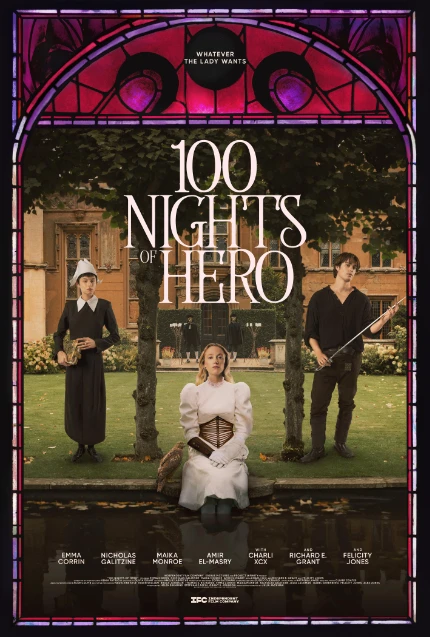
Closing the London Film Festival Gala with One Hundred Nights of Hero feels wonderfully fitting — a distinctly British production that captures the essence of the festival: bold, imaginative, and steeped in storytelling tradition.
Told like a darkly whimsical fairy tale, the film transports us to a world where women are forbidden to read or learn. Within this stark landscape, Hero rises — challenging the patriarchal order with quiet intelligence, courage, and a touch of mischief.
Woven through the narrative is that unmistakable British humour — dry, ironic, and deeply human — softening the film’s sharper edges without ever dulling its message.
Stylish in tone and rich in spirit, One Hundred Nights of Hero stands as both fable and satire, a celebration of the power of stories to upend injustice and reclaim imagination.