A piece of jewelry is never just an object. It’s a repository of memory, a marker of moments, a silent communicator of who we are or who we aspire to be.
It rests against our skin, absorbing the warmth of our bodies and the energy of our days. We choose these pieces to celebrate love, to commemorate achievement, or simply to feel a connection to something beautiful.
But for a new generation of creators and consumers, the story of a piece begins long before it’s clasped around a neck or slipped onto a finger. It begins in the earth, in the workshop, and in the hands of the people who bring it to life.
The conversation is shifting. The allure of a brilliant stone or the gleam of polished metal is no longer enough. We are beginning to ask more profound questions.
Where did this come from? Who was affected by its journey to me? What is its true cost, not just in dollars, but in its impact on the planet and its people?
This inquiry is the heart of a quiet but powerful revolution in the world of adornment. It’s a movement away from opaque supply chains and thoughtless consumption toward a new definition of luxury—one founded on transparency, intention, and a deep respect for both material and maker.
This isn’t about sacrificing beauty for virtue. It’s about discovering that the two are inextricably linked. A piece of jewelry that is crafted with care for the environment and fairness for its artisans carries a different kind of weight, a resonance that mass-produced trinkets can never possess.
It holds a story of empowerment, of restoration, and of conscious creation. This is the landscape we are exploring: a world where adornment is not just decorative, but declarative. It’s a statement of values, a wearable piece of a larger, more thoughtful narrative.
The most beautiful things, we are learning, are those that allow us to feel beautiful inside and out.
The soul of the material: beyond the four Cs
For decades, the value of a gemstone was distilled into a simple, marketable quartet: cut, color, clarity, and carat. This framework provided a universal language for quality, but it omitted the most crucial element: character.
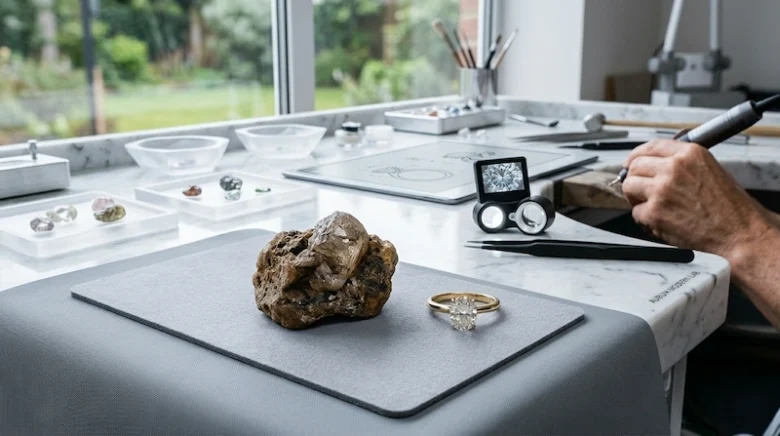
The character of a material isn’t found under a jeweler’s loupe; it’s embedded in its origin story. The shift toward conscious sourcing is a recognition that the provenance of a stone or the history of a metal is as integral to its beauty as its physical properties. It’s a deeper appraisal that asks not just “what is it?” but “how did it come to be?”
This new paradigm challenges us to look past the surface sparkle and engage with the complex realities of the mining industry. It’s an invitation to appreciate materials not just for their aesthetic appeal, but for their ability to be agents of positive change.
Whether it’s a diamond grown in a lab with renewable energy or gold reclaimed from forgotten treasures, the materials themselves are becoming storytellers, their very substance a testament to a more considered approach to luxury.
The hidden story in every gemstone
The journey of a colored gemstone from a mine to a market is often shrouded in mystery. Unlike diamonds, which have faced intense scrutiny leading to systems like the Kimberley Process (itself a flawed but important first step), the sourcing of sapphires, rubies, emeralds, and other precious stones has historically been far less regulated.
This opacity can hide a multitude of sins: environmental degradation from irresponsible mining practices, hazardous working conditions for miners, and supply chains that funnel profits away from the local communities where the stones are found.
A mindfully sourced gemstone, however, tells a different tale. It might come from a small-scale, artisanal mine where workers are paid a fair wage and given protective equipment.
The mining operation itself may prioritize land reclamation, ensuring the local ecosystem is restored after the stones have been extracted.
Brands at the forefront of this movement work directly with these mines or with trusted dealers who can provide a clear chain of custody, often tracking a single stone from the moment it is pulled from the earth.
They can tell you not just the country of origin, but sometimes the specific mine. This radical transparency transforms a beautiful object into a beautiful story.
It’s the difference between owning a ruby and owning a piece of the Mogok valley in Myanmar, knowing it was sourced in a way that supports the community that has cherished those stones for centuries.
Reclaimed metals: a new definition of precious
Gold is elemental, eternal. The gold in a forgotten earring or a dated bracelet is the same gold that coursed through ancient civilizations.
It doesn’t degrade or lose its purity. This simple fact is the foundation of one of the most significant shifts in sustainable jewelry: the move toward using reclaimed and recycled metals.
Mining new gold is an incredibly destructive process. It can involve displacing massive amounts of earth, using toxic chemicals like cyanide and mercury to separate the metal from the ore, and generating enormous carbon emissions. According to reports, producing the gold for a single ring can generate over 20 tons of mine waste.
Using recycled metal completely sidesteps this environmental toll. Reclaimed gold, silver, and platinum are sourced from existing jewelry, industrial materials, and electronic waste.
These metals are gathered, melted down, and refined to a purity that is identical to that of newly mined metals. There is absolutely no difference in quality, color, or composition. What is different is the impact.
By choosing a piece made from recycled metal, a consumer participates in a circular economy, reducing the demand for new mining and mitigating its devastating effects on landscapes and communities. It reframes the idea of “precious.”
The value lies not in its newness, but in its continuity—a tangible link to the past, repurposed with care for the future. This approach turns what would be waste into a resource, proving that true luxury is not about extraction, but about intelligent and beautiful preservation.
Lab-grown diamonds: science meets conscience
Perhaps no development has been more disruptive—or more debated—in the jewelry world than the rise of lab-grown diamonds.
Created in highly controlled environments that replicate the intense heat and pressure that form diamonds deep within the Earth, these stones are physically, chemically, and optically identical to their mined counterparts.
Even a trained gemologist cannot tell the difference without specialized equipment. The only distinction is their origin: one is a product of geology and time, the other of human ingenuity and technology.
The ethical argument for lab-grown diamonds is compelling. They offer a clear and verifiable alternative to the often-murky world of diamond mining, completely eliminating the risk of a stone being a “conflict diamond.”
The supply chain is short, transparent, and controlled. However, the environmental conversation is more nuanced. The process of creating diamonds in a lab is energy-intensive.
Early operations relied heavily on fossil fuels, leading to a significant carbon footprint. Today, the industry is at a turning point. Leading producers are now using renewable energy sources like solar and hydropower to power their labs, creating diamonds that are not only conflict-free but also have a dramatically lower carbon impact.
These producers are often certified as carbon-neutral, offering a truly compelling alternative for the eco-conscious consumer.
The debate over whether a lab-grown diamond is as “romantic” or “special” as a mined one is slowly fading, replaced by a more modern appreciation for a stone that represents progress, innovation, and a conscious choice to minimize harm.
The artisan’s hand: craftsmanship as a statement
In an era dominated by automation and mass production, the touch of a human hand has become the ultimate luxury. The slight, perfect imperfections of a hand-forged ring or the intricate detail of a hand-engraved pendant tell a story of time, skill, and dedication.
This focus on craftsmanship is a vital component of the conscious jewelry movement. It’s a deliberate turn away from the ephemeral trends of fast fashion and toward pieces that are made to last, both in their physical construction and their timeless design.
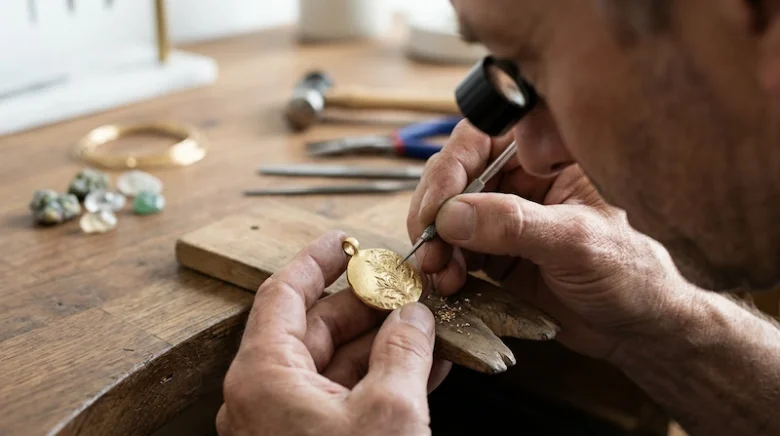
Choosing a piece from an independent artisan or a small studio is an investment in human creativity. It supports a lineage of skills passed down through generations and ensures that these beautiful traditions continue to thrive.
This approach also fosters a more intimate connection between the creator, the object, and the wearer. You are not just buying a product; you are acquiring a small piece of an artist’s vision and passion. This connection adds a layer of meaning that can never be replicated by a factory assembly line.
From mass production to meaningful creation
The jewelry market, like fashion, has its own version of “fast fashion.” Low-cost, trend-driven pieces are produced quickly and cheaply, often with plated base metals and imitation stones.
The environmental cost of this model is high, from the pollution generated by plating factories to the fact that these items are often treated as disposable, ending up in landfills after a few wears.
The human cost can be even higher, with production often outsourced to factories with poor labor practices and unsafe working conditions.
Meaningful creation stands in direct opposition to this model. It is a philosophy of “slow jewelry.” Designers take time to develop their concepts, to source their materials responsibly, and to craft each piece with meticulous attention to detail.
This process is inherently more sustainable. The focus is on quality over quantity, creating heirlooms for the future rather than accessories for a single season.
When you purchase from a designer who operates this way, you are often able to learn their story, understand their inspiration, and see the passion they pour into their work.
This narrative becomes part of the jewelry itself. The piece is no longer an anonymous commodity but a collaboration of sorts—a tangible expression of the artist’s world, now a part of yours.
It’s a powerful reminder that the way something is made is just as important as what it is made of.
The revival of ancient techniques
As designers seek to create pieces with more depth and soul, many are looking to the past, reviving ancient and time-honored metalworking techniques that have been pushed aside by modern manufacturing.
These methods require immense skill, patience, and a deep understanding of the materials. They are, by their nature, slow and deliberate, and the result is a texture and character that cannot be replicated by a machine.
This revival is not about nostalgia; it’s about reclaiming a more intimate and artful way of working with precious materials.
Some of these rediscovered arts include:
- Granulation: An ancient technique, perfected by the Etruscans, where tiny metal spheres (granules) are fused onto a metal surface without solder, creating intricate, shimmering patterns. It requires a master’s control over heat and a remarkably steady hand.
- Filigree: This delicate art form involves twisting thin threads of metal into elaborate lace-like designs. The open, airy patterns are both strong and ethereal, showcasing the artist’s precision and design sensibility.
- Hand engraving: Using a small, sharp tool called a burin, an artisan carves designs directly into the metal surface. Unlike machine engraving, which can feel flat and uniform, hand engraving has a depth, a fluidity, and a human touch that is unmistakable.
- Repoussé and chasing: A sculptural technique where a sheet of metal is hammered from the back (repoussé) to create a raised design on the front, which is then refined from the front (chasing). This method allows for the creation of complex, three-dimensional forms with incredible detail.
By incorporating these techniques, jewelers are not just making beautiful objects; they are acting as custodians of cultural heritage. They are keeping alive skills that connect us to a long history of human creativity, infusing their modern designs with a sense of history and timelessness.
Fairmined and Fairtrade: empowering communities
For the conscious consumer, certifications can provide a vital assurance that the materials in their jewelry have been sourced responsibly. Two of the most important standards in the precious metals industry are Fairmined and Fairtrade.
Both are independent, third-party certification systems designed to support small-scale and artisanal mining communities, ensuring they receive a fair price, operate under safe working conditions, and use environmentally sound practices. This is a key part of the movement for ethical and traceable jewelry.
When you buy a piece made with Fairmined or Fairtrade gold, you are directly contributing to the well-being of these communities.
The system guarantees a minimum price for their gold, protecting them from the volatility of the market. In addition, an extra premium is paid directly to the mining organization, which the miners themselves vote on how to spend.
This money is often invested in community projects like building schools, improving healthcare facilities, or funding environmental restoration efforts.
These certifications transform the act of buying jewelry from a simple commercial transaction into an act of social and economic empowerment.
It provides a direct, verifiable link between the consumer and the miner, creating a relationship built on dignity and mutual respect. It’s a powerful demonstration of how a luxury good can be a force for positive, grassroots change.
Wearing your values: the modern heirloom
The final chapter in the story of a piece of jewelry is written by the person who wears it. Today, that story is increasingly about personal identity and the expression of one’s values.
A piece of ethical and traceable jewelry is more than an accessory; it is a talisman of your beliefs. It is a quiet but constant statement about the kind of world you want to live in—one that values people over profit, sustainability over disposability, and authenticity over artifice.
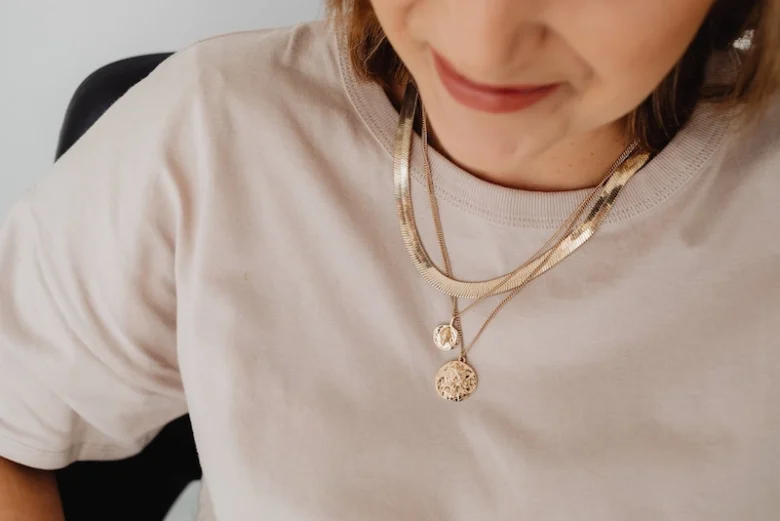
This shift transforms the very idea of an heirloom. In the past, an heirloom’s value was primarily in its monetary worth or its sentimental connection to a relative.
The modern heirloom carries these qualities, but it also carries a legacy of conscious choice. It is a piece that can be passed down not only with the story of the person who wore it, but also with the story of its own virtuous creation.
It’s a legacy of beauty and of principle, a testament to the idea that our choices, no matter how small, can add up to create a more beautiful and equitable world.
Jewelry as a conversation starter
When someone admires a unique, beautifully crafted piece of jewelry, the natural follow-up is, “Where did you get it?” This simple question becomes an opportunity.
It’s a chance to share the story of the independent designer who made it, to talk about the importance of recycled metals, or to explain the positive impact of Fairmined gold.
The piece becomes a catalyst for a conversation about things that matter. It can be a gentle form of activism, a way to introduce friends, family, and even strangers to the ideas of conscious consumerism and the stories behind the products we buy.
Wearing your values in this way is a personal and powerful form of self-expression. It signals that you are someone who thinks deeply about your choices and your impact on the world.
It aligns your outward aesthetic with your internal principles. In a world saturated with fleeting trends and disposable goods, a piece of jewelry with a story and a purpose stands out. It has a gravity and a presence that goes far beyond its physical beauty.
It becomes a part of your identity, a subtle badge that says, “I care about how this was made.” This is the new status symbol—not the size of the stone, but the strength of the story behind it.
How to identify truly transparent brands
Navigating the world of conscious jewelry can be challenging, as “sustainability” and “ethical” have become popular marketing buzzwords.
Greenwashing—where a company makes misleading claims about its environmental or ethical practices—is a real concern. However, truly transparent brands make it easy for you to verify their claims.
They are proud of their sourcing and production methods and are eager to share the details with you. Here are some key things to look for:
- Detailed sourcing information: A transparent brand will tell you exactly where its materials come from. They won’t just say “sustainably sourced.” They will specify if they use recycled metals, Fairmined or Fairtrade certified gold, or gemstones from a specific, reputable mine. Look for this information on their website’s “About” or “Materials” pages.
- Certifications: Look for official third-party certifications. For metals, this includes Fairmined and Fairtrade. For overall business practices, look for B Corporation (B Corp) certification, which requires a company to meet rigorous standards of social and environmental performance, accountability, and transparency.
- Traceability: The gold standard is full traceability. Some brands can trace their materials back to the source, providing a clear chain of custody for their metals and gemstones. They can tell you the story of your specific piece.
- Small-scale production: Brands that produce in-house or work with small, local workshops are more likely to have direct oversight of their production process, ensuring high standards of quality and labor.
- Willingness to answer questions: Don’t be afraid to ask. A truly transparent brand will welcome your questions and provide clear, honest answers. If a company is vague or evasive about its sourcing, it’s a red flag.
The future of adornment: bioplastics, upcycling, and beyond
The quest for sustainability is pushing the boundaries of what jewelry can be made from. While precious metals and gemstones will always have their place, designers are increasingly experimenting with innovative, unconventional, and eco-friendly materials.
This exploration is leading to a new aesthetic, one that is both avant-garde and deeply connected to the principles of a circular economy. The future of adornment is creative, resourceful, and exciting.
We are seeing designers craft stunning pieces from upcycled materials, transforming discarded plastics, glass, and even electronic waste into wearable art.
This alchemy turns refuse into treasure, challenging our perceptions of what is valuable. Others are working with bioplastics derived from corn starch or algae, which are biodegradable and have a minimal environmental footprint.
Wood from sustainably managed forests, reclaimed ceramics, and even lab-grown pearls are entering the lexicon of fine jewelry.
This spirit of innovation is a natural extension of the ethical jewelry movement. It’s a holistic approach that considers the entire lifecycle of a product, from its creation to its eventual return to the earth.
It proves that luxury and sustainability are not mutually exclusive; in fact, the most innovative and exciting work is happening at their intersection.
This is the kind of deep-seated, transformative story that captivates us. It’s a narrative that intertwines aesthetics with ethics, personal expression with global impact, and tradition with radical innovation.
We believe the most compelling trends are not just seen; they are felt, understood, and interrogated. They offer a new lens through which to see the world and our place in it.
The journey into the heart of conscious creation is a reflection of the very essence of what we explore here at Neomania Magazine.
If this exploration of beauty with substance has stirred something in you, if it has made you reconsider the stories objects can tell, then we invite you to continue the journey.
Uncover more narratives that challenge, inspire, and resonate by subscribing and joining a community that looks beyond the surface to find the extraordinary.