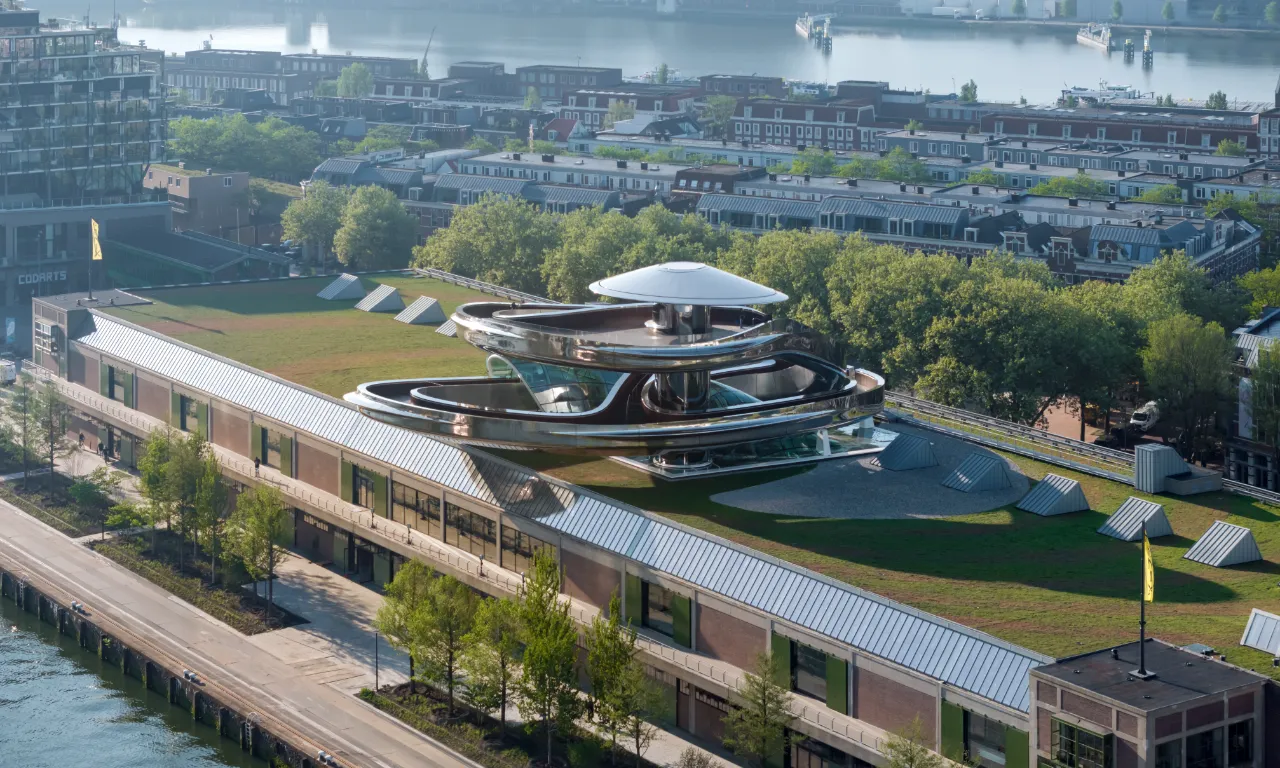
Fenix Museum – Rotterdam Museum of Emigration
Rotterdam’s, melting spiral of steel in reborn Fenix warehouse
The new Museum of Emigration is a breathtaking innovative architecture.
Led by Dutch MAD Architects, in collaboration with local firm Bureau Polderman, structural engineers ABT and a constellation of conservationists, the transformation of an old Fenix warehouse was a delicate balance of vision and reverence.
Layered in salt and steel, it rises in Dutch skies, not like a relic, but a resurrection.
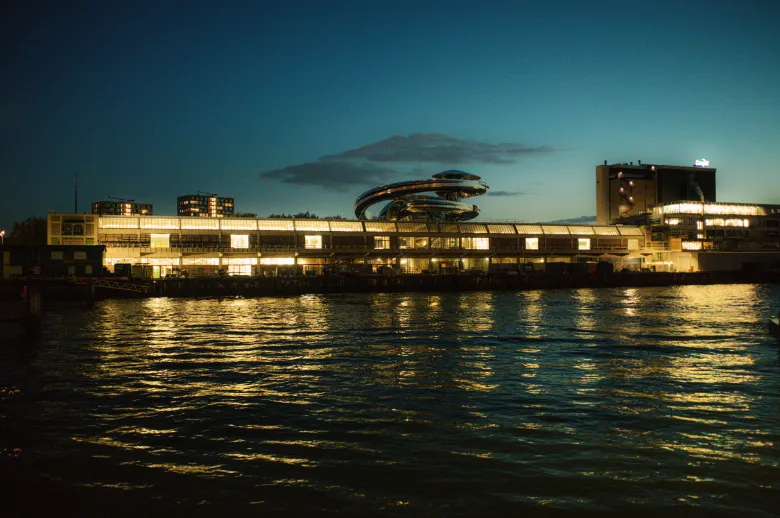
Built in 1923, when the industry spoke in iron and ambition, it once held the title: Fenix was the largest warehouse in the world.
A century later, it speaks again, reborn as Rotterdam Museum of Emigration. Not through exhibit or archive, but through space.
Through a choreography of light, material and memory that only Architecture can perform.
The museum stands as both monument and metamorphosis on the Katendrecht Peninsula, where history once flowed like freight.
It is a vessel reimagined. Behind its transformation is a symphony of visionaries: studio MAD Architects, collaborating with restoration experts, structural poets and cultural curators. Together, they didn’t just build a museum.
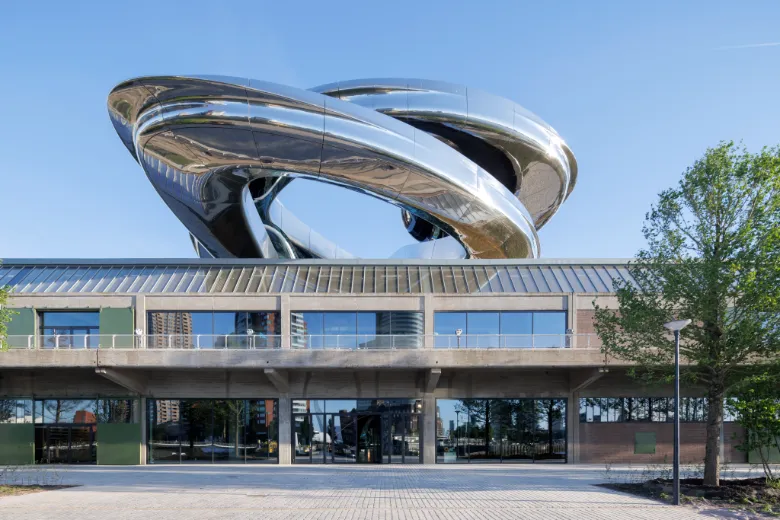
They excavated a soul
Fenix warehouse, giant anatomy, massive, muscular and maritime, was never delicate.
It was born of brick and brutal repetition. A workingman’s cathedral of commerce.
Within its vast body, we sense the reverence for rhythm: long horizontal lines, uniformity of fenestration, subtle play of void and volume.
Converting this behemoth into a pilgrimage meca for emigrant’s spirit, architects did not erase the past. They felt it.
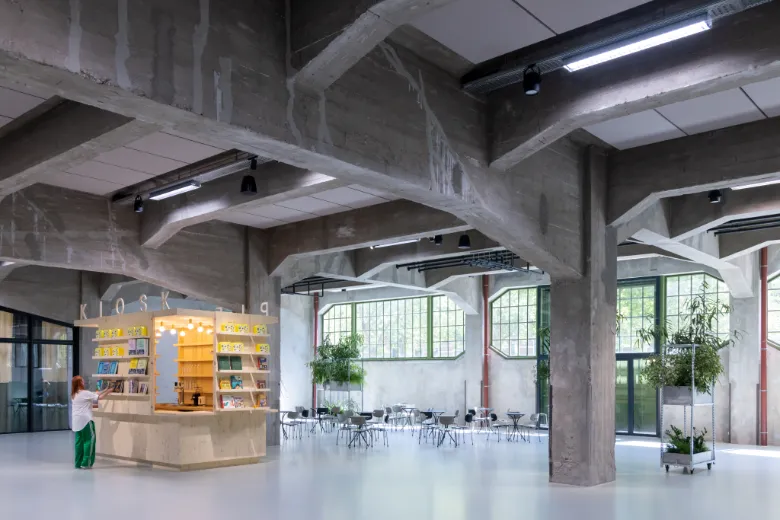
Original concrete frame, has been preserved like vertebrae, spine of a structure whose new skin breathes differently.
Rather than plastering over time, designers allowed it to stain the walls. Scarred columns, uneven patina become quiet dialogues between rust and resin.
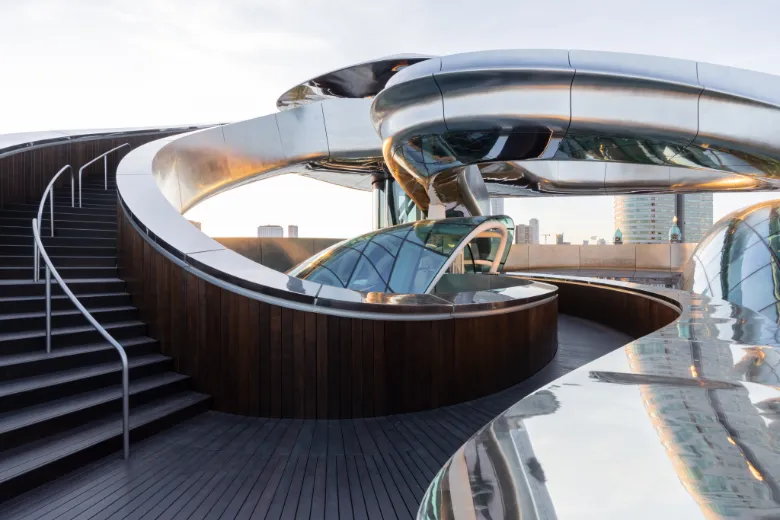
The centrepiece is the sweeping stairway, a sculptural spine that rises like a flame through the heart of the museum.
Designed by Chinese Ma Yansong, born in Beijing (1975), he is a rare voice in Contemporary Architecture.
Trained at Yale, now teaching at Tsinghua University (China), he is known for fusing futuristic form with emotions.
It is both stair and sculpture. An object of ascent, but also of departure.
It does not merely connect floors: it evokes farewell.
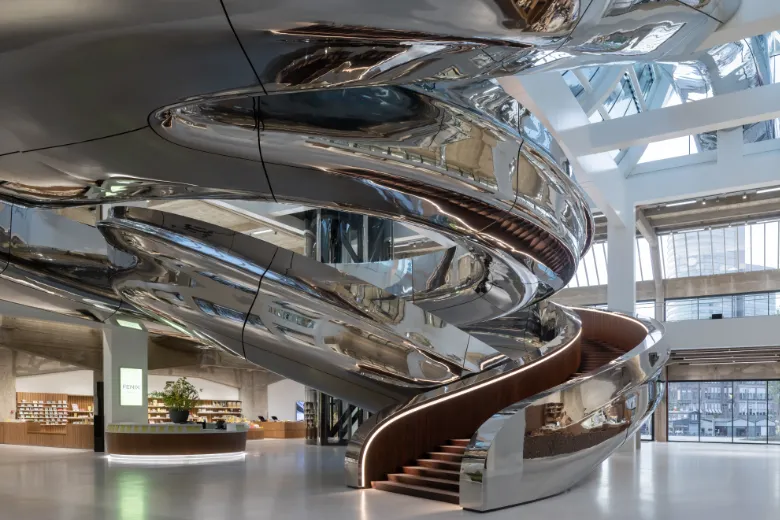
The most symbolic gesture is the sculptural marvel that coils upward like memory itself. A soft rupture within the warehouse’s rectilinear geometry.
It is not an object of circulation, but of evocation. Cast in white concrete, it rises in a fluid curve, unexpected, emotive, almost tender against the grit of the warehouse.
It contradicts the orthogonal grid, introducing a new architectural language: emotion over efficiency. This is architecture that feels.
It is a living metaphor: every step a footfall away from home, every landing a moment of uncertainty. Each stair represents pain and hope of departure. Cast in white concrete, polished smooth as bone, it twists upwards in a sinuous, almost liquid motion.
If the staircase is the museum’s beating heart, the materials are its blood, carrying oxygen of history through every detail.
Corten steel lines the thresholds, rusting softly like forgotten suitcases. Glass panels, etched, warped or left bare, capture views into frames. Floorboards, salvaged from ships, creak underfoot with an audible history. Each material was chosen not for its novelty, but for its resonance.
The Fenix Museum is not a space of spectacle. It’s a space of sensation. There is restraint, a kind of architectural humility that allows texture and tone to do the storytelling.
Even the light is considered as architecture. Clerestory windows installed in the old masonry, invite daylight to fall like revelation. At dusk, the building glows, not with LEDs, but with a inner warmth, as though it remembers being alive.
Dialogue with the city
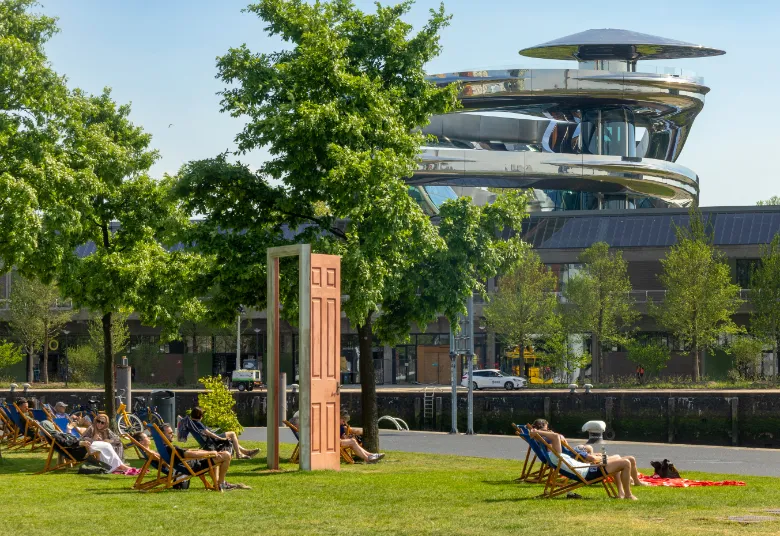
The Fenix Museum does not retreat from Rotterdam. Facing the Maas River, its facade becomes a lens that frames the stream where so many dreams flowed west.
It engages with Katendrecht, a neighbourhood once shunned, now reimagined.
The museum’s new public plinth, invites locals and visitors to occupy the old warehouse space.
It refuses to be an elitist artefact. It is an urban living room, where architecture mediates between impossible past and possible future.
Roof terraces, framed in timber and steel, allow visitors to gaze outward, toward the sea, toward Manhattan, toward whatever lies beyond. And here the museum fulfils its highest architectural ambition: it does not contain history. It continues it.
Architects as midwives of memory
This project is not just an act of design. It is an act of midwifery, helping something ancient and aching to be born anew.
Not every architect can listen as well as they draw. But here they have listened to the building, the city and the silence between personal stories. They did not impose ego. They invited history to breathe.
A new type of Museum
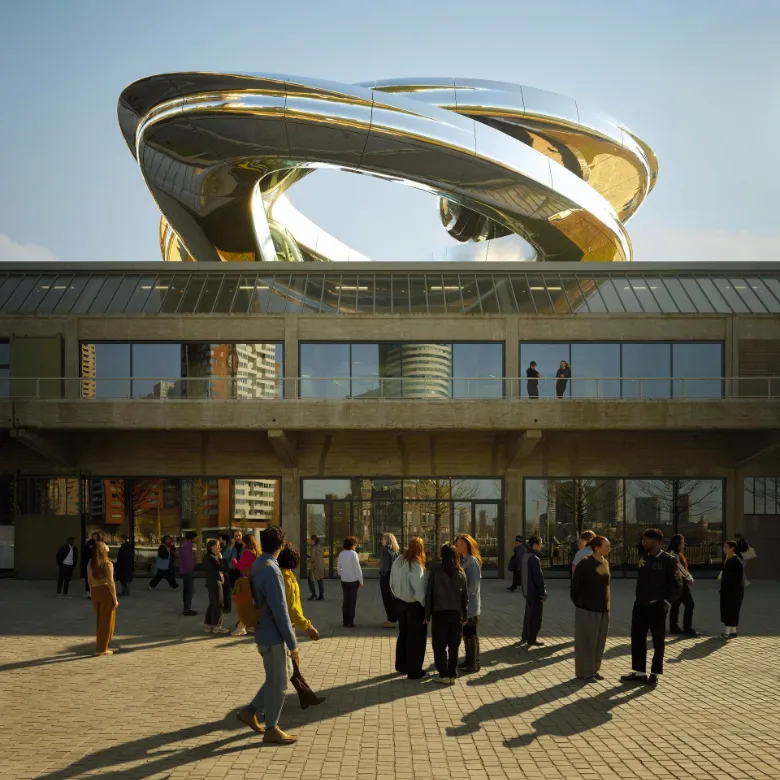
It is not interactive. It is evocative. It does not dazzle. It lingers.
It offers a model for future museums: spaces not only of information, but of infrastructure for empathy.
Spaces where people might enter for facts and leave with feelings.
From cranes to keels, from farewell to future, Rotterdam remembers not in statues, but in staircases.
The Rotterdam Museum of Emigration is more than a building. It is a threshold. A space caught in the act of becoming. A monument not of stone, but of story, retold through concrete, rust, glass and light.
For architects, it is a masterclass in restraint, resonance and remembering. For the world, it is a quiet flame among the North Sea winds.
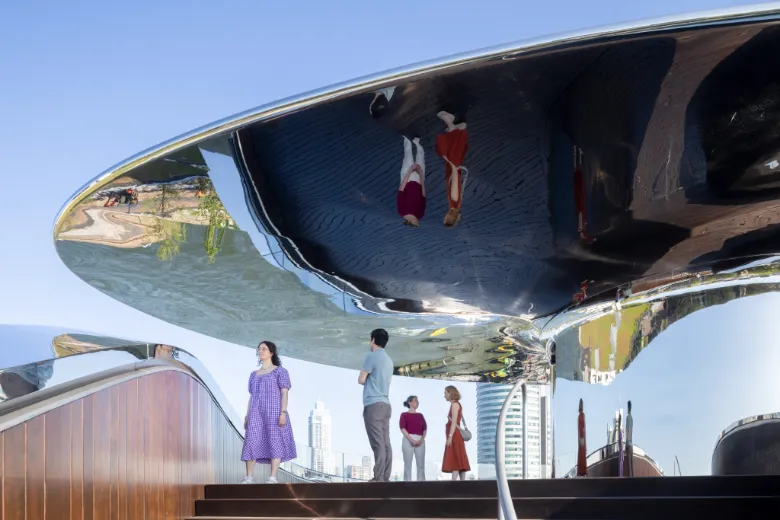
What the Rotterdam Museum of Emigration proposes architecturally, is a new philosophy: a museum where content is not just curated, but constructed. Where thebuilding itself becomes exhibition.
Not through didactic gesture, but through emotional Architecture.
For those emigrants who left and those who stayed, it is, at last, home.
MAD Architects studio, create buildings that appear to float, breathe and dream, like Harbin Opera House and Absolute Towers in Canada. They resist the cold gloss of globalisation, instead sculpting structures that are sensual, symbolic, almost surreal.