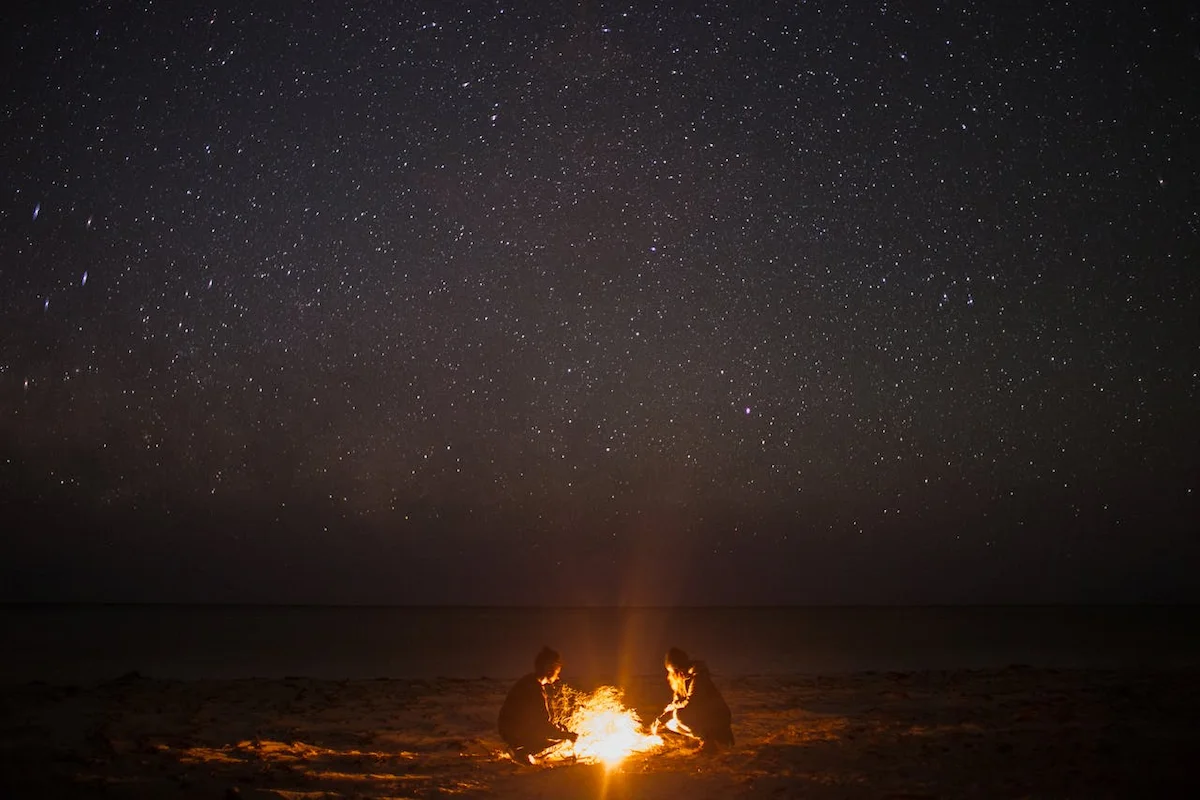
The night sky is becoming a rare commodity. For most people living in urban centers, the Milky Way is something they only see in high-definition photographs or documentaries.
Light pollution has veiled the heavens for decades, hiding the stars behind a hazy orange glow. This loss of darkness has sparked a new movement in high-end travel.
People are no longer just looking for five-star service or infinity pools; they are looking for the universe. Luxury stargazing tourism is not just a trend; it is a response to a world that has forgotten how to look up.
You might have noticed that the most exclusive destinations today are the ones that offer nothing but silence and shadows. In these remote corners of the planet, the air is thin, the lights are off, and the sky feels close enough to touch.
This shift toward “dark sky” travel reflects a deeper desire for connection. We want to feel small again, to be reminded of the vastness that exists beyond our screens and schedules. It is a spiritual pursuit wrapped in the comfort of a luxury lodge.
The rise of the dark sky movement
A few years ago, the International Dark-Sky Association began certifying specific locations as International Dark Sky Places. These are areas where the night sky is protected from artificial light.
What started as a conservation effort has quickly turned into a roadmap for the world’s most sophisticated travelers. When a destination receives this certification, it becomes a beacon for those seeking an authentic celestial experience.
You can see this happening in places like the Aoraki Mackenzie International Dark Sky Reserve in New Zealand or the Central Idaho Dark Sky Reserve in the United States.
These locations offer a level of clarity that is physically impossible to find in a city. Because the air is often dry and the elevation is high, the stars don’t just twinkle; they burn with a steady, piercing light.
You can see the dust clouds of the galactic center and the faint smudge of the Andromeda Galaxy with your naked eyes. This clarity is what luxury stargazing tourism is built upon.
It provides a stage for the greatest show on earth, one that has been performing for billions of years but has recently lacked an audience.
As we saw earlier, the demand for these experiences is growing. Travel agencies specializing in high-end trips are now including “stargazing concierges” and private astronomers in their itineraries.
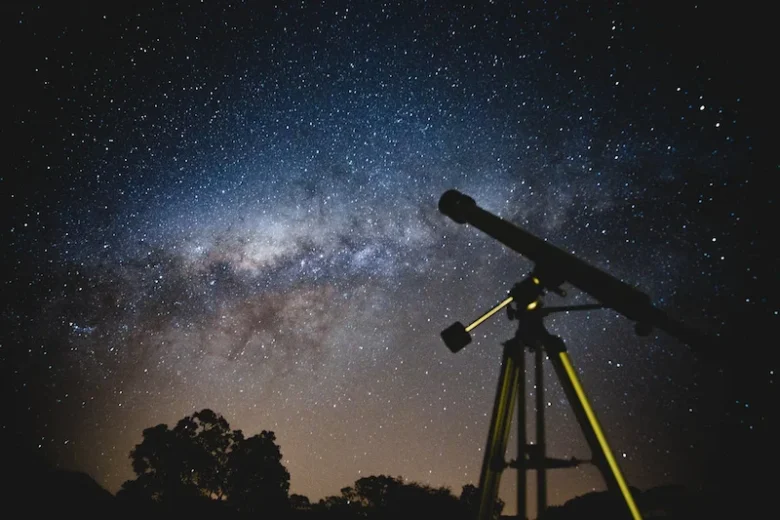
It is no longer enough to just have a telescope on the balcony. Travelers want an expert to guide them through the constellations, explaining the mythology and the science behind the light that took millions of years to reach their eyes.
This blend of education and awe is what makes the experience so resonant.
Where to find the clearest skies on earth
If you are looking for the absolute best places to see the stars, you have to go where the people aren’t. The Atacama Desert in Chile is often cited as the gold standard for luxury stargazing tourism.
It is the driest non-polar place on earth, meaning there is almost zero moisture in the air to blur your view. Several high-end hotels in the region, such as Tierra Atacama or Nayara Alto Atacama, have built their entire guest experience around the night sky.
They offer open-air observation decks and professional-grade telescopes that allow you to see the rings of Saturn in startling detail.
Another incredible spot is the Namib Desert in Namibia. The NamibRand Nature Reserve is one of the darkest places on the planet.
Here, the dunes turn a deep red during the day and a velvety black at night. Lodges like andBeyond Sossusvlei Desert Lodge have designed their suites with “star-gazing windows” directly above the beds.
You can literally fall asleep while watching the Southern Cross move across the sky. It is a seamless integration of nature and architecture that respects the environment while providing total comfort.
In the Northern Hemisphere, the American Southwest remains a favorite. Places like Amangiri in Utah or various retreats in Sedona, Arizona, offer a different kind of celestial beauty.
The red rock formations provide a dramatic silhouette against the star-filled sky. Many of these resorts now offer “night hikes” or “full moon yoga” to help you connect with the lunar cycles.
You might find that these activities offer a sense of peace that a traditional spa treatment simply cannot match.
The architecture of silence and light
The design of these luxury resorts is changing to accommodate the needs of stargazers. You will notice that lighting in these hotels is often dim, using warm amber tones that don’t ruin your night vision.
Paths are lit by low-level LEDs or even just the moon itself. This is a deliberate choice. Architects are now working with lighting designers to ensure that the buildings disappear into the landscape at night, allowing the sky to take center stage.
Think about the glass igloos in Finnish Lapland. While they were originally designed to view the Northern Lights, they have become a symbol of luxury stargazing tourism.
They offer a 360-degree view of the sky from the warmth of a heated room. This allows you to witness the movement of the stars for hours without the discomfort of the cold.
It is a perfect example of how technology can be used to enhance our connection to the natural world rather than distract from it.
This focus on design extends to the communal areas as well. Fire pits, outdoor lounges, and sunken seating areas are all positioned to provide the best possible angles for viewing the horizon.
You might also find that many of these lodges lack televisions or high-speed internet in the rooms. This isn’t a lack of service; it is a gift of presence.
By removing the digital noise, the hotels encourage you to look out the window and engage with the reality of the universe.
The spiritual impact of looking up
There is a psychological phenomenon known as the “Overview Effect.” It is the cognitive shift that astronauts experience when they see the Earth from space.
They describe a feeling of intense awe, a sense of unity with all life, and a renewed desire to protect the planet. While we might not all be going to orbit, luxury stargazing tourism offers a grounded version of this experience. When you stand under a sky filled with millions of stars, your daily worries tend to shrink.
This perspective is perhaps the most valuable part of the journey. In our modern lives, we are often the center of our own universes. We deal with constant pings, emails, and deadlines.
But the stars don’t care about your inbox. They have been there for eons, and they will be there long after we are gone. This realization isn’t depressing; it is liberating.
It allows you to breathe and remember that you are part of something much larger and more beautiful than a career or a social media feed.
As you may have noticed in this article, the appeal of the stars is universal. It transcends culture and language. Whether you are looking at the same constellations that the ancient Egyptians used to navigate the Nile or the ones the Polynesians used to cross the Pacific, you are participating in a human tradition that is thousands of years old.
This sense of continuity is a powerful antidote to the fast-paced, disposable nature of modern culture.
Technology meets the cosmos
While the goal is to disconnect, technology still plays a role in making luxury stargazing tourism more accessible. Many high-end resorts now use computerized telescopes that can find any star or planet in seconds.
You don’t need to be an expert to see the moons of Jupiter or the nebulae where stars are born. The hardware does the heavy lifting, leaving you free to simply enjoy the view.
Some lodges even provide guests with tablets pre-loaded with sky-mapping apps that use augmented reality to identify constellations as you point the device at the sky.
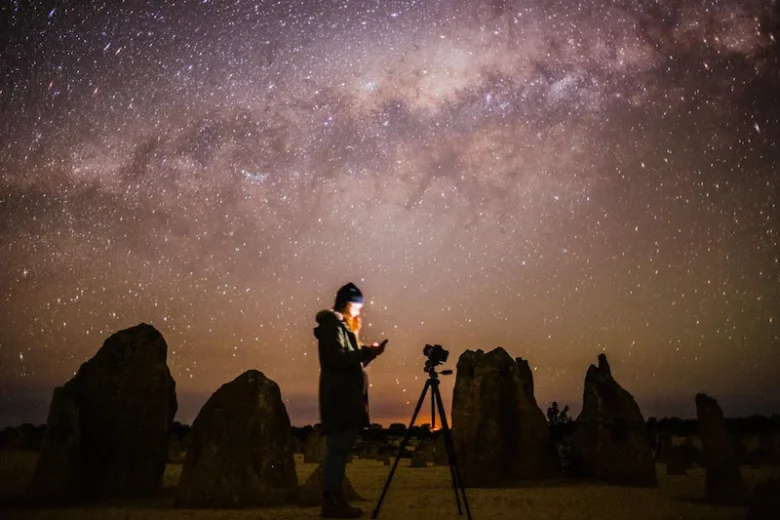
Beyond the telescopes, there is the photography aspect. Capturing the night sky is notoriously difficult, but many luxury tours now include professional photographers who can teach you how to take long-exposure shots of the Milky Way.
You can go home with a piece of art that you created yourself, a tangible reminder of the night you spent in the desert. This blend of high-tech gear and ancient wonder is a hallmark of the modern luxury traveler.
We’ll look at this in more detail later, but the equipment is only as good as the person using it. That is why the human element remains so important.
A great astronomer can tell you a story that makes a white dot in the sky feel like a giant, burning sun. They can explain how the iron in your blood was forged in the heart of a dying star.
This narrative is what transforms a simple observation into a life-changing memory.
The future of celestial travel
As space tourism becomes a reality with companies like Virgin Galactic and Blue Origin, the definition of luxury stargazing tourism is expanding.
We are moving toward a time when “looking at the stars” might involve actually leaving the atmosphere. However, for most of us, the best way to experience the cosmos will remain firmly on the ground.
The future of this industry lies in the preservation of darkness. As more of the world becomes electrified, the few remaining dark spots will become even more precious.
You can expect to see more “stargazing cruises” that take you into the middle of the ocean, far from any land-based lights. You might see “star-tents” in the middle of the Mongolian steppe or luxury camps in the Australian Outback.
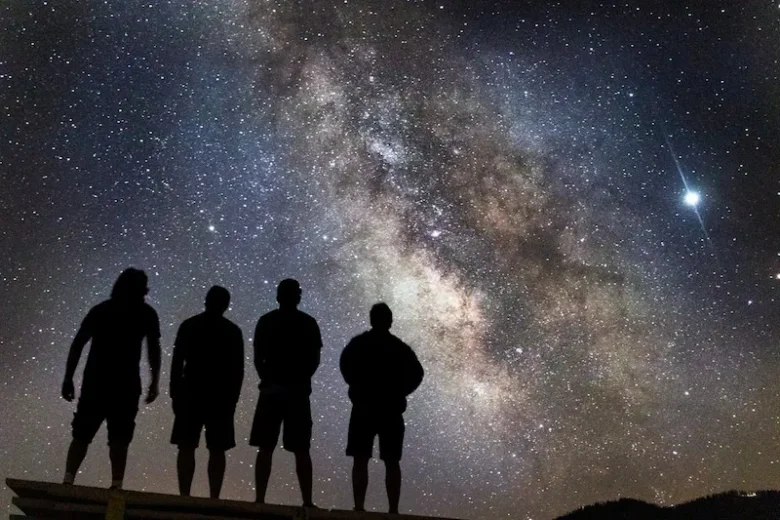
The common thread will be a commitment to environmental stewardship. These destinations know that if they lose their darkness, they lose their greatest asset.
By supporting these places, you are also supporting the protection of the night sky for future generations.
The aesthetic of these trips is also evolving. It is becoming more about “quiet luxury”—the idea that true wealth is found in experiences that are rare, silent, and deeply personal.
A private dinner under the stars in the middle of a desert is the new ultimate status symbol. It shows that you value time, space, and the beauty of the natural world above all else.
It is a sophisticated way to travel that prioritizes the soul as much as the body.
Preparing for your stargazing journey
If you are planning a trip focused on the stars, there are a few practical things to keep in mind. First, the lunar cycle is your most important calendar.
A full moon is beautiful, but it acts like a giant lightbulb in the sky, washing out the fainter stars and the Milky Way. For the best stargazing, you want to travel during the “New Moon” phase, when the sky is at its darkest. Most luxury lodges will have a lunar calendar on their website to help you pick the right dates.
You should also think about the weather. Clear skies are never guaranteed, even in the desert. It is a good idea to book at least three or four nights in a location to increase your chances of having at least one perfectly clear night.
Patience is part of the experience. Sometimes the most beautiful moments happen when the clouds suddenly part at 2:00 AM, revealing a sky you never thought possible.
Finally, bring the right gear. While the lodge will likely provide telescopes, a good pair of binoculars can be surprisingly effective for scanning the star fields.
Also, remember that even the hottest deserts get very cold at night. Luxury lodges will often provide blankets and heaters, but having your own comfortable layers will make those long hours of looking up much more enjoyable. You want to be focused on the heavens, not on how cold your toes are.
The cultural significance of the night
For centuries, the night sky was our clock, our calendar, and our compass. It dictated when we planted crops and how we found our way home.
In our modern world, we have replaced the stars with GPS and 24-hour grocery stores. We have gained convenience, but we have lost a sense of rhythm.
Luxury stargazing tourism helps us reclaim that rhythm. It forces us to slow down and operate on celestial time.
Many destinations are now incorporating local indigenous knowledge into their stargazing programs. In Australia, you can learn about the “Emu in the Sky,” a constellation made not of stars, but of the dark patches in the Milky Way.
In the Andes, you can hear about how the Incas saw the shapes of animals in the cosmic dust. These stories add a layer of cultural depth to the experience, reminding us that every civilization has looked at these same stars and tried to make sense of them.
This cultural connection is a big part of what we do at Neomania Magazine. We look for the stories that connect us to the past while pointing toward the future.
We believe that a refined life is one that seeks out these moments of profound beauty and reflection. Stargazing is the ultimate expression of that philosophy. It is an aesthetic experience that is both provocative and deeply spiritual.
The environmental cost of light
It is worth noting that protecting the night sky isn’t just about tourism; it’s about biology. Many animals, from sea turtles to migratory birds, rely on the stars and the moon to navigate.
Artificial light confuses them, often with fatal results. Even humans need darkness to produce melatonin and maintain a healthy circadian rhythm. By choosing to visit dark sky reserves, you are contributing to a global awareness of the importance of darkness.
Luxury resorts that prioritize dark skies are often leaders in sustainability. They use shielded lighting that points downward, reducing skyglow.
They often use solar power and minimize their overall footprint on the land. This responsible approach to tourism ensures that the very thing people come to see—the pristine environment—is preserved.
It is a virtuous cycle that benefits the traveler, the local community, and the planet itself.
As you move through these remote landscapes, you might find yourself becoming more aware of the light you use in your own life.
Many travelers return home and decide to change their outdoor lighting or advocate for dark sky ordinances in their own towns.
This is the real power of luxury stargazing tourism. It changes how you see the world, even after you have left the desert behind.
A new perspective on the horizon
At the end of the day, luxury stargazing tourism is about wonder. It is about that intake of breath when you first step out of the lodge and see a sky that looks like it was painted with diamonds.
It is about the quiet conversations you have with a partner while sitting under a canopy of stars. It is about the feeling of peace that comes from knowing that the universe is vast, beautiful, and largely unknown.
We live in a time when we are constantly told to look down—at our phones, at our feet, at our problems. Stargazing tells us to look up.
It invites us to ask the big questions: Where did we come from? Are we alone? What else is out there? These are the questions that drive art, science, and philosophy.
By taking the time to seek out the stars, you are giving yourself the space to think, to feel, and to be inspired.
The world is full of beautiful places, but there is nothing quite like a truly dark sky. It is a luxury that cannot be manufactured or bought; it can only be found.
Whether you find it in the high altitudes of Chile or the silent plains of Namibia, the experience will stay with you forever. It is a reminder that even in our darkest moments, there is light if we only know where to look.
As you reflect on these celestial journeys and the aesthetic of the night, you might find yourself wanting more of this refined perspective.
Neomania Magazine is dedicated to bringing you stories that challenge your perceptions and inspire your spirit. We invite you to join our community of thinkers and explorers who value the essence of every experience.
Subscribe to Neomania Magazine today and let us take you on a journey that goes beyond the surface, into the heart of what makes life truly vibrant and provocative.