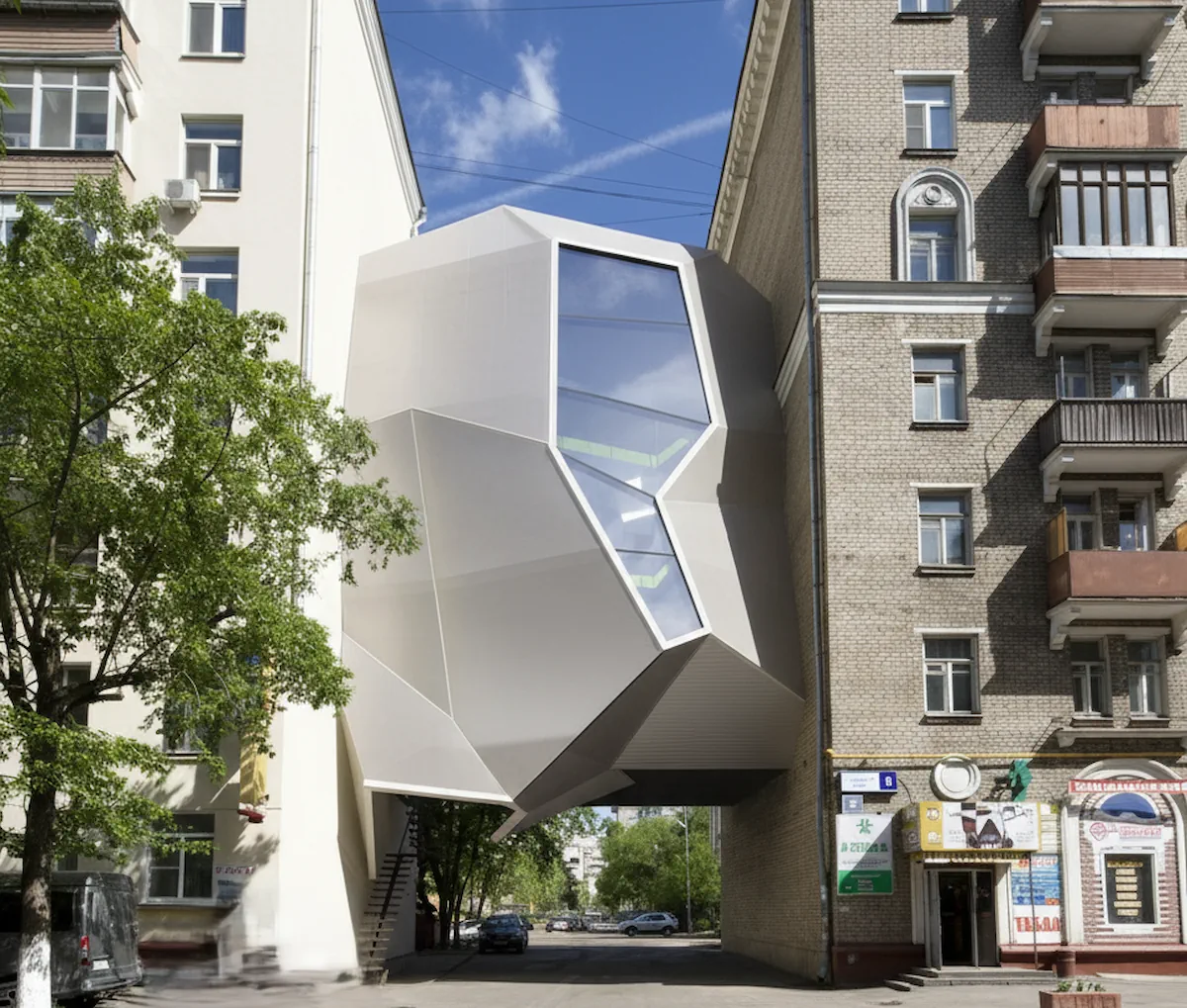
In the dense try of urban development, where every square foot is a battleground for space, a radical architectural phenomenon has begun to emerge: parasitic architecture.
This approach, as its provocative name suggests, involves the attachment of new, often smaller, structures onto existing buildings or infrastructure.
Far from a mere aesthetic trend, parasitic architecture represents a profound commentary on land scarcity, urban density, and the dynamic relationship between historical context and contemporary need.
It challenges conventional notions of ownership, permanence, and the very fabric of our built environment, forcing us to reconsider what constitutes a building and how cities can evolve without constant demolition and reconstruction.
The concept is not entirely new; historical precedents exist in various forms of architectural accretion and adaptation. However, the deliberate, often high-profile, and sometimes contentious nature of modern parasitic projects has solidified its status as a distinct and increasingly relevant design philosophy.
It manifests in myriad forms: from temporary installations clinging to facades, to fully functional living units perched atop historical edifices, and even structures suspended beneath bridges.
Each iteration, whether bold or subtle, invites a critical examination of urban planning, sustainability, and the perpetual quest for space in an ever-growing world.
This article will delve into the multifaceted world of parasitic architecture, exploring its definitions, its real-world manifestations, the philosophies that drive its proponents, and the heated debates it invariably ignites.
We will uncover how this audacious movement not only provides innovative solutions to pressing urban challenges but also how it redefines our understanding of what a city can be – a living, breathing entity, constantly growing and adapting, layer upon historical layer.
What is parasitic architecture, really?
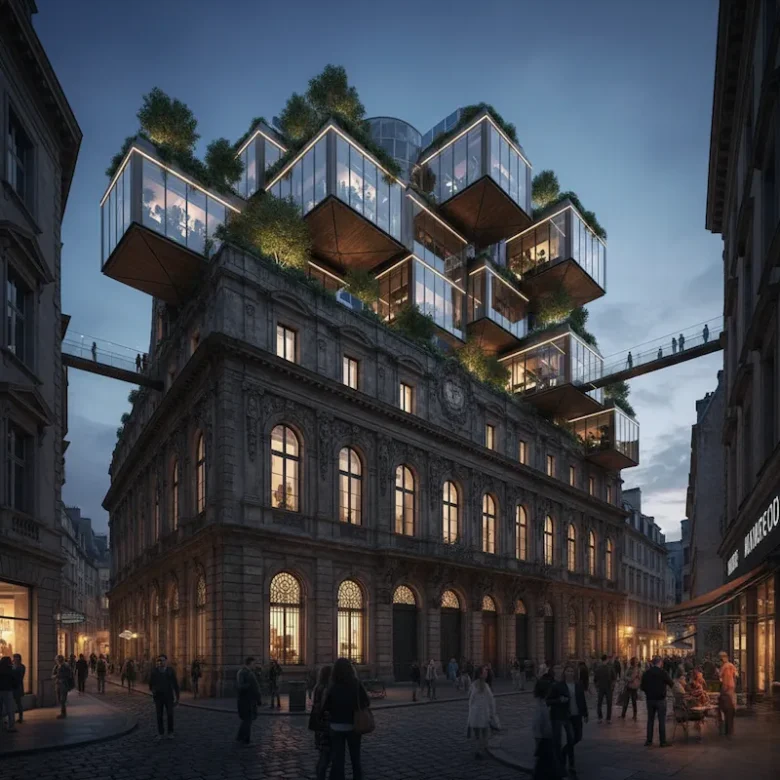
To understand parasitic architecture is to move beyond the immediate, somewhat pejorative connotation of its name. While the term “parasite” evokes images of unwelcome intrusion and depletion, in an architectural context, it points to a more nuanced, symbiotic, or at least interdependent, relationship.
It is a design strategy that leverages existing structures as hosts, creating new spaces where none previously existed, or where traditional construction would be impractical, financially prohibitive, or environmentally unsound.
This isn’t about demolition to rebuild; it’s about adding, extending, and transforming, often with a lightness of touch that belies its radical intent.
Beyond the label: from intruder to innovator
The term “parasitic architecture” itself is a loaded one, frequently sparking images of unwelcome attachments or detrimental intrusions. However, beneath this provocative label lies a deep-seated spirit of architectural innovation and adaptation.
Far from being solely an “intruder,” many parasitic projects emerge as clever solutions to complex urban problems, acting as catalysts for change and reimagining the potential of neglected or underutilized spaces.
The move “beyond the label” involves understanding that the initial shock value of the name often masks a sophisticated design methodology aimed at efficiency, sustainability, and sometimes, even aesthetic enhancement.
This approach often necessitates a high degree of creativity and engineering prowess, as architects must design structures that integrate seamlessly, yet distinctly, with their hosts, without compromising structural integrity or historical value.
The “intruder” becomes an “innovator” by demonstrating how architecture can be nimble, responsive, and respectful of its context while simultaneously pushing boundaries.
It forces a re-evaluation of what constitutes a “new” building, positing that perhaps the most sustainable and inventive path forward is to build upon what already exists, rather than always starting anew.
This involves intricate structural connections, material choices that consider the host’s load-bearing capacity, and often, a dialogue between the old and new that is both visually arresting and functionally sound.
The resulting structures are not merely add-ons but active participants in the ongoing narrative of the city, contributing new chapters to existing architectural stories.
The host and the guest: how it redefines urban space
At the heart of parasitic architecture lies the relationship between the “host” building or infrastructure and the “guest” structure. This dynamic is central to how the movement redefines urban space.
Traditional architecture typically occupies its own plot of land, standing as an autonomous entity. Parasitic architecture, by contrast, operates within the interstitial spaces, on the surfaces, or atop the volumes of existing constructs.
This fundamental shift challenges the very notion of territoriality in urban design, suggesting that space is not merely horizontal acreage but also vertical and volumetric potential.
The host provides the foundational context – its structure, its location, its history, and its relationship to the surrounding cityscape.
The guest, in turn, occupies this borrowed territory, injecting new life, function, or form into areas previously considered inert or fully utilized. This redefinition extends beyond mere physical presence; it alters how we perceive urban density and opportunity.
A forgotten rooftop transforms into a vibrant residential unit, a blank facade becomes a canvas for a temporary gallery, or the underside of an elevated highway is repurposed into a micro-community.
The act of attachment creates a dialogue between past and present, often highlighting the architectural features of the host while simultaneously asserting the contemporary presence of the guest.
It’s a spatial negotiation that expands the urban fabric without necessarily expanding the city’s footprint, making every unused surface a potential site for architectural intervention and innovation.
Symbiosis vs. parasitism: a delicate design balance
The naming convention of “parasitic architecture” immediately conjures a specific biological analogy: one organism benefiting at the expense of another.
However, within the architectural discourse, the actual relationship between host and guest is often far more nuanced and aspirational, leaning towards symbiosis rather than pure parasitism.
Achieving this delicate design balance is crucial for the movement’s acceptance and success. True symbiosis in this context implies a mutual benefit, or at least a minimal detrimental impact on the host, while providing significant value through the guest structure.
A truly parasitic architectural intervention would, by definition, degrade or compromise the host structure, perhaps by overloading its foundations, obscuring its historical features without cause, or creating an aesthetic blight.
In contrast, many of the most celebrated examples of this genre strive for a symbiotic relationship. The guest might provide a new revenue stream for the host building owner, offer a sustainable solution to urban sprawl, or even enhance the aesthetic appeal or functional utility of the host.
For instance, a new rooftop dwelling might incorporate green technology that benefits the entire building, or a temporary gallery space might draw attention to a historic facade that had previously been overlooked.
The “delicate design balance” lies in several key areas:
- Structural integrity: Ensuring the new addition does not compromise the host’s stability.
- Aesthetic integration: Creating a visual dialogue that respects or thoughtfully contrasts with the existing architecture, avoiding jarring or disrespectful intrusions.
- Functional enhancement: Providing a clear purpose for the new structure that justifies its presence and potentially benefits the surrounding urban environment or the host itself.
- Minimal impact: Designing for efficient attachment, energy use, and material sourcing that minimizes negative environmental or social consequences.
The challenge for architects in this field is to transcend the literal “parasite” label and demonstrate that these interventions can be a powerful force for positive, mutually beneficial urban development.
When executed thoughtfully, parasitic architecture shifts from a provocative concept to a sophisticated strategy for urban regeneration, demonstrating how new growth can occur in harmony with historical continuity.
Real-world examples: architecture on the edge
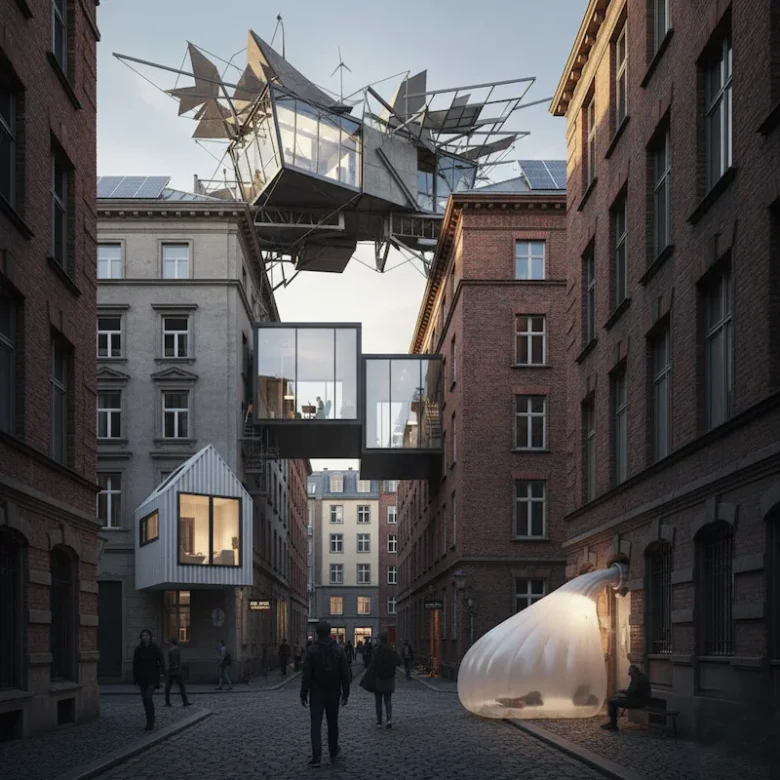
While parasitic architecture can often seem like a theoretical or avant-garde concept, its principles have been realized in a number of startlingly innovative and tangible projects across the globe.
These built examples serve as crucial case studies, moving the discourse from the abstract to the concrete. They demonstrate not only the engineering feasibility but also the aesthetic and social impact of attaching new structures to old.
From high-concept art installations to pragmatic housing solutions, these projects exist on the bleeding edge of design, challenging our perceptions of what is possible within the existing urban landscape.
Each one tells a unique story of intervention, adaptation, and the relentless human drive to inhabit and reinvent space.
Rooftop renegades: reclaiming the urban canopy
The most visible and often most dramatic frontier for parasitic architecture is the urban rooftop. Historically a utilitarian space for water towers and HVAC units, the “urban canopy” is increasingly being recognized as a vast, underutilized landscape ripe for reclamation.
Rooftop additions represent a direct and assertive form of parasitic design, leveraging premium access to light, air, and views while physically grafting a new architectural identity onto a pre-existing structure.
These projects are the renegades of the skyline, often creating a jarring but compelling dialogue between the historical host and its contemporary guest.
Perhaps the most iconic and seminal example of this approach is the Rooftop Remodeling Falkestrasse in Vienna, designed by Coop Himmelb(l)au in 1988.
This deconstructivist masterpiece appears as a chaotic, winged creature of glass and steel that has alighted atop a traditional Viennese apartment building. It is a deliberate and provocative act of architectural juxtaposition.
The design eschews any attempt to blend in, instead celebrating the collision of two distinct eras and aesthetics. The project fundamentally challenged preservationist norms and became a landmark statement, proving that the old and new could not only coexist but could also create a new, more dynamic whole.
It functions as a law office, demonstrating that these radical additions can be both conceptually groundbreaking and entirely functional.
More recent projects have continued this legacy, exploring modular construction and sustainable technologies. The appeal of the rooftop parasite is multifaceted: it offers a path to increasing density without contributing to urban sprawl, it unlocks immense real estate value in prime locations, and it provides architects with a unique platform for high-profile design expression.
These structures are more than mere penthouses; they are declarations of intent, signaling a city’s willingness to embrace a layered, evolving identity.
Cliffhangers and bridge dwellings: living in liminal spaces
Moving beyond the relative stability of the rooftop, another subset of parasitic architecture ventures into far more precarious and ambitious territories: the vertical faces of cliffs, the blank walls of dams, and the underbellies of bridges.
These projects colonize liminal spaces—the transitional, in-between zones of the urban environment that are typically considered uninhabitable.
To build here is an act of extreme engineering and profound imagination, transforming infrastructure and forgotten landscapes into sites for human dwelling.
While fully realized examples are rarer due to immense legal and structural hurdles, the concept has deep historical roots and a vibrant life in contemporary architectural proposals.
The Ponte Vecchio in Florence, with its layers of shops and homes clinging to the sides of the bridge, stands as a medieval archetype of this idea.
Modern interpretations push the concept further, envisioning sleek, high-tech modules suspended from contemporary infrastructure.
Conceptual proposals, such as MVRDV’s designs for inhabited bridges, imagine a future where transport corridors double as residential and commercial zones, creating a hyper-efficient, three-dimensional city.
These “cliffhangers” and bridge dwellings represent the ultimate response to land scarcity. They propose a radical densification of the urban environment by occupying the Z-axis with unprecedented aggression.
They force a confrontation with our notions of stability and permanence, offering a vision of living that is suspended, dynamic, and integrated with the very arteries of the city.
More than just a housing solution, this form of parasitic architecture is a philosophical statement about occupying the void, turning passages into places and transforming the infrastructural skeleton of the city into its living tissue.
Micro-housing and guerrilla pods: solutions for urban density
At the opposite end of the scale from grand architectural statements, parasitic design also manifests as a nimble, often politically charged solution to urban housing crises and hyper-density.
This is the world of micro-housing, temporary shelters, and guerrilla pods—small-scale interventions that address immediate social needs with ingenuity and resourcefulness.
These projects often operate at the intersection of architecture, art, and activism, providing shelter and commentary in equal measure.
A quintessential example is the Keret House in Warsaw, designed by architect Jakub Szczęsny. Inserted into a narrow alley between two large buildings, it is a fully functional home measuring only 122 centimeters at its widest point.
While technically freestanding, it is conceptually parasitic, as its existence is entirely dependent on the crevice provided by its larger neighbors. It is a powerful statement on the efficient use of forgotten urban gaps and the possibilities of micro-living.
Even more explicitly parasitic and socially motivated are the ParaSITE shelters created by artist Michael Rakowitz. These are custom-built, inflatable structures designed for homeless individuals, which attach to the exterior outtake vents of a building’s HVAC system.
The warm air flowing from the vent inflates and heats the temporary shelter, directly tapping into the host building’s metabolic system for survival.
This project is a poignant and literal interpretation of the parasite-host relationship, highlighting systemic inequalities while providing a practical, immediate solution.
These small-scale interventions demonstrate the adaptability and social conscience of parasitic architecture, proving that even the most modest addition can challenge our assumptions about who has the right to occupy space in the city.
The philosophy behind the practice
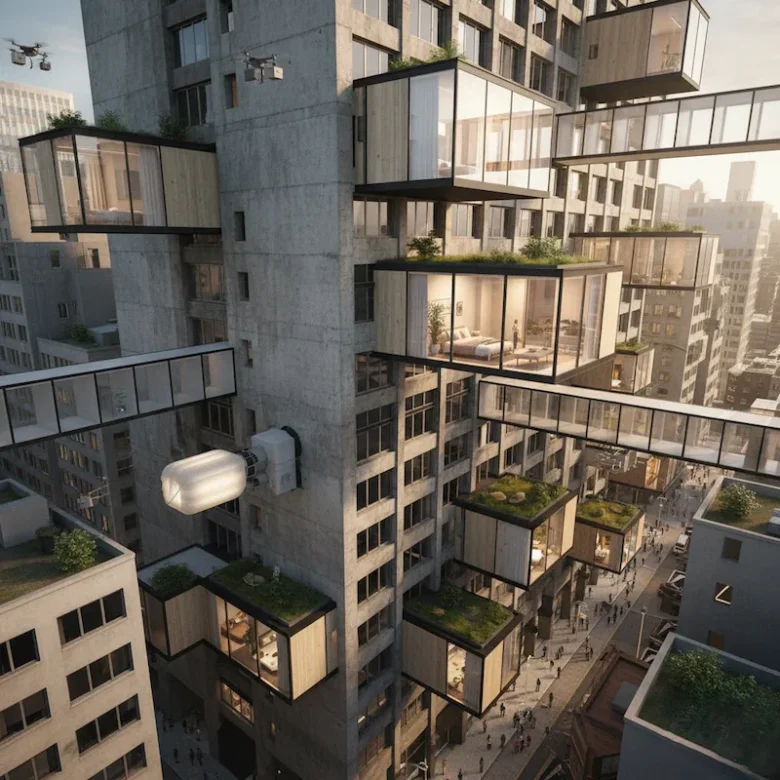
Parasitic architecture is more than an engineering challenge or an aesthetic exercise; it is a movement deeply rooted in a set of philosophical principles that respond directly to the pressures of the modern metropolis.
It emerges from a critical view of conventional urban development, with its cycles of demolition and construction, and proposes a more agile, resourceful, and layered approach to city-building.
Understanding this philosophy is key to appreciating these projects not as mere architectural oddities, but as thoughtful responses to some of the most pressing economic, social, and environmental issues of our time. At its core, this is a philosophy of intervention, adaptation, and critical engagement with the built environment.
A response to scarcity: building without breaking new ground
The most fundamental driver behind parasitic architecture is the reality of scarcity. In an increasingly urbanized world, two resources are critically finite: land and materials.
This movement offers a direct and ingenious response to this dual challenge by fundamentally shifting the paradigm of development. The philosophy is one of maximum utility, advocating for building without breaking new ground.
This principle operates on both a literal and a metaphorical level. Literally, it avoids the immense costs—financial and environmental—of land acquisition, excavation, and foundation-laying.
By leveraging the existing structural capacity of a host, it taps into a pre-existing foundation, saving time, money, and virgin materials.
Metaphorically, “building without breaking new ground” speaks to the concept of embodied energy. An existing building represents a massive investment of energy and carbon, from the extraction of raw materials to their transportation and assembly.
Demolition squanders this investment. Parasitic architecture, in its ideal form, respects and utilizes this embodied energy. It is a form of architectural upcycling, arguing that the most sustainable building is often the one that is already standing.
This approach inherently challenges the tabula rasa (blank slate) model of urban renewal, which favors wholesale clearing. Instead, it posits that cities should grow more like living organisms, grafting new life onto existing structures in a continuous, resource-efficient process of evolution.
The aesthetic of intervention: juxtaposing old and new
The visual power of parasitic architecture lies in its embrace of an aesthetic of intervention. Unlike traditional design, which often prioritizes harmony and seamless integration, this approach thrives on the deliberate and often stark juxtaposition of old and new.
The aesthetic is not about mimicry or polite deference to history; it is about creating a dynamic and honest dialogue between different architectural eras.
The new structure does not try to hide its modernity. Instead, its contemporary materials—often glass, steel, and composite panels—are put in sharp contrast with the host’s brick, stone, or concrete.
This visual tension serves a critical purpose: it recontextualizes both the host and the guest. The modern parasite can draw the eye to the intricate, historical details of its host, making us appreciate the older structure in a new light.
Conversely, the historical context gives the new addition a sense of place and gravity it would lack in isolation. This approach aligns with modern conservation principles, which advocate that new additions should be clearly legible as products of their own time.
The result is an architectural palimpsest, where the layers of a building’s history can be read on its surface. This aesthetic is not always comfortable or traditionally beautiful; it can be intentionally disruptive and provocative.
The beauty is found not in serene harmony, but in the energy and narrative created by the collision of forms, materials, and ideas.
It is a celebration of the city as a constantly evolving entity, where the past is not erased but becomes the foundation upon which the future is built.
The great debate: innovation or invasion?
No architectural movement that fundamentally challenges conventions of property, aesthetics, and permanence can exist without controversy. Parasitic architecture, by its very nature and name, stands at the center of a fierce debate.
Is it a forward-thinking solution to urban crises—a brilliant form of architectural innovation that maximizes space and resources? Or is it a visual and structural menace—an invasive force that disrespects historical context and compromises the integrity of its host?
This debate is not merely academic; it plays out in zoning board meetings, preservation societies, and public discourse, touching upon our most deeply held beliefs about how cities should look, function, and evolve.
Red tape: the legal and zoning challenges
Perhaps the greatest obstacle standing between parasitic concepts and widespread reality is bureaucracy. Modern zoning codes and building regulations are largely ill-equipped to handle such non-traditional proposals.
Most municipal codes are prescriptive, built on the 20th-century model of discrete buildings occupying clearly defined plots of land, with specific rules for setbacks, height limits, and floor-area ratios.
A structure that exists in the interstitial space between two buildings or is cantilevered from a facade does not fit neatly into these categories.
Gaining legal approval requires navigating a labyrinth of red tape. Air rights, the legal ownership of the space above a property, must be purchased or leased.
Complex easements may be required to grant access or allow for structural connections. Building permits demand exhaustive and expensive engineering studies to prove that the host structure can bear the additional load without compromising safety.
Furthermore, when the host is a designated landmark, historic preservation commissions add another formidable layer of scrutiny, often prioritizing the conservation of the original aesthetic over the potential benefits of a modern intervention.
For many pioneering architects in this field, the primary design challenge is not one of materials or form, but of legal and political strategy.
The host’s perspective: when is an addition unwelcome?
Central to the debate is the perspective of the host. While architects may speak of symbiotic relationships, an addition can easily become unwelcome if not executed with profound care and respect.
The most immediate concern is structural strain. An addition imposes new loads—from its own dead weight to the dynamic forces of wind and occupancy—that the original building may not have been engineered to support. A failure to account for this can have catastrophic consequences.
Beyond structural integrity, there are aesthetic and functional considerations. When does a bold juxtaposition become an unsightly blight that diminishes the architectural character and property value of the host?
An ill-conceived parasite can overwhelm its host, obscuring key features, blocking light and air to existing apartments, or creating an aesthetic disharmony that feels more like a scar than a thoughtful addition.
The line between a mutually beneficial relationship and a truly parasitic one—where the guest thrives at the clear expense of the host—is a fine one.
The success of any project hinges on a design that is not only innovative for itself, but also genuinely additive to the life, function, and even the identity of the structure it occupies.
“Parasite” as a positive: re-evaluating a loaded term
The very term “parasite” is a deliberate provocation, a loaded word chosen to spark conversation and challenge complacency. While it carries negative biological connotations, proponents of the movement argue for its re-evaluation in an architectural context.
The term powerfully captures the core idea of leveraging an existing system for a new purpose. It is an honest and unflinching descriptor for an act of architectural opportunism. However, the ultimate goal of the most sophisticated projects is to transcend this label.
The discourse is steadily shifting from “parasitism” to “urban symbiosis.” In a symbiotic relationship, both organisms benefit. The guest structure gains a foundation and a location, while the host can gain renewed purpose, increased property value, structural reinforcement, or even new sustainable features like green roofs or solar panels integrated into the parasite.
By re-evaluating the term, we are encouraged to see these interventions not as a hostile takeover, but as the beginning of a co-evolutionary process.
The “parasite” can be seen as a catalyst that awakens the dormant potential of its host, initiating a new chapter in the building’s life and contributing to a more resilient and resource-efficient urban ecosystem.
The future of urban symbiosis
As urban populations continue to swell and the pressures on space and resources intensify, the principles of parasitic architecture will inevitably move from the radical fringe toward the practical mainstream.
The future of this movement lies in the convergence of technological innovation, a growing environmental consciousness, and a fundamental rethinking of urban density.
What seems like a series of isolated experiments today may well be the prototype for the standard city-building practices of tomorrow. The future is not about replacing our cities, but about augmenting them in intelligent, symbiotic ways.
Modular, adaptable, and 3D-printed parasites
Technology will be the great enabler of future urban symbiosis. The next generation of parasitic structures will likely be modular and prefabricated, manufactured off-site with high precision and then transported and craned into place.
This will dramatically reduce on-site construction time, disruption, and cost, making the process scalable. These modules will also be adaptable, designed as “plug-and-play” units that can be attached to a building’s facade or rooftop to serve a variety of functions—a micro-apartment, a home office, a pop-up gallery—and potentially be removed or replaced as the host’s needs change over time.
3D printing stands to revolutionize the field entirely. Additive manufacturing will allow for the creation of incredibly lightweight, complex, and customized structural components.
This technology can solve the critical challenge of creating a perfect, bespoke interface between a standardized pod and a unique, irregular host surface.
One can envision a future where robotic arms crawl the facades of buildings, scanning their surfaces and 3D-printing custom brackets and even entire living pods directly in place, creating a seamless and highly efficient method of urban expansion.
Could parasitic design solve housing crises?
The most pressing application for these future technologies is in addressing global housing shortages. In theory, parasitic design offers a powerful tool for rapidly increasing a city’s housing stock without consuming new land.
Imagine legions of empty urban surfaces—the blank party walls of apartment blocks, the tops of low-rise commercial buildings, the forgotten spaces over parking lots—being populated with safe, efficient, and well-designed micro-housing units.
This approach could provide desperately needed homes for students, young professionals, or those experiencing homelessness.
However, it is crucial to remain realistic. Parasitic architecture is not a panacea. The immense legal, political, and social challenges—from NIMBYism (“Not In My Backyard”) to ensuring equitable access—remain significant hurdles.
It is more likely to be a highly effective niche solution rather than a wholesale replacement for traditional housing development.
It could serve as a vital part of a multi-pronged strategy, offering a nimble and targeted way to add density precisely where it is needed most, acting as a pressure-release valve for overheated housing markets.
Evolving cities: a vision of layered histories and futures
Ultimately, the enduring legacy of parasitic architecture is a philosophical one. It offers a compelling vision of the city as a palimpsest—a rich manuscript continuously written upon, where traces of the past are not erased but remain visible beneath the layers of the present and future.
This vision is a direct rejection of the rigid, master-planned utopias of the 20th century, which often sought a finished, static perfection. Instead, it embraces the city as a messy, dynamic, and perpetually incomplete organism.
The future cityscape imagined by this movement is not one of uniform sleekness, but a visually complex collage of eras, materials, and forms coexisting in intimate physical dialogue.
This aesthetic of layered histories is a sign of urban resilience and adaptability. It is the architecture of a civilization that has learned to build with its history, not just on top of it.
Parasitic architecture, in all its provocative audacity, reminds us that the future of our cities may not lie in grand, sweeping gestures, but in the countless small, intelligent, and symbiotic acts of addition that allow them to grow, adapt, and thrive.
The world of design is constantly evolving, challenging our perceptions of art, space, and society. If this deep dive into parasitic architecture sparked your curiosity, Neomania Magazine is your essential guide to the ideas on the edge of tomorrow.
Explore more provocative stories that deconstruct the future of culture and design. Subscribe to our weekly dispatch to stay ahead of the curve.