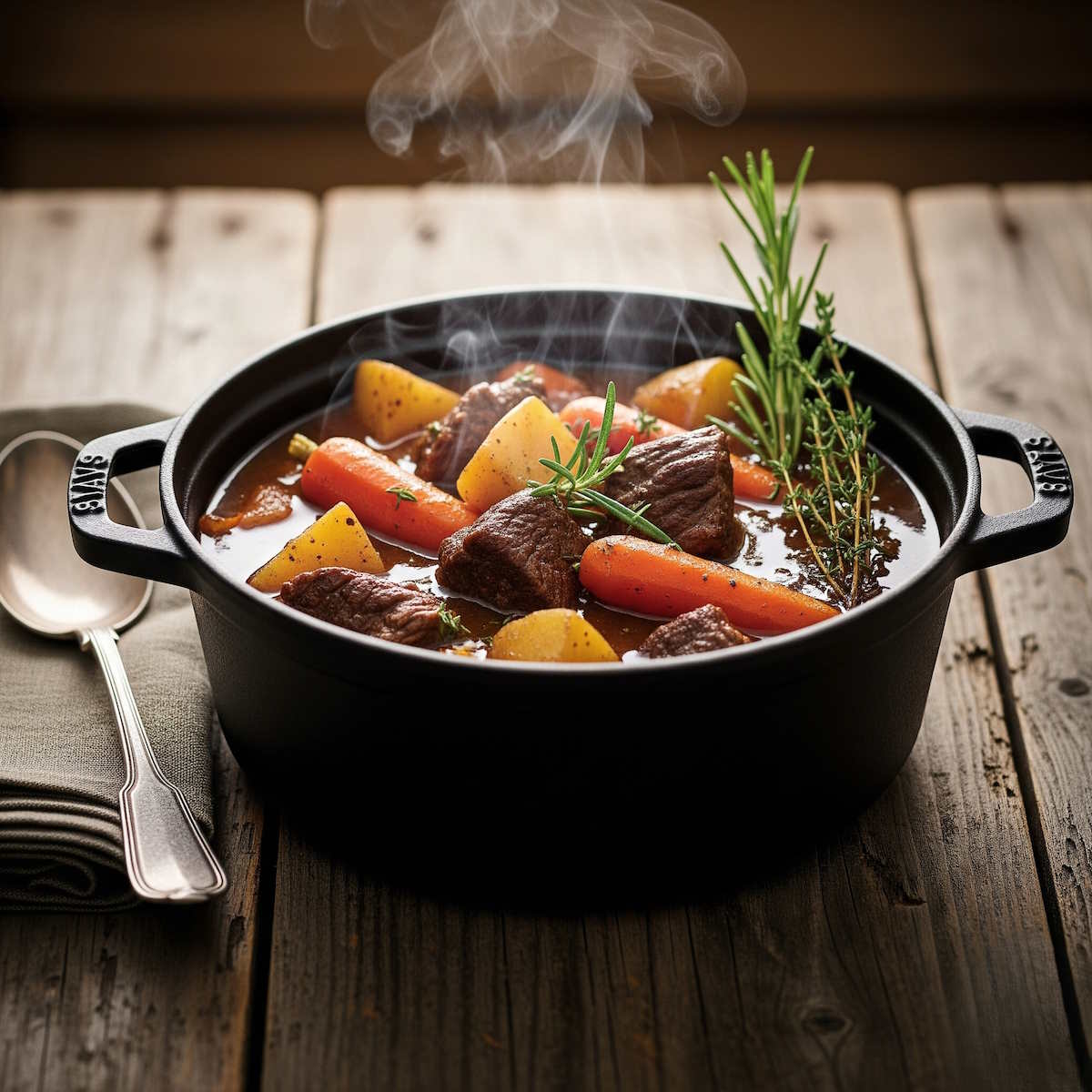
In an age that glorifies speed, where instant notifications and on-demand everything set the rhythm of our lives, the act of slowing down is a quiet rebellion.
This rebellion doesn’t require a grand gesture; it can begin with a simple, deliberate choice in the kitchen. Slow cooking is more than a cooking method; it’s a practical philosophy, a gentle counter-narrative to the frantic pace of the modern world.
While it’s often praised for its convenience, its true value lies in a deeper, more transformative set of benefits that touch every aspect of our lives—from the nutritional integrity of our food to the very flavor of our days.
We will explore the tangible advantages that go far beyond the simple ease of a one-pot meal. We will delve into the culinary alchemy that transforms humble ingredients into masterpieces of flavor, the nutritional science that makes it a healthier choice, and the quiet economics that benefit both our wallets and our peace of mind.
But most importantly, we will frame these benefits not as a series of disconnected life hacks, but as interconnected elements of a more intentional way of living.
This is the story of why cooking slow is one of the smartest, most rewarding decisions you can make in a fast-paced world. It’s about reclaiming our time, our health, and the profound, simple pleasure of real food.
The alchemy of flavor: the science of low and slow
The most immediate and seductive benefit of slow cooking is its unparalleled ability to develop deep, complex, and harmonious flavors. This isn’t magic; it’s a gentle and patient application of culinary science.
By holding ingredients at a low, consistent temperature for an extended period, we unlock a series of transformations that high-heat cooking simply cannot replicate. The slow cooker is not merely a convenience; it is an alchemical vessel.
How time becomes an ingredient
In fast cooking—searing, frying, grilling—time is the enemy. A moment too long can result in a burned, dry, or overcooked meal. In slow cooking, time is the most crucial ingredient.
Over the course of hours, flavors don’t just combine; they meld, mature, and deepen. Aromatic vegetables like onions, carrots, and celery slowly release their sugars and savory compounds, infusing the entire dish with a foundational sweetness and depth.
Herbs and spices, rather than delivering a sharp, immediate hit, have the leisure to permeate every fiber of the meat and vegetables, creating a layered, nuanced flavor profile that is impossible to rush.
The final dish tastes as if it has a history, a story told over hours, not minutes.
Transforming tough cuts into tender masterpieces
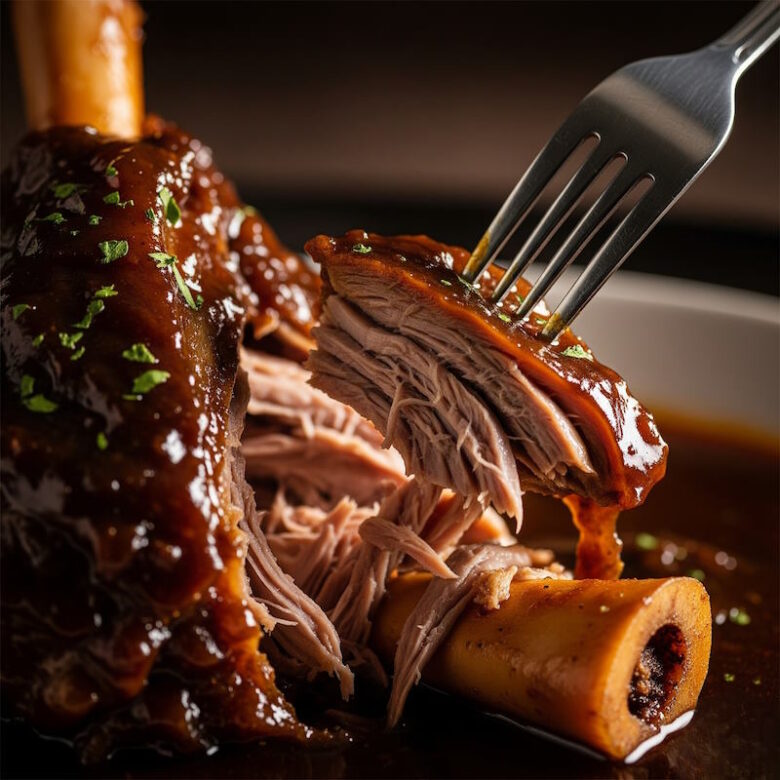
One of the most remarkable feats of slow cooking is its power over texture, particularly with meat. The secret lies in its effect on connective tissue.
Tough, sinewy, and affordable cuts of meat—like beef chuck, pork shoulder, brisket, or lamb shanks—are rich in a protein called collagen.
When cooked quickly at high temperatures, this collagen contracts and becomes tough and chewy. However, when held at a low, moist heat for a prolonged period (typically between 160°F and 205°F or 70°C and 95°C), a magical transformation occurs: the collagen slowly breaks down and dissolves into rich, silky gelatin.
This gelatin not only lubricates the muscle fibers, making the meat incredibly tender and succulent, but it also enriches the surrounding liquid, giving the sauce or broth a luxurious, full-bodied texture that is deeply satisfying.
Deeper, richer, and more complex flavors
Slow cooking is the ultimate environment for flavor fusion. Because the pot is sealed, very little moisture escapes. This means the ingredients are constantly braising in their own concentrated juices, along with any added broth or wine.
This enclosed, humid environment ensures that no flavor is lost to evaporation; instead, it is captured and continuously reinvested into the dish.
The gentle heat allows for a subtle Maillard reaction to occur over time, browning and caramelizing sugars and proteins to create hundreds of new aromatic compounds that provide savory depth.
The result is a meal where every component tastes both of itself and of the harmonious whole, creating a culinary experience that is profoundly comforting and complex.
The nutritional advantage: maximizing health benefits
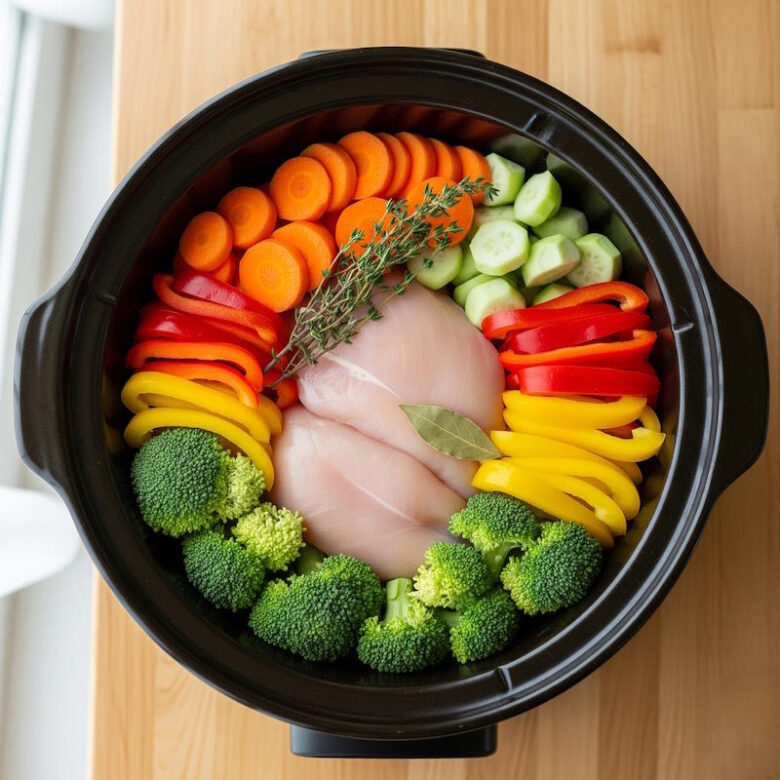
Beyond the remarkable improvements in taste and texture, slow cooking offers significant nutritional advantages. The gentle, controlled application of heat is often far better at preserving the inherent goodness of our food than aggressive, high-temperature methods. It is a way of cooking that works with the delicate nature of nutrients, not against them.
Preserving nutrients lost in high heat
Many essential vitamins are delicate and sensitive to heat. Water-soluble vitamins, such as Vitamin C and the B-complex vitamins (like B1, thiamine), are particularly vulnerable.
When foods are boiled or cooked at very high temperatures, these crucial nutrients can degrade or leach out into the cooking water, which is often discarded.
Slow cooking, with its lower temperatures and sealed environment, is far more protective. Because the cooking liquid is retained and becomes part of the final sauce or stew, any nutrients that do transfer from the food are consumed rather than thrown away.
Studies have shown that slow cooking can preserve these delicate nutrients more effectively than methods like boiling or pressure cooking.
Healthier cooking with less oil and fat
High-heat cooking methods like frying or sautéing often require significant amounts of added oils or fats to prevent sticking and facilitate browning.
In a slow cooker, the moist environment and non-stick surfaces drastically reduce, and often eliminate, the need for added fats.
The long cooking process naturally renders fat from meats, which can even be skimmed off before serving if desired. This makes it an ideal method for creating lean, healthy meals without sacrificing flavor or moisture.
The natural juices of the meat and vegetables create their own delicious, low-fat cooking medium, aligning perfectly with modern dietary goals for reduced fat intake.
Easier digestion and nutrient absorption
The same process that tenderizes tough cuts of meat also works on fibrous vegetables and legumes. The prolonged, gentle heat helps to break down complex carbohydrates and tough plant fibers, making them far easier for our bodies to digest.
This pre-digestion process not only prevents digestive discomfort but also enhances nutrient bioavailability—meaning our bodies can more easily absorb and utilize the vitamins and minerals present in the food.
For individuals with sensitive digestive systems, slow-cooked meals can be a comforting and highly nutritious option.
The quiet economics of a slow cooker
In a world of rising food and energy costs, the slow cooker emerges as an unsung hero of the household budget. Its benefits are not just culinary and nutritional; they are deeply practical and economical.
Adopting slow cooking is a strategic financial decision that saves money, energy, and the most precious resource of all: time.
The financial benefit of cheaper cuts of meat
The ability to transform tough, inexpensive cuts of meat into tender, five-star-quality meals is perhaps the greatest economic advantage of slow cooking.
Cuts like beef brisket, chuck roast, pork butt, and lamb shanks are significantly cheaper per pound than premium cuts like tenderloin or ribeye because they are packed with connective tissue.
For most cooking methods, this is a liability. For the slow cooker, it is an asset. This allows families to enjoy rich, satisfying meat dishes without the high cost, stretching the food budget further and making delicious, hearty meals more accessible.
Saving energy compared to a conventional oven
A conventional electric oven is a power-hungry appliance, consuming anywhere from 2,000 to 5,000 watts of energy. A typical slow cooker, by contrast, uses a fraction of that, often operating at a power level comparable to a single incandescent light bulb (around 75 to 250 watts).
Running a slow cooker for eight hours can consume less energy than running a conventional oven for just one. This dramatic difference in energy consumption translates directly into lower electricity bills over time. It’s a quieter, more efficient, and more sustainable way to cook.
The ultimate time-saver: the “set it and forget it” advantage
While the cooking process is long, the active preparation time for a slow-cooked meal is remarkably short. Most recipes simply require chopping some vegetables and browning the meat before placing everything in the pot.
The appliance does the rest of the work without any need for supervision. This “set it and forget it” nature is a game-changer for busy professionals, parents, and anyone juggling a demanding schedule.
It liberates hours of a day that would otherwise be spent actively cooking and monitoring a meal. It allows you to come home after a long day not to the stress of figuring out dinner, but to the welcoming aroma of a perfectly cooked, ready-to-eat meal. This is not just time saved; it’s peace of mind gained.
Beyond the pot: the mindful benefits
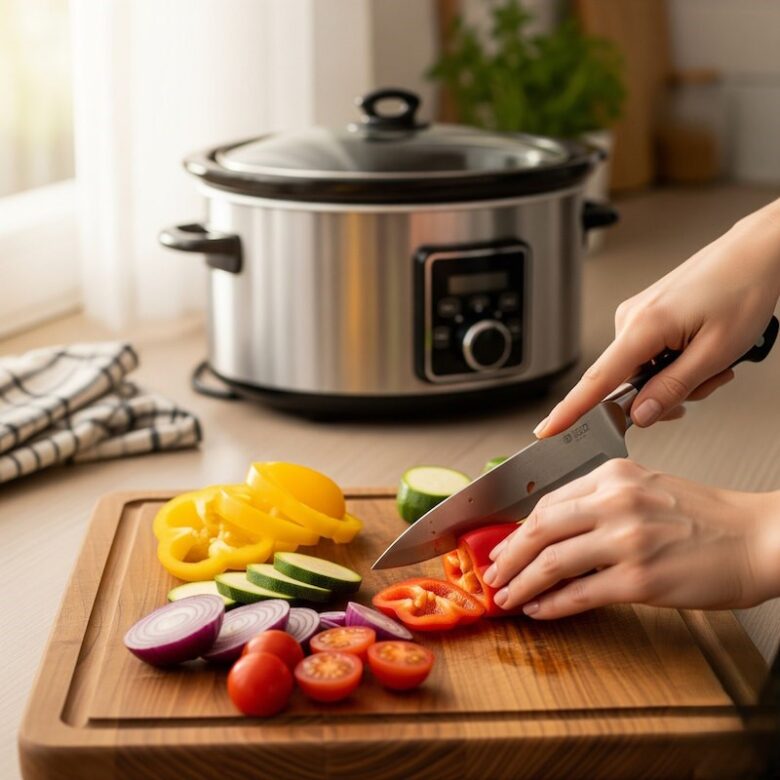
Perhaps the most profound benefits of slow cooking are the ones that can’t be measured in dollars or nutrients. In a culture that prizes immediacy, the deliberate act of cooking slow is a form of mindfulness.
It is a choice to engage with our food on a deeper level, to find a calmer rhythm in our daily lives, and to reconnect with a more intentional way of living.
A counterpoint to the stress of fast-paced cooking
Think of the frantic energy of a last-minute stir-fry or the high-pressure precision of grilling a steak to the perfect temperature. While exciting, these methods can be stressful.
Slow cooking is the antithesis of this culinary anxiety. The preparation is relaxed and methodical. There is no frantic rush. The long, unsupervised cooking time removes the pressure of constant attention.
It is a forgiving process that builds confidence. The gentle, simmering sounds and the gradually building aroma create a calming and comforting atmosphere in the home, turning the act of preparing a meal from a stressful chore into a therapeutic ritual.
The ritual of preparation and anticipation
Choosing to make a slow-cooked meal is an act of foresight and care, both for oneself and for others. The morning ritual of chopping vegetables and searing meat is a quiet, meditative practice that sets a tone of intention for the day.
And as the hours pass, the house fills with a rich, promising aroma. This slow build-up of anticipation is a pleasure in itself, a stark contrast to the instant gratification of fast food.
It teaches a quiet patience and allows us to savor the entire process of a meal, from preparation to the final, rewarding taste.
Connecting with the principles of the “slow food” movement
The practice of slow cooking in the home is a personal embodiment of the global “Slow Food” movement. Founded in the 1980s as a protest against the opening of a McDonald’s in Rome, the Slow Food movement champions a food system that is “good, clean, and fair.”
It advocates for preserving regional food traditions, celebrating the pleasure of quality food, and promoting a slower pace of life. By choosing to cook slowly, we participate in this philosophy.
We honor traditional cooking methods, we are more likely to use whole, unprocessed ingredients, and we reclaim the dinner table as a place of connection and enjoyment, not just rapid refueling.
The practical manifesto: why slow cooking is the future
Far from being an outdated method, slow cooking is more relevant today than ever. It is a perfectly modern solution to many of our most pressing contemporary challenges, from busy schedules and tight budgets to the urgent need for a more sustainable and mindful approach to food.
The perfect tool for meal prepping and busy lives
The rise of meal prepping is a direct response to the desire for healthy, home-cooked meals without the daily time commitment. The slow cooker is the ultimate meal-prepping appliance.
Its large capacity allows for cooking in batches, providing multiple meals for the week ahead from a single, low-effort session.
Soups, stews, chilis, and pulled meats can be easily cooked, portioned, and stored, creating a stockpile of nutritious options that are always ready to go.
Reducing food waste by using everything
Food waste is a major economic and environmental issue. Slow cooking is a powerful tool in the fight against it. It is the perfect vehicle for using up leftover vegetables that are slightly past their prime, transforming them into rich and flavorful stocks, soups, and stews.
Its ability to tenderize tough cuts encourages a more “nose-to-tail” approach to meat consumption, ensuring that less of the animal is wasted. It is a frugal and responsible way of cooking that honors the ingredients and maximizes their potential.
A return to real, unprocessed food
Ultimately, the greatest benefit of slow cooking is that it puts us back in control of what we eat. It encourages us to cook from scratch with whole, identifiable ingredients.
In a world saturated with highly processed, pre-packaged foods of questionable nutritional value, a slow cooker is a gateway back to real food.
It is a simple, accessible tool that empowers anyone, regardless of culinary skill, to create meals that are not only delicious and economical but also deeply nourishing for the body and the soul.
It is a quiet, consistent, and powerful statement that our well-being is worth taking the time for.
In a world of fast food and faster feeds, choosing the meaningful path is a deliberate act. Neomania is the signal for those who are tired of the noise. Tune in. Subscribe to Neomania.