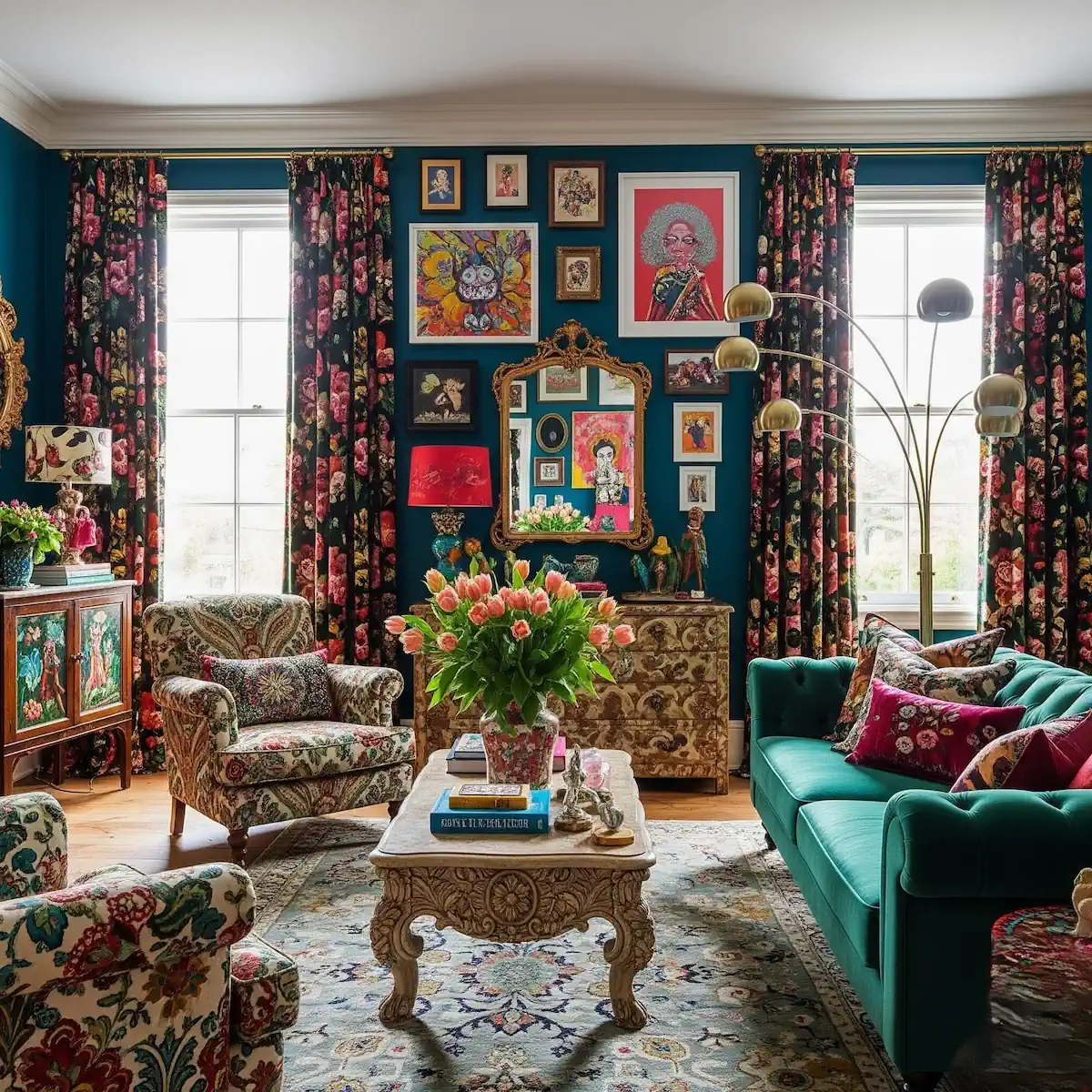
In the quiet, uncluttered landscape of the last decade, minimalism reigned supreme. It was a visual doctrine of clean lines, muted palettes, and intentional scarcity, a philosophy that whispered elegance through absence.
But the cultural pendulum has a momentum all its own. Today, a seismic shift is underway, and its expression is anything but quiet.
A vibrant, chaotic, and unapologetically loud aesthetic has captured the imagination of youth culture: maximalism.
This is not mere decoration; it is a declaration. In a world saturated with information and grappling with unprecedented complexities, a new generation is choosing to fight fire with fire, embracing an aesthetic of glorious excess.
They are rejecting the notion that less is more, and in its place, championing a powerful new creed where more is, emphatically, more.
This return to abundance is a complex cultural tapestry woven from threads of digital expression, historical nostalgia, and a profound psychological need for joy and identity.
It’s visible in the clashing prints of street fashion, the curated clutter of urban apartments, and the dazzling, multifaceted worlds of our digital lives.
Maximalism is the chosen language for a generation that has inherited a world of anxieties—climate change, economic instability, political polarization—and has decided to respond not with quiet contemplation, but with a riot of color, texture, and form.
It is a visual philosophy of resilience, a way of building personal sanctuaries that are rich, layered, and deeply personal.
To understand this movement is to look beyond the surface of its opulence and see the powerful currents of cultural change that lie beneath.
The return of excess in youth fashion
Fashion, as a cultural barometer, has been the first and most visible stage for maximalism’s grand return.
The minimalist uniform of monochromatic basics and understated silhouettes has been usurped by a joyous cacophony of style that prioritizes individual narrative over prescriptive trends.
Today’s youth are not dressing to blend in; they are assembling outfits that tell a story, layering garments like chapters in a personal anthology.
This sartorial shift is a direct conversation with the times, a visual dialogue that is intricate, referential, and deeply felt.
Beyond logos: the new wave of statement pieces
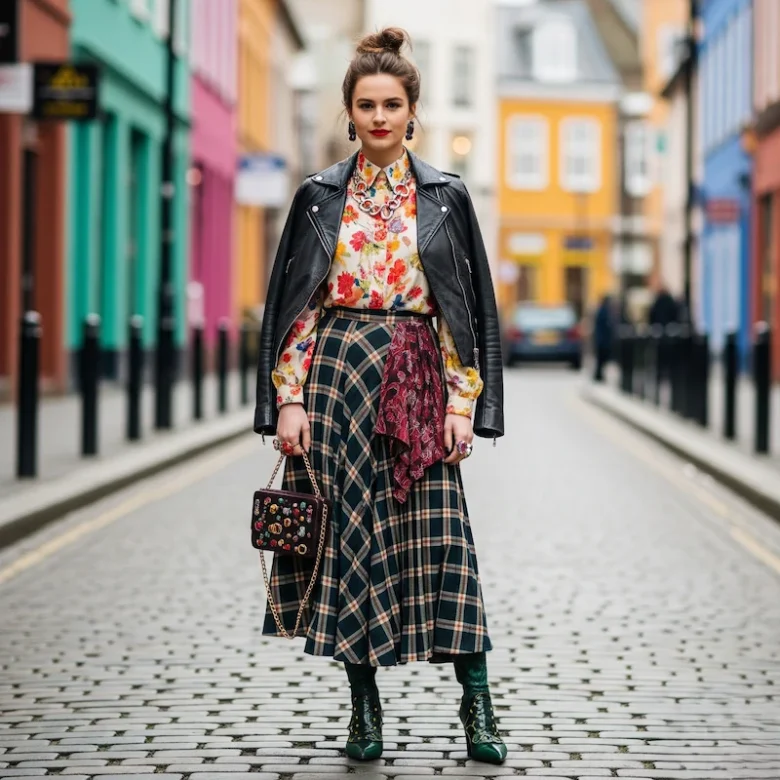
The obsession with brand logos that defined an earlier era has given way to a more nuanced appreciation for the “statement piece.”
This isn’t about broadcasting wealth, but about communicating personality. A statement piece in the maximalist lexicon could be a sculptural jacket with exaggerated proportions from a rising independent designer, a pair of artisan-crafted earrings that border on wearable art, or a handbag in a shockingly vibrant hue.
The value lies in its uniqueness and its ability to act as a narrative anchor for an outfit. Brands like Gucci under Alessandro Michele’s tenure arguably set the stage for this, presenting collections that were rich with historical references, intricate embroidery, and eccentric combinations, teaching a generation that fashion could be both intelligent and fantastically over-the-top.
Layering textures and prints for a new age
The new maximalist wardrobe is a masterclass in textural and pattern-based experimentation.
The old rules of coordination have been gleefully discarded. Now, slick leather trousers might be paired with a chunky, hand-knitted cardigan; a delicate silk slip dress might be worn over a graphic-printed turtleneck.
It’s a fearless approach that sees leopard print as a neutral and believes floral and plaid can coexist in harmony.
This isn’t chaos for chaos’s sake; it’s a sophisticated form of visual collage. It reflects a deep engagement with the materiality of clothing, a desire to create a sensory experience that is as rich to the touch as it is to the eye.
This approach celebrates complexity and rejects the flat, two-dimensional nature of a purely digital existence.
How vintage and secondhand fuel the maximalist wardrobe
Perhaps the most sustainable and inventive engine of fashion maximalism is the thriving ecosystem of vintage and secondhand commerce.
Platforms like Depop and The RealReal have become treasure troves for young stylists looking to cultivate a look that is entirely their own.
Thrifting allows for the discovery of one-of-a-kind pieces from different decades, enabling a unique form of sartorial time travel.
A 1970s psychedelic blouse can be paired with 90s platform boots and a 2000s-era beaded bag, creating an ensemble that is both deeply personal and impossible to replicate.
This practice is not only an aesthetic choice but an ethical one, representing a conscious move away from the relentless cycle of fast fashion and toward a more circular, character-rich approach to building a wardrobe.
Decoding the digital language of maximalism
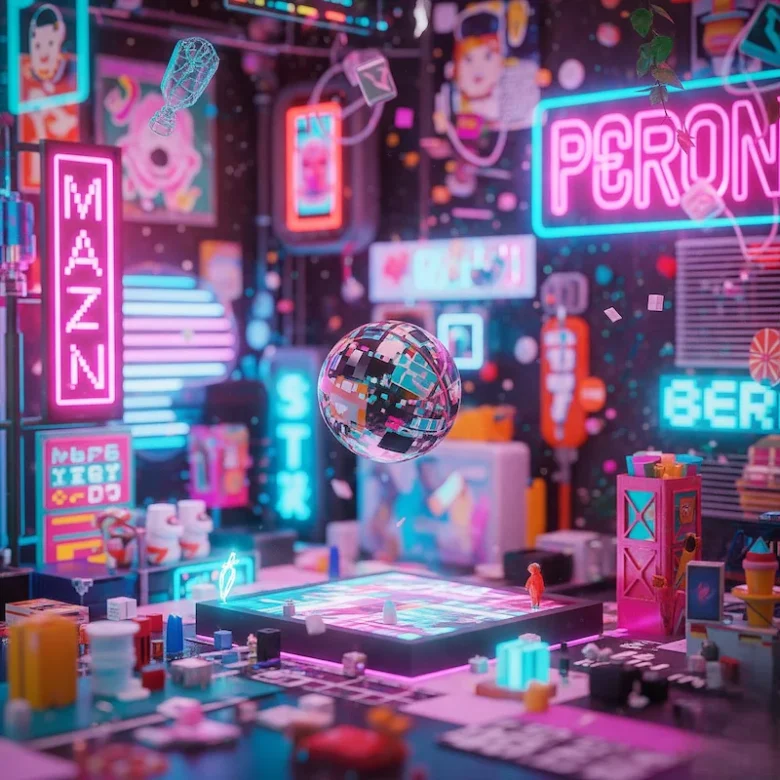
While its roots may be in the tangible world of fashion and decor, maximalism has found its most fertile ground and widest audience in the digital realm.
Social media platforms have become vast, evolving galleries where maximalist aesthetics are developed, refined, and disseminated at lightning speed.
Here, the constraints of the physical world fall away, allowing for an even more uninhibited exploration of color, form, and curated chaos.
For Gen Z, whose social lives are inextricably linked with their online presence, digital maximalism is not just a trend; it is a fundamental aspect of identity construction and communication.
The TikTok effect on chaotic and colorful styles
TikTok’s algorithm, which favors high-engagement, visually stimulating content, has acted as a powerful incubator for maximalist micro-trends.
The platform’s fast-paced, video-first format is perfectly suited to aesthetics that are bold, dynamic, and instantly legible.
From the “weird girl aesthetic,” which champions mismatched patterns and unconventional silhouettes, to the recent “mob wife” trend with its embrace of faux fur, animal prints, and chunky gold jewelry, TikTok accelerates the lifecycle of these styles.
It allows users not just to see the trend, but to see it in motion, to understand its attitude and context through short, looping narratives.
This creates a participatory culture where users are constantly reinterpreting and building upon a shared visual language of excess.
Instagram’s role in curating cluttercore aesthetics
If TikTok is the dynamic engine of maximalism, Instagram is its meticulously curated museum. Here, the aesthetic known as “cluttercore” or “clutter-core” thrives.
It is the art of the organized mess, the beautiful arrangement of a multitude of cherished objects.
Influencers and everyday users alike share images of their spaces—bookshelves overflowing with novels, walls covered in a dense collage of prints and postcards, desks adorned with a menagerie of charming trinkets.
It is a direct rebellion against the sterile, impersonal perfection of minimalist interiors. On Instagram, a photo of a cluttered, colorful room communicates a rich inner life, a personality with hobbies, passions, and a story to tell. It transforms the home from a mere living space into a living biography.
How digital avatars and gaming skins embrace excess
The ultimate frontier of maximalism may be in the metaverse and online gaming. In virtual worlds like Roblox, Fortnite, and VRChat, users are liberated from the laws of physics and the limitations of a budget.
Digital fashion and “skins” for avatars allow for an unparalleled level of customization and ornamentation. Players can adorn their digital selves with glowing wings, impossible armor, and outfits that change color with every movement.
This is maximalism in its purest form—expression without consequence. It provides a space for experimentation and fantasy, allowing young people to construct identities that are as complex, vibrant, and multifaceted as they wish, pushing the boundaries of what it means to “dress up.”
Maximalist interiors for a new generation
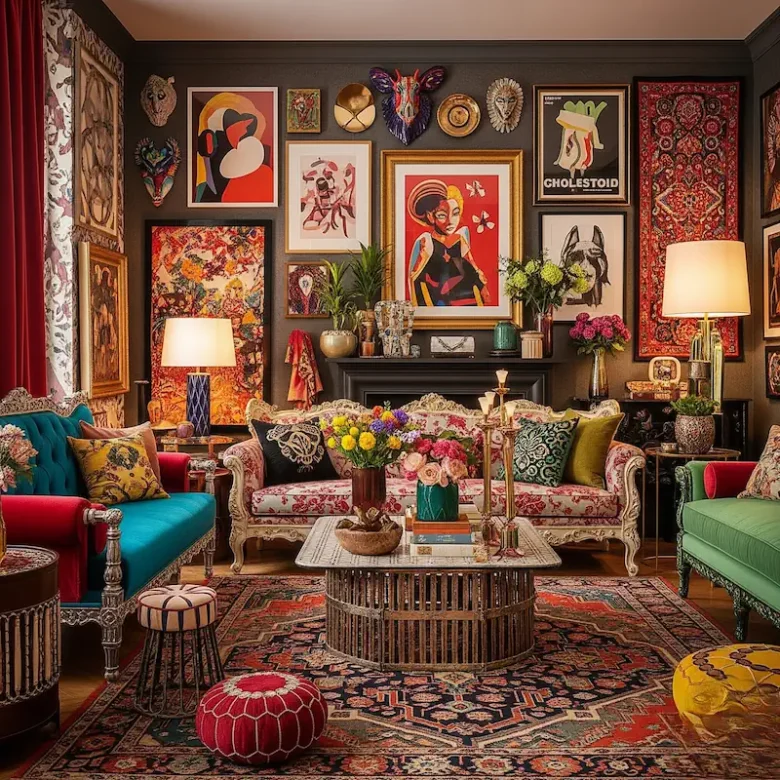
The home has been reclaimed as a sanctuary, a space not just for living, but for vibrant self-expression.
The minimalist ideal of a sparse, gallery-like space has been replaced by a desire for homes that feel lived-in, layered, and deeply personal.
The new generation of decorators and dwellers is eschewing impersonal show-home aesthetics in favor of interiors that are rich with story, color, and personality.
This is the domestic manifestation of the maximalist creed: a home should be a reflection of the soul, and the soul is rarely, if ever, beige.
The rise of the gallery wall in a digital age
The gallery wall is a cornerstone of the modern maximalist interior. It is far more than a collection of pictures; it is a visual diary writ large upon the living room wall.
In an age dominated by digital photo streams, the act of printing, framing, and physically arranging images and art becomes a powerful statement of intent.
These walls are eclectic mosaics, mixing fine art prints with personal photographs, quirky postcards, concert tickets, and antique mirrors.
The arrangement is often organic and asymmetrical, valuing emotional resonance over perfect alignment.
Each wall tells a story, mapping out a resident’s travels, relationships, and aesthetic sensibilities, turning a blank surface into a focal point of personal history.
Dopamine decor and the psychology of color
The concept of “dopamine decor” is central to understanding the appeal of maximalist interiors.
This approach involves using color, pattern, and texture specifically to evoke feelings of happiness, energy, and joy. After years of sensory deprivation from living in muted, grayscale environments, there is a collective yearning for spaces that stimulate and uplift.
This translates into bold choices: a sofa upholstered in emerald green velvet, a kitchen painted a sunny, optimistic yellow, or a bathroom tiled in a vibrant, geometric pattern.
It’s a design philosophy rooted in psychology, recognizing that our surroundings have a profound impact on our mood and well-being.
The goal is to create a home that doesn’t just look good, but feels good.
Blurring the lines between kitsch and curated chaos
The new maximalism fearlessly embraces objects and styles once dismissed as “kitsch.” There is a newfound appreciation for the charm and nostalgia of items that are quirky, humorous, and even slightly gaudy.
A collection of ceramic cats, a vintage lava lamp, or a piece of fringed furniture can all find a place in a maximalist home, provided they are chosen with love and intention.
The key is the curation. This isn’t hoarding; it’s a carefully considered form of collecting. The skill lies in blending high and low, old and new, serious and playful.
The result is a space that defies easy categorization, feeling uniquely assembled and deeply authentic to its inhabitant, a testament to a life fully lived.
The philosophy behind the flourish
To dismiss maximalism as a mere aesthetic trend is to miss the profound philosophical currents that give it meaning.
It is not simply a preference for “more stuff,” but a complex and nuanced response to the cultural, social, and technological conditions of the 21st century.
For the youth driving this movement, maximalism is a worldview, a strategy for navigating a world of overwhelming information and uncertainty.
It is a conscious choice to embrace complexity and find power in abundance, a philosophy that is as intellectual as it is visual.
A rejection of scarcity and a celebration of abundance
Minimalism, at its core, often romanticized a kind of elegant scarcity. It suggested that clarity and value were found by stripping things away. Maximalism offers a powerful counter-narrative.
For a generation that came of age amidst economic recessions and is now facing unprecedented housing and job insecurity, the aesthetic of scarcity can feel less like a choice and more like an imposed reality.
Maximalism, in this context, is a defiant act of celebration. It is the creation of personal worlds of abundance, a visual feast that insists on joy, richness, and possibility, even when the external world preaches limitation.
It is a way of saying, “I will not be defined by what I lack, but by the richness I can create.”
Maximalism as a form of identity exploration
In a world where identity is increasingly understood as fluid, intersectional, and self-defined, maximalism provides the perfect visual language for this exploration.
A minimalist aesthetic implies a fixed, singular identity—clean, edited, and unambiguous. Maximalism, by contrast, allows for the expression of a multifaceted self.
A person can be interested in 18th-century art, punk rock, and Japanese anime simultaneously, and a maximalist aesthetic allows all these facets of their personality to coexist visually in their fashion and their home.
It is a rejection of the need to “pick a lane” and an embrace of the beautiful, contradictory messiness of being human. Each layer, each object, each pattern is a part of a larger, ever-evolving identity.
The influence of art history on modern maximalist trends
Modern maximalism is not without precedent; it is part of a rich historical lineage. It echoes the decadent ornamentation of the Baroque and Rococo periods, the intricate patterns of the Arts and Crafts movement, and the rebellious eclecticism of Postmodernism in the 1980s.
Young creatives are voraciously consuming art history, reinterpreting these past movements for a contemporary audience.
A Gen Z designer might draw inspiration from the gilded excess of Versailles for a streetwear collection, or a young decorator might look to the bohemian spirit of the Bloomsbury Group for interior styling.
This historical awareness adds a layer of intellectual depth to the movement, framing it not as a fleeting fad, but as the latest chapter in a long and fascinating story of humanity’s love affair with ornamentation.
Maximalism’s impact on the beauty industry
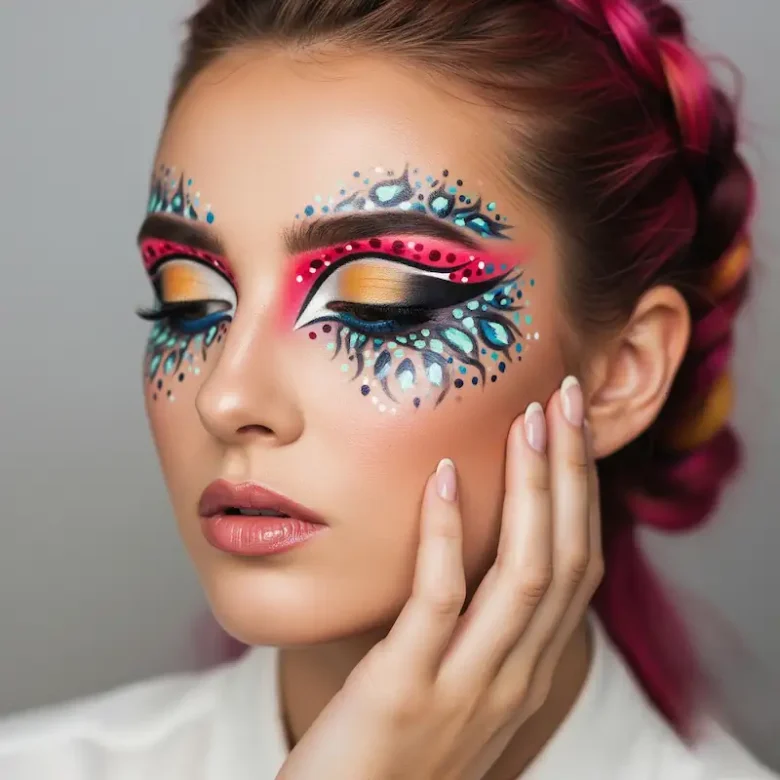
The world of beauty and cosmetics, long a canvas for self-expression, has become a key battleground in the war against minimalism.
The “no-makeup makeup” look, with its emphasis on subtle enhancement and natural perfection, is now just one option among many.
Maximalism in beauty is a celebration of artistry, color, and fearless experimentation. It treats the face and body as a space for creative play, where the goal is not to conform to a standard of beauty, but to invent one’s own.
This shift has been driven by a generation of digital-native creators who use makeup as a tool for transformation and a medium for art.
Graphic eyeliner and bold eyes as self-expression
The eyes have become the focal point of maximalist beauty. Graphic eyeliner has evolved far beyond the classic cat-eye, with creators painting intricate, geometric shapes, floating creases, and abstract lines in a rainbow of colors.
This is makeup as illustration. It is often paired with bold, color-blocked eyeshadow, vibrant mascara, and the strategic application of gems, pearls, or glitter.
Inspired by television shows like Euphoria, this trend turns the eye area into a miniature canvas.
It is a way to communicate a mood or an artistic sensibility in a powerful, visually immediate way, transforming a daily routine into a moment of creative expression.
The resurgence of elaborate nail art
Nail art has exploded into a significant subculture within the maximalist movement. The simple French manicure has been replaced by long, sculptural nails adorned with complex, three-dimensional designs.
Nail technicians are now artists, creating miniature masterpieces that might include hand-painted scenes, encapsulated charms, intricate textures, and piercing-like adornments.
Each set of nails is a statement, a temporary installation of wearable art. This trend highlights a focus on detail and craft, a desire to carry beauty and complexity to one’s very fingertips.
It’s a form of personal branding that is both intimate and highly visible.
How brands are catering to the maximalist consumer
The beauty industry has taken note of this seismic shift. Independent, creator-led brands have found massive success by offering highly pigmented, unconventionally colored products that cater to the desire for bold experimentation.
Legacy brands are also adapting, expanding their shade ranges, launching collaborative collections with avant-garde artists, and featuring more diverse and creative looks in their marketing campaigns.
The packaging itself has become more maximalist, with ornate containers and vibrant designs that make the product a decorative object in its own right.
The successful beauty brand of today understands that it is no longer just selling a product; it is selling a tool for identity creation and a ticket to a more colorful world.
The future of maximalism in a changing world
As with any powerful cultural movement, the question of longevity arises. Is maximalism a fleeting aesthetic spasm, or does it represent a more permanent shift in our cultural values?
As we look to the future, it seems clear that the core tenets of the movement—self-expression, joy, and the celebration of complexity—are here to stay.
However, the form and expression of maximalism will inevitably evolve as it confronts new social and economic realities.
Its future will be defined by its ability to adapt, innovate, and find new meaning in an ever-changing world.
Sustainable maximalism and conscious consumption
A primary critique of maximalism is its potential to encourage overconsumption. However, a more thoughtful, sustainable version of the movement is already taking shape.
This approach champions finding excess in what already exists. It is maximalism powered by vintage finds, upcycled furniture, and mended clothing.
It is about creating richness not through constant acquisition, but through creativity, resourcefulness, and the art of the collage.
This “conscious maximalism” proves that an aesthetic of abundance does not have to be at odds with environmental responsibility. It’s about having a lot of things you love, not just a lot of things.
The evolution of maximalism in a post-pandemic era
The global pandemic was a powerful catalyst for the current wave of maximalism. After periods of lockdown and sensory deprivation, there was a collective, explosive desire for joy, social connection, and vibrant experiences—a phenomenon dubbed “revenge dressing.”
As we move further into a post-pandemic reality, this initial explosive energy may mellow into a more integrated form of expression.
The home will likely continue to be a central canvas for maximalist expression, having been solidified as our ultimate sanctuary.
The desire for joyful, expressive fashion for social events will remain, but it may be balanced with a continued appreciation for comfort and practicality.
What comes next after more is more?
Predicting the next cultural pendulum swing is a fool’s errand, but we can identify the seeds of what might come next within maximalism itself.
Perhaps the future lies in an even more personalized synthesis—a “personal eclecticism” where individuals create a unique blend of minimalist and maximalist principles tailored to their own needs.
A serene, minimalist bedroom might coexist with a wildly maximalist living room in the same home.
An outfit might feature a single, sculptural, minimalist garment accessorized with layers of ornate, maximalist jewelry.
The future of style is unlikely to be a return to a single, prescriptive doctrine. Instead, it will be about providing a broader, more permissive toolkit for self-expression, where the ultimate arbiter of taste is not a magazine or a trend, but the individual.
Maximalism is far more than a simple aesthetic preference; it is the chosen visual vocabulary for a generation navigating unprecedented complexity.
This powerful embrace of the layered, the referential, and the unapologetically abundant serves as a philosophy of resilience, a way to carve out personal worlds rich with meaning.
From the curated chaos of a city apartment to the defiant expression of street fashion, it proves that in an overwhelming age, creating one’s own reality is the ultimate act of power.
For more deep dives into the aesthetics defining our time, subscribe to Neomania and continue to explore the art, design, and culture of now.
[mailerlite_form form_id=3]