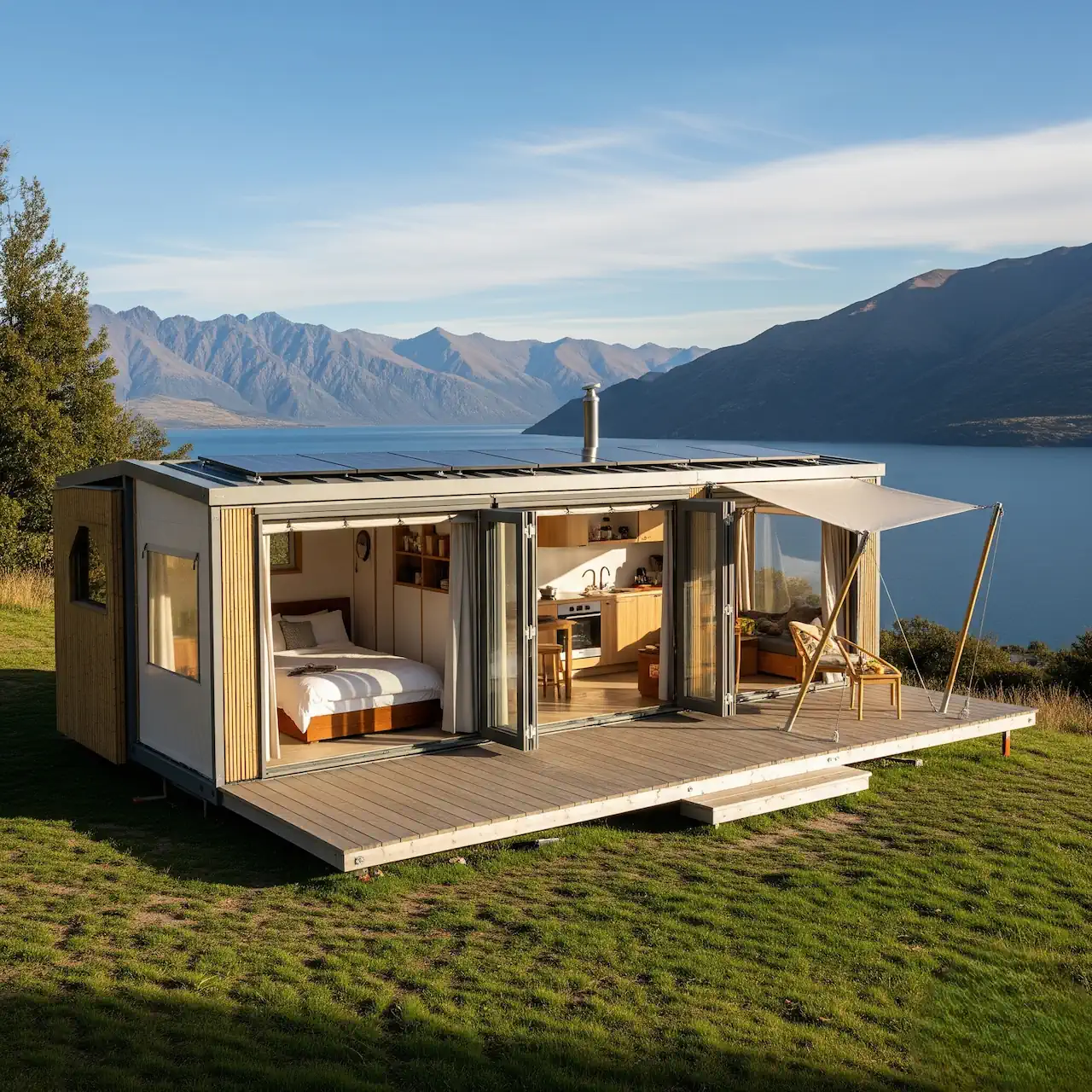
In an age defined by accelerating change, the traditional notion of architecture as a permanent, immovable monument is undergoing a profound transformation.
As humanity grapples with challenges like ecological urgency, unprecedented migration, and the fluid nature of digital work, the very idea of a fixed dwelling is being reevaluated.
This new era calls for a different kind of architectural thinking—one that prioritizes movement, flexibility, and adaptability over permanence.
This is the domain of nomadic dwellings, a field that is swiftly evolving from a fringe concept into a critical discipline.
Nomadic dwellings are mobile, flexible, and often ephemeral structures that challenge the deeply ingrained Western idea that buildings must last forever.
They represent a philosophical shift, embracing impermanence not as a flaw to be overcome, but as a central design principle.
These designs are born from the recognition that our world is in constant flux, and our living spaces must be equipped to move, change, and respond to that volatility.
They are not merely temporary shelters; they are thoughtful, human-scaled solutions for a future where roots are chosen, not predetermined.
This article will explore the historical context, modern innovations, and ethical implications of this groundbreaking architectural movement, showing how designing for impermanence is becoming one of the most compelling and necessary approaches in contemporary architecture.
What are nomadic dwellings?
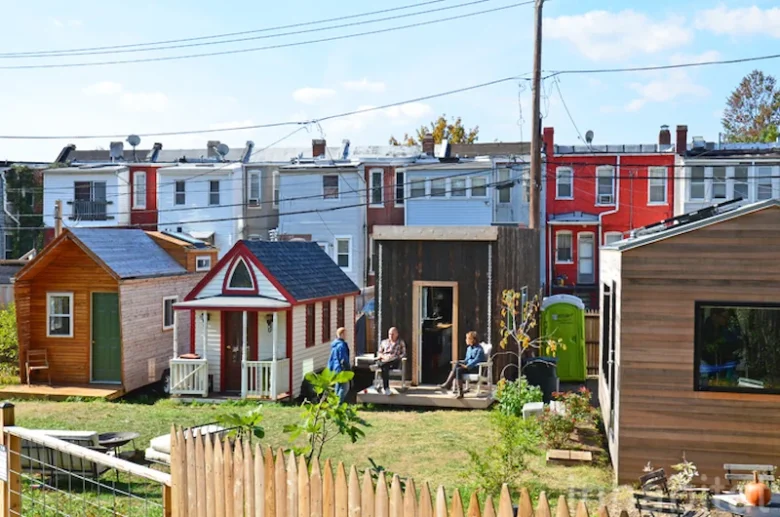
While the concept of mobile living may evoke images of traditional yurts or simple caravans, the modern nomadic dwelling is far more complex and technologically advanced.
It is an innovative typology that transcends the conventional boundaries of what a home can be, integrating new materials, modular systems, and smart technologies to create living spaces that are as dynamic as the lives they support.
At their core, these dwellings are defined by their capacity for movement, their adaptability to changing environments, and their philosophical embrace of transience.
Beyond tents and caravans
Today’s nomadic dwellings extend far beyond the historical precedents of tents and caravans. They include a diverse array of innovative structures, each designed with a specific form of mobility in mind.
Modular pods, for instance, are prefabricated units that can be transported and combined like building blocks to form larger living spaces.
These pods are often designed with a “plug-and-play” philosophy, allowing for quick assembly and disassembly, making them ideal for both individual living and rapid community formation.
Another example is inflatable architecture, which utilizes advanced fabrics and pneumatic technology to create lightweight, transportable shelters that can be deployed almost instantly.
Meanwhile, foldable micro-units are engineered to compress into compact forms for easy transport, only to unfold into fully functional homes at their destination.
These examples showcase a departure from historical nomadic architecture, leveraging modern engineering and design to create shelters that are not only mobile, but also highly efficient and customizable.
Architecture in motion
The defining characteristic of these dwellings is that they are structures designed to be in motion, rather than fixed in place.
They are not rooted in one piece of land; instead, they are rooted in the people who inhabit them. This shift from “place” to “presence” is a central tenet of the movement.
These buildings are meant to adapt to the environment, not dominate it. They can be relocated to chase better weather, follow a seasonal job, or simply to experience a new landscape.
They respond to the rhythms of life, rather than resisting them. The result is a home that functions as a responsive interface, a living skin that changes with its occupant’s journey.
This is a profound break from conventional building, which often forces people to adapt their lives to the limitations of a fixed structure.
By embracing mobility, nomadic dwellings offer a new kind of freedom—the freedom to live with intention, moving and settling as one’s life dictates, without the cumbersome weight of a permanent foundation.
Why impermanence matters today
The renewed interest in impermanence is not merely a stylistic trend; it is a pragmatic and philosophical response to the defining challenges of our time.
Traditional architecture, with its focus on permanence and stability, often proves ill-suited to a world marked by environmental volatility, rapid technological shifts, and unprecedented human mobility.
Nomadic dwellings, by their very nature, are designed to navigate this uncertainty. They embody a forward-thinking approach that acknowledges a future where flexibility and resilience will be far more valuable than rigid longevity.
This shift in perspective is driven by a confluence of powerful forces, from ecological crises to the evolution of global work cultures.
Climate migration and urban flux
As a result of climate change, millions are being displaced by extreme weather events, rising sea levels, and desertification.
This climate migration represents a new reality where communities must be prepared to move, sometimes with little warning. In this context, architecture must adapt to mobility and unpredictability.
Nomadic dwellings offer a critical solution, providing shelter that can move with people rather than being abandoned.
They are a form of architecture designed for crisis and adaptation, enabling swift, dignified relocation. Moreover, they are particularly relevant in rapidly urbanizing areas, where land is scarce and costly.
Temporary, movable structures can occupy interstitial urban spaces, creating dynamic public hubs or affordable housing solutions without the irreversible commitment of a permanent building. This adaptability makes them a vital tool for managing the fluidity of modern urban life.
Digital nomads and remote living
The rise of the digital nomad and the remote work revolution has fundamentally altered the relationship between work, life, and location. Millions are no longer tethered to a single city, pursuing a lifestyle of geographical freedom.
This new way of living demands an architecture that supports mobility, not fixation. Nomadic dwellings, such as sophisticated mobile pods or highly adaptable modular homes, cater directly to this demographic.
They provide the comfort and functionality of a traditional home while enabling a location-independent existence. This revival of interest is not just about convenience; it’s about a philosophical alignment.
Digital nomads value experiences over possessions, and a home that can travel with them is the ultimate expression of that freedom, contrasting sharply with the permanence and burden of a traditional mortgage and fixed property.
Cultural history of nomadic architecture
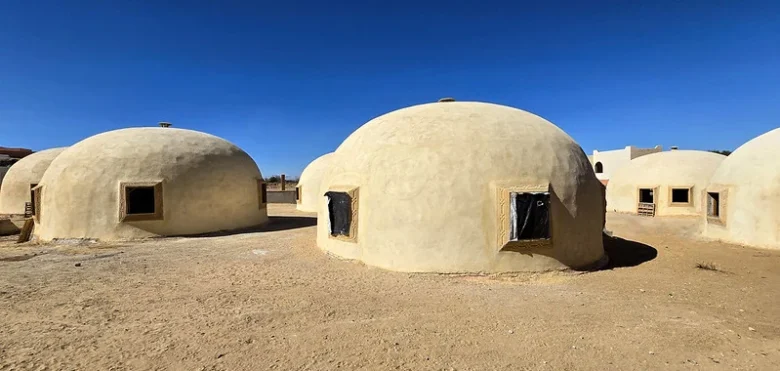
The modern nomadic dwelling is often viewed as a radical innovation, but its roots run deep in the annals of human history.
For millennia, many cultures across the globe have perfected the art of creating temporary and mobile shelters.
This rich cultural history provides a powerful precedent for today’s designs, demonstrating that a focus on impermanence can lead to highly sophisticated, efficient, and beautiful architectural solutions.
By studying these ancient traditions, contemporary architects gain insights into sustainability, climate adaptation, and the deep connection between people and their living spaces.
Ancient traditions, modern relevance
Examples of traditional nomadic architecture are as diverse as the cultures that created them. The Mongolian yurt, for instance, is a marvel of engineering.
Its circular lattice frame and felt covering provide exceptional insulation against the harsh steppe climate, while its lightweight, collapsible design allows it to be packed and transported on the back of a few camels.
Similarly, the Bedouin tents of the Middle East, crafted from woven goat hair, are designed to breathe and provide shade in the scorching desert heat.
Their dark color absorbs sunlight, creating a cooler interior through convection. In the Americas, the Indigenous longhouses of certain tribes were designed to be partially disassembled and re-erected, allowing entire communities to move with seasonal resource cycles.
These historical systems were incredibly efficient, climate-responsive, and deeply cultural, proving that “sustainability” and “adaptability” were core principles long before they became modern buzzwords.
Architecture as rhythm, not anchor
For many nomadic cultures, building wasn’t about creating an anchor to a single place, but about participating in a larger rhythm of life—a cycle of movement, seasons, and natural resources.
Their homes were not static objects but integral parts of their annual migrations. This perspective stands in stark contrast to the Western architectural tradition, which often fetishizes permanence as a symbol of power and stability.
Today, as we face ecological precarity and a need for greater flexibility, this ancient philosophy of architecture as a dynamic system is becoming increasingly relevant.
It challenges us to rethink our assumptions about what a building is for, inviting us to value lightness, temporality, and flow.
Innovative approaches to modern nomadic dwellings
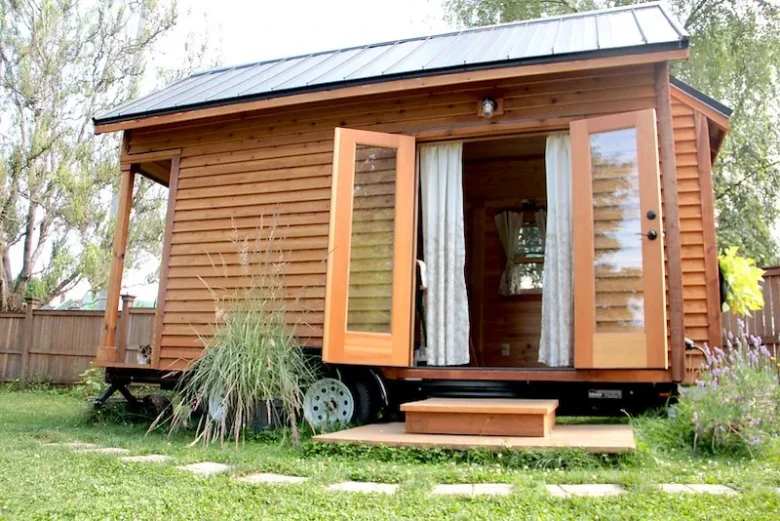
The evolution of nomadic dwellings from historical precedents to cutting-edge designs is a testament to human ingenuity.
Today, architects and designers are leveraging new technologies and materials to push the boundaries of what is possible, creating structures that are more flexible, efficient, and sophisticated than ever before.
These innovations are not just about making a shelter portable; they are about designing a seamless, responsive living system that can adapt to any condition, whether it’s a remote wilderness or a dense urban environment.
This new wave of nomadic architecture is about using technology not for spectacle, but for a more meaningful, adaptable, and sustainable existence.
Folding, floating, flying
Modern nomadic dwellings are exploring radical new forms of mobility. Designers are creating structures that unfold like origami, with walls and roofs that can expand from a compact, transportable form into a fully-functional living space in a matter of hours.
These designs, often made from lightweight composites or reinforced paper, embody a minimalist philosophy while providing surprising levels of comfort and durability.
Similarly, floating architecture is gaining traction as a solution for coastal urban centers and areas vulnerable to rising sea levels.
These dwellings are self-sufficient, tethered to a specific location but capable of being towed to a new site if necessary.
This approach redefines what it means to build on land, embracing the fluidity of water as a new foundation.
Finally, some of the most ambitious concepts involve flying architecture, where compact, prefabricated pods are airlifted into remote zones, offering instant shelter for disaster relief or scientific expeditions.
This truly treats architecture as a lightweight, deployable tool—a backpack for human habitation.
Digital fabrication and modularity
The shift towards nomadic dwellings has been greatly accelerated by advancements in digital fabrication.
Technologies like 3D printing allow for the creation of intricate, custom-designed components that are both strong and lightweight.
Homes can be printed in sections or even on-site, drastically reducing construction time and waste.
Similarly, CNC cutting, which uses computer-controlled machines to precisely cut materials like wood or metal, enables the creation of plug-in modules that fit together with perfect accuracy.
This modularity is a core principle of modern nomadic design, as it allows for dwellings that are quick to build, easy to move, and endlessly customizable.
A single unit can be a micro-home, a studio, or a retail space, and multiple units can be combined or rearranged to suit a family’s changing needs.
This approach empowers users, turning them from passive inhabitants into active co-creators of their living spaces.
Architects and studios rethinking impermanence
The current relevance of nomadic dwellings can be largely attributed to the vision of architects and studios who have championed the idea of impermanence.
Their work goes beyond creating a temporary structure; it uses temporality as a critical lens to explore social, environmental, and spatial problems.
By designing buildings that are not meant to last forever, they are asking fundamental questions about what architecture should do, who it should serve, and what its true value is in a world of constant change.
Shigeru Ban
Perhaps no architect is more synonymous with the ethics of impermanence than Shigeru Ban.
A Pritzker Prize laureate, Ban is world-renowned for his innovative use of unconventional materials, most notably cardboard tubes, to create sophisticated and dignified structures.
His work gained global recognition for its use in disaster-relief shelters, such as those built after the Kobe earthquake in 1995 and the Haiti earthquake in 2010.
Ban’s designs are not just quick and cheap; they are an elegant and respectful form of architecture that provides comfort and community to those who have lost everything.
His philosophy is that architects have a responsibility to use their skills to help society, and his work demonstrates that powerful, meaningful architecture can be born from impermanence and necessity.
Atelier Bow-Wow
The Japanese studio Atelier Bow-Wow, founded by Yoshiharu Tsukamoto and Momoyo Kaijima, explores the social potential of small-scale, mobile architecture.
They are famous for their concept of “pet architecture”, which refers to quirky, often small structures that fill the gaps between larger buildings in dense urban environments.
Their work includes micro-homes and mobile pavilions that interact with the urban environment and social spontaneity.
A key project, the “Muji Hut,” exemplifies their approach—a tiny, prefabricated wooden structure that is simple, mobile, and encourages a closer relationship with nature, even in a city.
Their designs are playful yet deeply thoughtful, showcasing how impermanence can foster a more human-centered, responsive urbanism.
RAAAF Studio (Netherlands)
The Dutch multidisciplinary studio RAAAF, led by Erik y Ronald Rietveld, blends art and architecture with temporary interventions in public space.
Their work often involves deconstructing or reinterpreting existing structures to reveal new possibilities.
A prime example is their project “Bunker 599,” where they sliced through a WWII bunker to expose its interior, creating a powerful, temporary monument.
Their nomadic approach to architecture is conceptual; their “dwellings” are often critical gestures that invite the public to re-examine the built environment.
By creating temporary, site-specific works, they highlight the social and political dimensions of space, demonstrating that the most impactful architecture doesn’t always have to be permanent.
Designing for dignity in mobility
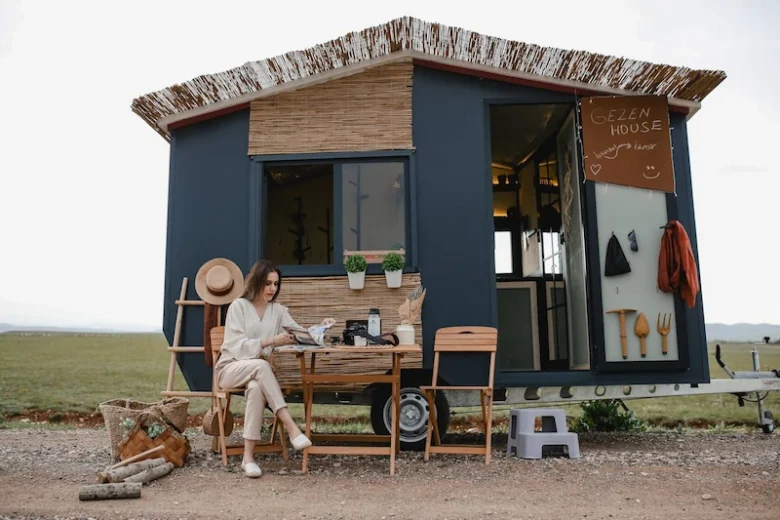
Beyond its technological and aesthetic appeal, the most profound aspect of nomadic architecture lies in its ethical potential.
It provides a framework for addressing some of the world’s most pressing social issues by placing human needs at the very center of its design philosophy.
Nomadic dwellings challenge the conventional view of architecture as a symbol of wealth and permanence, instead positioning it as a tool for social good—a dignified, adaptable response to crisis and change.
This approach asserts that a home is not just an asset but a fundamental human right, and that even a temporary structure can be a source of profound beauty and meaning.
Shelter as human right, not property
In an era marked by refugee crises, housing shortages, and increasing homelessness, the ability to provide fast, dignified, and adaptable shelter is a critical challenge. Nomadic dwellings are uniquely suited to this task.
Designs for refugee housing, for instance, can be deployed rapidly and are built to be culturally sensitive, respecting the need for privacy, family structure, and community.
These are not merely boxes for survival; they are thoughtfully designed homes that offer safety and a sense of normalcy in the most difficult circumstances.
Similarly, nomadic structures can provide a vital solution for post-disaster rebuilding, allowing communities to return to their land faster and begin the process of healing with a sense of dignity.
By prioritizing adaptability and accessibility, this form of architecture transforms shelter from a commodity into a human right, making it available where and when it is needed most.
Beauty in transience
The notion that temporary structures must be visually unappealing or utilitarian is a fallacy that nomadic architecture is actively dismantling.
Many of today’s most celebrated mobile dwellings are a testament to the idea that there is great beauty in transience.
These structures, from their clean lines and innovative materials to their seamless integration with the natural world, are designed for meaningful living.
They often feature panoramic windows that connect inhabitants to the outdoors, efficient layouts that promote a sense of order, and materials that are tactile and natural.
The impermanence of these homes invites a poetic appreciation for the present moment and the specific place they occupy.
It’s a design philosophy that reminds us that beauty is not about eternal solidity, but about creating spaces that are resonant, comfortable, and aesthetically pleasing, regardless of how long they are meant to last.
Challenges and tensions
Despite its immense potential and growing popularity, the widespread adoption of nomadic architecture is not without its significant hurdles.
This movement exists in a complex relationship with established legal frameworks, cultural biases, and urban planning norms that were developed for a world that no longer exists.
These challenges reveal a fundamental tension between the fluid, adaptable nature of nomadic living and the rigid systems of governance and social perception that prioritize permanence.
Overcoming these tensions will require not only innovation in design but also a significant shift in legislative and cultural mindsets.
Zoning laws and urban resistance
One of the most immediate obstacles facing nomadic dwellings is the outdated nature of zoning laws. Most cities are not built to welcome impermanence.
Their regulations are designed to govern fixed structures on specific land plots, often making it difficult or impossible to legally place a mobile home on a residential lot, let alone a temporary one in a public space.
Legislation regarding ownership, property taxes, and utility hookups often clashes with the transient nature of these dwellings.
Overcoming this resistance will require urban planners and policymakers to rethink how cities can accommodate flexibility, perhaps through the creation of new zones specifically for temporary or mobile living, or through more flexible land-use policies that allow for dynamic, pop-up communities.
Perceptions of instability
On a cultural level, nomadic dwellings face the challenge of ingrained social perceptions of instability. In many Western societies, a permanent home is a powerful symbol of legitimacy, success, and rootedness.
A mobile or temporary dwelling, in contrast, is often associated with transience, poverty, or a lack of stability. This bias makes it difficult for nomadic architecture to gain widespread acceptance as a viable and desirable form of living.
The movement challenges us to question this deep-seated belief and to recognize that true stability can be found in flexibility and resilience, not just in fixed foundations.
It asks us to value lightness, temporality, and a sense of flow as legitimate alternatives to the traditional ideal of a permanent, unchanging home.
The revolution in design is now
The conversation around permanence is just beginning. As nomadic dwellings redefine our understanding of home, we stand at a pivotal moment in architectural history.
If you wish to stay at the forefront of this revolution and explore the minds shaping our built future, we invite you to join the community at Neomanía Magazine.
Visit our website to discover visionary projects, compelling interviews, and in-depth analyses that go beyond the surface. Your journey into the future of design starts here.