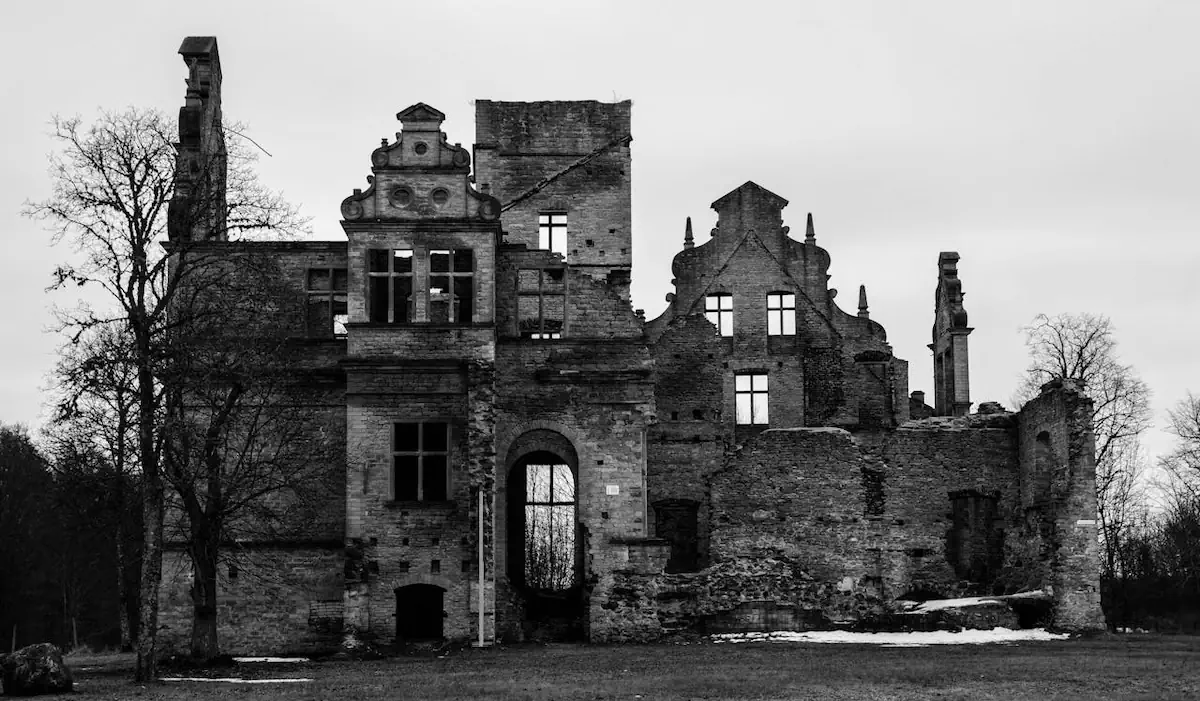
The ruins of the ancient world—the sun-bleached marble of Rome, the moss-covered walls of medieval castles—speak to us of gradual decline, of the slow, picturesque triumph of time over human ambition.
These are ruins that follow the expected classical arc of history. But the Modern Ruin is fundamentally different: it is a sudden, often violent testament to obsolescence.
From the skeletal remains of Brutalist towers and colossal, abandoned industrial plants to derelict infrastructure, these structures represent the acceleration of modernity’s cycle—the failure of utopian promises and the inherent self-cannibalization required by ceaseless progress.
This article explores the profound philosophical and aesthetic phenomenon known as Ruinenlust: the intoxicating, bittersweet pleasure we derive from decay.
It is a necessary intellectual counterpoint to our relentless pursuit of the new, forcing us to confront the tangible fragility of our own civilization.
Ruinenlust challenges us to see not just failure, but allegory—to recognize that in the crumbling concrete lies a potent mirror reflecting our anxieties about memory, permanencia, and the political cost of the accelerated life.
The philosophical Gaze: ruinenlust and time

To understand the contemporary fascination with derelict spaces, we must ground the topic in intellectual history. The modern gaze upon the ruin is not frivolous; it is deeply connected to established philosophical concepts of time, memory, and the powerful, yet terrifying, experience of the Sublime. The ruin forces the intellect to confront limits—both architectural and temporal.
Ruinenlust: the aesthetics of decay
Ruinenlust literally translates from German as “ruin-lust” or the pleasure/fascination derived from viewing ruins. The term captures a complex emotional duality: the sadness of witnessing decay mixed with the sublime pleasure of feeling time pass. However, the contemporary practice of Ruinenlust contrasts sharply with its Romantic 18th-century predecessor.
The Romantic appreciation of decay was often centered on the picturesque. Landscape architects intentionally built garden follies—fake, half-finished ruins—to serve as contemplative backdrops, designed to evoke a gentle melancholy.
This was a safe, curated encounter with decline. The contemporary Ruinenlust, conversely, directs its uncanny gaze upon unplanned, urban decay.
These modern ruins—a boarded-up mall, an obsolete power station—were never meant to be picturesque. Their sudden obsolescence often speaks of economic collapse, political failure, or rapid technological replacement, lending a disturbing sincerity to their decay that the garden folly lacked. The pleasure is derived from confronting the raw, unmediated evidence of failure.
Simmel’s collaboration: nature vs. artifice
The philosopher Georg Simmel, writing in the early 20th century, provided one of the most elegant concepts for understanding the ruin. Simmel viewed the ruin as a unique form of “collaboration” between the forces of nature and the creation of man.
Architecture, he argued, is defined by its vertical, human intention—its defiant assertion against gravity and the earth’s natural horizontality.
The moment a building falls into ruin, a counter-movement begins: nature reclaims the work. Roots fracture foundations, water dissolves plaster, and rust re-oxidizes steel.
The ruin thus represents a moment of balance, where the decline of human agency is reconciled with the eternal continuity of the natural world.
It is a temporary pause in conflict, embodying a profound unity where the human drive for form is beautifully, tragically overcome by the elemental drive for matter.
Simmel’s lens offers not despair, but a moment of philosophical repose where the observer witnesses a cycle more powerful than human will.
The allegory of obsolescence
For critical theorists like Walter Benjamin, particularly in his work on the German Trauerspiel (mourning-play) and the Arcades Project, the modern ruin holds a deeper, more politically charged meaning. Benjamin positioned the ruin not merely as a fragment of history, but as an allegory of thought itself.
In Benjamin’s view, the modern ruins—the abandoned industrial structures and failed utopian projects—are the physical embodiments of capitalism’s waste and the structural fragility of its utopian ideals.
They are the frozen remnants of historical time that failed to materialize its promise. The ruin ceases to be a background and becomes a character, speaking silently of cycles of production and discard.
The observer, captivated by the ruin, is not just engaging in nostalgia, but confronting the physical evidence of obsolescence as a system.
This intense, melancholic gaze becomes an act of political critique, using the crumbling façade to illustrate the ephemeral nature of all seemingly solid ideologies.
Typologies of the modern ruin
The contemporary aesthetics of decay demand a new categorization, moving beyond the classical columns and Roman arches to the distinctive collapse of 20th-century progress.
Modern ruination is defined by its vast scale, rapid abandonment, and its representation of social and economic tectonic shifts.
The post-industrial ghosts
These are the most ubiquitous and emotionally resonant modern ruins: abandoned factories, derelict steel mills, and massive, obsolete power stations, often referred to as Brownfields. These structures are the direct, tangible artifacts of the industrial age’s triumph and subsequent, violent collapse.
As the backbone of 20th-century economies, these spaces represent concentrated human effort, production, and, critically, community.
Their decay is so poignant because it mirrors the deindustrialization and social disintegration of the surrounding areas. The sight of a massive, empty assembly line or a rusted blast furnace is a dramatic visual signifier of a lost way of life.
They stand as post-industrial ghosts at the heart of urban centers, their sheer monumental scale making them potent symbols of the cyclical nature of economic power—a powerful, melancholic reminder that even the strongest industrial empires are eventually reducible to rubble.
Utopian decay: brutalism and modernism
Perhaps the most tragic and politically charged form of decay is that of Utopian Decay: the crumbling remains of grand 20th-century social housing and public works.
The decay of Brutalist complexes, in particular, is emotionally resonant because these structures were built with an earnest faith in Social Architecture—ideals of collective living, public health, and egalitarian housing.
The current sight of water-stained concrete, shattered windows, and failed communal spaces represents a literal crumbling of social ideals.
The ambition was enormous, but the execution and maintenance often failed, leaving behind massive, durable monuments to broken promises.
The decay of these buildings is a visual narrative of disappointment—a reflection on how the best intentions of Modernism, which sought to rebuild society from the ground up, resulted in imposing, often alienating, ruins that haunt the urban landscape.
The squatted relics: architecture of necessity
A third, dynamic typology of the modern ruin are the Squatted Relics—structures that have lost their original commercial function but are spontaneously re-inhabited and repurposed out of sheer necessity by communities.
These spaces are not passively decaying; they are being actively and illegally maintained through bottom-up, adaptive reuse.
The prime example is the Torre de David (Tower of David) in Caracas, a massive, uncompleted financial skyscraper that became home to thousands of squatters, who collaboratively built internal infrastructure, services, and community spaces within the derelict concrete shell.
This typology illustrates an extraordinary architectural process: the ruin becomes a framework for spontaneous urbanism and Architecture of Necessity.
The squatted relic represents a pragmatic rejection of the ruin as mere aesthetic object, forcing a confrontation with human ingenuity and the political imperative for shelter in the face of failed development.
Designing with the scar: architectural strategies
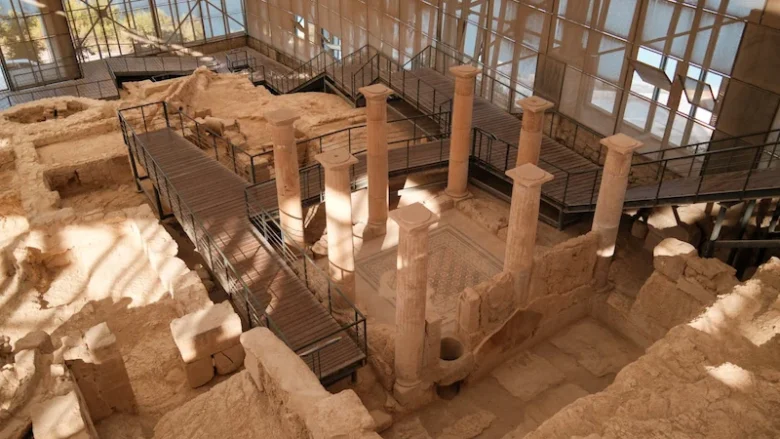
The presence of the modern ruin forces contemporary architectural practice to develop radical new strategies. This section explores responses to existing ruins and the provocative practice of designing a structure that is born as a ruin or
consciously embraces its own inevitable decay.
The unfinished and the ruined: the dialectic
A radical counter-strategy to the perpetual quest for polished perfection is the practice of designing a building to be, or to appear, unfinished.
This approach consciously blurs the line between monument and decay. Architects employing this technique use raw concrete, exposed rebar, and deliberately incomplete façades to create a dialectic where the building seems to anticipate, and even design for, its own ruin-ificative potential.
By leaving the building in a state of suspended animation, the architect preemptively admits defeat to time and allows the natural forces of weathering—staining, erosion, the growth of patina—to complete the design over decades.
This is the ultimate act of humility in architecture: accepting that the building is not a finished product, but an ongoing process of material change.
This technique invites the viewer to participate in the structure’s existence, acknowledging that all human creations are temporary.
Adaptive reuse as memory preservation
The most responsible and enduring architectural response to the modern ruin is Adaptive Reuse—but executed as memory preservation.
This methodology rejects the impulse to erase the decay and restore the building to its “original” state. Instead, it chooses to preserve, frame, or integrate the existing decay as a critical part of the new design.
This approach treats the ruin as a palimpsest—a multi-layered record of time and events. For instance, in renovation, the architect may deliberately leave bullet holes in a wall, stabilize a rusted support beam without replacing it, or highlight the boundary between the original, weathered brick and the new, pristine structure.
The decay becomes a scar of history that must be honored. This practice ensures that the final design is not a denial of the past, but an active, multi-layered conversation with it, using the architecture to transmit the site’s complex narrative.
The fragment as a creative stimulus
The aesthetic and emotional power of the fragment is central to Ruinenlust. The incomplete form of the ruin—a solitary arch, a broken staircase leading nowhere—acts as a powerful creative stimulus for the user. It forces the imagination to participate in the mental reconstruction of the lost whole.
Unlike a complete building, which dictates its own narrative, the ruin offers an open-ended narrative potential. The missing parts must be filled by the observer’s mind, making the encounter with the ruin an intensely personal, active, and imaginative experience.
Architects leverage this power by designing spaces that deliberately introduce gaps, negative space, and framed fragments of the original structure.
The incomplete nature of the ruin paradoxically makes it a more powerful generator of memory and narrative than its complete counterpart ever was.
The digital ruin and contemporary culture
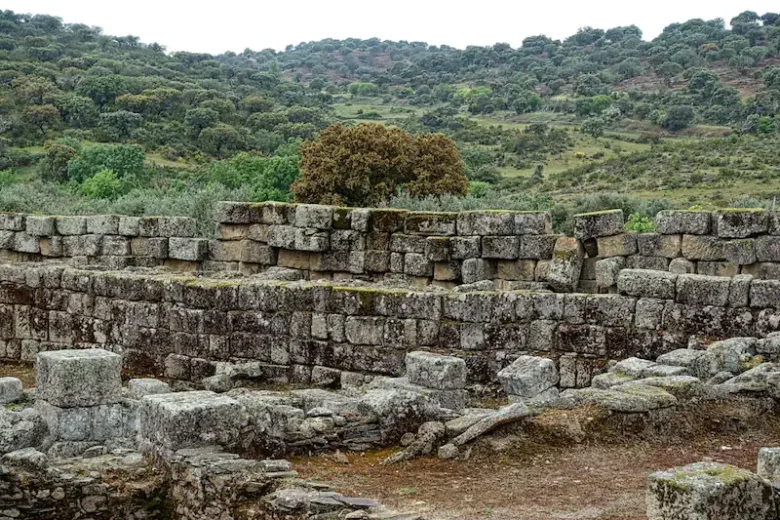
The fascination with the aesthetic of modern ruins has transcended physical space, migrating into the digital realm and becoming a dominant feature in visual culture.
This pervasive cultural presence has created complex ethical and aesthetic tensions that the ruin-gazer must confront.
The architect as physical novelist
Architect Jonathan Hill coined the term “physical novelist” to describe the architect who engages with the ruin. This concept suggests that by intervening in a site’s decay, the architect is not merely a repairman or a restorer, but a writer who is reinterpreting the site’s history and projecting a fictionalized future onto its incomplete form.
The original building is the first draft; the ruin is the subsequent, edited, and often brutal second draft by time. The architect’s intervention is the third, deliberately adding a new chapter that integrates the previous two.
This role requires historical sensitivity and creative audacity. It means using the existing decay (the scar) as a narrative prompt—the story begins with the ruin.
The result is an architecture that does not hide its age or trauma, but wears it as a compelling and complex narrative, making the building a genuinely palimpsestic text written in stone and steel.
The post-apocalyptic palate
The aesthetic of the ruin is not just historical; it is deeply entrenched in our contemporary fantasies about the future. The post-apocalyptic palate is everywhere: the omnipresence of the ruined aesthetic in cinema (Blade Runner, The Last of Us), video games (Fallout, Cyberpunk), and high fashion.
This cultural obsession reveals a profound paradox: a civilization driven by relentless technological progress simultaneously anticipates and romanticizes its own dramatic collapse.
The dystopian landscape—where nature reclaims the megastructure and technology lies broken—provides a cathartic space for audiences to confront their anxieties about climate change, nuclear conflict, and the inherent instability of globalized power.
The Modern Ruin, in its physical and digital forms, functions as a powerful cultural symbol, a beautiful premonition that allows us to rehearse our own end, and perhaps, find a strange pleasure in the thought of starting again amidst the rubble.