In a world saturated with digital noise and passive consumption, the human spirit yearns for something more tangible. We scroll through endless feeds, watch algorithm-curated content, and often end the day feeling depleted, as if we’ve consumed much but created nothing.
This isn’t a critique of technology, but an observation of a growing internal void. The antidote isn’t a digital detox; it’s a creative re-engagement. It’s about reclaiming our hands, our minds, and our time to build, shape, and express something uniquely our own.
The pursuit of a creative outlet is not about becoming a master artist overnight. It’s not about monetizing a passion or performing for an audience. It is a deeply personal act of discovery. It’s about the quiet satisfaction of a well-turned phrase, the subtle scent of wet clay, the focused calm of a perfectly executed stitch.
These activities reconnect us to the physical world and, more importantly, to ourselves. They challenge us to solve problems, to see the world through a different lens, and to embrace the beautiful imperfection of the human hand.
This exploration is for the professional who feels their creativity has been confined to spreadsheets, the parent seeking a moment of personal identity beyond their family role, and the young adult navigating a world that demands productivity over passion.
We will venture into a selection of engaging pastimes that do more than just fill time; they expand our capacity for wonder, resilience, and self-expression. These are not just hobbies; they are pathways back to a more authentic, engaged way of living.
The journey into a new creative practice is an intimate one. It requires patience and a willingness to be a beginner again. It’s in that vulnerable space, where we are not experts, that the most profound growth occurs.
We learn to let go of the pursuit of perfection and instead find joy in the process itself. This shift in mindset can permeate every aspect of our lives, fostering a more curious, open, and resilient approach to the challenges we face daily.
The tactile arts: Reconnecting with your hands
Our hands are incredible tools of expression, yet for many of us, their primary daily function is reduced to typing on a keyboard or tapping on a screen. Engaging in tactile arts is a powerful way to ground ourselves in the physical world.
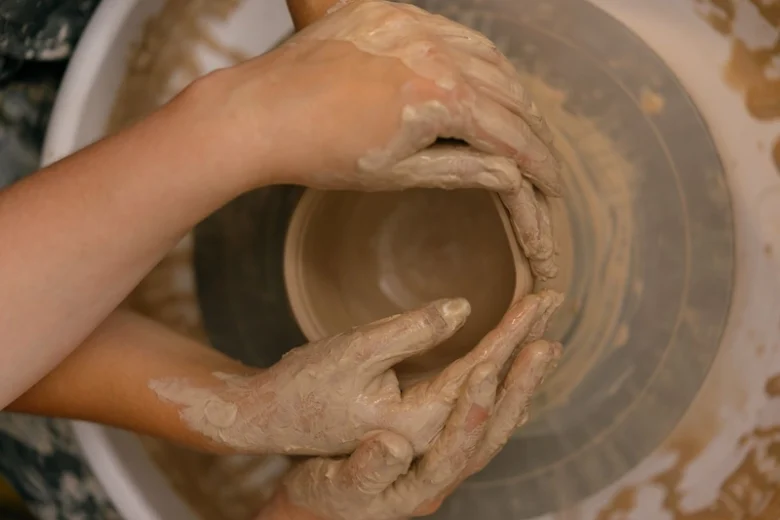
The direct feedback of material—the coolness of clay, the grain of wood, the tension of thread—creates a mindful feedback loop that is both calming and deeply rewarding. It’s an act of rebellion against the disembodied nature of modern life.
1. Pottery and ceramics: Shaping earth and fire
There is something primal and deeply satisfying about working with clay. Whether you’re at a potter’s wheel, feeling the centrifugal force guide the vessel’s walls upwards, or hand-building a sculpture, the process is an exercise in patience and presence.
It forces you to be entirely in the moment, as a lapse in concentration can cause a collapse. The transformation of a soft, yielding lump of earth into a permanent, hardened object through the alchemy of fire is a metaphor for personal transformation itself.
Getting started can be as simple as joining a local studio for an introductory class. These spaces are often vibrant communities where you can learn from others and share in the collective process of creation.
You’ll learn about different types of clay, glazing techniques, and the science behind firing. More than just making a mug or a bowl, you’ll be creating a functional piece of art that carries the memory of its making in every imperfection and curve.
2. Woodworking: The art of patient subtraction
Woodworking is a conversation with a living material. Each piece of wood has its own history, its own grain, and its own character. The craft is about understanding that character and working with it, not against it.
From carving a simple spoon to constructing a piece of furniture, woodworking teaches precision, planning, and an appreciation for the slow, deliberate process. The scent of freshly cut wood and the feeling of a perfectly smooth, sanded surface are rewards in themselves.
You don’t need a massive workshop to begin. Basic hand tools—a saw, a chisel, a plane—and a small project can be the entry point. This hobby cultivates a deep respect for materials and the time it takes to create something of lasting value.
It’s a meditative practice where the focus required to make a precise cut silences the noise of the outside world. The end result is not just an object, but a testament to your patience and skill.
3. Fiber arts: Weaving stories with thread
The world of fiber arts is vast and incredibly diverse, encompassing everything from knitting and crochet to embroidery, weaving, and macramé. These practices have a rich history, often passed down through generations as both a practical skill and a form of storytelling.
The rhythmic, repetitive motions of knitting or weaving can be incredibly calming, inducing a state of flow similar to meditation. It’s a productive way to unwind, turning a bundle of yarn into a wearable garment or a beautiful piece of home decor.
Embroidery, in particular, offers a canvas for intricate visual expression, like painting with thread. It allows for a level of detail and texture that is unique. These crafts are portable, relatively inexpensive to start, and supported by a massive online community of fellow makers eager to share patterns and techniques. It’s a way to create warmth and beauty, one stitch at a time, connecting you to a long lineage of artisans.
The visual narrative: Capturing and creating worlds
We are visual creatures, constantly interpreting the world through light, color, and form. Engaging in visual arts allows us to move from passive observer to active creator of these narratives.
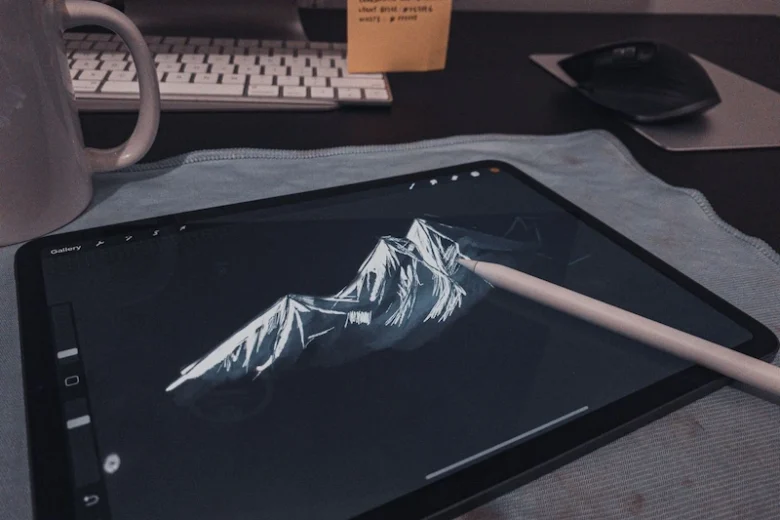
It’s about learning to truly see, to notice the subtle play of shadows, the unexpected harmony of colors in a cityscape, or the emotion conveyed in a simple line. These pursuits sharpen our perception and give us a new language to express our inner world.
4. Film photography: The deliberate image
In an age of infinite digital snapshots, film photography feels like a radical act. With a limited number of exposures on a roll, each shot becomes a deliberate choice. You are forced to slow down, to compose your frame, to think about light and shadow before you press the shutter.
This intentionality brings a weight and value back to the act of taking a picture. The process doesn’t end there; the anticipation of developing the film and seeing your images for the first time is a unique and magical experience.
Learning the mechanics of an analog camera—aperture, shutter speed, ISO—connects you to the fundamental principles of photography. It’s a craft that blends art and science.
Finding an old 35mm camera at a thrift store or online can be an affordable entry point into this rewarding world. It teaches you to be a more thoughtful observer of your surroundings, finding beauty in moments you might have otherwise missed.
5. Urban sketching: Documenting your environment
Urban sketching is the practice of drawing on location, capturing the life of cities, towns, and villages. It’s not about creating a perfect, photorealistic rendering; it’s about capturing the essence and energy of a place.
Armed with a simple sketchbook and a pen or a small watercolor set, you can turn any lunch break or wait at a bus stop into a creative opportunity. It’s a way of chronicling your life and your community in a deeply personal way.
This practice sharpens your observation skills like nothing else. You start to notice architectural details, the way people interact in public spaces, and the unique character of your environment. It’s a form of visual journaling that creates a powerful connection to your surroundings.
The global Urban Sketchers community provides inspiration and a sense of belonging, reminding you that you are part of a worldwide movement of artists documenting their corner of the world.
6. Digital illustration: The infinite canvas
While many creative outlets focus on the analog, the digital realm offers its own universe of possibilities. With a tablet and a stylus, you have access to an infinite palette of colors, brushes, and textures.
Digital illustration allows for endless experimentation without the cost of materials or the fear of making an irreversible mistake. The “undo” button becomes a tool for creative freedom, encouraging you to take risks you might not on paper.
Software like Procreate or Adobe Fresco has made digital art more accessible than ever. You can explore different styles, from clean vector graphics to lush, painterly compositions. It’s a versatile skill that can be applied to everything from creating personal art to designing logos or illustrating stories. The ability to work in layers, adjust colors on the fly, and easily share your work makes it a powerful and modern medium for creative expression.
- Ceramics: Focuses on form, texture, and the transformative power of heat.
- Woodworking: Emphasizes precision, patience, and understanding natural materials.
- Film Photography: Teaches deliberate composition and the fundamentals of light.
- Urban Sketching: Develops observational skills and a connection to your immediate environment.
- Digital Illustration: Offers limitless experimentation and flexibility in a modern medium.
The art of words and sound: Crafting intangible experiences
Creativity is not limited to the visual or tactile. Some of the most profound human expressions are crafted from the intangible materials of language and sound. These pursuits challenge us to think abstractly, to structure our thoughts, and to communicate complex emotions and ideas.

They are about building worlds and evoking feelings with nothing more than words on a page or vibrations in the air.
7. Creative writing and journaling: Mapping your inner landscape
Everyone has a story to tell. Creative writing, whether in the form of poetry, short stories, or memoir, is the act of giving that story form. It’s a way to process experiences, to explore alternate realities, and to connect with the fundamental human condition.
The simple act of putting pen to paper (or fingers to keyboard) can be a powerful tool for self-discovery. Journaling, in particular, is a private space for unfiltered thought, a daily practice of paying attention to your own life.
You don’t need a grand plot to start writing. Begin with small observations, a snippet of dialogue you overheard, a vivid memory. Writing prompts can be a great way to kickstart your creativity.
The goal is not to write a bestseller, but to develop your voice and find clarity in your own thoughts. It’s an exercise in empathy, as you step into the shoes of different characters and see the world from their perspective.
8. Podcasting or audio storytelling: Finding your voice
In a visually dominated world, the power of the human voice is often underestimated. Podcasting has emerged as an incredibly accessible and intimate medium for storytelling.
Whether you’re interviewing interesting people, exploring a niche topic you’re passionate about, or crafting a fictional audio drama, podcasting allows you to connect with listeners on a deeply personal level. The barrier to entry is lower than ever; a decent microphone and free editing software are all you need to begin.
This hobby develops a wide range of skills: research, writing, interviewing, audio editing, and public speaking. It forces you to structure your thoughts coherently and to present them in an engaging way.
More than that, it’s about finding and honing your unique voice—not just the sound of it, but your perspective, your humor, and your way of seeing the world. It’s a platform to share your passion and build a community around it.
9. Learning a musical instrument: The language of emotion
Music is a universal language that transcends cultural and linguistic barriers. Learning to play an instrument as an adult is a challenging but immensely rewarding endeavor. It engages both the analytical and creative sides of your brain, improving memory, coordination, and discipline.
Whether you choose the intricate patterns of a piano, the soulful chords of a guitar, or the rhythmic pulse of drums, you are learning to speak this language of emotion.
The process can be humbling. You will have to embrace being a beginner, to struggle with scales and chords. But the moment you can play a recognizable melody or a simple song is a moment of pure triumph.
It’s a lifelong journey of learning and improvement, a hobby that can provide comfort, joy, and a powerful outlet for emotional expression for the rest of your life. Online tutorials and apps have made self-teaching more accessible than ever before.
Functional creativity: Blending art with daily life
Creativity doesn’t have to be confined to a studio or a sketchbook. It can be woven into the fabric of our daily lives, transforming mundane tasks into opportunities for expression and delight.

These “functional” hobbies produce things that are not only beautiful but also useful, enriching our everyday experiences and connecting us to the things we use and consume in a more meaningful way.
10. Culinary arts and bread making: The alchemy of the kitchen
Cooking is one of the most accessible and rewarding creative outlets. It engages all the senses—sight, sound, smell, touch, and taste. Following a recipe is like learning a new song, but the real creativity begins when you start to improvise, to understand how flavors and textures work together, and to create your own dishes. It’s a blend of science and art, precision and intuition.
Baking, especially sourdough bread, has seen a resurgence for good reason. It’s a slow, meditative process that connects you to an ancient tradition. Nurturing a starter, kneading the dough, and watching it rise is a lesson in patience and biology.
The reward is not just a delicious, crusty loaf of bread, but a profound sense of accomplishment and self-sufficiency. Sharing food you’ve made with others is a fundamental act of connection and care.
11. Mixology and craft cocktails: Composing liquid art
The art of crafting a well-balanced cocktail is akin to a form of liquid alchemy. It’s about understanding how different spirits, sweeteners, and bitters interact to create a harmonious and complex flavor profile.
Mixology is a study in balance, proportion, and presentation. Learning the history behind classic cocktails like the Old Fashioned or the Negroni connects you to a rich cultural tradition. Creating your own signature drinks is an exercise in pure creativity.
This hobby encourages you to explore a world of flavors, from artisanal gins and small-batch whiskies to homemade syrups and infusions. The ritual of preparing a drink—the clinking of ice, the precise measurement, the elegant garnish—can be a mindful and satisfying way to mark the transition from the workday to the evening. It’s a sophisticated and enjoyable skill to share with friends.
12. Gardening and plant care: Cultivating life
Tending to a garden, whether it’s a small collection of houseplants on a windowsill or a plot of vegetables in the backyard, is a profound act of creation. It is a partnership with nature that teaches patience, nurturing, and an acceptance of cycles beyond our control. Watching a seed sprout and grow into a plant that produces food or flowers is a source of constant wonder. It connects us to the seasons and the fundamental processes of life.
Gardening is both a physical and mental exercise. It gets you outdoors and working with your hands, while also requiring planning and problem-solving. It can be a source of fresh, healthy food, beautiful flowers, and a peaceful sanctuary to escape the stresses of daily life. The simple act of caring for another living thing can be incredibly grounding and beneficial for mental well-being.
13. Calligraphy and hand-lettering: The beauty of the written word
In an era of uniform digital fonts, the art of beautiful handwriting stands out as a uniquely personal and elegant form of expression. Calligraphy is the disciplined art of formal lettering, while hand-lettering is more illustrative and expressive.
Both are meditative practices that require focus, control, and an appreciation for form and space. The slow, deliberate strokes of a pointed pen or brush can be incredibly calming.
This hobby transforms the simple act of writing into an art form. It can be used to create beautiful invitations, personalized gifts, or simply to add a touch of elegance to your personal journaling.
It’s an inexpensive hobby to start, requiring only a few basic tools. It teaches you to appreciate the beauty in the details and the power of a well-crafted line, turning everyday words into small works of art.
14. Perfumery or candle making: Crafting atmosphere and memory
Scent is the sense most closely linked to memory and emotion. The art of creating custom perfumes or scented candles is a fascinating blend of chemistry and poetry. It involves learning about top, middle, and base notes and how they combine to create a unique and evocative fragrance profile. You can craft scents that remind you of a specific place, a cherished memory, or a desired mood.
This is a deeply personal creative outlet that results in something that can subtly enhance your daily life and environment. Candle making, in particular, is a relatively simple process that can be done at home.
Experimenting with different waxes, wicks, and fragrance oils allows for endless creativity. It’s a way to literally craft an atmosphere, filling your space with a scent that is uniquely yours.
15. Bookbinding: Constructing vessels for ideas
Bookbinding is the art and craft of assembling pages of paper into a book. It’s a practice that honors the book as a physical object, not just a container for text. Learning different stitching techniques, like Coptic stitch or Japanese stab binding, allows you to create beautiful, durable, and completely custom journals, sketchbooks, or photo albums. It’s a hobby that combines precision, craftsmanship, and design.
There is a deep satisfaction in creating a book from scratch—choosing the paper, designing the cover, and executing the binding. It’s a skill that feels both ancient and relevant. In a world of mass-produced goods, a handmade book is a treasured object. It’s a perfect complement to other creative pursuits like writing, sketching, or photography, providing a beautiful, handcrafted home for your work.
- Culinary Arts: Engages all senses and fosters improvisation.
- Mixology: Teaches balance, proportion, and the history of flavors.
- Gardening: Connects you with nature’s cycles and the act of nurturing.
- Calligraphy: Turns writing into a meditative, artistic practice.
- Bookbinding: Honors the book as a physical object of art and craft.
The true value of these creative hobbies for adults lies not in the finished product, but in the person you become through the process of making. Each one offers a unique path to mindfulness, a different set of problems to solve, and a new way of seeing and interacting with the world.
The key is to choose something that sparks a genuine flicker of curiosity within you and to approach it with an open mind, free from the pressure of expectation. This is not about being productive; it’s about being present.
The stories we tell at Neomania Magazine are born from this same spirit of curiosity and deep engagement. We believe that art, in all its forms, is not just something to be consumed, but a vital dialogue that shapes our understanding of ourselves and our world.
The aesthetic journey you embark on with a new creative practice mirrors the very narratives we seek to explore—those that challenge, inspire, and resonate on a profound level.
If this exploration of creativity has stirred something within you, if you crave stories that go beyond the surface and engage with the very essence of the creative act, then our publication is the next step in your journey.
We invite you to continue the conversation, to be moved and challenged by narratives that reflect the depth and complexity of the human experience. Let our stories transport you and inspire a new way of seeing. Join us.