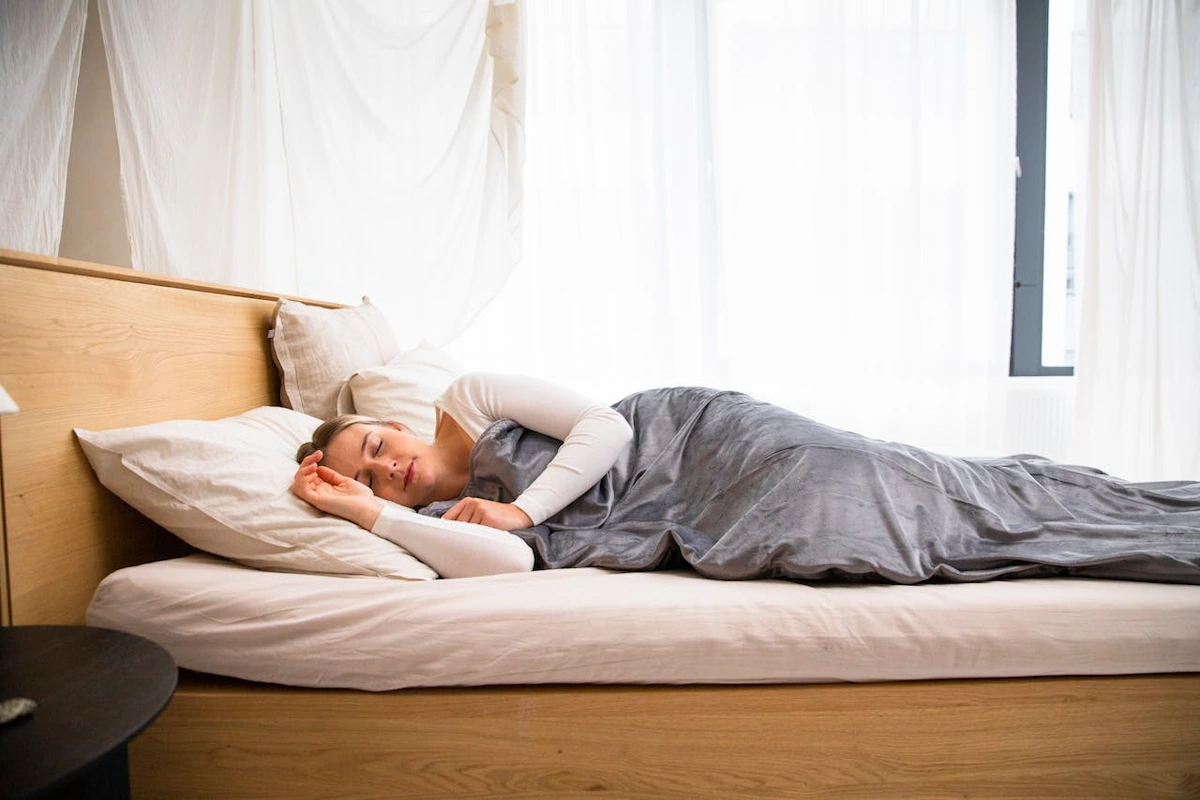
We often talk about design, architecture, and vanguard culture as external forces—things we consume, analyze, or build. Yet, the most intimate and foundational piece of design we interact with every day is the architecture of our own rest.
If you are seeking sharper clarity, breakthrough creative moments, or simply the energy to appreciate complex cultural forms, your journey begins not in a gallery or a studio, but in the quality of your sleep.
For those of us constantly engaging with high-level stimuli—whether you’re a professional navigating complex projects or a young adult trying to define your aesthetic voice—sleep is the non-negotiable foundation.
When sleep quality drops, everything else follows: focus fades, aesthetic appreciation dulls, and the capacity for innovation diminishes.
This isn’t just about getting hours; it’s about getting the right kind of restorative sleep. We can start by looking at how to refine your daily habits, a practice often called sleep hygiene, transforming your downtime into a powerful tool for peak performance.
Think of improving your sleep quality as curating a masterpiece—a space and a routine dedicated entirely to recovery. We’ll look at the tangible steps you can take, from adjusting your schedule to optimizing your physical surroundings, ensuring that your rest is as intentional and inspiring as the work you do during the day.
Crafting your personal rest ritual: consistency and timing
The human body loves predictability. When we talk about better sleep habits, the single most impactful change you can make is introducing rigor and consistency to your schedule.
This might sound counterintuitive to the free spirit, but structure actually liberates your mental energy for more creative pursuits.
The power of the sleep schedule: waking up to clarity
Your body operates on a powerful internal clock, the circadian rhythm, which regulates everything from hormone release to body temperature.
If you treat your bedtime and wake-up time like a suggestion, that clock struggles to set itself. The key to maintaining a strong rhythm is consistency, even on weekends. Yes, that means trying to stick to the same wake-up time seven days a week.
When you maintain a steady wake-up time, you train your body to expect sleep roughly 14 to 16 hours later. This consistency dramatically improves the speed at which you fall asleep and the depth of your rest.
Many people find that if they wake up at 7:00 AM every day, by 11:00 PM, their body naturally starts releasing melatonin, the hormone that signals it’s time to wind down.
If you fluctuate wildly—say, waking at 7:00 AM on weekdays and 11:00 AM on Saturday—you create a kind of internal jet lag that leaves you perpetually foggy.
A simple way to implement this is to choose your ideal wake-up time and then work backward, aiming for 7 to 9 hours of sleep. If you need 8 hours and want to be up by 6:30 AM, your target bedtime is 10:30 PM.
Start small; shift your routine by 15 minutes every few days until you hit that sweet spot.
Understanding your chronotype: when you really shine
While consistency is vital, we also have to respect our natural inclination toward certain sleep patterns, known as chronotypes. Are you a morning lark, a night owl, or somewhere in between?
Trying to force a night owl (someone who naturally peaks late) into a 5:00 AM routine is a recipe for chronic fatigue. Likewise, asking a morning lark to stay up until 2:00 AM for work will deplete their best thinking hours.
Understanding your chronotype means aligning your most demanding tasks—creative work, complex analysis, deep reading—with your natural peak alertness windows.
For example, if you know you are a night owl, accept that your most innovative thinking might happen between 9:00 PM and midnight, and adjust your schedule so you can sleep in a little later, perhaps starting work at 10:00 AM instead of 8:00 AM.
This alignment respects your biology and maximizes your cognitive output, making the time you spend awake far more productive and enjoyable.
Sleep environment optimization: designing for deep rest
The bedroom should be a sanctuary—a space designed specifically for restoration, stripped of the visual and digital clutter that defines our daytime existence.
We can achieve remarkable improvements in sleep quality simply by treating the bedroom as an architectural project focused on tranquility. This is where sleep environment optimization comes into play.
Temperature and light: the architectural elements of slumber
When you look at high-end architectural design, every element serves a purpose. Your sleep space should be no different. Two factors stand out: temperature and light.
- The cool factor: Your core body temperature needs to drop slightly to initiate and maintain sleep. Most sleep experts agree that the ideal temperature range for a bedroom is between 60 and 67 degrees Fahrenheit (15.5 and 19.4 degrees Celsius). If your room is too warm, your body struggles to shed heat, leading to restlessness. Consider breathable sheets (linen or cotton) and layered blankets that allow you to adjust easily throughout the night.
- Managing the light spectrum: Light is the most powerful signal to your circadian rhythm. Exposure to bright light, especially blue light emitted by screens, suppresses melatonin production. This is why you feel wired after scrolling through social media right before bed. Conversely, total darkness is essential while you sleep. Even small sources of light—a charging indicator, a street lamp filtering through the window—can disrupt the deep, restorative phases of sleep. Invest in blackout curtains that complement your aesthetic, or use a high-quality sleep mask.
Sensory minimalism: decluttering your bedroom aesthetic
The visual culture we consume during the day often involves complexity, layered meaning, and intense color. Your bedroom should be the opposite: a space of sensory minimalism. The goal is to reduce cognitive load.
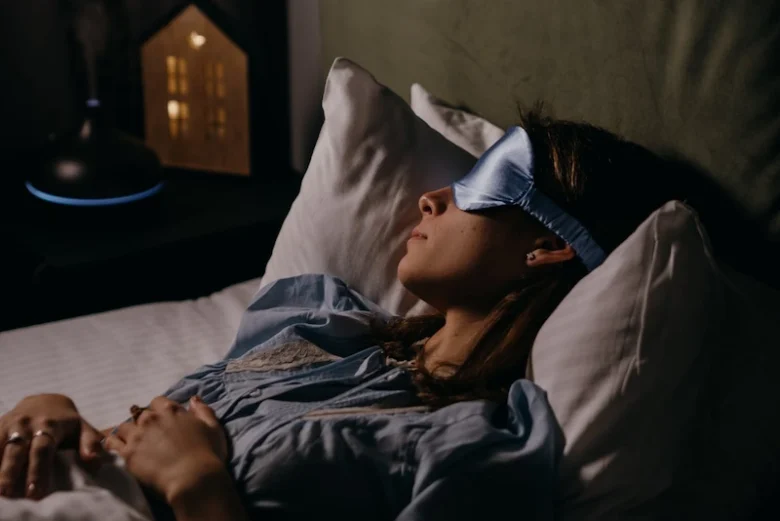
First, the obvious rule: the bedroom is for sleeping and intimacy, not for work or intense stimulation. Remove the television, the dedicated workspace, and any piles of administrative clutter.
If you must keep a computer in the room, tuck it away completely. This separation helps condition your mind to associate the room solely with rest.
Second, consider the palette. Soft, muted colors (deep blues, grays, earth tones) are known to promote calmness. The texture of your bedding, the quality of your mattress, and the simple, clean lines of your furniture should all contribute to an atmosphere of quiet luxury.
When your environment feels curated and intentional, your mind is more likely to settle down and let go of the day’s chaos. This commitment to aesthetic tranquility is a direct investment in your mental performance.
The evening routine for better rest: signaling the shutdown
You wouldn’t abruptly shut down a complex server without running a proper sequence of checks and processes. Yet, many people expect their minds to jump from high-intensity work to deep sleep in minutes.
The transition is everything. Developing an intentional evening routine for better rest is the bridge between the day’s demands and the night’s peace.
The 90-minute rule: disconnecting from the digital noise
The 90-minute window before your target bedtime is sacred. This is the period when you must consciously reduce your exposure to blue light and high-stress stimuli.
Ninety minutes allows your brain enough time to naturally start producing melatonin and slow down its processing speed.
During this time, ditch the phone, the tablet, and the laptop. If you absolutely must read something on a screen, use blue light filtering apps (like Night Shift or Twilight) and keep the brightness very low.
Better yet, transition to physical media: a book, a journal, or a magazine (perhaps one with refined visual culture, like Neomania).
This disconnection is more than just a light switch; it’s a psychological boundary. By setting aside the digital noise, you protect your subconscious from processing last-minute emails, stressful news headlines, or the endless scroll of social media, all of which keep your brain in a state of low-level alertness.
Mindful unwinding: transitioning from stimulus to stillness
What fills that 90-minute gap? Activities that are predictable, calming, and non-stimulating. The goal is to lower your heart rate and quiet the mental chatter.
A warm bath or shower can be incredibly effective, as the subsequent slight drop in body temperature after you get out mimics the natural cooling process required for sleep.
Reading a physical book—especially fiction or something unrelated to work—is a great way to occupy the mind without demanding active problem-solving.
Many people find that a short, gentle stretching routine or light meditation helps immensely. Even five to ten minutes of focusing on your breath can interrupt the loop of anxious thoughts.
The trick is to find a sequence of three or four activities that you perform in the same order every night. This ritualistic repetition acts as a powerful cue to your body: the day is over, and rest is imminent.
Diet, movement, and daytime choices that support quality sleep
The quality of your sleep is not isolated to the nighttime hours; it is deeply affected by how you manage your body and mind during the day. What you eat, when you move, and how you manage stress all feed directly into your ability to rest deeply.
Caffeine and alcohol: managing the chemical landscape
We often use caffeine to kickstart our day, but its half-life is surprisingly long—up to six hours for some people. That 3:00 PM espresso might still be circulating in your system, blocking the receptors that promote sleep when 10:00 PM rolls around.
A good rule of thumb is to set a caffeine curfew, usually eight to ten hours before bedtime. Switch to herbal tea or water in the late afternoon.
Alcohol is another common culprit. While a glass of wine might make you feel drowsy, it severely disrupts the second half of your sleep cycle, particularly REM sleep, which is vital for memory consolidation and emotional processing.
You might fall asleep faster, but the sleep you get is fragmented and poor quality. If you choose to drink, try to keep it moderate and finish several hours before bed.
Physical activity: timing your energy expenditure
Regular physical activity is one of the best natural aids for better sleep. Exercise helps regulate mood and reduces anxiety, making it easier to settle down at night. However, the timing matters.
Intense exercise too close to bedtime can raise your core body temperature and release stimulating hormones like adrenaline and cortisol, keeping you awake. Ideally, finish high-intensity workouts at least three hours before you plan to sleep.
If you prefer evening movement, opt for something gentle, like a leisurely walk or restorative yoga, which helps cool the body down and prepares it for rest.
Sunlight exposure: resetting the internal clock
We talked about avoiding light at night, but during the day, light is your best friend. Getting exposure to bright, natural light—ideally within the first hour of waking up—helps powerfully reinforce your circadian rhythm.
Step outside for ten minutes, eat breakfast near a window, or take a brief morning walk. This early dose of light tells your brain, “It’s daytime, start the clock,” which in turn ensures that the necessary sleep hormones are ready to kick in when the sun goes down.
This simple act connects you to the natural rhythms of the world, something often lost in our digitally saturated lives. It’s an easy, zero-cost way to dramatically improve the efficiency of your internal systems.
Cultivating a culture of high-quality rest
The path to high performance and deep creativity isn’t about pushing harder; it’s about recovering smarter. When you commit to how to improve sleep hygiene, you aren’t just fixing a health problem; you are optimizing the primary tool you use to interact with the world: your mind.
Consider the cumulative effect of these small changes: a consistent schedule stabilizes your mood, a cool, dark room allows for true deep sleep, and a dedicated evening ritual clears the mental slate.
The result is waking up not just rested, but renewed—ready to approach the day with the mental bandwidth required to appreciate complex aesthetics, analyze challenging concepts, and create work that truly resonates.
We believe that true style and cultural engagement stem from a place of clarity and refined intention. The greatest artists, architects, and designers have always understood the power of the void, the stillness required before creation can begin. Your sleep is that void, that essential period of stillness.
As you refine the architecture of your rest, you’ll find that your capacity for inspiration expands. You’ll see the world, and the vanguard culture within it, with sharper eyes and a more discerning mind. This is the ultimate self-design project.
We invite you to carry this refined intention into your daily life. Let the quest for restorative sleep transport you, allowing you to reflect on the aesthetic proposal of a life lived fully and consciously.
Inspire yourself to consume culture and design of vanguard that reflects this commitment to excellence, right here in Neomania Magazine.