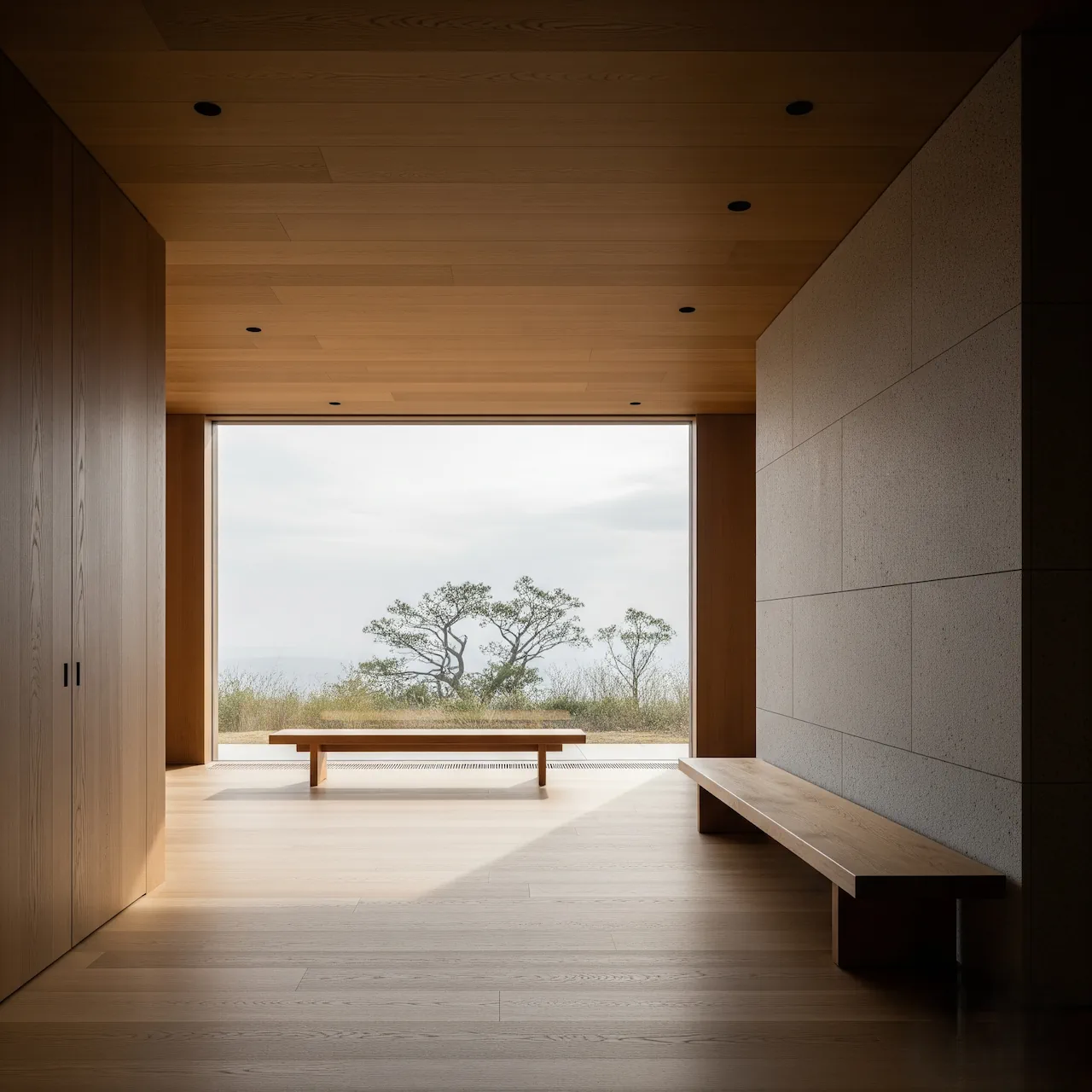
In an era saturated with noise, information overload, and relentless digital stimulation, silence has become more than just the absence of sound; it’s a profound necessity. The architecture of silence is a visionary discipline emerging as a vital response to this modern dilemma.
It’s not about building soundproof rooms but about creating environments that, through the deliberate orchestration of light, space, and matter, invite introspection, serenity, and a deeper connection to oneself.
This approach merges design with neuroscience, philosophy, and phenomenology. Its goal is not just acoustic comfort but holistic well-being.
The architects leading this movement are pioneering the creation of spaces that act as psychological havens, offering people a much-needed respite from a noisy and fast-paced world. At its core, the architecture of silence is the art of designing not only for the body but for the mind and spirit.
Beyond the acoustics: a holistic approach to serenity
Historically, the concept of silence in architecture focused on technical solutions like acoustic insulation, sound absorption, and noise reduction. However, the architecture of silence proposes a far more integrated and holistic approach.
It recognizes that “noise” isn’t just auditory; it’s also visual and mental. Therefore, designing for quietness involves creating a stillness that encompasses all the senses.
This is achieved through design principles that prioritize simplicity and harmony. Visual silence, for example, is born from minimalist spaces with clean lines and a curated selection of objects that prevent overstimulation.
Natural light is a favored tool, used to create subtle movements and calming atmospheres, in contrast to harsh, artificial illumination. Similarly, great care is given to the phenomenology of space—how materials, textures, and scale influence our perceptions and emotions.
The use of natural wood, rough stone, or exposed concrete can evoke a sense of solidity and tranquility, while simple geometry and open voids can encourage meditation. True quietude isn’t forced; it’s carefully designed.
Why silence is the ultimate modern luxury
The constant hum of modern life takes a toll on our health. Prolonged exposure to noise pollution has been linked to chronic stress, poor concentration, insomnia, and anxiety.
In this context, silence emerges not as a mere preference but as a fundamental biological and psychological necessity for human balance. The architecture of silence directly addresses this need, offering sanctuaries where the mind can rest and process information more deeply.
This design philosophy draws inspiration from the profound value that silence has held throughout human history, from the tranquil courtyards of monasteries to the minimalist Japanese Zen gardens.
These spaces were never just quiet; they were tools for introspection and spiritual elevation. Today, this ancient wisdom is being reinterpreted for contemporary settings like offices, hospitals, and homes, where the need for mental recovery and focus is more urgent than ever.
Spaces designed for silence are spaces for healing, creativity, and deeper human connection. In our overstimulated era, the ability to find true stillness is perhaps the most valuable form of luxury.
Core principles of contemplative design
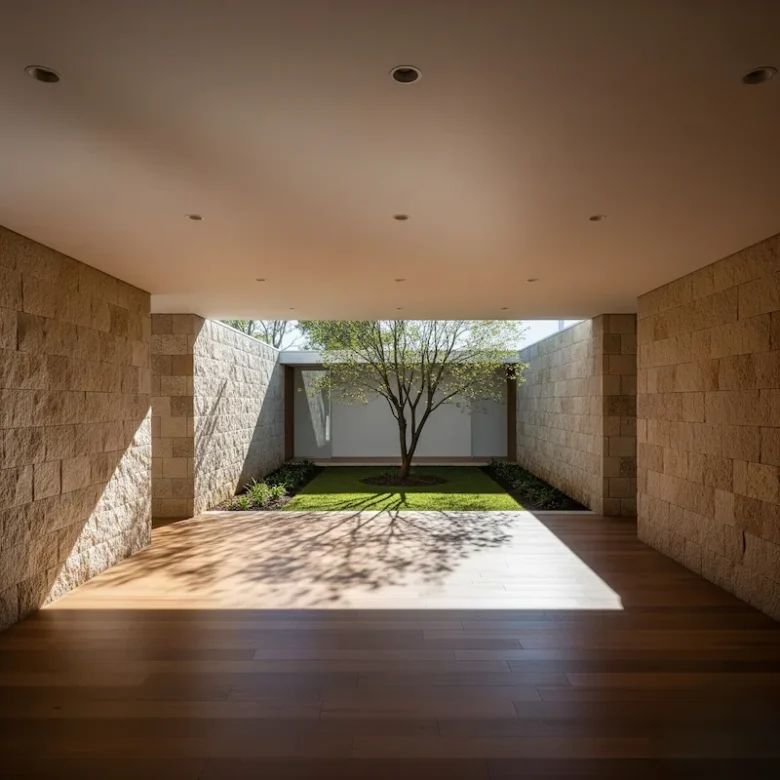
The architecture of silence is a subtle exercise in composition that goes beyond mere aesthetics. Its principles are based on a deep understanding of how space, light, and matter interact to influence our state of mind and perception.
An architect working with silence doesn’t just design a building; they orchestrate a sensory and emotional experience.
The goal is to create environments that nourish the mind, offering a counterpoint to the frantic pace of modern life and giving inhabitants a sense of belonging and calm.
This approach moves away from ostentation and excess, embracing instead a design language that prioritizes simplicity, harmony, and functionality.
It is a return to the essentials, where every element has a purpose and contributes to the overall atmosphere of quietude.
From the choice of a material to the direction of a ray of light, every design decision is made with the intention of fostering introspection and well-being.
The power of light, void, and materiality
Light is perhaps the most powerful element in the architecture of silence. It is not used simply to illuminate, but to shape space and generate atmospheres.
Natural light, in particular, is masterfully handled to create soft contrasts, gradual transitions, and a visual rhythm that evokes calm.
Inner courtyards, strategically placed skylights, and facades that filter light are common tools to avoid direct glare and create a diffuse light that softens contours and soothes the eye.
The void is another essential component. In Western culture, the void is often associated with lack, but in the philosophy of quietude, it is a canvas.
Empty spaces are not wasted spaces, but places for visual and mental rest. Architects use the void to give scale and breathing room to volumes, allowing the mind to wander without being interrupted by visual noise.
Finally, materials are chosen for their ability to resonate with our senses. Warm wood, rough stone, exposed concrete, and bamboo not only offer interesting textures but also absorb sound in a way that reduces echo and contributes to a sense of solidity and timelessness.
Materiality is not just superficial; it is a means of anchoring the experience in physical reality, creating a tangible counterpoint to digital chaos.
Creating human-scale spaces in a loud world
The architecture of silence is intrinsically humanistic. It recognizes that people’s well-being is directly related to the scale of their environment.
Large, impersonal spaces can be overwhelming, while intimate, well-proportioned spaces invite relaxation and connection.
Human scale is achieved by planning appropriate ceiling heights, creating cozy niches and corners, and carefully modulating space so that it feels comfortable and protective, rather than imposing.
This discipline also deeply values the connection with the natural environment. The goal is to blur the barriers between the interior and the exterior, allowing natural elements—light, air, the view of a garden—to flow freely inside.
This symbiosis is not a mere aesthetic whim but a strategy to reduce stress. Neuroscience has shown that exposure to nature activates the prefrontal cortex and reduces anxiety, which makes integrating gardens, courtyards, or panoramic views a powerful tool for designing inner calm.
The science of serenity: an introduction to neuroarchitecture
The architecture of silence has found significant support in neuroarchitecture, an emerging discipline that studies how the design of the built environment affects the brain.
Thanks to research in neuroscience, we now know that spaces are not neutral; they have a direct impact on our biology and psychology.
Contemplative architecture is based on this scientific understanding to create environments that are not only pleasant but also optimize brain function and promote mental and emotional health.
This union of design and science allows us to understand why certain spaces make us feel calm and others generate stress.
It helps us move from a design based on intuition to one based on evidence, making architecture a therapeutic and preventive tool.
How design shapes the brain for focus and well-being
Neuroarchitecture has shown that the design of spaces can have a profound effect on our cognition. For example, environments with curved lines and organic shapes tend to be perceived as more relaxing and safe, as they activate the amygdala in a less threatening way than spaces with sharp angles and aggressive volumes.
Similarly, well-lit spaces with natural light can regulate the circadian rhythm, improving sleep quality and, therefore, overall health.
In the context of the architecture of silence, design focuses on reducing distracting stimuli that saturate our attention capacity.
Planning spaces for work or concentration with tranquil views, minimizing visual complexity, and using sound-absorbing materials can reduce cognitive load, allowing the brain to focus on the task at hand and decreasing cortisol levels, the stress hormone.
Visual vs. auditory noise: strategies for a calmer mind
Neuroscientific research confirms what the architecture of silence has intuited: noise is a threat. Constant auditory noise forces the brain into a state of alert that interferes with concentration and memory. The solution goes beyond double-glazed windows.
Architects use active design solutions like incorporating water elements (fountains, waterfalls) whose soft sound masks background noise, or integrating sound-absorbing materials like perforated wood panels, felt ceilings, and wool carpets, which reduce reverberation and create an auditively serene environment.
For its part, visual noise—clutter or the saturation of colors and objects—can generate an information overload that stresses the mind. The solution of contemplative architecture is intentional minimalism.
This does not mean empty spaces, but organized spaces where every object has its place and contributes to a narrative of calm.
The choice of a neutral color palette, the creation of large surfaces of solid color, and the simplification of forms are strategies that allow the eye to rest, thus calming the nervous system.
Iconic projects embracing quietness
The architecture of silence is not merely a theoretical framework; it is manifested in concrete works that demonstrate its power to transform the human experience.
Throughout history, certain spaces have been deliberately designed to induce quietude and contemplation. These works, both sacred and secular, serve as powerful testaments to how design can profoundly influence our psyche.
By studying these projects, we understand that architecture can be far more than a physical shelter—it can be a spiritual and mental sanctuary.
The architects who have mastered this discipline are often considered masters of the phenomenology of space, able to orchestrate light, matter, and void to create an immersive experience.
Their projects aren’t just visited; they are experienced, leaving a lasting impression of peace and harmony on those who enter.
From sacred spaces to modern sanctuaries
Historically, spaces for introspection were found primarily in sacred contexts. The cloister gardens of monasteries, for example, are an archetype of the architecture of silence.
With their covered galleries looking out onto an inner courtyard, they are designed to block out the noise of the outside world and direct one’s gaze toward a space of calm and reflection.
The repetition of arches and columns creates a visual rhythm that soothes the mind, while the silence is broken only by the gentle sound of a fountain or the chirping of birds.
In Japanese culture, zen gardens are another sublime example. The meticulous design of raked sand, strategically placed rocks, and the almost complete absence of plants creates a “dry landscape” that invites meditation.
The silence in these gardens is not a lack of sound but the absence of unnecessary stimuli, allowing the mind to focus on the order and harmony of the universe.
These works show that quietness can be created with very simple means, through intentional design.
Case studies in contemporary contemplative design
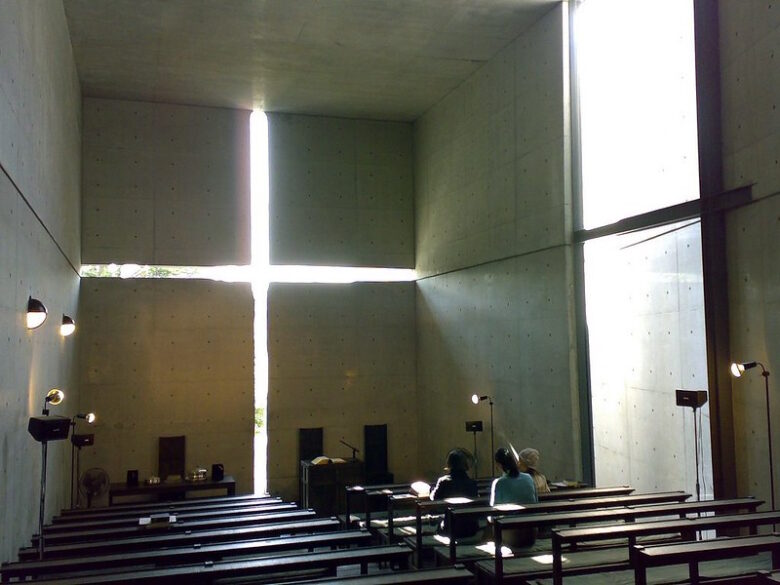
In contemporary architecture, the legacy of quietude has been reinterpreted with a modern language. The Japanese architect Tadao Ando is a recognized master of the architecture of silence.
His Church of the Light in Ibaraki, Japan, is an iconic example. Instead of using decorative elements, Ando uses the pure forms of concrete and the natural light that enters through a cross carved into the wall.
The space is austere, but the light that floods it is a powerful presence that induces a deep sense of awe and serenity. The silence in this church is not emptiness; it is the light itself.
Another notable project is the Teshima Art Museum, designed by Ryue Nishizawa. This structure, which looks like a giant water drop on a hill, has no walls or traditional exhibits.
Instead, its interior is a meditation space where the sound of the wind, the echo of visitors, and the dripping of water filtering through two openings in the roof are the protagonists.
The museum’s architecture does not frame art; it is the art itself, a multi-sensory experience of silence and nature. These examples show how architecture can transcend its utilitarian function to become a medium for healing and self-discovery.
The future of building: designing for wellness
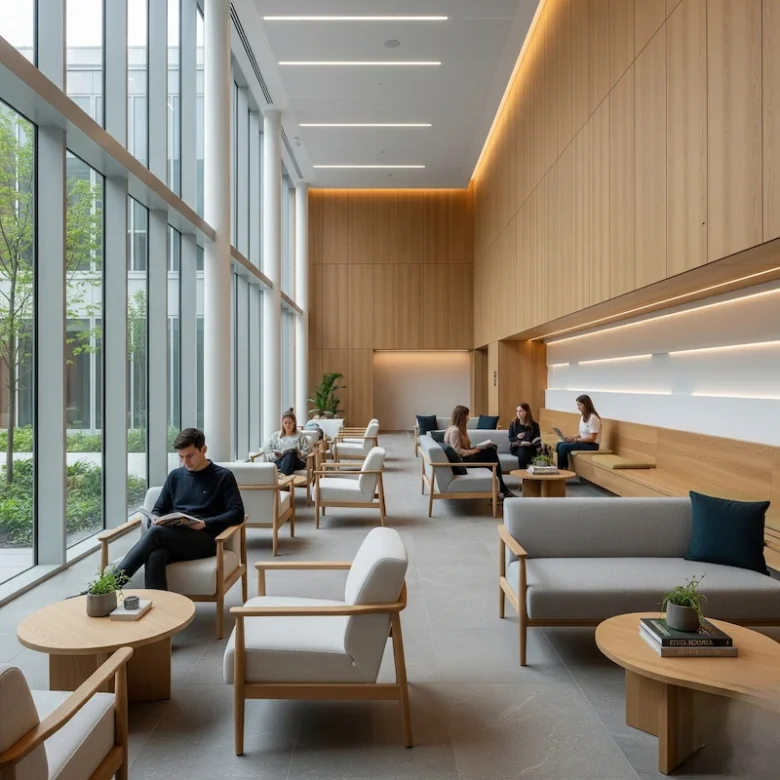
What was once considered a niche approach, reserved for places of worship or meditation, is now emerging as a vital necessity in the architecture of the future. In an increasingly urbanized, dense, and loud world, the architecture of silence is not a luxury but a strategy for survival.
The architects and designers of tomorrow will no longer focus solely on function and aesthetics, but on their creations’ ability to promote the mental and emotional health of inhabitants.
The legacy of this movement will not be a collection of buildings, but a transformation of how we think about construction and, ultimately, how we live.
This visionary approach invites us to imagine a future where hospitals heal not just with medicine, but with serene environments; where schools improve concentration with classrooms designed for quietude; and where homes shield us from the world’s clamor so we can reconnect with ourselves.
Architecture, in its highest form, has the power to heal and to nurture, and this movement is the path toward that promise.
A legacy of calm in a noisy world
The true legacy of the architecture of silence will be its ability to leave a lasting imprint of calm in an ephemeral and noisy world.
The design principles that emphasize natural light, honest materiality, and contemplative spaces are becoming more and more integrated into conventional architecture.
Contemporary design is rediscovering the value of interior gardens, transitional spaces, and biophilic elements as powerful tools to mitigate stress.
This movement has shown that silence is not the absence of something but the presence of a superior quality—a sensory and emotional experience that enriches life.
Designing for quietness teaches us that sometimes, the most powerful thing about a space isn’t what you see, but what you feel: a whisper, the reflection of light, the echo of a step.
This legacy will remind us that the quality of our experience is just as important as the functionality of our environment.
How silent architecture is becoming a social tool
Finally, the architecture of silence is establishing itself as a powerful social and healing tool. In hospitals, designing for quietness can reduce patient stress and accelerate recovery.
In schools, it can improve academic performance and student well-being. In workplaces, it can increase productivity and reduce burnout. Its impact is tangible and measurable.
By incorporating these principles into urban planning and public design, we can create kinder, less overwhelming cities.
The creation of urban parks, libraries, and transit stations with a focus on reducing visual and auditory noise can democratize access to serenity.
The architecture of silence, therefore, is not a privilege but a universal right. It is the beacon of a new era where building no longer just shapes the landscape, but also cares for the health and dignity of the human spirit.
Continue the journey to serenity
The conversation around a more mindful way of living starts with a single thought. If you believe that architecture can be a tool for inner calm and well-being, your journey continues with us.
At Neomanía Magazine, we explore the intersection of design, neuroscience, and serenity. Subscribe to discover more visionary projects and compelling insights into building a quieter, healthier world.