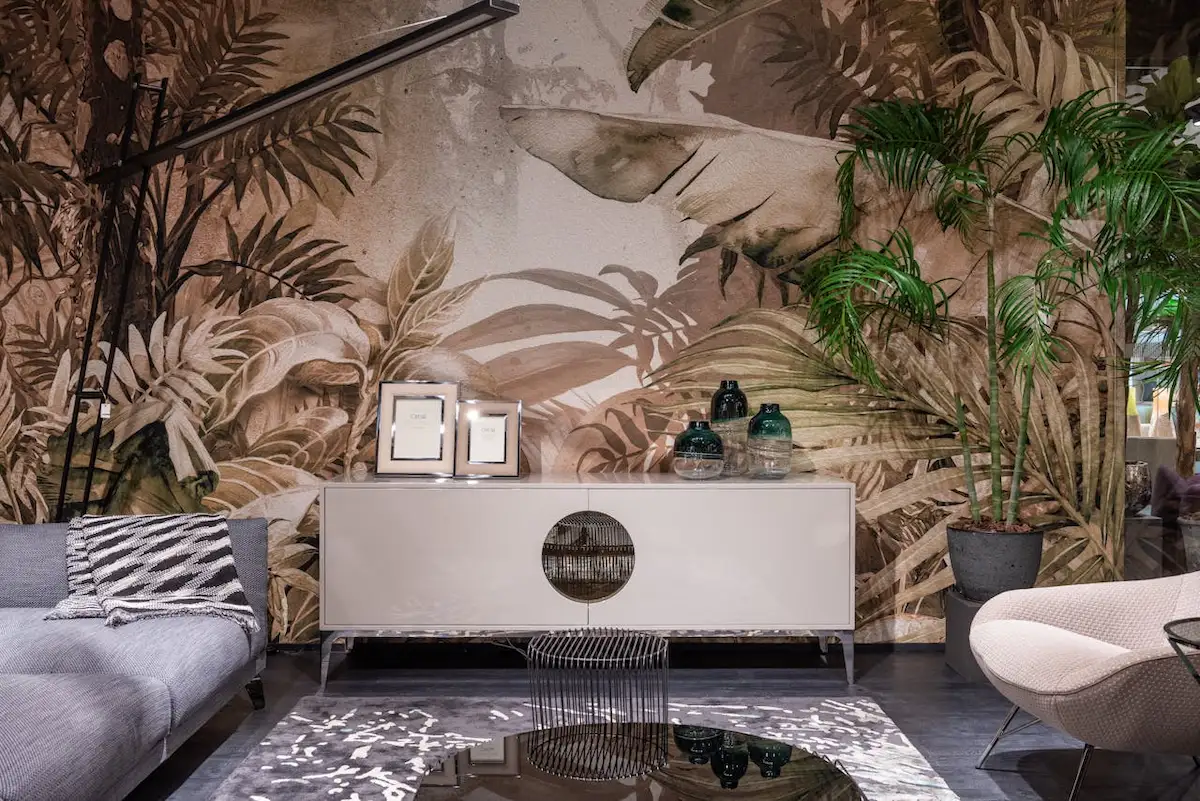
The quiet reign of the minimalist white wall is officially over. For years, we were told that serenity and sophistication lived in stark, unadorned spaces. But a subtle, powerful shift has been occurring in our homes and our collective consciousness.
We’ve begun to crave story, texture, and personality in our most intimate environments. Walls are no longer just structural necessities or passive backdrops for our lives; they are becoming the primary storytellers, the main characters in the theater of our homes.
This movement is about more than just decoration; it’s a reclamation of personal expression, a bold statement against the homogenous, and a deep dive into the narrative potential of a room.
The new era of wallpaper is not a revival of your grandmother’s fussy florals but a complete reimagining of what a vertical surface can be: a canvas for digital art, a portal to a biophilic paradise, or a testament to handcrafted texture.
This transformation is driven by a confluence of cultural and technological shifts. On one hand, there’s a growing fatigue with the cold, impersonal feel of minimalist aesthetics that dominated the last decade. We’re seeking warmth, comfort, and spaces that feel uniquely ours.
This has paved the way for a return to maximalism, not as chaotic clutter, but as a curated, joyful expression of identity. On the other hand, technological advancements in digital printing and material science have blown the doors wide open for creativity.
Designers are no longer limited by traditional printing methods. They can create vast, seamless murals, experiment with metallic inks and three-dimensional textures, and produce coverings on sustainable, eco-friendly materials.
This fusion of a desire for personal storytelling with limitless technological possibility is what makes this moment so exciting. We are learning to see our walls not as boundaries, but as horizons.
The resurrection of pattern: From minimalist fatigue to maximalist joy
The pendulum of design has swung decisively away from the stark and towards the expressive. This isn’t just a fleeting trend but a psychological response to a world that often feels overly sanitized and digitally distant.
We are actively seeking sensory experiences within our homes, and patterned walls are a direct and impactful way to achieve this.
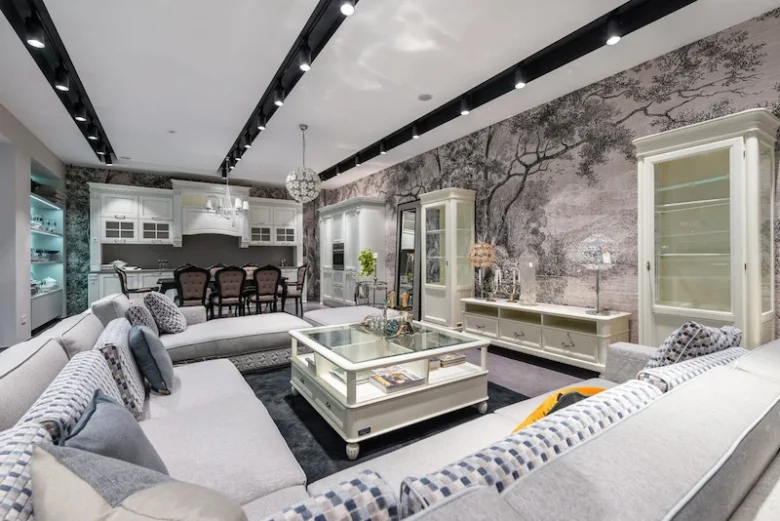
They engage the eye, evoke emotion, and instantly infuse a space with a distinct energy that a simple coat of paint cannot replicate.
The re-embrace of pattern is a celebration of complexity, history, and the beautiful imperfections that make a space feel lived-in and loved.
The psychology of pattern and color in modern spaces
Every choice we make in our interiors has a subconscious effect on our mood and well-being. A wall covering is perhaps the most powerful tool in this psychological design kit.
Large-scale, flowing botanical prints can create a sense of calm and connection to nature, reducing stress and fostering a restorative atmosphere.
This is the core principle behind the biophilic design movement, which seeks to integrate natural elements into our built environments. Studies have shown that even representations of nature can lower heart rate and improve focus.
Conversely, bold geometric patterns with high-contrast colors can energize a space, making it feel dynamic and creative. Think of a home office where a sharp, art deco-inspired pattern encourages focus and innovation, or a dining room where a vibrant, abstract design sparks conversation and conviviality. Color theory plays a massive role here.
Deep blues and greens can create a sense of intimacy and security, perfect for a bedroom or a cozy reading nook. Warm terracottas, ochres, and blush tones can make a large room feel more inviting and welcoming.
The modern approach is to use these tools with intention, asking not just “what does this look like?” but “how does this make me feel?” It’s about crafting an emotional architecture for our daily lives.
Maximalism as a curated rebellion
The term “maximalism” can often conjure images of cluttered, chaotic rooms. But the new maximalism is a far more intentional and sophisticated affair.
It’s a rebellion against the idea that “less is more,” proposing instead that “more is more,” provided it is curated with a personal story.
In this context, a bold wallpaper is the anchor, the unifying canvas upon which a collection of meaningful objects, art, and furniture can be layered. It sets the tone and provides the narrative thread that ties everything together.
A maximalist wall might feature a dense, jungle-like mural that serves as the backdrop for a velvet sofa, antique brass lamps, and a collection of travel souvenirs.
The wallpaper isn’t competing with these items; it’s contextualizing them, making them part of a single, cohesive story of adventure and eclecticism.
This approach requires a confident eye. It’s about mixing patterns, textures, and eras in a way that feels deliberate, not accidental.
A damask print might be paired with modern furniture, or a psychedelic 70s pattern could be grounded by traditional wooden pieces.
The wall covering is the statement of intent, declaring that this is a space unafraid of personality, history, and a little bit of drama. It’s a deeply personal form of design that celebrates the richness and complexity of a life well-lived.
The return of historical motifs with a contemporary twist
There’s a fascinating trend of designers reaching back into the archives—to Art Nouveau, Chinoiserie, Arts and Crafts—and reinterpreting these historical styles for a 21st-century audience. This isn’t about creating period-perfect rooms.
It’s about borrowing the elegance and craftsmanship of the past and injecting it with a fresh, modern sensibility. A classic William Morris print might be recolored in a palette of neon pink and electric blue, transforming it from a quaint classic into a vibrant, edgy statement.
Chinoiserie, the 18th-century European interpretation of Chinese artistic traditions, is experiencing a major resurgence. But today’s versions are often digitally printed on a massive scale, with exaggerated birds and blossoms that feel more like immersive art installations than simple decorative paper.
The colors are bolder, the lines are cleaner, and the overall effect is one of dramatic, transportive beauty. This dialogue between past and present adds layers of meaning to a space.
It acknowledges design history while refusing to be constrained by it, creating interiors that feel both timeless and completely of the moment. It’s a way of honoring our roots while boldly stepping into the future.
Technology as the artist’s new brush: The digital revolution in wall design
The single greatest catalyst in the evolution of wall coverings is technology. Digital printing has liberated designers from the constraints of rollers and screens, allowing for unprecedented detail, scale, and customization.
This technological leap has democratized design, putting the power of a completely unique interior into the hands of homeowners and designers alike.
Simultaneously, a growing awareness of our environmental impact has spurred incredible innovation in materials science, leading to products that are as beautiful as they are responsible.
This intersection of digital artistry and sustainable practice is defining the future of our walls.
Customization at your fingertips: The rise of bespoke murals
Perhaps the most exciting development is the ability to create truly bespoke wall treatments. Digital printing allows any high-resolution image—a personal photograph, a child’s drawing, a piece of abstract digital art—to be transformed into a wall-sized mural.
This moves the wall covering from a mass-produced product to a piece of personal art. Imagine a dining room wall covered in a misty, large-scale photograph of a forest you once hiked through, or a bedroom where the wall behind the bed is a custom-designed star map from the night you were born.
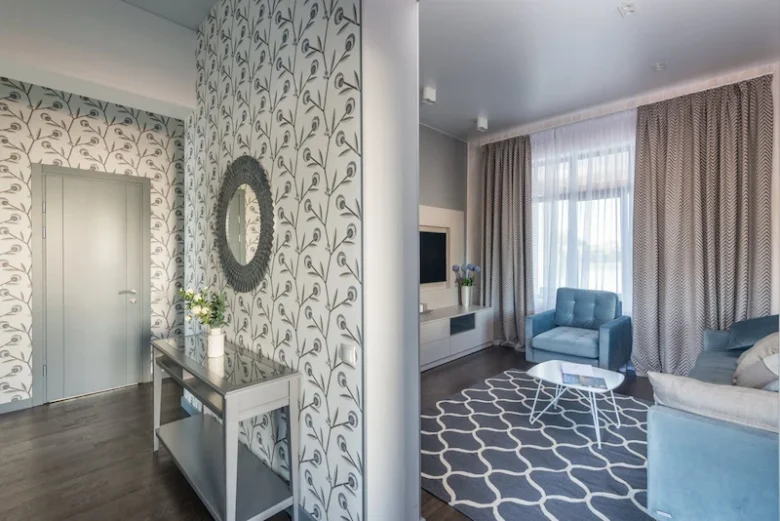
This level of personalization fosters a much deeper connection to our living spaces. Companies now offer services where you can upload your own design or work with an in-house artist to create something entirely new.
The technology also allows for perfect scaling. A pattern can be enlarged or shrunk to fit the exact dimensions of a wall, ensuring the design is never awkwardly cropped.
This precision eliminates the repetitive feel of traditional wallpaper, making the design feel more organic and integrated into the architecture of the room.
It’s the ultimate form of self-expression, turning your home into a gallery of your own life and imagination.
Sustainable innovation: Materials that care for the planet
The design industry is undergoing a crucial reckoning with its environmental footprint, and wall coverings are at the forefront of this change. The days of vinyl-coated, chemical-laden papers are numbered.
In their place, a new generation of sustainable materials is emerging, offering beautiful and responsible choices. Our team at Neomania Magazine consistently tracks these innovations, as they represent a fundamental shift in consumer priorities.
These eco-conscious options are no longer a niche market but a rapidly growing standard. Consumers are demanding transparency and products that align with their values.
This has pushed manufacturers to innovate, resulting in wall coverings that are better for both our homes and the planet. Here are some of the key materials leading the charge:
- FSC-Certified & Recycled Paper: Many modern wallpapers are printed on paper sourced from responsibly managed forests (certified by the Forest Stewardship Council) or made from post-consumer recycled content.
- Non-Woven Substrates: These are made from a blend of synthetic and natural fibers, making them breathable. This quality helps prevent mold and mildew growth behind the paper, contributing to healthier indoor air quality. They are also tear-resistant and can be removed dry, making them easier to replace without damaging the walls.
- Water-Based Inks: Traditional solvent-based inks can release volatile organic compounds (VOCs) into the air, which are harmful to human health and the environment. Water-based inks are non-toxic, odor-free, and a much safer alternative for interior spaces.
- Natural Textiles: Materials like grasscloth, cork, linen, and silk are being used to create richly textured wall coverings. These are renewable resources that add a layer of natural, tactile warmth to a room. Cork, in particular, is an excellent choice as it is harvested from the bark of the cork oak tree without harming the tree itself, and it provides natural acoustic and thermal insulation.
Interactive and smart wallpapers: The future is now
Looking ahead, the fusion of technology and wall design is poised to become even more profound. We are on the cusp of “smart” wallpapers that do more than just look beautiful.
Researchers and avant-garde design studios are experimenting with materials that can interact with their environment and its inhabitants.
Imagine a child’s bedroom with wallpaper that incorporates thermochromic ink, changing colors and revealing new patterns in response to the temperature of the room or a human touch.
Other innovations include wallpapers embedded with tiny LED lights that can be programmed to create gentle, shifting patterns of light, effectively turning a wall into a dynamic, ambient light source.
There is also exploration into conductive inks that could turn a wall into a giant touchscreen interface or even charge devices wirelessly.
Augmented reality (AR) applications are also emerging, where pointing a phone or tablet at a patterned wall could bring the design to life, with birds flying out of the branches or flowers blooming in real-time.
While still largely in the conceptual or luxury stages, these developments signal a future where our walls are no longer static surfaces but responsive, interactive partners in our homes.
Beyond the living room: Unconventional applications for modern wall treatments
The versatility and durability of modern wall coverings have liberated them from the confines of the traditional living room or bedroom.
Designers and adventurous homeowners are now using these materials in unexpected and creative ways, challenging our preconceived notions of where a pattern belongs.
This expansion into new territories—from ceilings to bathrooms—allows for a more holistic and immersive design experience, where a narrative theme can flow throughout an entire home. It’s about seeing every surface as an opportunity for expression.
The fifth wall: Bringing ceilings into the design conversation
For too long, the ceiling has been the forgotten surface in interior design, a vast expanse of white that is often completely ignored.
But treating the ceiling as a “fifth wall” is a transformative design strategy that is rapidly gaining traction. Applying a bold wallpaper or mural overhead can have a dramatic impact on the feel of a room.
In a room with a high ceiling, a dark, patterned paper can create a sense of intimacy and coziness, drawing the ceiling down to a more human scale.
Think of a bedroom with a deep navy paper covered in a subtle star pattern, creating a celestial canopy to sleep under.
In a smaller room, a light-colored paper with a dynamic pattern can draw the eye upward, creating an illusion of height and space. It can also be a way to add a powerful dose of pattern and color without overwhelming the room.
A powder room, for example, might have neutral walls but a spectacular, oversized floral print on the ceiling, creating a jewel-box effect that surprises and delights visitors.
Using wallpaper on the ceiling is a confident, unexpected move that signals a sophisticated understanding of three-dimensional space.
From bathrooms to backsplashes: Durability meets design
Thanks to advancements in materials, the bathroom is no longer off-limits for decorative wall coverings. New vinyl and treated papers are specifically designed to withstand moisture, humidity, and splashes, making them a practical and stylish alternative to tile.
This opens up a world of design possibilities for what is often a purely functional space. A small powder room can be transformed into an immersive experience with a floor-to-ceiling mural of a dramatic landscape or a quirky, conversational print.
Even the kitchen backsplash, traditionally the domain of tile or stone, is becoming a new canvas. Specially treated, cleanable wallpapers can be installed and protected by a sheet of clear glass, allowing for any pattern or color to be introduced into the kitchen without sacrificing functionality.
This allows for a seamless visual flow, especially in open-plan spaces where the kitchen is visible from the living area. It’s a clever way to inject personality and artistry into the most utilitarian corners of the home. The new era of wallpaper is defined by this kind of boundary-pushing application.
The art of zoning: Using wall coverings to define open-plan spaces
As open-plan living continues to be popular, the challenge remains of how to define distinct functional areas without putting up walls. Wall coverings offer an elegant and effective solution.
A single wall or a section of a wall can be used to visually “zone” a space, creating a room-within-a-room. In a large living/dining area, applying a dramatic, dark-hued wallpaper to the wall behind the dining table can create a distinct and intimate dining “nook.” It visually separates the space from the more relaxed living area without interrupting the open flow.
Similarly, in a studio apartment, a beautiful paper can be used to frame the sleeping area, giving it the feel of a separate bedroom.
A strip of inspiring, graphic wallpaper can delineate a workspace in the corner of a living room, mentally separating work from leisure. This technique is more than just decorative; it’s a form of “soft architecture.”
It uses color, pattern, and texture to guide the eye and suggest function, adding depth and intentionality to an open layout. It’s a sophisticated way to organize space that is both practical and aesthetically pleasing.
Curating your narrative: How to choose and style with intention
With an almost infinite array of choices available, selecting the right wall covering can feel daunting. The key is to approach it not as a purely decorative decision, but as an act of personal curation.
The goal is to find a design that resonates with your personal story and enhances the architectural spirit of your home. It requires introspection and a bit of practical knowledge about how pattern and scale interact with a space.
This is the final, crucial step in transforming a wall from a blank surface into a meaningful part of your home’s narrative.
Finding your aesthetic voice: From biophilic calm to abstract energy
Before you even begin looking at samples, take a moment to consider the story you want your space to tell. How do you want to feel when you are in that room? Your answer will guide you toward a specific aesthetic family. This process is about aligning your inner world with your outer environment.
Here are a few popular aesthetic directions to consider:
- Biophilic & natural: If you crave tranquility and a connection to the outdoors, look for patterns inspired by nature. This could be anything from delicate leaf motifs and realistic floral murals to more abstract representations of water, wood grain, or stone textures like marble and terrazzo. The color palette is typically grounded in earthy tones, greens, and blues.
- Geometric & modern: For those who appreciate order, clean lines, and a dynamic feel, geometric patterns are a perfect fit. This category spans from classic Art Deco fans and chevrons to bold, contemporary abstract shapes. They work well in modern and mid-century modern spaces, adding a sense of rhythm and structure.
- Historical & romantic: If you are drawn to a sense of history, elegance, and drama, explore updated historical motifs. This includes the aforementioned Chinoiserie and damask prints, as well as toile de Jouy scenes and intricate Arts and Crafts patterns. These designs add a layer of timeless sophistication to a room.
- Artistic & abstract: For the bold and expressive, an abstract mural can turn a wall into a piece of contemporary art. Think large-scale watercolor washes, painterly brushstrokes, or graphic, graffiti-inspired designs. This choice is about pure emotion and visual impact, making a powerful and personal statement.
The rules of scale and light
Once you have a sense of your desired aesthetic, there are a few practical considerations. The scale of the pattern is crucial. A common misconception is that large patterns will overwhelm a small room. In fact, the opposite can often be true.
A large-scale, repeating pattern can actually make a small space, like a powder room or entryway, feel larger and more dynamic by tricking the eye and blurring the room’s boundaries. Conversely, a tiny, busy pattern in a large room can sometimes feel chaotic and unfocused.
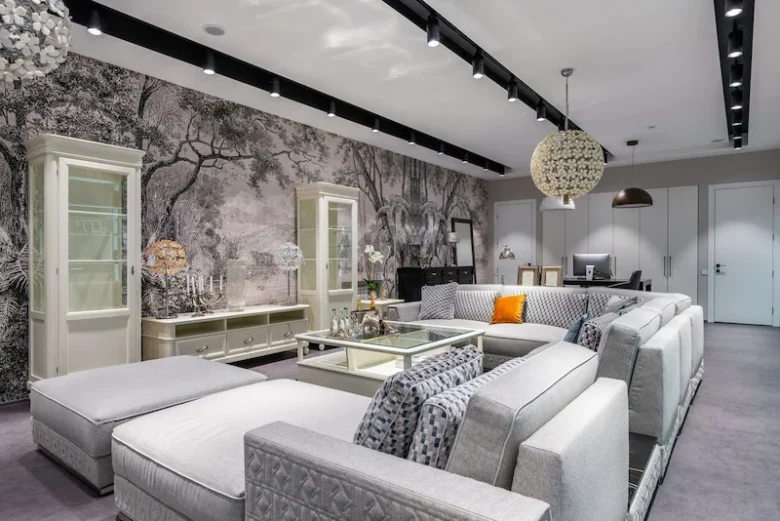
Light is the other critical factor. Before committing, always get a sample and tape it to the wall. Observe how it looks at different times of day—in the bright morning light, the warm afternoon glow, and under artificial light at night.
A paper with a metallic or pearlescent finish can look magical in a room that gets a lot of natural light, as it will shimmer and change throughout the day.
In a darker room, you might opt for a lighter-colored paper to brighten the space, or lean into the moodiness with a deep, saturated color that creates a cozy, enveloping feel.
Understanding the interplay of pattern, scale, and light is the final step in making a choice that you will love for years to come.
This journey into the world of modern wall coverings is about more than just trends; it’s about a fundamental shift in how we relate to our homes.
We are moving away from passive consumption of design and toward active creation of personal sanctuaries that reflect who we are and who we aspire to be.
The walls are no longer silent; they are speaking, telling stories of nature, of technology, of history, and of ourselves. They challenge us, comfort us, and inspire us daily.
At Neomania Magazine, we believe that the most compelling design is born from these kinds of thoughtful, personal narratives.
If you are moved by the power of a story well told, if you seek to understand the deeper currents shaping our aesthetic world, and if you believe that a home should be a reflection of a life lived with intention, then we invite you to continue this exploration with us.
Join our community and discover a perspective on art and design that goes beyond the surface, into the very heart of what makes a space truly meaningful.