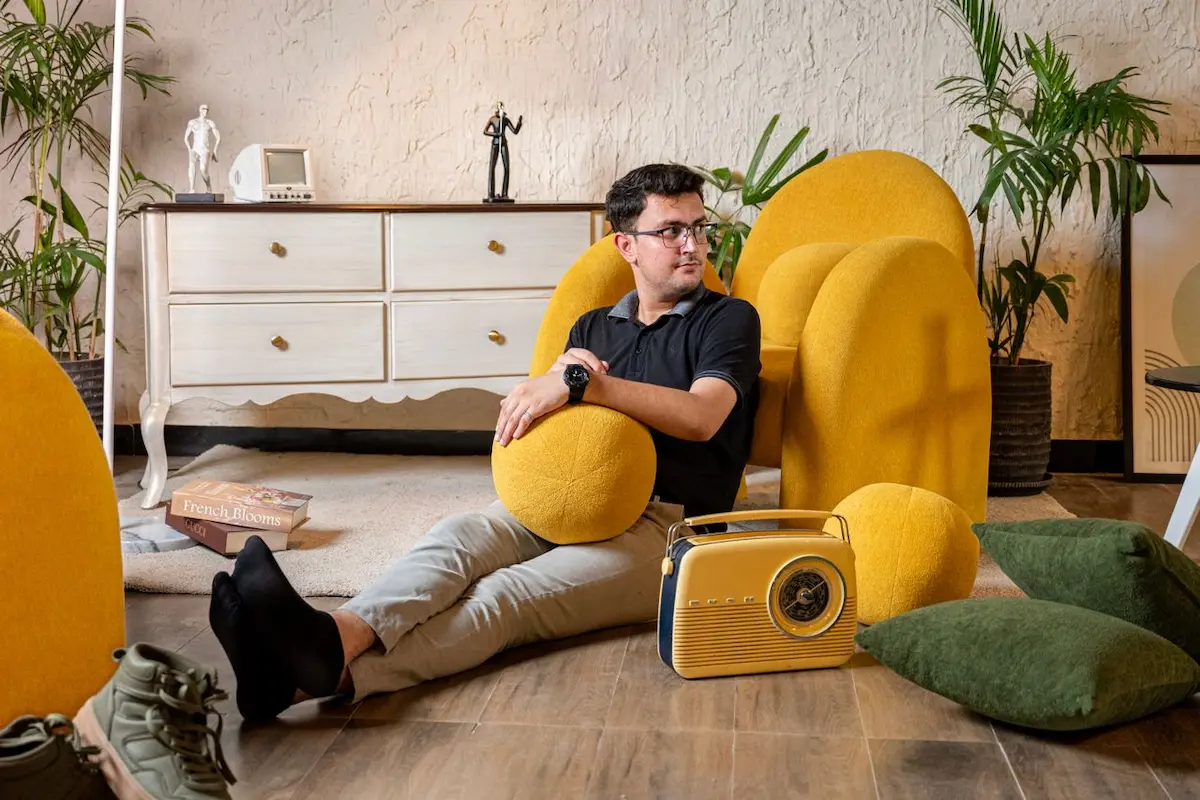
There’s a quiet revolution happening behind closed doors. It isn’t about following rigid design rules or chasing fleeting trends. Instead, it’s a deeply personal movement toward creating homes that actively contribute to our happiness.
This approach, sometimes called dopamine decor, is less a style and more an ethos—a philosophy centered on filling our spaces with color, texture, and objects that trigger a genuine sense of joy and contentment. It’s about crafting an environment that doesn’t just house you, but also nurtures you.
This shift marks a departure from the cool, impersonal minimalism that dominated for years, welcoming a more expressive, personal, and emotionally resonant way of living. It’s the art of turning your home into a sanctuary, a personal gallery, and a source of daily delight.
The core idea is simple yet profound: our surroundings have a direct and measurable impact on our mood and mental state. By consciously curating our homes to include elements that we find personally stimulating and beautiful, we can create a feedback loop of positivity. This isn’t about clutter or chaos; it’s about intentionality.
Every object, every color choice, every piece of art becomes a note in the symphony of your personal space, working in harmony to elevate your spirit. It’s a design language written in the vocabulary of personal joy, where the ultimate goal is not a picture-perfect room, but a life well-lived within its walls.
We’re moving beyond the idea of a home as a status symbol and embracing it as a tool for well-being, a canvas for self-expression, and a testament to a life rich with meaning and memories.
The psychology of a vibrant living space
The connection between our environment and our emotional state is a field rich with scientific inquiry. The way we design our homes—the colors we choose, the light we let in, the textures we touch—sends constant signals to our brains, influencing everything from our stress levels to our creativity.
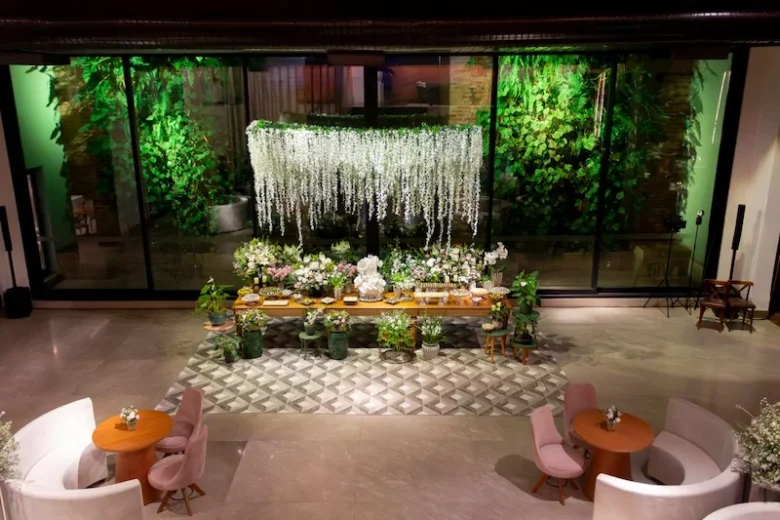
Understanding this relationship is the first step toward intentionally designing a home that supports, rather than drains, our mental energy. It’s about leveraging design principles not just for aesthetic appeal, but for psychological benefit. When a space feels right, it’s often because it’s satisfying a deep-seated need for comfort, security, or stimulation.
Beyond aesthetics: The cognitive impact of color
Color theory is more than just a guide for creating pleasing palettes; it’s a window into human psychology. Different colors can evoke specific emotional and even physiological responses.
For instance, blues and greens, often associated with nature, are known to have a calming effect, potentially lowering blood pressure and reducing anxiety. They are ideal for spaces dedicated to rest and relaxation, like bedrooms or reading nooks.
In contrast, warm colors like yellow, orange, and red are energizing and stimulating. Yellow is often linked to optimism and happiness, making it a great choice for kitchens or dining areas where social interaction and energy are desired. Red, a color of passion and intensity, can increase heart rate and is best used as an accent to avoid overstimulation.
However, these associations are not universal. Our personal experiences and cultural backgrounds heavily influence our perception of color. A color that one person finds joyful might be jarring to another. This is where the true power of mood-boosting design lies: in its personalization.
The goal isn’t to follow a generic prescription but to conduct a personal exploration. What colors are tied to your happiest memories? A vibrant turquoise that reminds you of a seaside vacation? A deep, earthy terracotta that evokes a sense of grounding and stability? By surrounding yourself with these personally significant hues, you create a space that constantly reinforces positive memories and feelings, turning your walls into a canvas of your own life story.
Texture and light as mood amplifiers
Our experience of a room goes far beyond the visual. The tactile quality of a space—the feel of a velvet cushion, the smoothness of a marble tabletop, the roughness of a linen curtain—plays a vital role in our sense of comfort and well-being.
Incorporating a variety of textures adds depth and interest, making a space feel richer and more inviting. This is known as creating a “sensory-rich” environment. A plush rug underfoot can provide a sense of grounding, while a chunky knit throw offers a feeling of warmth and security. These tactile elements invite touch and interaction, making us feel more connected to our surroundings.
Light, both natural and artificial, is another powerful tool for shaping the mood of a space. Abundant natural light is consistently linked to improved mood and productivity. Arranging furniture to maximize daylight and using sheer curtains can transform a room’s atmosphere.
When it comes to artificial lighting, a layered approach is most effective. This involves combining ambient (overall) lighting, task (focused) lighting, and accent (highlighting) lighting.
Using dimmers allows you to adjust the intensity for different activities and times of day, creating a soft, warm glow for a relaxing evening or bright, clear light for a productive morning.
The quality of light matters, too. Warm-toned bulbs tend to create a cozier, more intimate feel, while cool-toned bulbs are more energizing. By thoughtfully orchestrating light and texture, you can craft a multi-sensory experience that soothes, energizes, or inspires as needed.
Crafting your personal sanctuary of joy
The journey to a more joyful home is not about a complete overhaul or a massive budget. It’s about a series of small, intentional choices that accumulate to create a space that is a true reflection of you. It begins with a shift in mindset: from “What should this room look like?” to “How do I want to feel in this room?” This question becomes your guiding principle, your North Star in every design decision.
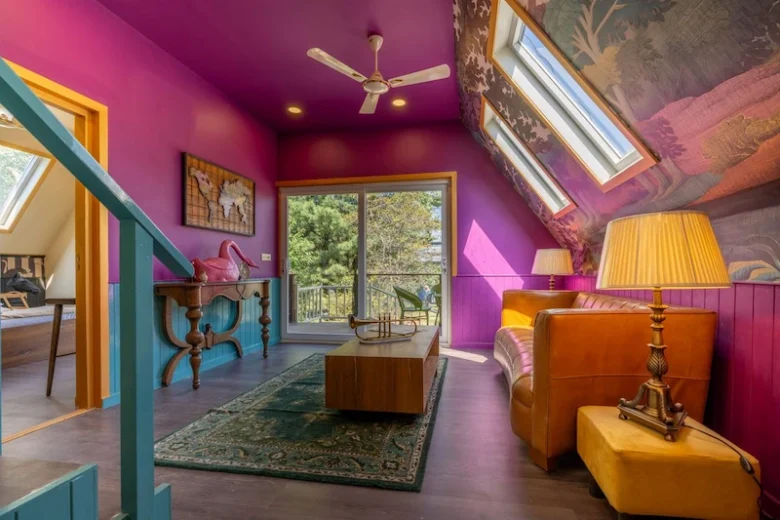
The process is one of discovery, of tuning into your own preferences and memories, and giving yourself permission to break from conventional design “rules.” Your home should be your autobiography, written in the language of objects and colors.
Starting small: The art of the accent piece
You don’t need to paint every wall a shocking color to embrace this philosophy. The power of a single, well-chosen accent piece can be transformative. Think of it as a concentrated dose of joy.
This could be a brightly colored armchair that becomes your favorite reading spot, a set of vibrant throw pillows that breathe new life into a neutral sofa, or a bold, graphic rug that anchors the room with personality.
These smaller elements are low-risk, high-reward ways to experiment with color and pattern. They allow you to test what resonates with you without committing to a large-scale change.
The key is to choose items that you have a genuine emotional connection to. Perhaps it’s a piece of ceramic art you picked up on your travels, a vintage lamp with a quirky shape, or a piece of textiles in your absolute favorite, non-negotiable color.
These objects serve as more than just decoration; they are daily reminders of experiences, people, and feelings that bring you happiness. They are the punctuation marks in the story of your home, drawing the eye and sparking a small moment of delight each time you see them. Starting small builds confidence and helps you hone your personal aesthetic before tackling larger projects.
The gallery wall reinvented: Telling your story
The gallery wall has been a design staple for years, but its modern interpretation is less about creating a perfectly symmetrical grid of matching frames and more about curating a dynamic, personal narrative. This is your opportunity to surround yourself with images and objects that hold meaning.
It’s a visual representation of your life, your passions, and your journey. Think beyond just photographs. Your gallery wall can be a rich tapestry of different media and objects.
- Mix and match media: Combine framed art prints and personal photos with other elements. Consider including a small mirror for a reflective touch, a piece of pressed botanicals, a vintage postcard, or even a small, shallow woven basket. This variety adds textural interest and makes the collection feel more organic and evolved over time.
- Tell a thematic story: Instead of a random assortment, you could curate your wall around a theme. This could be a collection of black-and-white travel photography, a series of botanical illustrations, or an eclectic mix of abstract art in a specific color palette. The theme provides a cohesive thread that ties the disparate pieces together.
- Play with frames and layout: Ditch the idea that all frames must match. A mix of different styles, materials, and sizes—from sleek modern metal to ornate vintage wood—adds character and a sense of history. Before you start hammering nails, lay out your arrangement on the floor. Cut paper templates the size of each frame and tape them to the wall to perfect your composition. This allows you to visualize the final result and make adjustments easily.
This reinvented gallery wall becomes a living document of your life. It’s a space that can grow and change with you, as you add new pieces from your travels, swap out photos, and continue to build a collection that is uniquely yours. It’s a powerful way to make a large-scale personal statement in any room.
Curating chaos: A maximalist’s guide to balance
For those who are drawn to more-is-more, the challenge is not in acquiring beautiful things, but in arranging them in a way that feels curated and intentional rather than cluttered and overwhelming.
Maximalism at its best is a symphony of color, pattern, and texture, not a cacophony. The key to successful maximalism is establishing an underlying structure or a unifying element that brings harmony to the “chaos.”
One effective strategy is to choose a unifying color palette. You can have a riot of different patterns—floral, geometric, animal print—but if they all share a few common colors, the overall effect will be cohesive.
For example, a room filled with objects in varying shades of blue, green, and gold will feel connected, even if the styles and eras of the objects are wildly different. Another approach is to create “vignettes” or small, curated groupings of objects on surfaces like bookshelves, side tables, or mantels. Within each vignette, group items by theme, color, or material.
This creates moments of visual rest and focus within a busier room. Finally, pay attention to scale. Vary the size of your objects and furniture to create a dynamic visual landscape.
A large piece of art can anchor a wall, while a collection of smaller objects can add detail and intrigue. It’s a delicate dance, but when done right, a maximalist space is a rich, immersive environment that tells a complex and fascinating story about its inhabitant.
The evolution of expressive interiors
The desire for personal expression in our homes is not a new phenomenon, but its current form is a unique product of our times. It’s a reaction against the homogeneity of mass-produced design and a reflection of a broader cultural shift towards individuality and authenticity.
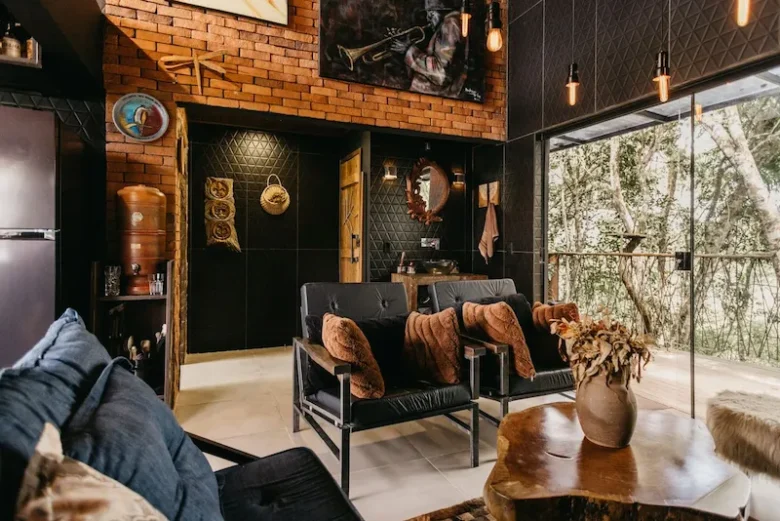
We can trace the roots of today’s expressive interiors through various design movements, each of which championed boldness and personality in its own way. By understanding this history, we can better appreciate the nuances of the current trend and see how it builds upon, and reinterprets, the past. This historical context gives us a richer vocabulary for creating our own unique spaces.
From Memphis design to the new eclecticism
In the 1980s, the Memphis Group, an Italian design collective, launched a radical assault on the principles of “good taste.” They championed bold, clashing colors, asymmetrical shapes, and playful, often kitschy, patterns. Their work was polarizing—a direct rebellion against the subdued, serious modernism that preceded it.
While the pure Memphis aesthetic was short-lived, its influence has been profound and long-lasting. It broke the rules and gave designers permission to be playful, to prioritize visual delight and wit over sober functionality. You can see echoes of Memphis in the current trend’s love for squiggly lines, primary color accents, and a general sense of irreverence.
Today’s “new eclecticism” takes the spirit of movements like Memphis but applies it with a more personal, less dogmatic touch. It’s not about recreating a specific historical style but about borrowing freely from different eras and cultures to create a layered, personal mix.
A mid-century modern credenza might sit comfortably next to a Victorian armchair, under a piece of contemporary abstract art. The thread that connects these disparate elements is the owner’s personal taste.
This approach requires a confident eye, but it results in spaces that are truly one-of-a-kind, filled with objects that have been collected over a lifetime, each with its own story. It’s the antithesis of a room decorated in a single weekend from one catalog; it’s a home that has been lovingly assembled over time.
The role of social media in personalizing trends
Social media platforms, particularly Instagram and Pinterest, have fundamentally changed the way we discover and interpret design trends. In the past, trends were dictated from the top down by a handful of magazines and design authorities. Today, inspiration is democratized.
We have access to a global tapestry of homes, from a minimalist loft in Tokyo to a bohemian riad in Marrakech. This exposure has broadened our visual horizons and empowered us to be more adventurous in our own spaces. We can see how real people are interpreting trends, adapting them to their own lives and budgets.
This has fostered a more modular, “pick-and-mix” approach to design. Instead of adopting a trend wholesale, we might be inspired by the color palette from one image, the gallery wall layout from another, and the use of plants from a third.
Social media acts as a vast, visual brainstorming tool, allowing us to gather ideas and synthesize them into a style that is uniquely our own. It has also created a community of design enthusiasts who share tips, sources, and encouragement, making the process of creating a personal home feel less intimidating and more like a shared creative project. The result is a design landscape that is more diverse, more personal, and more dynamic than ever before.
Beyond the visual: Engaging all senses
A truly immersive and joyful home engages more than just the eyes. Our other senses—smell, hearing, touch—play a powerful role in shaping our emotional experience of a space. By consciously designing for all the senses, we can create a deeper and more holistic sense of comfort and well-being.
This is about moving beyond interior design and into the realm of “sensory design,” where the goal is to craft a complete atmosphere. It’s the subtle, often subconscious, cues that can make a house truly feel like a home, a place of refuge and restoration. When we walk into a space that smells wonderful, feels comfortable, and sounds peaceful, our bodies and minds instinctively relax.
Scent-scaping your home for emotional resonance
The sense of smell is uniquely powerful because it is directly linked to the parts of the brain that process memory and emotion. A specific scent can instantly transport us back to a cherished memory or evoke a strong feeling.
“Scent-scaping” is the art of using fragrance to intentionally set the mood in different areas of your home. This goes beyond simply masking unpleasant odors; it’s about creating a signature scent identity for your space.
- Living areas: For social spaces like the living room, consider warm and welcoming scents. Sandalwood, cedar, or amber can create a cozy, inviting atmosphere. During the day, a fresher scent like citrus or green tea can feel uplifting and energizing.
- Bedrooms: In spaces for rest, calming fragrances are key. Lavender is well-known for its relaxing properties and can promote better sleep. Chamomile and bergamot are also excellent choices for creating a serene and tranquil environment.
- Kitchens and Bathrooms: In these areas, you typically want clean and fresh scents. Lemon, eucalyptus, mint, or herbal fragrances like rosemary and thyme work well to create a sense of cleanliness and vitality.
You can layer scents using a variety of methods, from high-quality candles and essential oil diffusers to natural sources like fresh flowers or a simmering pot of spices on the stove. The key is to choose scents that you personally love and find authentic. Your home’s fragrance should be a subtle background note that enhances the overall experience of being there.
The sound of comfort: Curating your home’s audio identity
The sounds in our environment, or the lack thereof, have a significant impact on our stress levels and ability to concentrate. The “soundscape” of your home is just as important as its visual landscape. The first step is often sound reduction.
In a noisy urban environment, this could mean investing in heavy curtains, area rugs, or acoustic panels to absorb unwanted external noise. Creating a baseline of quiet allows you to then intentionally add sounds that you find pleasant and relaxing.
This could be a high-quality sound system for playing curated playlists that match your mood—perhaps calm ambient music for working, upbeat jazz for cooking, or classical music for reading. The sound of a small indoor water feature can provide a soothing, natural white noise.
Even the absence of annoying sounds, like a squeaky door or a dripping faucet, contributes to a more peaceful environment. By taking control of your home’s audio identity, you can create a space that not only looks good but also sounds like a sanctuary, a place where you can truly tune out the noise of the world and reconnect with yourself. This is the final layer in creating a home that supports you on every level.
Crafting a home that genuinely elevates your spirit is a deeply personal and rewarding endeavor. It’s an ongoing conversation between you and your space, a process of discovery that unfolds over time.
Each choice, from a splash of vibrant paint to a treasured object, becomes a brushstroke in a larger portrait of a life lived with intention and joy. The stories and emotions embedded in these walls are what transform a mere structure into a true sanctuary.
As we continue to explore the intersection of art, design, and well-being at Neomania Magazine, we invite you to see your own home as a canvas for this kind of profound and personal expression.
The most beautiful spaces are not those that follow every rule, but those that tell a compelling story—your story. We believe these are the narratives worth sharing, the ones that challenge, inspire, and resonate long after you’ve turned the page.