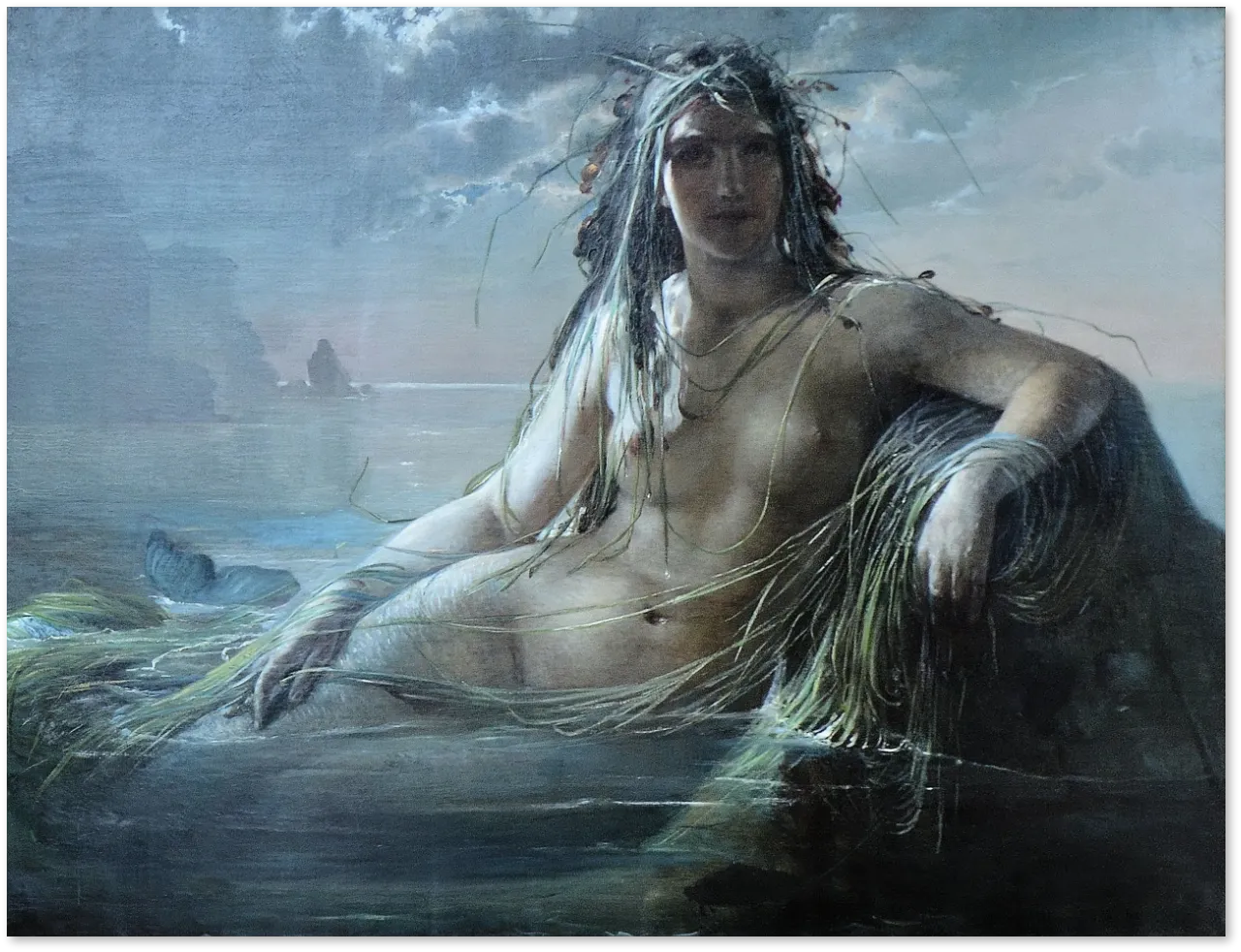
Mermaids have fascinated artists, writers and audiences for centuries. They are an ideal symbol for the unknown and the human desire. These mythical creatures, usually imagined as women with the upper body of a human and the tail of a fish, have appeared in paintings, sculptures, illustrations, ceramics, jewellery, photography, digital art, comics and films.
Their enduring popularity comes from their mysterious nature. Mermaids represent both the beauty and danger of the sea, combining human qualities with the unknown world beneath the waves.
Throughout art history, they have changed according to each culture. The origins of imagery can be traced to ancient myths and sea deities.
Many ancient cultures created stories about supernatural beings associated with water. In ancient Assyria, the goddess Atargatis was represented as a woman connected with a fish.
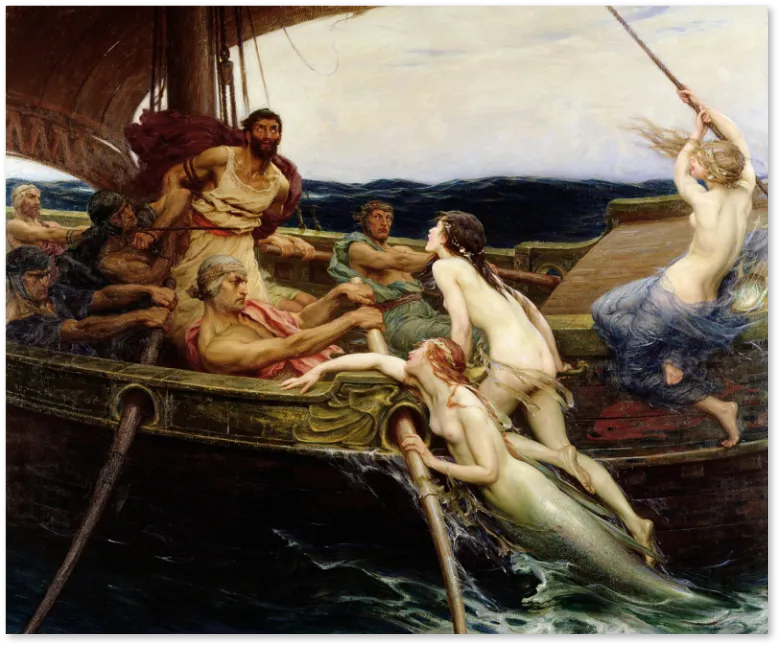
Similar water spirits appeared in Greek and Roman mythology. The Greek sirens, were originally depicted as bird-like women rather than fish-tailed creatures.
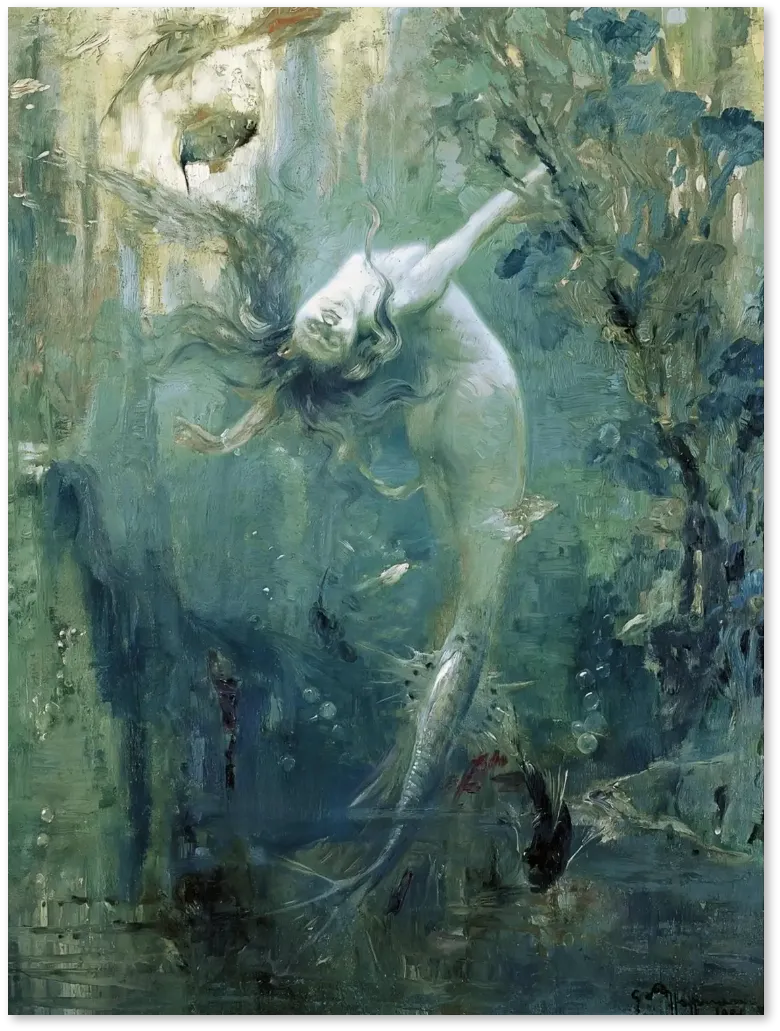
Over time, different legends and artistic traditions influenced one another, contributing to the image that became familiar.
During the Middle Ages, mermaids became common subjects in European art and decorative objects, appearing in manuscripts, carvings, church decorations and sculptures. Medieval artists often used naked sensuous figures as symbol of temptation.
Because the sea was mysterious, they could represent the dangers that lay beyond the familiar world. Their beauty was presented as deceptive: attractive on the surface but potentially dangerous underneath.
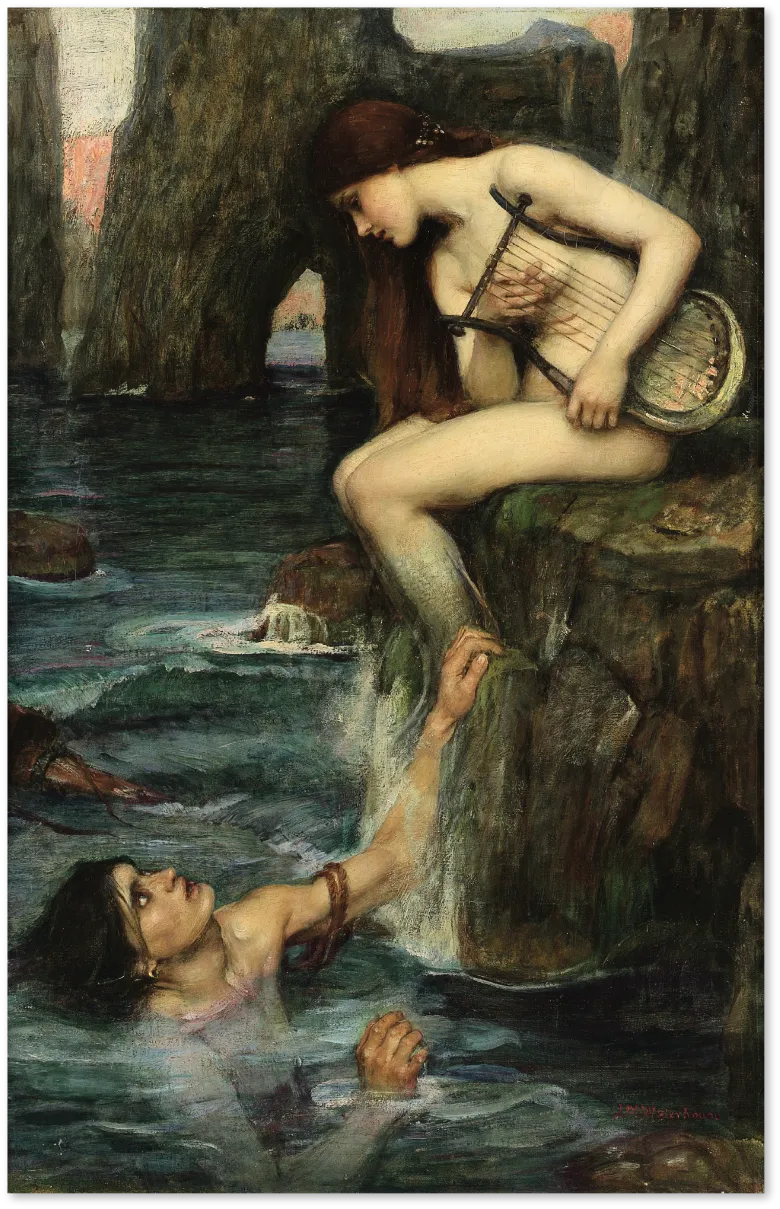
One of the most interesting features of mermaid art is the combination of beauty and danger.
The human upper body suggests emotion and attractiveness, while the fish tail connects the creature to strange underwater world.
Artists explored contrasting ideas: desire, temptation, freedom and mystery.
Mermaids first became a favourite subject in the art of the Pre-Raphaelite movement. These British artists were attracted to medieval stories, legends, poetry and beautiful, highly detailed imagery. Their paintings featured women with long hair, elaborate costumes and dreamlike surroundings. Mermaids fitted naturally into this visual world. John William Waterhouse, combines beauty and danger in a mysterious atmosphere.
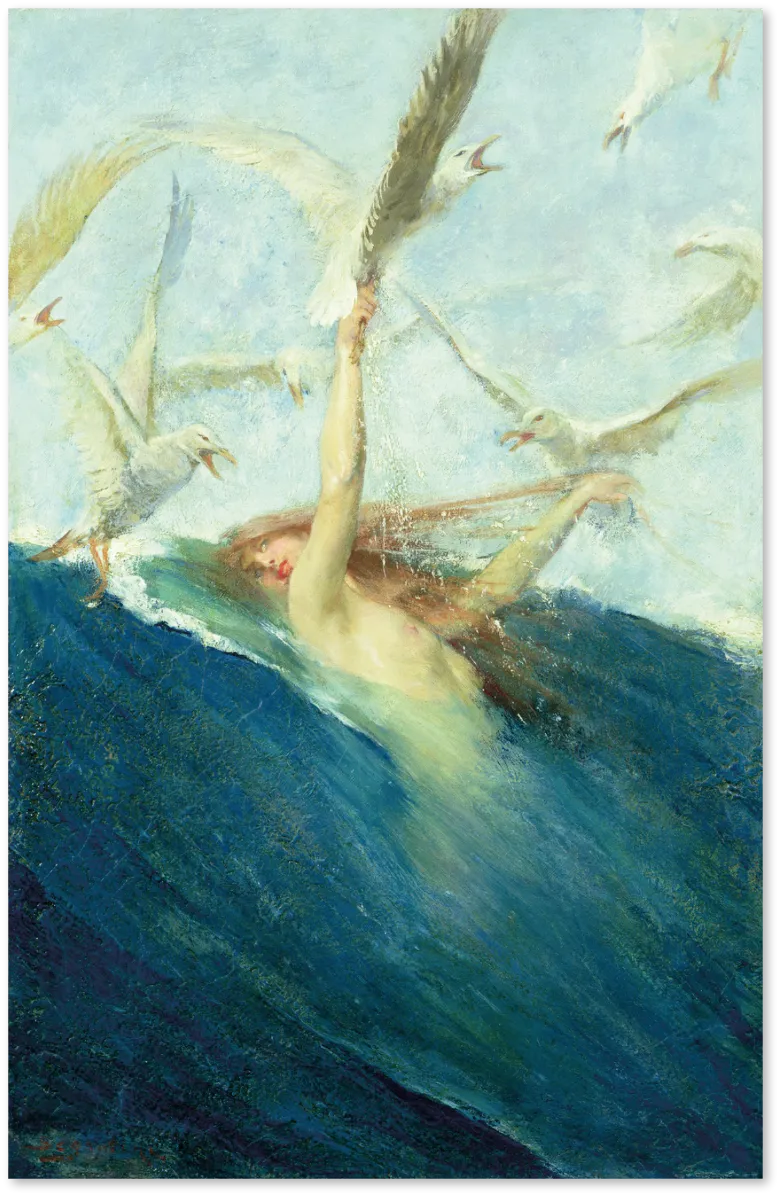
In nineteenth century, mermaids became especially popular among Romantic and Victorian artists. They were interested in imagination, emotion, mythology and the supernatural. They were portrayed in dramatic ocean seascapes, surrounded by waves, rocks, shells as mysterious underwater creatures with their long hair, flowing bodies and shimmering tails.
Arnold Bocklin was a Swiss Symbolist painter fascinated with mythological and aquatic figures, male and female. His “Mermaids at Play” features vibrant blues and greens, symbolising the tranquility and mystery of the sea.
The use of soft pastels contrasts with the darker hues, creating a sense of depth and inviting viewers into the underwater world.
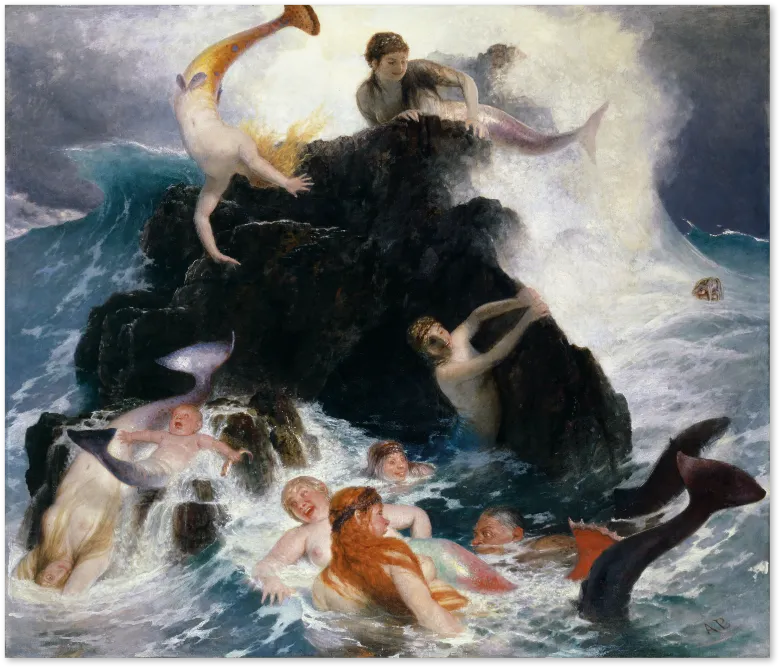
The artist employs dynamic compositions, with mermaids playfully interacting. Surrounding aquatic flora enhances the sense of movement and energy.
They exhibit a range of expressions, from joy to mischief. Their playful poses and interactions suggest a narrative of freedom and enchantment, embodying the allure of mythical creatures.
The Victorian period also saw a growing interest in folklore and fairy tales. Mermaids appeared in books and magazines illustrations and became familiar figures in popular culture.
One of the most influential literary examples was Hans Christian Andersen’s “The Little Mermaid”, published in 1837. Andersen’s story presented a different kind of mermaid from the dangerous temptress of earlier traditions. His mermaid was vulnerable, curious, romantic and willing to make great sacrifices for love and the possibility of gaining a human soul. The story inspired countless later artists and illustrators.
The famous Danish sculptor Edvard Eriksen created “Little Mermaid” statue in Copenhagen (1913). Inspired by Andersen’s tale, the sculpture depicts a small mermaid sitting on a rock beside the water.
Unlike some dramatic representations, this bronce figure appears quiet and thoughtful. Her pose suggests longing and sadness, reflecting the emotional character of Andersen’s story.
The bronze sculpture in Denmark has become one of the best-known works of art associated with mermaids and demonstrates how literature can influence visual art.
Mermaids continued to change in meaning during the twentieth century. Instead of symbols of temptation, they increasingly became associated with independence, fantasy, transformation and freedom.
Modern artists have used mermaids to question ideas about femininity and identity.
The creature’s ability to exist between two worlds—land and sea—makes her a powerful symbol of transformation. She can be both human and non-human, familiar and strange, vulnerable and powerful.
Popular culture has also enormous influence on modern images. Film, animation, comics, advertising, fashion and children’s books have transformed the creature into a widely recognised cultural figure.
Walt Disney’s film The Little Mermaid, released in 1989, played a major role creating a colourful optimistic version of the character for modern audiences. Although this interpretation differs greatly from earlier European legends, it demonstrates how mythical figures are reinvented for new generations.
Contemporary artists continue to experiment with mermaid imagery. Some create realistic underwater paintings, while others use photography, sculpture, digital illustration or art installations.
Environmental artists have used mermaids to draw attention to pollution, rising sea levels and the destruction of marine ecosystems. In their works, they become a symbolic voice for the ocean itself. Instead of representing danger to humans, they represent the danger that humans pose to the natural world.
Mermaids are much more than imaginary creatures. Their long history shows how we use mythology to explore human concerns. They inspire temptation, beauty, love, danger, loneliness, freedom and the mystery of nature.
Their appearance has changed from medieval symbols of moral warning to romantic figures, literary heroines, popular characters and environmental symbols. Artists repeatedly return to these erotic female figures because they offer endless possibilities.
Their continuing presence in art proves the lasting power of mythology. From ancient legends to modern digital art, mermaids continue to inspire artists because they allow us to imagine a world beneath the surface: beautiful, erotic and full of mystery.
˝A mermaid found a swimming lad, picked him for her own, pressed her body to his body, laughed and plunging down forgot in cruel happiness that even lovers drown.˝
William Yeats