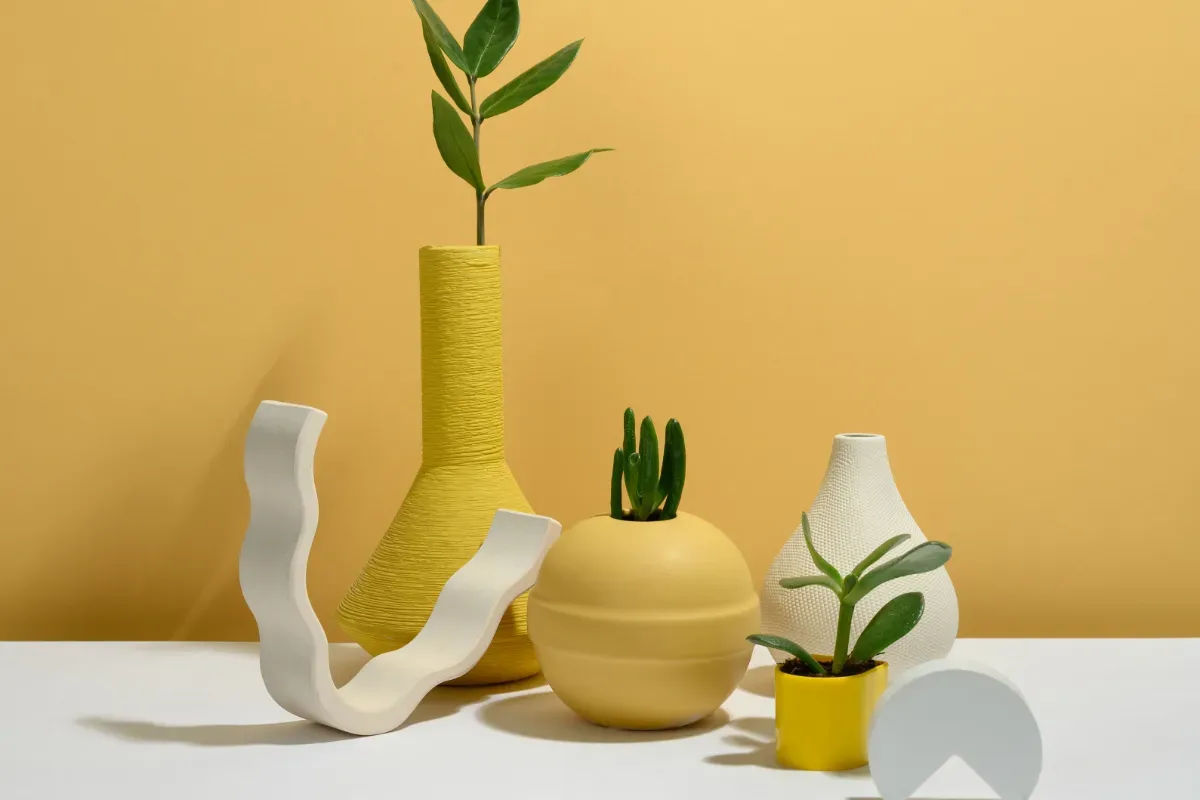
There is a quiet revolution happening in our homes. It’s not about a new color palette or a particular furniture trend, but something more fundamental, more dimensional. We are witnessing the liberation of form. The objects we choose to live with are no longer just accents or afterthoughts; they are becoming the central characters in our domestic stories.
This shift moves past the idea of art as something to be hung on a wall and contained within a frame. Instead, it embraces the power of three-dimensional objects to shape an environment, to challenge perception, and to communicate a narrative with their very presence.
This is the rise of sculptural decor, a movement that treats our living spaces not as galleries to be filled, but as immersive installations to be experienced.
This isn’t merely about placing a bronze bust on a mantelpiece. It’s a deeper engagement with materiality, scale, and the interplay of light and shadow. It’s about understanding that a sinuous ceramic vessel on a coffee table can hold a conversation with the architectural lines of the room, or that a kinetic mobile hanging in a stairwell can transform the very quality of the air around it.
These pieces demand more than a passing glance. They invite touch, they provoke thought, and they alter our physical relationship with the spaces we inhabit. They are the silent poets, the bold provocateurs, the quiet anchors in the ever-shifting landscape of our personal worlds. We are learning to speak a new language of interior design, one where volume, texture, and silhouette are the primary vocabulary.
The new domestic landscape: Sculpture off the pedestal
For centuries, sculpture was largely confined to public squares or the hallowed halls of museums, placed on pedestals that created a clear, almost sacred, separation between the art and the viewer. Bringing a sculpture for home often meant miniaturizing these grand statements, creating a smaller, tamer version of a public monument.
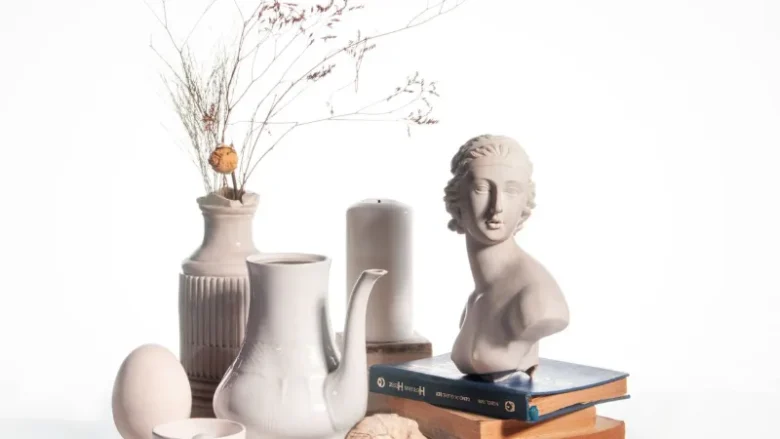
The contemporary approach, however, completely dismantles this hierarchy. Today’s most compelling sculptural objects are designed with an intrinsic understanding of the domestic sphere. They are conceived not to be revered from a distance, but to be integrated into the fabric of daily life.
Blurring lines between function and form
One of the most exciting aspects of this movement is the erosion of the rigid boundary between utilitarian objects and pure art. Is a hand-carved wooden chair by a designer like Casey McCafferty a piece of furniture or a sculpture? The answer, increasingly, is both. His work, with its organic, almost primal forms, serves its function perfectly while simultaneously existing as a powerful aesthetic statement. This duality is at the heart of the modern approach.
We see it in the lighting fixtures of designers like Apparatus Studio, whose creations are less like lamps and more like illuminated installations, casting intricate shadows that become part of the room’s composition. We see it in the biomorphic tables of Wendell Castle, which defy conventional shapes and challenge our very idea of what a table should be.
These pieces enrich our lives not just through their utility, but by infusing everyday actions—sitting, reading, dining—with a sense of intention and beauty. They remind us that the objects we use can, and should, be as thoughtfully considered as the art we admire.
Materiality as a narrative device
The story of an object is often told through its material. Contemporary artists and designers are exploring a vast and often unconventional palette of materials to create their forms, each choice imbued with meaning. The cold, industrial precision of brushed aluminum speaks a different language than the warm, forgiving nature of hand-thrown clay.
The translucent, ethereal quality of cast resin tells a different story than the rugged, earth-bound honesty of reclaimed wood. Consider the work of Simone Bodmer-Turner. Her chalk-white, serpentine ceramic vessels feel both ancient and futuristic, their matte texture absorbing light and creating a sense of profound stillness.
They are not merely containers; they are meditations on form and emptiness. In contrast, the polished bronze pieces by the Haas Brothers are playful, biomorphic, and almost creature-like, their reflective surfaces engaging in a dynamic dance with their surroundings. The choice of material is not arbitrary; it is the first word in the object’s story, setting the tone for the entire narrative.
The role of scale and placement
Moving sculpture off the pedestal also means rethinking its relationship to space. The placement of a three-dimensional object is as critical as the object itself. A large, commanding piece can anchor a room, creating a focal point around which all other elements orbit.
A monumental floor piece by an artist like Isamu Noguchi, for example, doesn’t just occupy space; it defines it, carving out zones for conversation and contemplation. Conversely, a collection of smaller, more intimate objects can create a personal vignette on a bookshelf or console table, a small world of curated forms that tells a story about the collector’s passions and sensibilities.
The negative space around a sculpture is just as important as the object’s physical mass. An artistically placed form can draw attention to the architecture of a room, highlighting a high ceiling, framing a view, or creating a sense of dynamic tension with a sharp corner. It is a choreography of object and environment, where each element enhances the other.
Cultivating a personal aesthetic: Beyond trends
The most rewarding aspect of incorporating sculptural elements into a home is the opportunity it provides for deep personal expression. Unlike following a prescribed trend, curating a collection of three-dimensional art is an act of self-discovery.
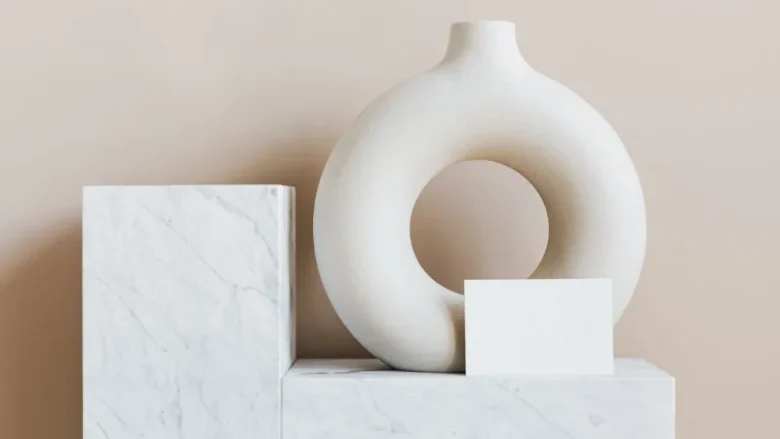
It’s about finding objects that resonate on a visceral level, pieces that speak to your history, your aspirations, and your unique way of seeing the world. This is not about acquiring status symbols; it’s about building a physical environment that reflects and nourishes your inner life.
Developing an eye for form
Learning to see the world in three dimensions is a skill that can be cultivated. It begins with paying attention to the shapes and forms that surround you every day. Notice the elegant curve of a branch, the geometric precision of a skyscraper, the soft undulation of a sand dune. This practice of observation hones your aesthetic intuition. When you start looking for sculptural objects, trust your gut reaction. What shapes are you drawn to?
- Organic and biomorphic: Forms inspired by nature, with flowing, curved lines that evoke plants, animals, or the human body. Think of the work of Jean Arp or the smooth, pebble-like creations of Barbara Hepworth. These pieces often bring a sense of softness and serenity to a space.
- Geometric and architectural: Pieces characterized by clean lines, sharp angles, and a sense of structure. Artists like Donald Judd and Sol LeWitt are masters of this style. These objects can introduce a sense of order, rhythm, and intellectual rigor into an interior.
- Abstract and Expressive: Forms that prioritize emotion and energy over representation. These pieces can be dynamic, chaotic, or contemplative, and they often serve as powerful emotional focal points. The energetic metal works of John Chamberlain are a prime example.
There is no right or wrong answer. The goal is to identify the formal language that speaks to you most clearly. It’s about finding the silhouettes that feel like a physical extension of your own aesthetic sensibility.
The emotional resonance of objects
A successful piece of decorative sculpture modern or classic does more than just look good; it makes you feel something. It can be a sense of calm, a jolt of energy, a pang of nostalgia, or a spark of curiosity. The true value of living with these objects lies in this ongoing emotional dialogue.
A piece might remind you of a place you’ve traveled, a person you love, or a part of yourself you want to cultivate. This is where the line between decoration and personal totem blurs. These are not just inanimate objects; they are companions on your journey.
They witness your life, and in turn, their silent presence can offer comfort, inspiration, and a sense of continuity. When selecting a piece, ask yourself not just “Do I like how this looks?” but “How does this make me feel?” The answer to the second question is far more telling and will lead you to a collection that is truly your own.
Building a collection over time
A meaningful collection of art is not built overnight. It is a slow, organic process of discovery and acquisition. It’s a mistake to think you need to fill your home with major pieces all at once. The journey is part of the joy. Start small. Perhaps it’s a beautifully crafted ceramic bowl from a local artisan, a small bronze found in a vintage shop, or a glass object that catches the light in a particularly beautiful way.
Each piece is a stepping stone, a clue that leads you to the next. Over time, you will start to see threads connecting your choices. A recurring theme, a preference for a certain material, a fascination with a particular type of form. This is your personal aesthetic emerging. Your collection will become a visual diary, a timeline of your evolving taste and experiences. It tells a story that is more authentic and compelling than any perfectly styled, instantly assembled room ever could.
The global conversation: Voices in contemporary design
The movement towards integrating sculptural forms into our living spaces is a global phenomenon, with artists and designers from diverse backgrounds contributing to a rich and varied conversation.
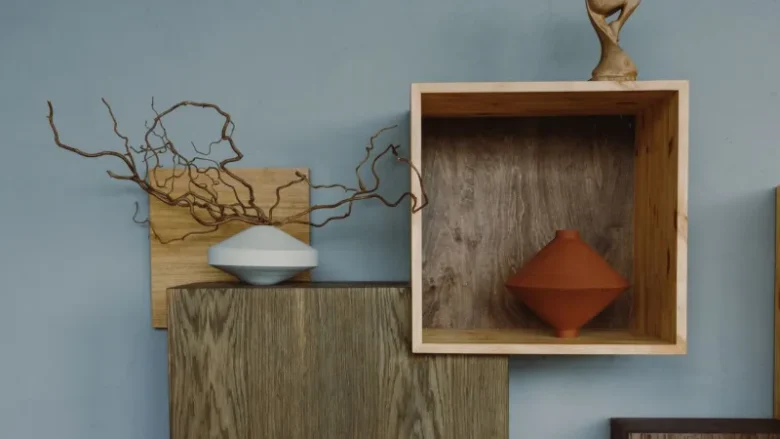
From the minimalist sensibilities of Japan to the bold exuberance of Brazil, different cultural perspectives are shaping the objects we live with. Exploring these different approaches can broaden our own understanding and open our eyes to new possibilities for our homes.
Minimalism and wabi-sabi: The poetics of imperfection
The Japanese aesthetic philosophy of wabi-sabi, which finds beauty in imperfection, impermanence, and incompleteness, has had a profound influence on contemporary sculptural objects design. This approach values the handmade, the asymmetrical, and the natural. It celebrates the crack in a ceramic glaze, the weathered patina on a piece of wood, and the subtle variations in a hand-formed shape.
Artists like akeno Ueoka create vessels that feel as if they were unearthed from the earth, their rough textures and organic forms embodying a deep connection to nature. This aesthetic is not about pristine perfection; it’s about authenticity and the beauty of the aging process.
Incorporating these pieces into a home can create a sense of calm, mindfulness, and grounding. They are a quiet rebellion against the mass-produced and the disposable, reminding us of the value of the unique and the enduring.
Scandinavian functionalism meets artistic expression
Scandinavian design has long been celebrated for its clean lines, natural materials, and emphasis on functionality. However, a new wave of Nordic designers is pushing beyond pure functionalism to explore more expressive, sculptural forms. While the core principles of simplicity and quality craftsmanship remain, there is a growing interest in objects that have a stronger artistic presence.
Designers like Cecilie Manz create pieces that are exquisitely simple yet possess a subtle, poetic quality. Her work, whether a lamp, a speaker, or a piece of furniture, is always distilled to its essential form, yet it never feels cold or sterile. It has a warmth and a humanity that comes from a deep understanding of material and proportion. This evolution of Scandinavian design shows that practicality and artistic expression are not mutually exclusive; in fact, they can enrich and elevate one another.
Latin American modernism: Boldness and biomorphism
There is a vibrant and powerful energy in the work of many Latin American designers, who often draw inspiration from the region’s rich natural landscapes and modernist architectural heritage. Designers like the Campana Brothers from Brazil are famous for their inventive use of materials and their playful, often surreal, forms.
Their “Favela” chair, made from scraps of wood, is both a piece of furniture and a powerful social commentary. The work of Mexican designer Gloria Cortina often combines raw, elemental materials like obsidian and bronze into monumental forms that feel both ancient and strikingly contemporary.
This approach is characterized by a boldness of scale, a love of rich textures, and a biomorphic language that blurs the line between the man-made and the natural. These pieces are not for the faint of heart; they are powerful statements that bring a dynamic and passionate energy to any space.
Living with art: A continuous dialogue
Ultimately, bringing sculptural forms into your home is about more than just aesthetics. It is an invitation to engage in a continuous dialogue with the objects that share your space. These pieces are not static. They change with the light, casting different shadows in the morning than they do in the evening.
They reveal new details and textures over time as you live with them. They become part of the backdrop of your life, silent witnesses to your daily routines, your moments of joy, and your periods of reflection. This ongoing relationship is what transforms a house into a home, and a collection of objects into a deeply personal narrative.
The interplay of light and shadow
A three-dimensional object is never truly seen in isolation; it is always in conversation with the light that illuminates it. This is a fundamental principle that photographers and cinematographers understand well, and it is equally true for interior design. The way light falls on a sculpture can completely transform its character.
The hard, direct light of a spotlight can create dramatic, high-contrast shadows, emphasizing the object’s sharp angles and geometric precision. Soft, diffused light from a window, on the other hand, can create gentle gradations of tone, highlighting subtle curves and soft textures.
Consider how a piece will be lit throughout the day. A polished metal sculpture might catch the morning sun, sending reflections dancing across the room, while a matte ceramic piece might seem to glow in the soft light of dusk. Actively thinking about lighting is not just a technical consideration; it is a way to choreograph the visual experience of your home, allowing your sculptural pieces to perform and reveal their many moods.
Creating moments of pause and reflection
In our fast-paced, digitally saturated world, our homes need to be sanctuaries—places where we can disconnect, recharge, and reconnect with ourselves. Well-chosen sculptural objects can play a vital role in creating these moments of pause. A beautifully balanced mobile by a window, turning slowly in the breeze, can be a source of quiet meditation.
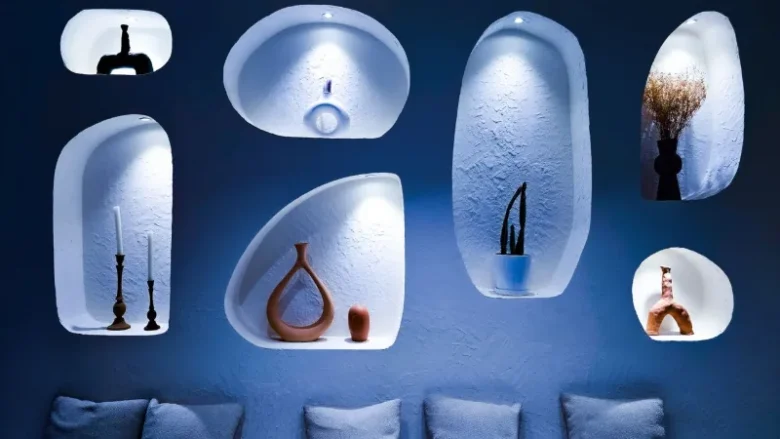
A tactile object on a desk can be something to hold and turn over in your hands while you think. These are not grand, dramatic gestures, but small, quiet invitations to be present. They pull our attention away from our screens and back into the physical world. By strategically placing these objects in transitional spaces—a hallway, a landing, an entryway—we can create small pockets of beauty and contemplation that punctivate our day. They are anchors for the eye and the mind, offering a moment of stillness in the midst of life’s constant motion.
The decision to live with art is a commitment to a more considered, more beautiful, and more meaningful life. It is an affirmation that the objects we surround ourselves with matter. They are not just filler. They are the language we use to write the story of who we are. They are the forms that give shape to our days.
As we have seen, this is a deeply personal journey, one that unfolds over time and is guided by intuition and experience. It is a path of discovery, not of perfection. The pieces you choose will become part of your story, evolving with you and reflecting your journey through the world. They are more than just decoration; they are the silent, beautiful architecture of a life well-lived.
The stories we tell here at Neomania Magazine are about these very intersections—where art meets life, where form meets feeling, and where an object becomes a vessel for meaning. We believe that the world is full of these quiet, powerful narratives, waiting to be seen and understood.
If this exploration of form and space has stirred something in you, if it has made you look at your own surroundings with a new sense of curiosity and possibility, then you are one of us. Join our community of thinkers, creators, and observers. Subscribe to continue the conversation and to receive stories that challenge, inspire, and transform the way you see the world.