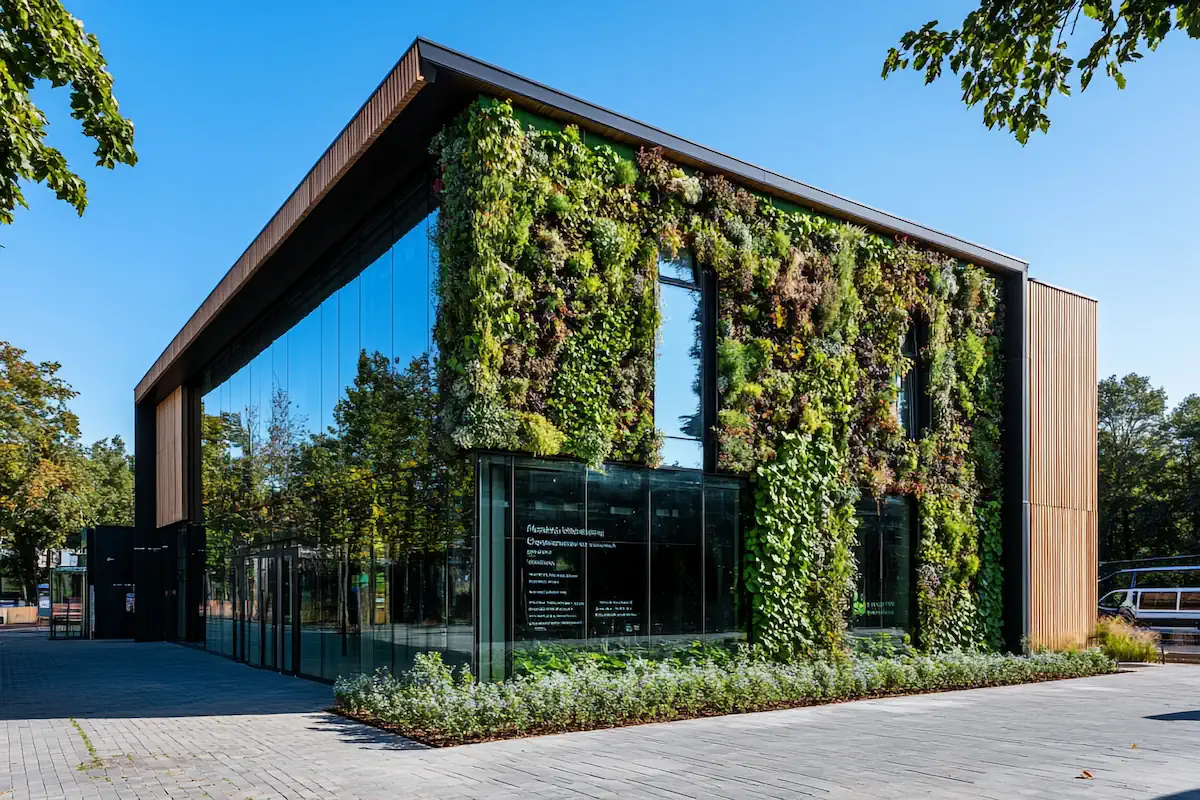
We’ve engineered nature out of our lives, replacing it with glass, steel, and the blue light of screens. We built sterile boxes for efficiency and then wondered why we felt stressed, uninspired, and disconnected.
Biophilic architecture isn’t about adding more houseplants to the office. It’s a design revolution based on a simple, radical idea: our minds and bodies are hardwired to thrive in nature, and it’s time our buildings acknowledged that biological fact. This isn’t just a trend; it’s a necessary correction.
For the better part of a century, architecture has been a testament to human dominance over nature—a sealed, climate-controlled rebellion against the elements.
We created environments of predictable comfort at the cost of sensory and spiritual nourishment. The result is a modern paradox: we are the most connected generation in history, yet we feel profoundly isolated within the very structures designed to shelter us.
The air is filtered, the light is static, and the only sounds are the hum of servers and the distant city traffic. Biophilic architecture is the counter-argument.
It is a movement to dismantle the cage, to intentionally re-integrate the complex, restorative patterns of the natural world into our daily spaces.
It is an admission that we are not separate from the ecosystem, but an intrinsic part of it, and our health—mental, physical, and societal—depends on remembering that connection.
The ghost in our code: unpacking the biophilia hypothesis
To understand the urgency of biophilic design, we must first understand the ghost in our own machine: the Biophilia Hypothesis.
Popularized by biologist E.O. Wilson, the hypothesis posits that humans possess an innate, genetically determined urge to affiliate with other forms of life and the natural world.
This isn’t a poetic sentiment; it’s an evolutionary inheritance. For 99% of human history, we were hunter-gatherers whose survival depended on an intimate, moment-to-moment dialogue with our environment. Our brains evolved to find pleasure and safety in the signals of a thriving ecosystem.
Answering an ancient, biological need
The rustle of leaves in the wind signified weather changes. The presence of water was life itself. A view from a high, protected place offered security and strategic advantage.
These weren’t just scenery; they were data points crucial for survival. Our nervous systems evolved to reward us for seeking out these environments, releasing calming neurochemicals that reduced stress and enhanced focus.
When we sit in a windowless office under fluorescent lights, our bodies are still running this ancient code. We are biologically craving a connection that our built environment systematically denies us. Biophilic design is the practice of answering that deep, biological need.
The hard data behind our craving for nature
What was once a hypothesis is now a field of evidence-based design. The data is overwhelming. Studies show that office workers with views of nature take fewer sick days and report higher job satisfaction.
Hospital patients in rooms with windows overlooking trees recover faster and require less pain medication than those staring at a brick wall.
In schools, classrooms with ample natural light and views of greenery have been linked to improved test scores and concentration.
This is not about aesthetics; it’s about physiology. Exposure to nature has been proven to lower cortisol (the stress hormone), reduce blood pressure, and improve immune function.
We are finally proving with science what we have always known intuitively: we are better when we are connected to the living world.
How “Green” Design and Biophilic Design Diverge
It’s a common mistake to use “green” and “biophilic” interchangeably. While they are allies, their primary focus differs. Green architecture is primarily concerned with the building’s impact on the environment—measuring success in kilowatts saved, gallons of water recycled, and carbon footprints reduced.
It is an essential and noble pursuit focused on resource efficiency. Biophilic architecture, however, is concerned with the environment’s impact on the human.
Its metrics are human-centric: stress reduction, cognitive performance, and emotional well-being. A building can be LEED Platinum certified and still be a sterile, uninspiring box that ignores the innate needs of its occupants.
The ultimate goal is to merge the two: to create buildings that are not only good for the planet, but also good for the people inside them.
The blueprint for well-being: core biophilic principles
Biophilic design is not a style; it’s an operating system. It works through a framework of principles that can be applied in countless ways.
Rather than a simple checklist, these principles can be understood through three core thematic categories, creating a holistic approach to designing human-centric spaces.
Nature in the space: direct sensory engagement
This is the most direct application of biophilia: bringing literal elements of nature into a building. It’s about creating a multi-sensory experience.
This includes the presence of living plants and green walls, which improve air quality and provide a direct visual connection to life. It involves the dynamic presence of water, through fountains or water features, whose sound has a proven calming effect.
It means maximizing natural light, not as a static resource, but as a dynamic force that changes throughout the day, connecting us to the time and seasons.
It’s also about airflow and thermal variability, allowing for subtle changes in temperature and air movement that mimic a natural environment and keep our senses engaged.
Natural analogues: the power of pattern and material
Our brains are pattern-recognition machines, and we are wired to respond positively to the patterns found in nature. This principle involves using materials, forms, and patterns that evoke the natural world.
This can be achieved through the use of natural materials like wood, stone, bamboo, and cork, which offer rich textures and a sense of warmth and authenticity.
It also includes biomorphic forms—shapes and lines that recall contours found in nature, from furniture that mimics the curve of a shell to columns that branch like trees.
Crucially, it involves the use of fractals, the complex, self-repeating patterns found everywhere from snowflakes to ferns. These patterns are visually fascinating and have been shown to reduce stress and mental fatigue.
The nature of the space: prospect, refuge, and mystery
This is the most sophisticated application, dealing with our spatial instincts. It’s about configuring space to tap into our evolutionary preferences for certain environmental conditions.
Prospect refers to our innate desire for an unimpeded view over our surroundings, which gave our ancestors a strategic advantage.
This translates to open-plan spaces, expansive windows, and balconies. Refuge, conversely, is our need for small, safe spaces where we feel protected—a place to retreat from the main flow of activity.
This can be a cozy nook, a high-backed chair, or a lowered ceiling area. Mystery is the promise of more information, achieved by creating partially obscured views that entice us to explore a space further.
A winding path or a partition that doesn’t quite reach the ceiling creates a sense of intrigue and engagement, making a space more compelling and interesting.
Hacking the brain: the neuroscience of natural spaces
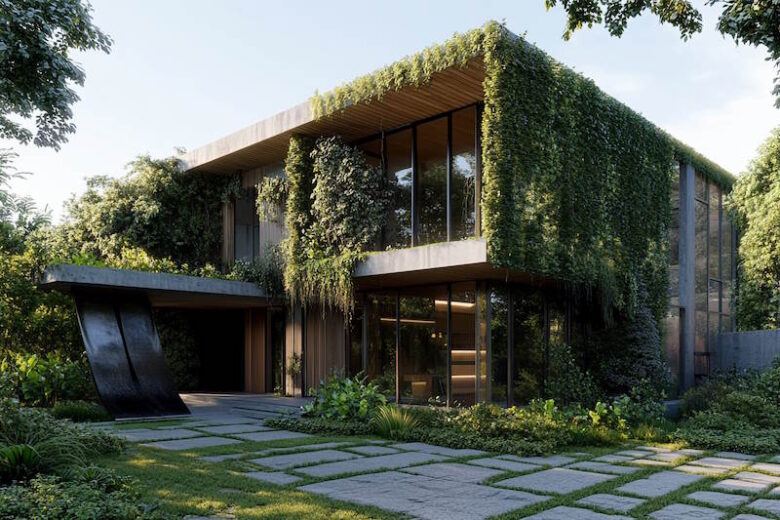
The power of biophilic design lies in its ability to directly “hack” our neurobiology. It’s a form of environmental psychology that leverages our evolutionary programming to create spaces that actively improve our mental and physical state.
Designing against cortisol: how nature lowers stress
Chronic stress is the epidemic of the modern workplace and city life. Our brains interpret sterile, unchanging, and overly complex environments as latently threatening, keeping our sympathetic nervous system on low-grade alert and elevating cortisol levels.
Biophilic environments do the opposite. Visual exposure to nature, even a simple window view, triggers our parasympathetic nervous system, responsible for “rest and digest” functions.
This physiological shift measurably lowers heart rate, blood pressure, and cortisol, effectively designing stress out of the environment.
The cognitive boost of restorative environments
Our capacity for directed attention—the kind needed for work, study, and problem-solving—is a finite resource. Urban environments constantly deplete it with a barrage of stimuli.
Nature, however, engages in “soft fascination,” effortlessly capturing our attention without draining it. This is the core of Attention Restoration Theory.
A brief glimpse of a tree, a water feature, or a dynamic light pattern allows our brains to rest and recharge their executive functions. The result is improved focus, enhanced creativity, and better memory recall.
How light, sound, and air sculpt our performance
Our bodies are finely tuned instruments governed by circadian rhythms. Static, artificial lighting disrupts this internal clock, leading to poor sleep, fatigue, and mood disorders.
Dynamic lighting systems that change in color temperature and intensity to mimic the 24-hour cycle of the sun can recalibrate these rhythms, improving alertness during the day and sleep quality at night.
Similarly, the acoustic environment can be shaped with natural sounds like water to mask distracting office noise, while improved natural ventilation not only enhances physical health but also has been shown to improve cognitive function scores.
The built ecosystem: case studies in living architecture
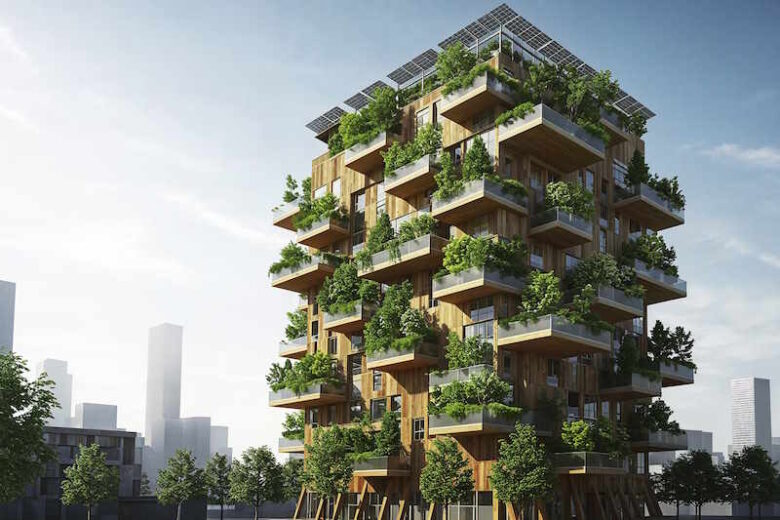
Biophilic design is no longer a fringe theory. It is being executed at the highest levels, creating landmark buildings that serve as living case studies for a new way of thinking.
The corporate oasis: reimagining the modern office
Tech giants, in a race to attract and retain top talent, have become major patrons of biophilic design. The most iconic example is Amazon’s “The Spheres” in Seattle, a glass-domed conservatory housing over 40,000 plants, where employees can work and meet surrounded by a living rainforest.
This is more than a perk; it’s a statement about the future of work, an acknowledgment that creativity and innovation flourish not in sterile cubicles, but in rich, sensory, and restorative environments.
Sanctuaries for healing: biophilia in healthcare
Nowhere are the benefits of biophilic design more critical than in healthcare. Singapore’s Khoo Teck Puat Hospital was designed with the principle that “a hospital in a garden” is also a “garden in a hospital.”
With lush courtyards, rooftop farms, and patient rooms where over 80% have views of greenery or water, the hospital has become a benchmark for restorative healthcare design.
The results are tangible: improved patient outcomes, faster recovery times, and reduced staff stress and burnout.
The home as a living, breathing refuge
At the residential scale, biophilic design is about creating personal sanctuaries that buffer us from the stress of the outside world.
This can range from homes designed with central courtyards and seamless indoor-outdoor transitions to simple apartment interiors that maximize natural light, utilize natural materials, and incorporate an abundance of plant life.
The goal is to create a home that doesn’t just shelter the body, but also nourishes the soul.
The urban manifesto: from building to habitat
The true potential of biophilic design will be realized when we scale its principles from the individual building to the entire urban landscape. This is the next great frontier for architecture and urban planning.
Beyond the single building: creating biophilic cities
Imagine cities connected by green corridors, where rooftops are productive farms, and building facades are vertical ecosystems.
A biophilic city is one that weaves nature into its very fabric, improving air quality, managing stormwater, reducing the urban heat island effect, and dramatically enhancing the quality of life for all its citizens.
It is a city designed not just for efficiency, but for resilience and well-being.
The symbiosis of high-tech and high-nature
This vision is not a retreat from technology. On the contrary, technology is a critical enabler. Smart building systems can manage complex indoor ecosystems, dynamic glass can optimize natural light without creating glare, and advanced materials can mimic natural processes.
The future is a symbiosis where we use our most advanced tools to reintegrate our most ancient connection: the one to the natural world.
A mandate for the future: why this is non-negotiable
Biophilic architecture is not a luxury. It is a biological imperative and an ethical choice. As we face the dual challenges of climate change and a global mental health crisis, designing spaces that heal both people and the planet is no longer an option—it is a mandate.
We must stop thinking of buildings as inert objects and start conceiving of them as living, breathing habitats. The future is not about building bigger; it is about building wiser. It is about, finally, coming home.
Stop just decorating your space. Start designing your habitat. Stop just consuming news. Start understanding the forces behind it.
Think deeper. Subscribe to Neomania.