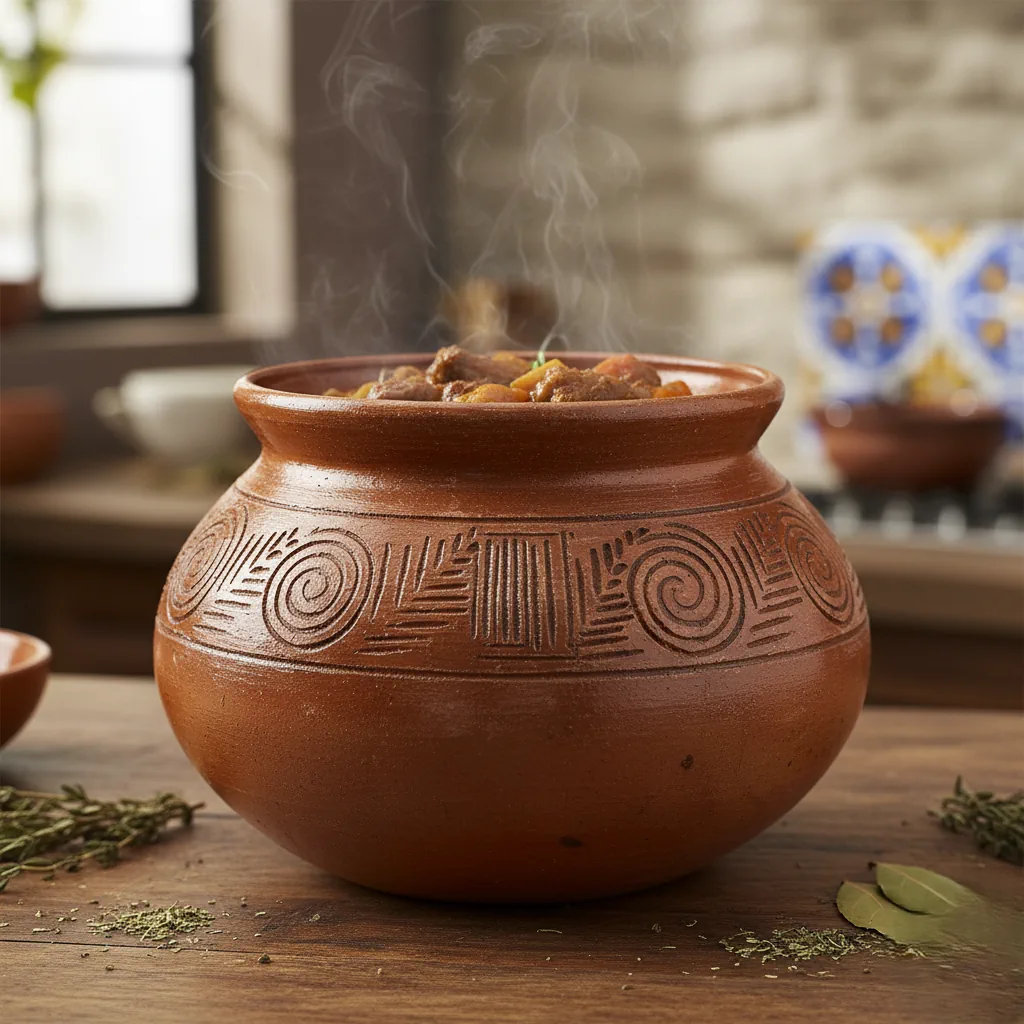
Long before metal pots or electric ovens, we cooked with the earth itself. Clay, shaped by hand and fired by flame, was the original kitchenware.
Our ancestors knew its secrets: how it held the heat of a low fire, how it transformed tough roots into tender sustenance, how its very essence seemed to whisper stories into the food.
Today, in high-tech kitchens of polished steel and curated dining rooms lit by designer lamps, cooking with clay is making a quiet, powerful return — not as nostalgia, but as ritual.
It is a deliberate act of reaching back, not to regress, but to ground ourselves. Primitive, yes. But also poetic, primal, and deeply modern.
What does it mean to cook with clay?
To cook with clay is to enter into a different relationship with time, with heat, and with the ingredients themselves. It is to reject the harsh, immediate efficiency of modern cookware for something gentler, deeper, and more collaborative.
A stainless-steel pot is an impassive tool; it executes commands with cold precision. A clay pot, however, is a participant. It has a voice, a memory, and a unique character that influences every dish created within it. It asks for a conversation, not a command.
The vessel as a co-chef
Unlike the inert, non-porous surfaces of industrial cookware, clay is alive. It is a living membrane, riddled with microscopic pores that allow it to breathe.
When heated, it absorbs and releases steam in a slow, steady rhythm, creating a humid, enveloping heat that coaxes flavors from food rather than blasting them into submission.
It is a co-chef, a silent partner in the culinary process. It responds to heat not with a sudden sizzle, but with a gradual, radiant warmth that penetrates food evenly and deeply.
This gentle persuasion is what creates unparalleled tenderness in slow-cooked meats and a profound depth in humble bean stews.
The clay itself infuses the food with a subtle, earthy nuance—a whisper of minerality, a memory of its origins—that cannot be replicated by any other material.
Forms of clay cooking across cultures
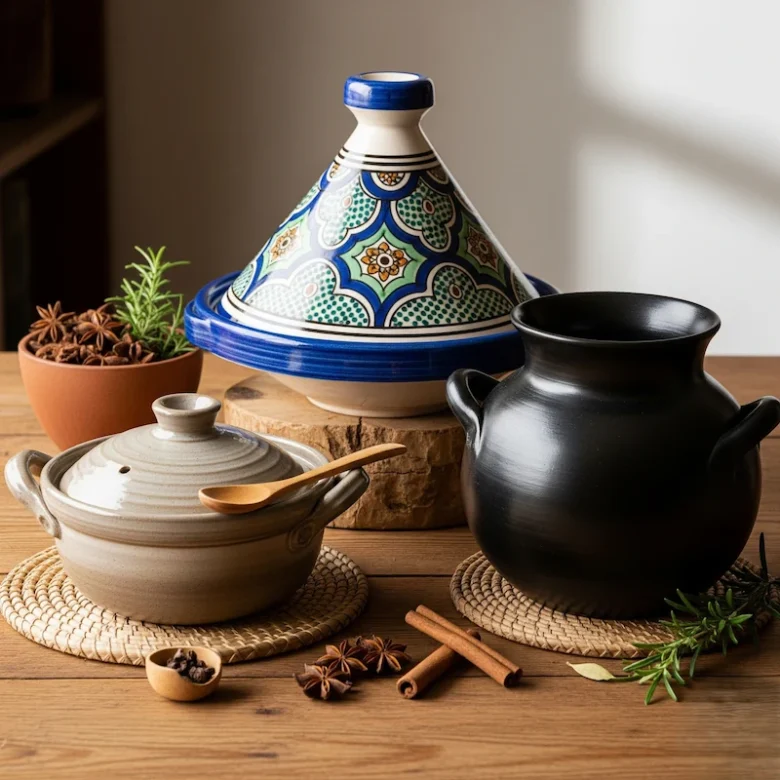
Each culture has found its own way to speak the language of clay, shaping vessels that are perfectly attuned to their landscape, ingredients, and culinary soul. Each pot is a story of place.
Tagine (Morocco):
The iconic conical lid of the Moroccan tagine is a marvel of primitive engineering. It is an alchemical tower, designed to capture the rising steam from the simmering stew, cool it, and send the condensed, flavorful liquid back down into the dish.
This self-basting cycle creates incredibly moist, aromatic dishes, where the flavors of lamb, prunes, almonds, and spices meld into a harmonious whole over a low, patient fire.
To lift the lid of a tagine is to release a fragrant cloud that transports you to the heart of a bustling souk.
Donabe (Japan):
In Japan, the rustic, earthy donabe pot is central to the culture of communal winter meals. Often used directly on the table over a portable burner, it embodies the philosophy of wabi-sabi—finding beauty in imperfection and simplicity.
Its ability to heat gently and retain warmth for hours makes it perfect for nabe (hot pot dishes), soups, and, most famously, for cooking rice.
Rice steamed in a donabe has a texture and flavor—nutty, moist, and slightly sweet—that is considered the pinnacle of perfection.
Handi (India):
The squat, round handi pot is a cornerstone of North Indian and Pakistani cuisine. It is the vessel of choice for the ancient technique of dum pukht, or slow-oven cooking.
Food is placed inside, and the lid is sealed shut with a strip of dough. The pot is then placed over a very low flame, allowing the ingredients to cook in their own juices, trapping every molecule of aroma.
The breaking of the dough seal at the table is a moment of pure culinary theatre, releasing a fragrant burst that promises deep, complex flavors.
Cazuela (Spain/Latin America):
The humble cazuela is the soul of Iberian and Latin American kitchens. This wide, shallow, glazed earthenware dish is a master of slow, even cooking.
In Spain, it is the vessel for hearty winter guisos (stews), sizzling garlic shrimp (gambas al ajillo), and countless tapas.
Its legacy traveled across the Atlantic, where it found a new home. In Colombia, the cazuela is essential for rich seafood stews and the iconic cazuela de frijoles.
The famous black clay pottery from La Chamba, Colombia, handmade and burnished by artisans, is cherished by chefs worldwide for its beauty and its unique ability to distribute heat.
Pit-fired or underground ovens:
This is the most primal form of clay cooking, a direct communion with the earth. In this technique, food is wrapped in leaves, placed in a pit lined with hot stones, and buried under the earth itself.
The earth becomes the oven, its insulating properties creating a slow, steamy, and smoky cooking environment.
From the pachamanca of the Andes to the hāngī of the Māori in New Zealand, this method is a profound act of trust in nature, a surrendering of the meal to the patient embrace of the land.
Why clay now? A return to primal tactility
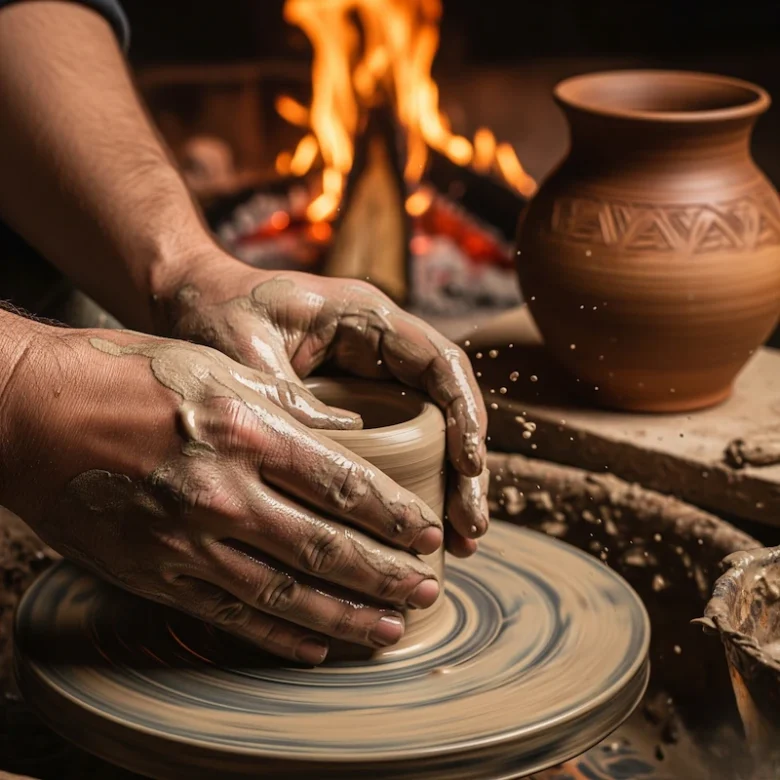
In an era of touch screens, synthetic surfaces, and virtual interactions, we are starved for the real. We crave texture, weight, and a connection to the physical world.
The return to clay in the kitchen is not just a culinary choice; it is a response to this deep-seated human need for tactility. It is a way to feel the earth in our hands, even in the most urban of settings.
Texture as a taste enhancer
Clay does more than just contain food; it fundamentally alters its structure. The slow, humid heat generated within an earthenware pot works a unique magic.
It doesn’t just cook; it transforms. Tough cuts of meat become meltingly tender as their connective tissues are gently dissolved over hours.
Hardy legumes soften into a creamy, luxurious consistency. The flavors, rather than evaporating away, are concentrated and driven deep into the ingredients.
This slow simmering allows for a layering and development of flavors that is impossible to achieve with the aggressive heat of metal. The result is a dish with a roundness, a depth, and a textural complexity that feels both nourishing and profound.
Elemental connection
To cook with clay is to become a practitioner of a simple, ancient alchemy. It is to consciously engage with the four classical elements in a single, harmonious act.
The Earth is present in the very body of the pot, shaped from the ground beneath our feet. Water is there in the liquid that bubbles within, in the steam that circulates, and in the essential ritual of soaking the pot before use.
Fire provides the energy, the transformative force that turns raw ingredients into a nourishing meal. And Air is the medium for the incredible aromas that fill the kitchen, the very breath of the dish that tells you its story as it cooks.
In a world of abstracted processes, cooking with clay brings us back to this elemental, tangible reality.
The aesthetics of clay cuisine
The beauty of cooking with clay extends beyond the palate to the eye and the heart. The vessels themselves are objects of humble, honest beauty, and the way they are used creates a visual and emotional warmth that enriches the entire dining experience.
Imperfect vessels, perfect warmth
Handmade clay pots are a celebration of the imperfect. Unlike the sterile uniformity of mass-produced cookware, each earthenware pot bears the unique signature of its creation.
You can often feel the subtle ridges left by the potter’s fingers, see the variations in the glaze, or trace the dark smoke marks from the fire that gave it life.
These are not flaws; they are marks of character, testaments to a human process. No two are ever identical. A small crack that has been lovingly sealed, a patina that has developed over years of use—these things add to the pot’s story and its soul.
To use such a vessel is to embrace a philosophy of beauty that values character over perfection.
Serving from the source
In many culinary traditions, the clay pot is both a cooking tool and a serving dish. This seamless transition from stove to table is not just practical; it is deeply meaningful.
The vessel arrives at the table still radiating a gentle, persistent heat, keeping the food warm throughout the meal. It brings with it the full, unadulterated aroma of the dish, a scent that has been developing and concentrating within its porous walls for hours.
It carries the story of its own making and the history of the meal it contains. To serve from the source is to invite everyone at the table into the heart of the cooking process, creating a communal, rustic, and profoundly comforting experience.
Designers and chefs reimagining clay in the kitchen
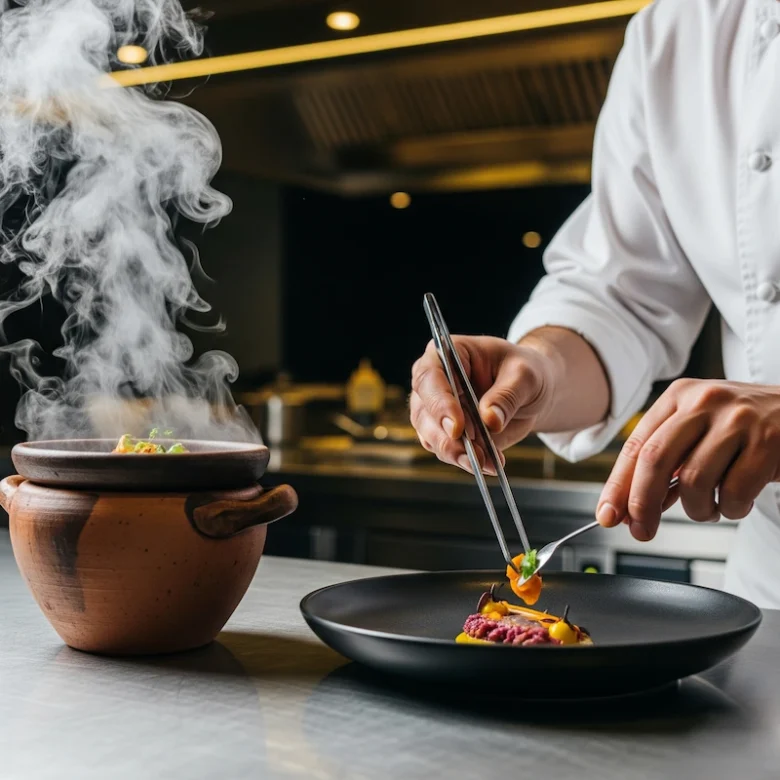
The resurgence of clay is not confined to rustic home kitchens. Some of the world’s most forward-thinking chefs and designers are embracing this primitive material, using it to ground their avant-garde creations in a sense of history, place, and authenticity.
Enrique Olvera (Mexico)
At Pujol in Mexico City, a restaurant consistently ranked among the world’s best, Enrique Olvera has made the humble clay pot, or olla de barro, a central figure in his most famous creation: the Mole Madre, Mole Nuevo.
The “mother mole,” a complex sauce that is aged for hundreds, even thousands of days, is kept perpetually simmering in a traditional clay pot. The pot is never fully emptied; new ingredients are added to the old base, creating a living, evolving sauce.
Olvera understands that the porous clay is not just a container; it is an active ingredient, absorbing the flavors of past batches and adding a rustic, inimitable depth to this icon of Mexican haute cuisine.
Archaeology of flavor: Ana Roš (Slovenia)
Ana Roš, chef at Hiša Franko in Slovenia, practices a form of culinary archaeology, unearthing forgotten local ingredients and traditions.
Her use of locally fired clay vessels is a key part of this philosophy. By cooking and serving in pots that recall ancient Balkan traditions, she grounds her stunningly modern and precise plating in an ancestral form.
The rough, earthy texture of the clay provides a powerful visual and philosophical contrast to the refined delicacy of her food, creating a dialogue between the past and the present on a single plate.
Rituals around clay cooking
To own and use a clay pot is to commit to a series of small, mindful rituals. These practices are not chores; they are the very essence of what makes cooking with clay so rewarding. They create a bond between the cook and the tool, transforming the act of cooking into a meditative practice.
Slowness and silence
Clay cookware is the enemy of haste. It demands slowness. It must be heated gradually to avoid thermal shock. It cooks at a low, gentle simmer for hours.
You cannot rush a tagine or force a cazuela. This enforced slowness is an invitation to be present. It encourages quiet attention.
You learn to listen for the soft, bubbling murmur of a stew, to watch for the gentle puff of steam, to trust in the slow, transformative power of time.
In a world that demands instant results, the clay pot teaches the profound joy of patience.
The act of seasoning the vessel
Like cast iron, a new clay pot needs to be seasoned or cured before its first use. This ritual varies by tradition, but it often involves soaking the pot in water for many hours, and then rubbing it with garlic or oil and heating it slowly.
This is an act of initiation, a way of preparing the vessel for its life of service. It seals the pores and strengthens the clay. But more than that, it is the first step in a lifelong relationship. With each use, as the cook soaks and cares for the pot, that bond deepens. The vessel begins to carry the memory of the hands that tend to it.
The sustainability of primitive materials
In an age of ecological crisis, the simple clay pot offers a powerful model of sustainable design. It is a tool born of the earth, and one that can harmlessly return to it, embodying a truly cyclical and regenerative way of living.
Low-impact, biodegradable, locally sourced
At its most basic, clay cookware is made from mud, water, and fire. It can be harvested from local sources, shaped by hand, and fired using simple kilns, often fueled by wood.
This stands in stark contrast to the energy-intensive, polluting industrial processes required to manufacture metal and synthetic cookware. Clay is a low-impact, gentle technology that allows us to create beautiful, functional tools without harming the planet.
Cradle-to-earth design
The ultimate test of a material’s sustainability is what happens at the end of its life. A non-stick pan, once scratched and discarded, leaches chemicals into a landfill for centuries.
A clay pot, when it inevitably cracks or breaks after years of service, is not waste. It can be returned to the garden, where its shards will break down over time, once again becoming part of the earth from which they came.
This is cradle-to-earth design in its most literal and beautiful sense. It closes the loop, perfectly and completely.
The spiritual side of clay
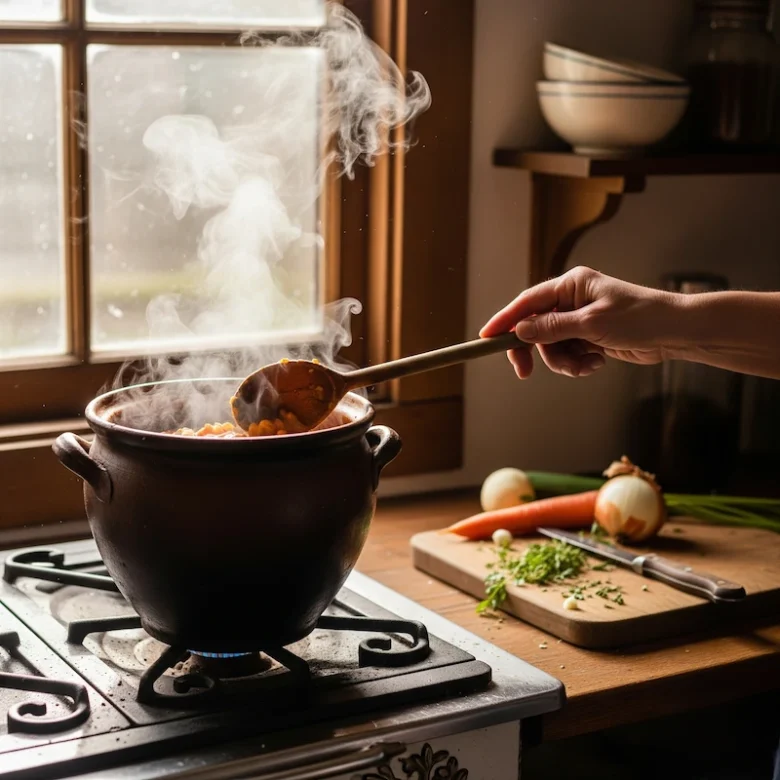
Beyond its practical and aesthetic qualities, cooking with clay touches something deeper within us. It connects us to a sense of ceremony, memory, and the sacredness of the everyday.
Ceremony through simplicity
There is something undeniably sacred about preparing a meal in a pot made from the same earth that grew the vegetables you are cooking. It is a simple, powerful act of wholeness. It collapses the distance between the field and the kitchen, the farm and the table.
Stirring a soup in an earthenware pot, feeling its warmth and weight, becomes a quiet ceremony—a moment of gratitude for the gifts of the earth and the simple miracle of nourishment.
Embodied memory
Over years of use, the porous walls of a clay vessel slowly absorb the oils, spices, and essences of every dish prepared within them.
A Mexican olla de frijoles that has simmered beans for a generation develops a depth of flavor that a new pot can never replicate.
The vessel becomes a living archive, a container not just of food, but of memories. It holds the ghost of every celebratory stew, every comforting soup, every humble meal shared with loved ones.
To cook with such a pot is to cook with history, to add your own story to a legacy of nourishment.
Challenges and care
The deep rewards of cooking with clay come with a set of responsibilities. This is not a material for the careless or the impatient. It asks for our attention and our respect.
Fragility and patience required
Clay is fragile. It can crack if heated or cooled too quickly. It can chip if banged against a hard surface. It can shatter if dropped. This fragility is not a design flaw; it is a teacher. It forces us to move more slowly and deliberately in the kitchen.
It asks us to handle our tools with care and respect. It demands a ritualized maintenance—soaking before use, washing gently by hand, drying thoroughly—that grounds us in the physical reality of our actions.
Not for the careless
In the end, clay cookware is a reflection of the cook’s mindset. Unlike a steel pan that can withstand aggressive, high-heat cooking and careless handling, clay rewards intention over speed. It is for the cook who finds joy in the process, not just the result.
It is for the person who wants to engage more mindfully with each step of creating a meal. It is a choice to embrace a slower, gentler, and more connected way of being in the kitchen.
Cooking with clay is more than a technique — it’s a way of remembering. Of grounding. Of crafting meals not just for the palate, but for the soul.
In a world of automation, it offers manual joy, primitive poetry, and ceramic resilience. Every meal becomes a return — to fire, to touch, and to the wild patience of the earth itself.
The story of clay is a story of connection. Neomania Magazine explores the rituals, materials, and designs that give modern life its meaning. If you believe in the poetry of primitive things, subscribe to our newsletter and continue the exploration.