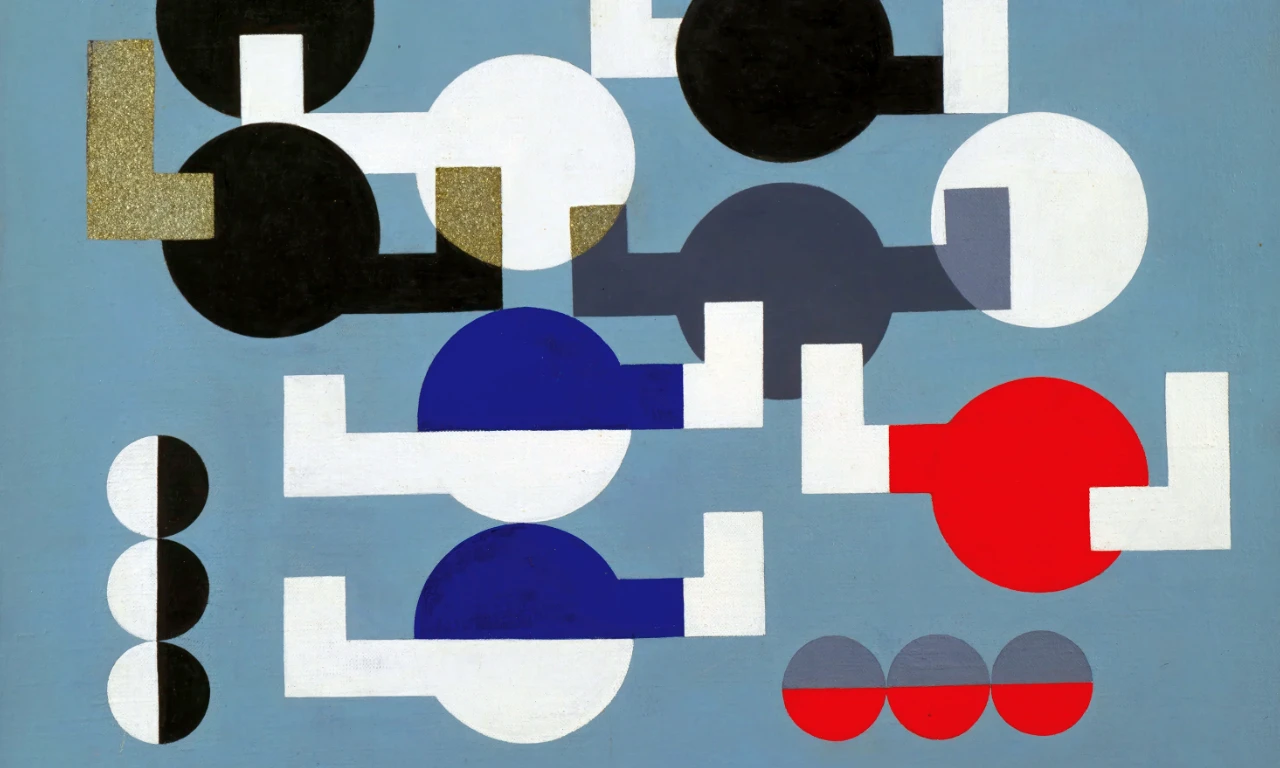
The Dada movement emerged in Zurich as one of the most radical cultural upheavals in modern history.
Instead of seeking harmony, beauty or meaning, Dada celebrated the absurd, spontaneity and the irrational.
Born from the rubble of World War I, it was not merely an art movement but a direct confrontation with the logic, values and institutions that artists believed had contributed to the devastation of the war.
It challenged the notion of art, transforming the avant-garde and paving the way for Surrealism, Conceptual Art and Contemporary experimental practices.
Swiss origins of Dadaism
Dada was born in 1916 at the Cabaret Voltaire in Zurich, Switzerland, a neutral refuge during the war.
Founded by Hugo Ball and Emmy Hennings, the cabaret became a gathering space for expatriate intellectuals, poets and artists.
They performed sound poetry, staged chaotic events and mocked societal structures through art that defied normal conventions.
Hugo Ball’s “sound poems” were performances in elaborate cubist costumes, capturing the chaotic spirit of the era.
The word “Dada” itself, chosen for its nonsensical, childlike resonance, symbolised a break from reason and tradition.
This current quickly spread to Berlin, Paris, New York and beyond, taking different political and aesthetic forms. Across cities, the common thread remained: a rebellion against logic, tradition and the institutions that seemed complicit in society’s failures.
The top Dadaist artists
While many artists contributed to Dada, some figures stand out for their influence and enduring legacy.
Tristan Tzara
A poet, theorist and performer, Tzara was the movement’s chief spokesperson. His Manifestos articulated Dada’s rejection of logic and rationalism. He is the author of provocative writings and performances expressing rebellion and , chaotic character of the movement and helped internationalise Dada’s influence.
Marcel Duchamp
Considered the most influential Dada artist, he revolutionised art by introducing the “readymade”, ordinary objects designated by the artist’s choice alone. His works challenged the idea that art required skilled craftsmanship or aesthetic beauty. Though he resisted being labeled to any movement, his rebellious spirit became central to Dada’s identity.
Jean Arp
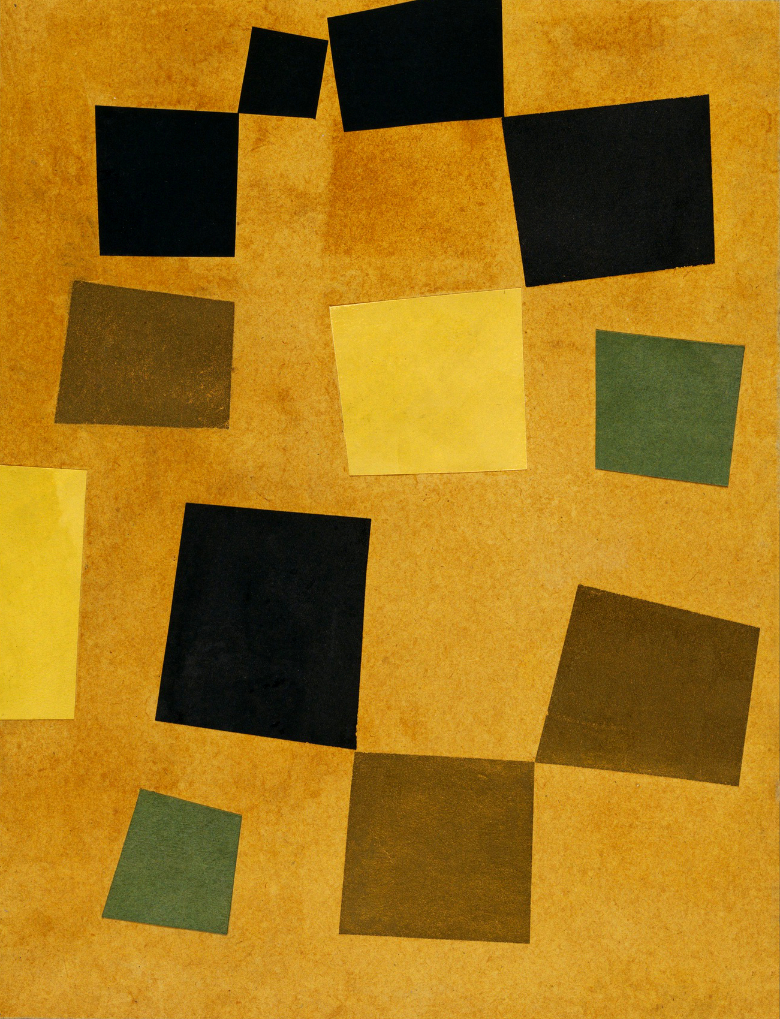
A founding member of Zurich Dada, Arp used chance as a compositional tool, letting pieces of torn paper fall randomly onto a surface and fixing them where they landed. This embrace of randomness challenged traditional artistic intention and deeply influenced early modern Abstraction.
Man Ray
An American artist active in New York and Paris, Ray contributed to Dada through experimental photography, painting and film. His “rayographs”, caméra-less photographs made by exposing objects directly onto photosensitive paper, pushed boundaries of form and technique. He became a bridge between Dada and Surrealism.
Hannah Höch
A leading figure in Berlin Dada, this German artist pioneered the technique of photomontage. She used images from mass media, addressing gender, identity and politics. Her bold manipulations of photographic fragments created sharp critiques of Weimar society and remain key to feminist art history.
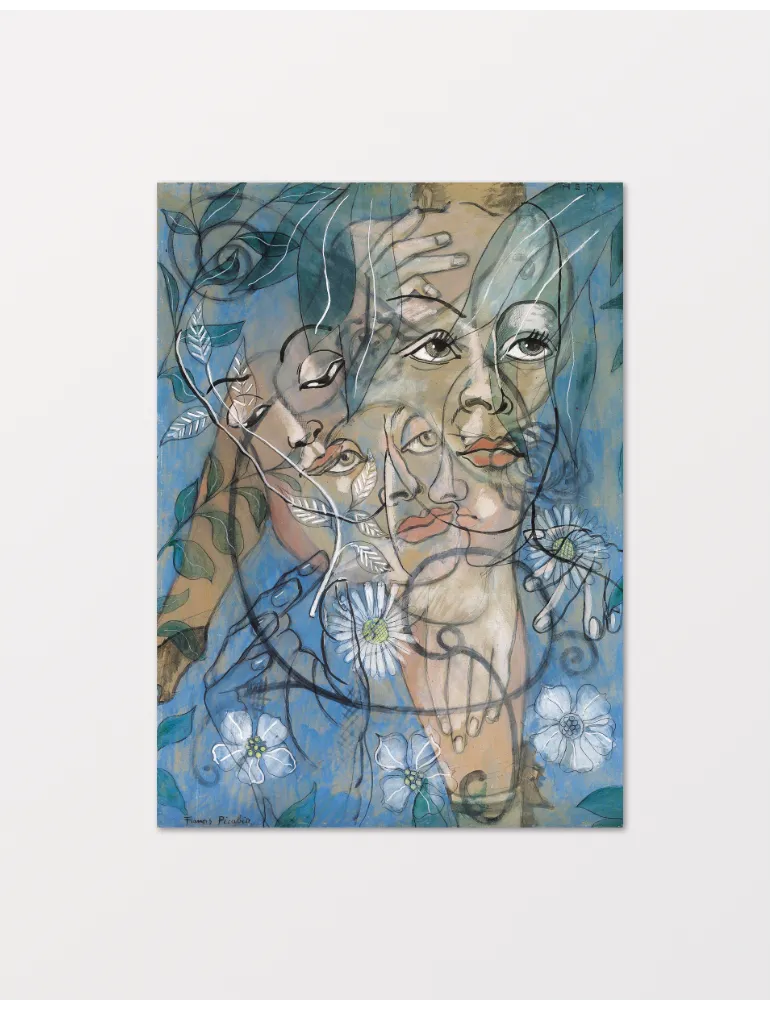
Francis Picabia
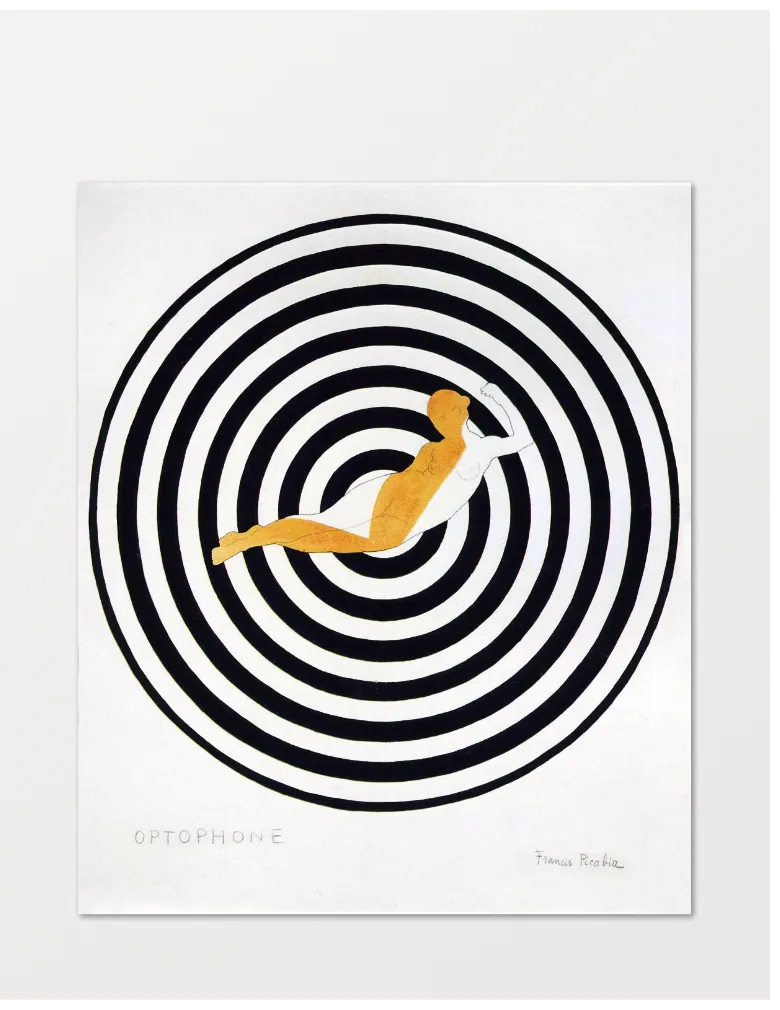
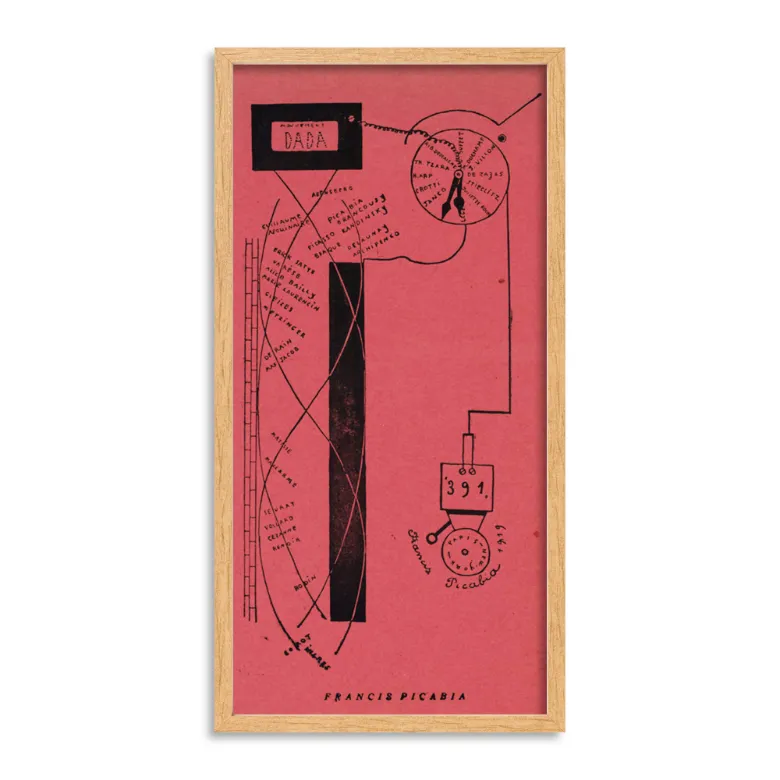
French painter and poet associated with Impressionism, Cubism, Pointillism and Dadaism. He experimented with publishing and filmmaking, with eclectic stylistic and media shifts. He did paintings featuring color blocks, geometric shapes, abstractions and unorthodox material collages.
Key concepts of Dadaism
Anti-Art sentiment
Dadaists sought to dismantle the idea that art must be beautiful or meaningful. By elevating mundane objects, embracing nonsense and ridiculing institutions, they challenged the art world boundaries.
Photomontage
Berlin Dada embraced collage as a weapon of political critique. Artists borrowed images from newspapers and advertisements, rearranging them to expose the absurdity of mass culture and political propaganda.
Theatricality
Dada thrived in performances, cabarets, poetry readings and “happenings”, featuring chaotic improvisation, humorous disruption and satirical spectacle.
Spontaneity
Dadaists embraced randomness as a rejection of rational design. This approach undermined traditional ideas of artistic mastery and opened the door to chance in later Avant-garde Art.
Major Dada artworks
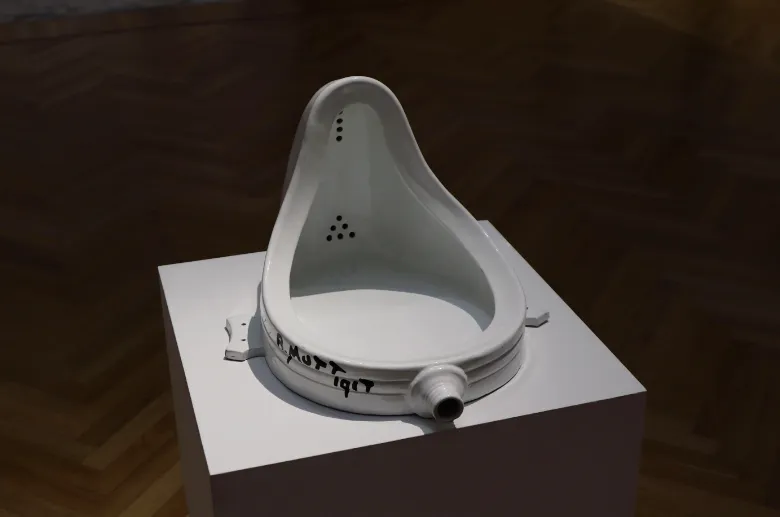
Fountain by Marcel Duchamp (1917)
Housed in several replicas across major museums, Duchamp’s infamous porcelain urinal signed “Mutt” remains one of the most scandalous works in art history. It redefines art as a conceptual gesture rather than a crafted object. Found in Art Museums in Philadelphia, San Francisco and Paris Centre Pompidou.
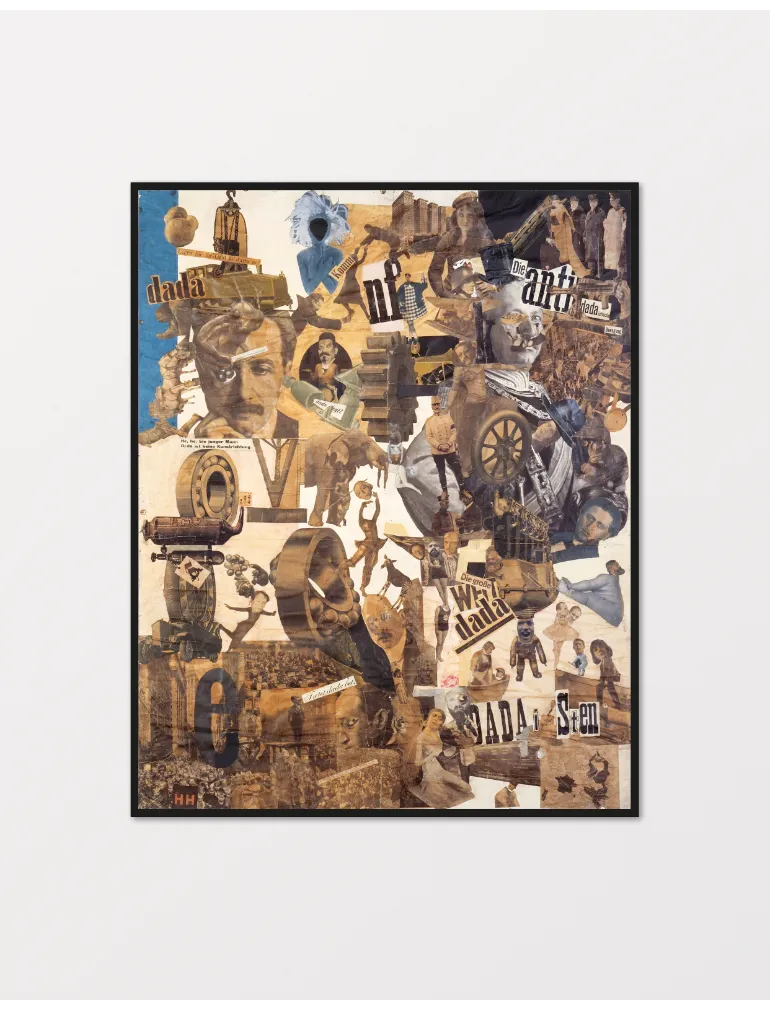
Cut with the Kitchen Knife by Hannah Höch (1919)
Located in Berlin Staatliche Museen, this massive photomontage critiques the chaos and contradictions of postwar German politics. It is a foundational work of both Dada and political collage.
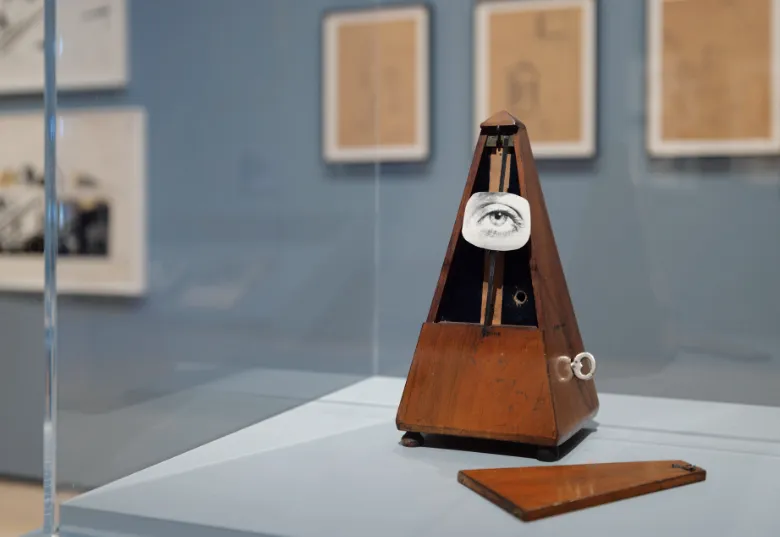
Object to Be Destroyed by Man Ray (1923)
This metronome with a photograph attached alludes to repetition, desire and destruction. It exemplifies Man Ray’s blend of Dada irreverence and symbolic experimentation. One of several versions is in Tate Gallery, London.
Collage with Squares Arranged According to the Laws of Chance by Jean Arp (1916)
Held at MOMA (Museum of Modern Art, New York), this collage embodies Arp’s embrace of the random. The work is celebrated as an early experiment in avoiding artistic control.
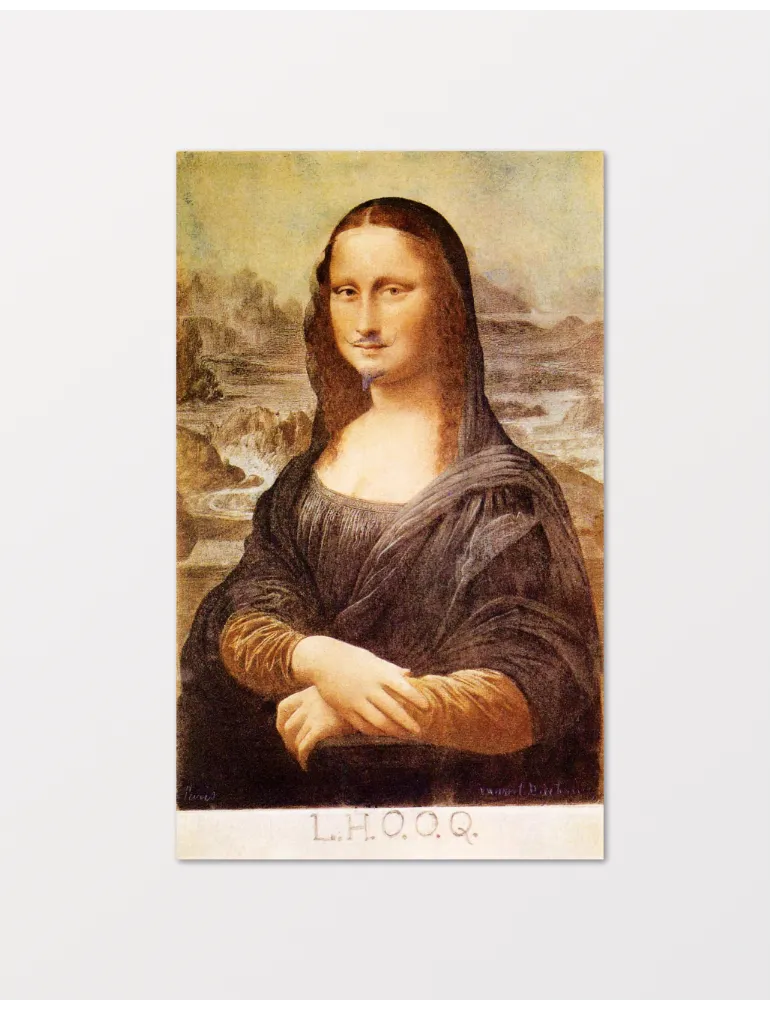
LHOOQ by Marcel Duchamp (1919)
It is a cheap postcard of Mona Lisa altered with a painted moustache, exhibited at Centre Pompidou in Paris. The work mocks artistic authority by decontextualising a cultural icon.
Legacy of Dadaism
Dada’s deep imprint far exceeds its short lifespan. By destabilising traditional art notions, Dadaism became inspiration for many later movements:
Surrealism, borrowed Dada’s sense of rebellion but replaced chaos with dream logic.
Fluxus and Performance Art, inherited Dada’s performative and anti-institutional impulses.
Pop Art, embraced Dada’s use of everyday objects and mass media imagery.
Conceptual Art took Duchamp’s idea that “concept matters more than the object.”
Today, Dada’s influence can be seen not only in museums but in contemporary culture: memes, absurdist humor, internet remix… all echoing the spirit of playful subversion.
Dadaism was a rebellious and transformative force that challenged artistic foundations and redefined the concept of Modern Art.
The movement’s most iconic works, preserved in major museums around the world, continue to provoke thought and inspire new generations of artists.
Dada may have declared itself anti-art, but its legacy is deeply woven into the fabric of artistic innovation in the centuries that followed.