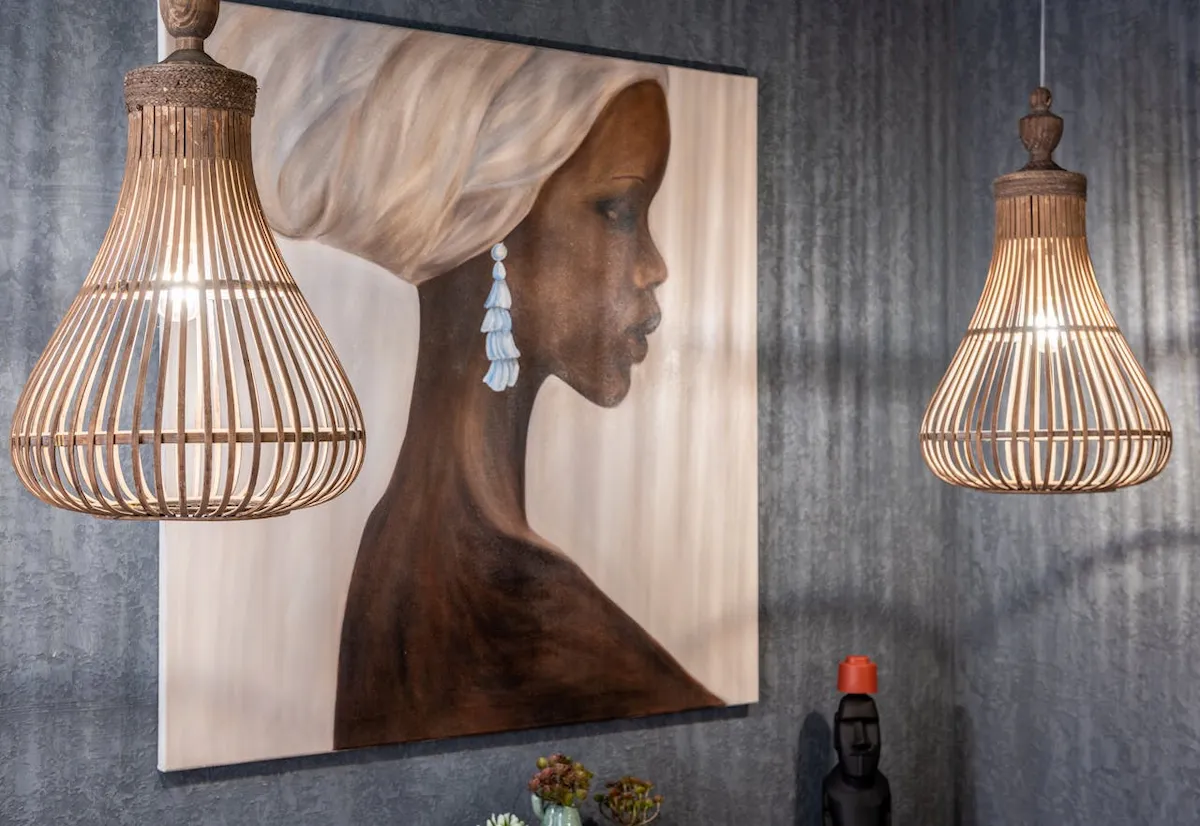
A home feels incomplete until the walls start speaking. You might have the perfect sofa, a handcrafted coffee table, and lighting that hits all the right angles, but without art, the space lacks a pulse.
Selecting the right pieces is about more than just filling a void; it is about finding a visual language that mirrors who you are and what you value.
It is a process that can feel overwhelming if you look at it as a set of strict rules, but it becomes a joy when you treat it as an extension of your own narrative.
The first thing to remember is that there is no “right” way to collect. Your home is not a showroom; it is a living, breathing sanctuary.
Whether you are drawn to the quiet stillness of a minimalist landscape or the loud, provocative energy of street art, the goal is to find pieces that make you stop and look every single time you walk into the room.
Let’s look at how you can transform your living environment into a curated gallery that feels both sophisticated and deeply personal.
Finding your aesthetic voice
Before you start browsing galleries or online marketplaces, take a moment to look around your current space. What colors dominate your furniture? What kind of mood do you want to create?
Some people want their home to be a peaceful retreat, while others want it to be a conversation starter. Your personality should dictate the art, not the other way around.
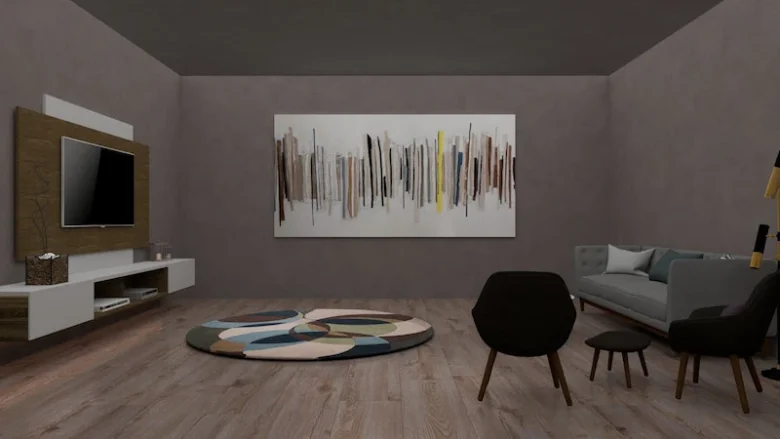
If you love clean lines and open spaces, you might find that large-scale abstract works with plenty of “white space” help maintain that sense of airiness.
On the other hand, if your style is more eclectic, you could experiment with a gallery wall that mixes vintage sketches with modern photography.
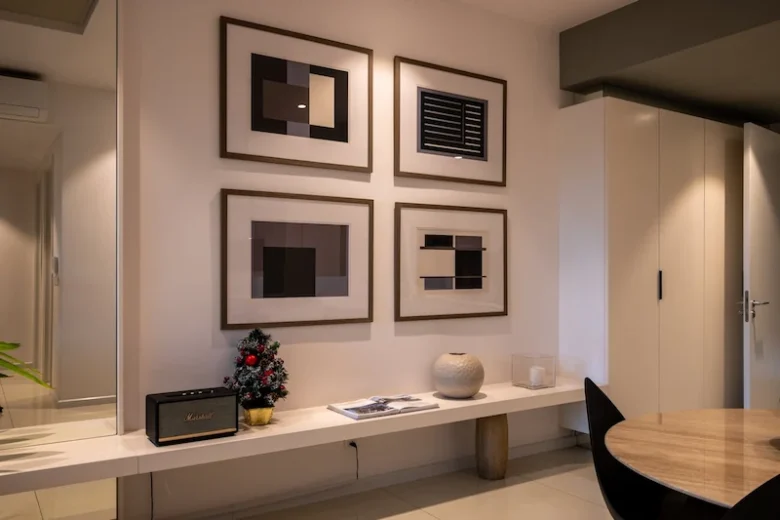
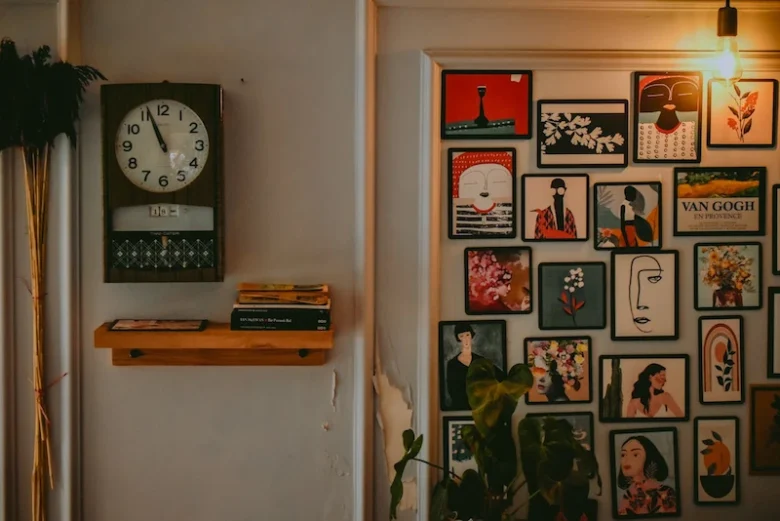
The key is to trust your gut. If a piece makes you feel something—curiosity, nostalgia, or even a bit of discomfort—it probably belongs in your life.
As you explore different styles, you will notice that certain themes keep popping up. Maybe you are consistently drawn to geometric patterns or perhaps you find yourself staring at portraits of people you’ve never met.
These patterns are clues to your aesthetic DNA. Use them to guide your search, but don’t be afraid to break your own rules. Sometimes the most interesting room is the one where a single piece of art feels completely unexpected.
The importance of scale and placement
One of the most common mistakes people make is choosing art that is too small for the wall it’s meant to occupy. A tiny frame on a massive white wall can look like an afterthought.
Conversely, a piece that is too large can swallow a room whole. You want to find a balance that feels intentional.
When hanging art over a piece of furniture, like a sofa or a headboard, a good rule of thumb is to ensure the artwork is about two-thirds the width of the furniture below it.
This creates a visual anchor that ties the room together. Also, keep an eye on the height. Most people hang their art way too high.
You want the center of the piece to be at eye level—roughly 57 to 60 inches from the floor. This makes the art feel connected to the rest of the room rather than floating away toward the ceiling.
Mixing mediums and textures
Art isn’t limited to oil on canvas. To give your home a refined, multi-dimensional feel, you should look into different mediums.
Photography, charcoal drawings, textile art, and even 3D sculptures can add layers of interest that a flat painting might not provide. Mixing these elements prevents your home from feeling one-note.
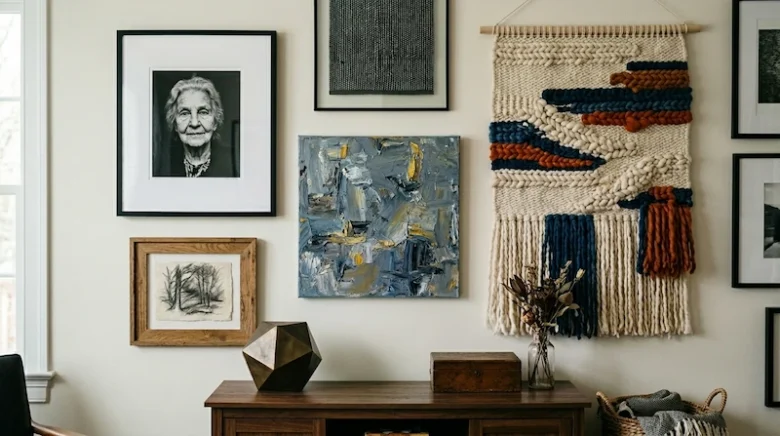
Think about how a framed photograph with a crisp white mat contrasts with a raw, unframed canvas. Or how a woven wall hanging brings warmth to a room filled with glass and metal.
These contrasts create a visual tension that is very pleasing to the eye. You don’t need everything to match perfectly. In fact, a little bit of friction between styles—like putting a very modern, neon piece next to a classic wooden antique—often results in the most stylish outcomes.
We’ll look at this in more detail later, but for now, consider the materials. Wood frames bring a natural, grounded feel, while sleek black or metallic frames feel more urban and sharp.
Even the glass matters; non-reflective museum glass can make a huge difference in how you see the details of a delicate sketch or a dark photograph. It’s these tiny choices that show you really care about the work you’re displaying.
Working with color and light
Color is usually the first thing people think about when they learn how to choose art for your home. While you don’t need your art to match your throw pillows exactly, there should be some conversation between the colors on the wall and the colors in the room. You can go one of two ways: harmony or contrast.
Harmony involves picking art that shares the same color palette as your room. If your living room is full of blues and greys, a seascape or a cool-toned abstract will feel right at home.
Contrast, however, is where things get exciting. If you have a very neutral, beige room, a vibrant red or orange painting can act as a focal point that brings the whole space to life. It gives the eye a place to rest and something to talk about.
Light also plays a huge role in how art looks. Natural light is beautiful, but be careful with direct sunlight, as it can fade certain types of art over time, especially watercolors and photographs.
If you have a piece you really love, consider installing a picture light above it or using adjustable track lighting to highlight it.
This creates a “gallery effect” that makes even a simple print look like a high-end investment. As you may have noticed in this article, the way you treat the art is just as important as the art itself.
Building a collection over time
You don’t need to buy everything at once. In fact, the best homes are those where the art collection has grown slowly over years. Buying art should be an emotional experience.
Maybe you bought a small sketch while on vacation in Mexico, or you found a vintage poster at a local flea market that reminded you of your childhood. These pieces have stories, and those stories are what make your home feel like yours.
Starting small is perfectly fine. You can begin with limited edition prints or works by emerging artists. These are often more affordable and allow you to support the arts without breaking the bank.
As you get more comfortable with your taste, you might decide to save up for a larger, original piece that serves as the centerpiece of your home.
The beauty of a slow collection is that it evolves as you do. Your taste ten years from now will likely be different than it is today, and your walls should reflect that growth.
If you find yourself stuck, try looking for local art fairs or open studio events. Meeting the artist and hearing about their process can create a connection to the work that you just can’t get from buying something mass-produced at a big-box store.
When you know the “why” behind a piece, it becomes much more than just decoration; it becomes a part of your history.
The provocative and the spiritual
At Neomania Magazine, we often talk about art that goes beyond the surface. We believe art should challenge you. It should ask questions. Don’t be afraid to choose pieces that are a bit provocative or that lean into the spiritual.
Art has the power to shift the energy of a room. A piece with deep, moody tones and complex textures can invite reflection and quietness, while something bold and rebellious can spark creativity and energy.
This is where you can really take risks. Maybe you choose a piece that deals with social issues or one that uses unconventional materials like recycled plastic or industrial metal.
These choices show that you are not just following trends, but that you are engaged with the world around you. Your home should be a place where you feel inspired to think and feel deeply.
By choosing art that has a bit of an edge, you create an environment that is as intellectually stimulating as it is beautiful.
So, look for the works that stay in your mind long after you’ve looked away. Those are the pieces that will continue to give back to you every day.
Art is a long-term relationship, not a fleeting trend. When you choose with intention, you are not just decorating a wall; you are curating your life.
Common questions when selecting art
You might be wondering if you can mix different types of frames in the same room. The answer is a loud yes. While matching frames can look very neat and organized, mixing them adds character.
You could have a sleek modern frame next to an ornate, gilded vintage one. As long as there is a common thread—maybe the color of the art or the subject matter—it will look intentional rather than messy.
Another thing people often ask is whether they should buy art as an investment. While some art does increase in value, it is much better to buy because you love it.
The “return on investment” should be the daily joy you get from looking at it. If it happens to become more valuable over time, that’s just a bonus. Focus on the emotional connection first, and the rest will follow naturally.
Lastly, don’t forget about the “breathing room.” Not every wall needs to be covered. Sometimes, leaving a wall blank can make the art on the opposite wall stand out even more.
It’s about creating a rhythm in the house where the eye can move from a point of interest to a place of rest. This balance is what makes a home feel sophisticated and well-thought-out.
Choosing art for your home is a journey that never truly ends. It’s about being open to new ideas, trusting your instincts, and surrounding yourself with things that move you.
If you want to stay ahead of the curve and find more stories that challenge and inspire, you’ll find a wealth of inspiration in our pages.
We invite you to see the world through a more refined lens and join a community that values the bold and the beautiful.
Subscribe to Neomania Magazine today and let us help you transform your perspective on art, design, and the essence of modern living.