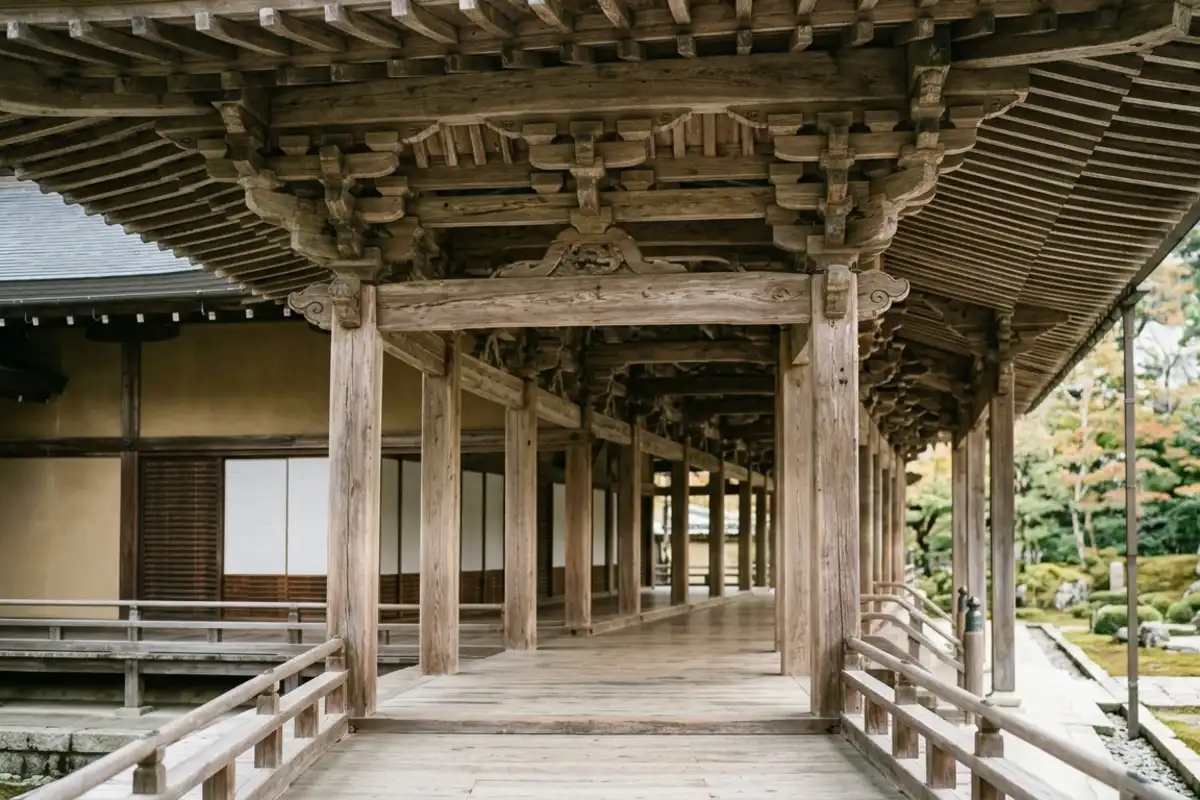
A structure that stands for centuries, held together by nothing more than tension, friction, and the masterful geometry of its own components, feels like a contradiction in our age of adhesives and metal fasteners. Yet, this is the quiet reality of a woodworking tradition that treats timber not as a raw material to be forced into shape, but as a partner in creation.
It’s a design language where the connections themselves become the aesthetic, a silent, intricate dialogue between the artisan and the very grain of the wood. This approach to construction transcends mere technique; it’s a form of structural poetry, where every cut and every fit tells a story of patience, precision, and a profound understanding of natural forces.
This world of interlocking wood forms is not a relic of the past, but a living, breathing discipline that continues to inform and challenge contemporary architects, designers, and artisans. It forces a different way of thinking about how things are made, how they endure, and what it means to create something of lasting value.
We’re not just looking at a building method; we’re examining a philosophy of assembly, one that finds immense strength in intricacy and integrity in the absence of the extraneous. It’s a testament to the idea that the most resilient solutions are often born from the deepest respect for the material itself.
The grammar of grains: understanding the fundamentals
Before a single piece of wood is joined to another, a deep and intuitive process of selection and observation takes place. The artisan is not just a builder but a biologist of sorts, reading the life story of the tree in its grain, its density, and its response to the environment.
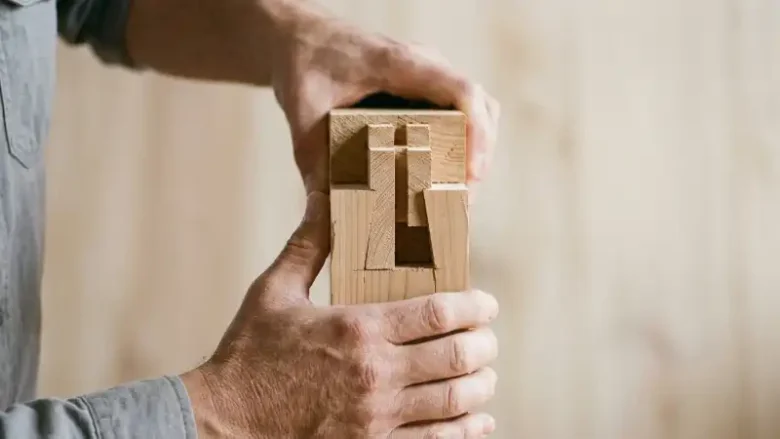
This foundational knowledge is what separates functional construction from true artistry. The strength of the final piece is determined long before the first saw cut is made; it begins with this intimate understanding of the material’s character.
Reading the wood: more than just material
The success of any complex wooden joint lies in anticipating how the material will behave over time. Wood is a dynamic medium; it breathes, expanding and contracting with changes in humidity and temperature. An artisan must read the grain—the direction of the wood fibers—to predict these movements.
A joint that is flawlessly tight on a dry winter day could split apart in the summer humidity if the grain orientation isn’t properly considered. This is why certain woods, like Hinoki cypress (Chamaecyparis obtusa) or Sugi cedar (Cryptomeria japonica), are prized. Their straight grain and stable nature make them predictable partners in this delicate dance of tension and compression.
The artisan visualizes how forces will flow through the finished structure, aligning the grain of each component to channel stress and support weight in the most efficient way possible. It’s a practice that is part engineering, part intuition, honed over years of working with the material.
The lexicon of connections: from simple to sublime
The vocabulary of these connections is vast and nuanced, with each type of joint designed for a specific structural purpose. They range from the relatively straightforward to the bewilderingly complex, each with a name that often poetically describes its form or function.
Simple joints like the mortise and tenon (hozo and hozo-ana) form the basis of much of the craft, creating strong right-angle connections for frames and posts. But the tradition quickly evolves into far more elaborate forms.
- Splicing joints (tsugite): these are used to join two pieces of wood end-to-end, creating a longer, continuous beam or post. The kanawa-tsugi, or “metal-ring splice,” is a marvel of interlocking forms that slides together and is secured with a single pin, creating a connection so strong it can be difficult to see the seam.
- Angled joints (shiguchi): this category covers the methods for joining wood at angles, forming the corners of buildings and the intersections of beams. The “hell-and-heaven” joint (jigoku-kusabi) is a complex, hidden connection that uses internal wedges to lock beams together from within, creating a clean exterior surface with immense internal strength.
- Three-way joints (mitsudomoe): perhaps the most visually and structurally impressive are the joints that unite three members at a single point. The kawai-tsugite is a stunning example, where three pieces of wood interlock in a spiral configuration, each one bracing the other two. It’s a solution of breathtaking elegance and logic.
Each of these joints is a self-contained ecosystem of forces. They are designed to tighten under load, using the weight of the structure to increase their own integrity. This is a fundamental principle: the building actively participates in holding itself together, a dynamic system rather than a static assembly.
Beyond the workshop: architectural and aesthetic implications
The influence of these sophisticated japanese carpentry techniques extends far beyond the realm of pure craft. It has shaped architectural aesthetics, influenced modern design principles, and offered a compelling model for sustainable and resilient construction.
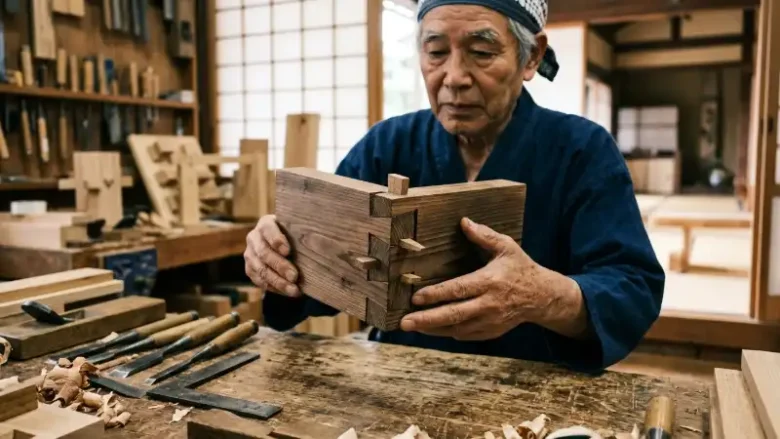
When the method of assembly is not hidden but celebrated, it changes our entire relationship with the built environment. We begin to see buildings not as solid, inert objects, but as intricate puzzles where every piece has a purpose and a place.
Designing for disassembly and longevity
One of the most forward-thinking aspects of this construction method is the concept of designing for disassembly. Because these structures are assembled without nails, screws, or glues, they can, in theory, be taken apart. This was a practical necessity for temples and other important buildings, allowing them to be repaired, relocated, or have damaged sections replaced without destroying the entire structure.
A single rotted beam could be carefully extracted and a new one fitted in its place, extending the life of the building for centuries. This principle is incredibly relevant today as we grapple with issues of sustainability and the lifecycle of materials. It presents a model of construction that is not disposable but renewable, where maintenance is an integral part of the design. This contrasts sharply with many modern building practices, where demolition is often the only solution for renovation or repair.
The aesthetic of the exposed joint
In much of Western carpentry, the ideal is often a seamless surface where the joinery is hidden. Here, the opposite is often true. The joint is frequently left exposed, becoming a focal point of aesthetic interest. This is not mere ornamentation; it is a declaration of integrity.
The visible complexity of an interlocking joint speaks to the quality of the craftsmanship and the intelligence of the design. It draws the eye and invites contemplation. You can trace the lines of force, see how the pieces lock together, and appreciate the skill required to make them fit with such precision.
This “aesthetic of the joint” has had a profound impact on modern architects like Kengo Kuma, whose work often celebrates the connection points between materials, turning structural necessities into the primary design feature. It’s an honest architecture, one that reveals its own making.
From macro to micro: the precision of Kumiko
The same principles of interlocking, no-glue construction are scaled down to an incredibly delicate level in the art of kumiko woodworking. This practice involves assembling intricate lattice panels from hundreds, sometimes thousands, of tiny, precisely cut pieces of wood.
These panels, used for screens, doors, and decorative elements, are held together purely by the friction and tension of their interlocking geometric patterns. The work demands sub-millimeter accuracy.
A single piece cut a fraction too long or at a slightly incorrect angle will cause a cascading error, preventing the entire pattern from fitting together. Kumiko is a discipline of pure precision, a meditation in wood.
The resulting patterns—from the traditional hemp leaf (asanoha) to the cherry blossom (sakura)—are not just beautiful; they are marvels of structural logic on a miniature scale, demonstrating that the principles of strong, elegant connections are universal, applicable to both a massive temple beam and a sliver of wood no thicker than a piece of paper.
The modern artisan: tradition in a contemporary context
In a world dominated by mass production and digital fabrication, the deliberate, patient, and highly skilled practice of hand-cut joinery might seem anachronistic. Yet, it is experiencing a significant resurgence.
A new generation of woodworkers, architects, and designers around the globe is turning to these ancient methods, not as a rejection of technology, but as a way to deepen their understanding of material and form. They are finding that the old ways have much to teach the new, offering solutions that are both technically sophisticated and deeply human.
The role of digital tools in an analog craft
The relationship between traditional craftsmanship and modern technology is not one of opposition but of potential symbiosis. While the soul of the craft lies in the hand-skill of the artisan, digital tools are opening up new possibilities. CAD software allows for the design and visualization of incredibly complex joints that would be difficult to draft by hand.
CNC machines can be used for the rough initial cutting of components, saving time and reducing material waste, leaving the final, crucial fitting to be done by a skilled hand with a chisel and plane.
This hybrid approach allows for new levels of complexity and precision, pushing the boundaries of what is possible while preserving the essential element of human touch and judgment. It’s a way of using technology to augment, rather than replace, skill.
Case study: a global revival
The appeal of these techniques is now thoroughly global. Workshops from North America to Europe are dedicated to teaching these skills. Architects are increasingly specifying exposed timber frames with complex joinery in high-end residential and public projects, drawn to the warmth, beauty, and structural honesty of the method. We see it in the work of firms that prioritize sustainable materials and craftsmanship, where the building itself tells a story of its own making.
This is not simply about replicating historical forms; it’s about adapting the underlying principles to a modern context. A contemporary home might use a complex three-way joint not for a temple roof, but to create a dramatic, open-plan living space, demonstrating the timeless versatility of the techniques.
The enduring resonance of a silent craft
What is it about these intricate connections that captivates us so deeply? Perhaps it’s the sheer intelligence of it all. In an age of brute-force solutions, there is an undeniable elegance to a system that derives its strength from precision and balance.
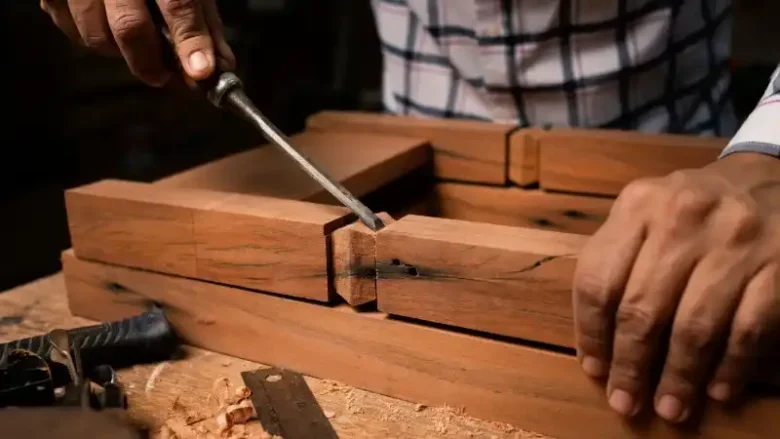
The logic of a well-made joint is both beautiful and deeply satisfying. It represents a perfect synthesis of form and function, where the way something is put together is inseparable from its appearance and its performance. There are no superfluous parts. Every surface, every angle has a purpose.
A lesson in patience and intention
Learning or even just observing this craft is an exercise in mindfulness. It demands a level of focus and patience that is rare in our fast-paced world. The process cannot be rushed. Each cut must be deliberate, each measurement exact. The woodworker is engaged in a slow, methodical conversation with the material. This intentionality is embedded in the final product.
A piece of furniture or a building constructed with these methods feels different. It possesses a certain quiet authority, a sense of permanence that comes from the immense care invested in its creation. This is, perhaps, the core of what we respond to: the visible evidence of human dedication.
The future of structural art
The principles of japanese joinery offer more than just a set of techniques for working with wood. They provide a powerful counter-narrative to the culture of disposability. They remind us that things can be made to last, to be repaired, and to grow more beautiful with age. They demonstrate that the most elegant solutions are often found by working with nature, not against it.
As we look for more sustainable, resilient, and meaningful ways to build our world, these silent, interlocking joints have a great deal to say. They are not merely historical artifacts but are active, relevant, and deeply inspiring models for the future of design and construction.
This is the kind of storytelling that lies at the heart of our work. We believe that by looking closely at a craft, a design, or an idea, we can uncover narratives that challenge our assumptions and expand our perspective.
The world of intricate japanese wood joints is a perfect example—a silent language that speaks volumes about ingenuity, beauty, and endurance.
If this exploration of structural poetry has sparked your curiosity and left you wanting to uncover more stories that lie just beneath the surface, we invite you to continue the journey with us. A subscription to Neomania Magazine brings these kinds of deep, resonant narratives directly to you, offering a refined look into the ideas and aesthetics that are shaping our world.