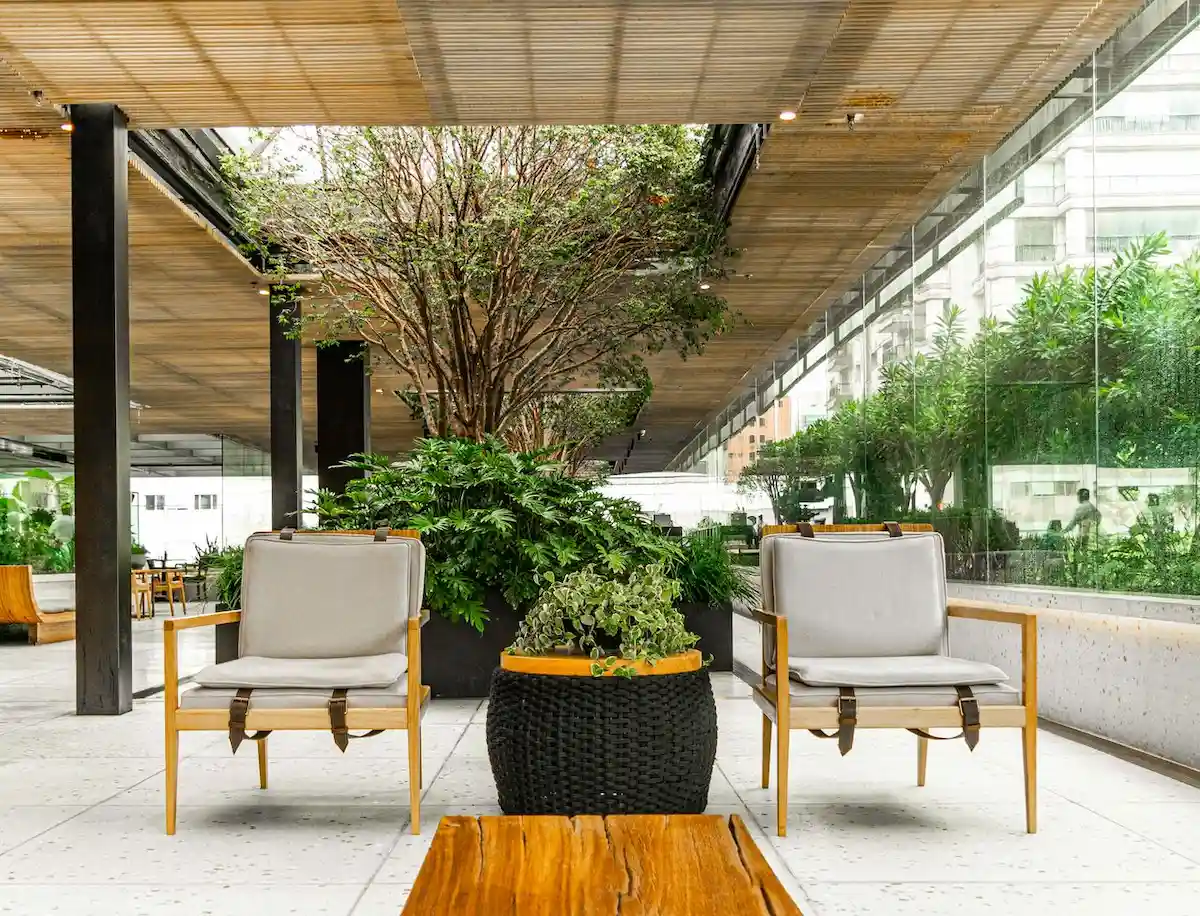
The stark geometry of the 20th-century office is a ghost that still haunts many of our professional lives. It’s a landscape of fluorescent hums, beige partitions, and the faint, sterile scent of recycled air. This was the temple of productivity, a machine for working, built on the premise that focus is born from the absence of distraction.
But what if that premise was fundamentally flawed? What if the very sterility we engineered to optimize performance has been slowly eroding our creativity, our well-being, and even our connection to the work itself?
A quiet but profound shift is underway, a movement that challenges this legacy by reintroducing the one element that was so meticulously scrubbed away: nature.
This is not about placing a sad-looking ficus in the corner of the reception area. It’s a deeper, more integrated philosophy that questions the very boundary between our built environments and the living world. We are beginning to understand that the human psyche is not a machine to be optimized in a vacuum.
It is an ecosystem, deeply intertwined with the patterns, textures, and rhythms of the natural world. The rustle of leaves, the dappling of light through a canopy, the organic imperfection of wood grain—these are not distractions.
They are a form of primal information, a subconscious signal to our brains that we are safe, that we can relax, and that we can create. The conversation has moved from ergonomics to ecology, from efficiency to experience. The most forward-thinking companies are no longer just building offices; they are cultivating habitats.
The philosophical shift: From concrete jungles to living systems
For decades, the blueprint for corporate architecture was one of control and uniformity. The goal was a predictable, replicable environment that could be scaled globally, from a skyscraper in Manhattan to a business park in Singapore.
This industrial mindset, a hangover from the factory floor, treated employees as uniform components in a larger apparatus. The space was designed to minimize deviation and maximize output.
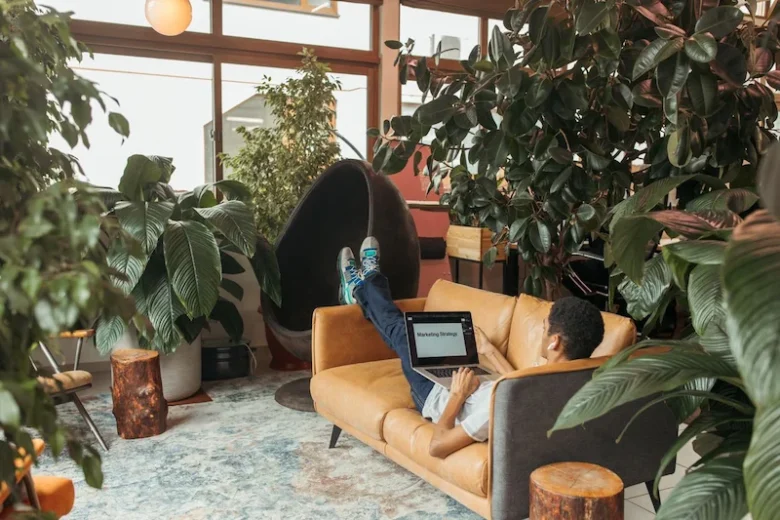
But this model has shown its cracks. The rise of burnout, the struggle for genuine innovation, and the modern demand for purpose-driven work have revealed the limitations of a purely mechanical approach.
The new paradigm recognizes that a workplace is not just a container for labor but a catalyst for culture and a sanctuary for the mind.
Reconnecting with our innate biology
The core idea animating this design revolution is rooted in a simple, powerful concept: our intrinsic human need to connect with nature. This pull is not a matter of preference but of evolutionary programming. For 99% of human history, we lived and worked in natural environments.
Our sensory systems are finely tuned to interpret the nuances of the living world. The hard, flat, and monotonous surfaces of a traditional office provide almost no positive sensory input, leading to cognitive fatigue and heightened stress.
Introducing elements of nature—even in abstract forms—taps into this deep-seated part of our biology. It’s about creating spaces that speak to our ancient selves, allowing the modern professional to work with, rather than against, their own nature.
This is where the concept of office biophilia emerges, not as a decorative trend, but as a strategic imperative for businesses that want to thrive in the 21st century.
Beyond aesthetics: The function of natural forms
A truly effective biophilic workspace is more than just a collection of plants. It’s a holistic system that mimics the complexity and richness of a natural ecosystem. This can manifest in several ways, often categorized into direct and indirect experiences of nature.
- Direct nature connection: This is the most literal application. It includes the presence of living plants, water features like fountains or small indoor streams, and access to natural light and fresh air. It also involves maximizing views of the outdoors, strategically placing desks and common areas to look out over parks, trees, or even a dynamic cityscape.
- Indirect (or Evocative) nature connection: This is more subtle and involves the use of natural materials, patterns, and forms. Think of a reception desk carved from a single piece of reclaimed wood, carpeting with a pattern that mimics moss on a forest floor, or acoustic panels shaped like honeycombs. These elements work on a subconscious level, evoking the feeling of being in nature without the literal presence of it.
- Human spatial response: This layer addresses our innate desire for certain types of spaces. It includes creating areas of “prospect and refuge”—open, collaborative zones with expansive views, balanced by smaller, sheltered nooks for focused work. It’s about offering a variety of environments that cater to different tasks and moods, much like one might find different settings within a natural landscape.
This multi-layered approach ensures that the benefits are not just superficial. It creates an environment that is sensorially rich and psychologically restorative, addressing our need for both stimulation and calm.
The deeper implications: Culture, creativity, and the soul of work
The adoption of nature-centric design is more than an architectural trend; it is a reflection of a deeper shift in our understanding of work itself. It signals a move away from a purely transactional view of employment—where an employee provides labor in exchange for a salary—towards a more holistic, relational one.
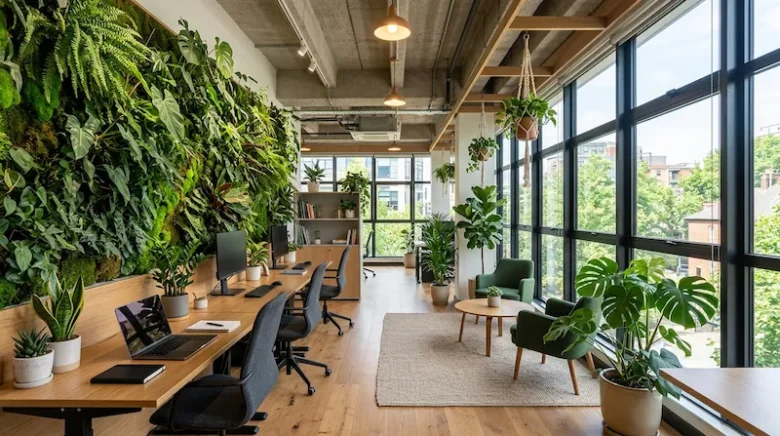
A company that invests in creating a beautiful, healthy, and restorative environment is sending a powerful message to its employees: we care about you as a whole person, not just as a unit of productivity. This can have a profound impact on employee loyalty, engagement, and overall corporate culture.
Fostering a culture of care and sustainability
A workplace that is alive requires care. Plants need to be watered, lighting systems need to be maintained, and natural materials need to be looked after. This act of stewardship can subtly permeate the company culture. It fosters a sense of shared responsibility and respect for one’s environment.
This mindset often extends beyond the office walls. A company that values the natural world inside its building is more likely to adopt sustainable business practices outside of it. The design of the workspace becomes a daily, physical manifestation of the company’s values.
It’s a way of making an abstract concept like “sustainability” a tangible, lived experience for every employee, every day. This authenticity is incredibly powerful for attracting a new generation of talent that prioritizes purpose and values alignment over traditional perks.
Unlocking creativity through non-linear thinking
Nature is not linear. It is complex, fractal, and sometimes chaotic. A forest is not organized in a grid. This inherent complexity is a powerful antidote to the rigid, linear thinking that can stifle innovation.
Being in a nature-infused environment can help break down mental blocks and encourage more associative, creative thought processes. The subtle, unpredictable movements of leaves, the changing patterns of light and shadow, the complex geometry of a fern—these “soft fascinations” can capture our attention without demanding focused effort, allowing the mind to wander and make novel connections.
This is the state of mind where “aha” moments often occur. By designing workspaces that mirror the complexity of the natural world, we are creating fertile ground for the kind of non-linear, systems-level thinking that is required to solve the complex problems of our time.
A living workspace doesn’t just support the work; it actively participates in the creative process.
Navigating the future: Challenges and considerations
As with any significant paradigm shift, the transition to more biophilic and human-centric workspaces is not without its challenges. The initial investment can be a barrier for some companies, especially smaller businesses or startups.

There is also a risk of “greenwashing,” where companies add a few superficial natural elements for marketing purposes without committing to a deeper, more meaningful integration. This superficial approach, often called “biophilic-lite,” can backfire if it’s perceived as inauthentic by employees.
True transformation requires a genuine commitment from leadership and a willingness to rethink long-held assumptions about how and where work gets done. The future of work is not just about remote or hybrid models; it’s about the quality and intention of the physical spaces we choose to inhabit.
Equity and accessibility in design
A critical consideration is ensuring that the benefits of these enhanced workspaces are accessible to everyone, not just the employees in the corner offices or at elite tech campuses. As companies redesign their spaces, they must be mindful of creating equitable environments.
This means distributing natural light and views as widely as possible, ensuring that restorative spaces are available to all employees regardless of their role or seniority, and considering the needs of a neurodiverse workforce.
For some, the sensory richness of a highly biophilic environment might be overwhelming. A well-designed space will offer a variety of settings, from vibrant, collaborative gardens to quiet, sheltered nooks with minimal stimulation, allowing individuals to choose the environment that best suits their needs at any given moment.
Integrating technology with nature
The future of workspace design lies not in choosing between technology and nature, but in thoughtfully integrating the two. Smart building technology can be used to optimize the indoor environment, adjusting light, temperature, and even air quality in response to real-time data.
Digital screens can display high-resolution, dynamic nature scenes in windowless rooms, providing a simulated biophilic experience. Soundscaping can be used to mask distracting office noise with subtle, natural sounds like flowing water or birdsong.
The goal is to use technology not to create a more artificial environment, but to make the experience of nature more accessible, immersive, and effective within the built environment. It’s about creating a “symbiotic building,” where technology and nature work together to support the well-being and performance of the people inside.
The movement towards living, breathing workspaces is ultimately a movement towards a more human-centered vision of work. It is an acknowledgment that we are biological creatures, not machines, and that our environment has a profound and inescapable impact on our ability to think, create, and connect.
The sterile, gray box of the past was built on a misunderstanding of human nature. The emerging workspace—lush, dynamic, and deeply connected to the living world—is an attempt to correct that misunderstanding.
It is a space that doesn’t just contain us, but sustains us. This is more than a design trend; it is an evolution in consciousness, a recognition that the most valuable and innovative work will be done in spaces that nurture the human spirit.
The stories we tell about our work are shaped by the spaces in which we tell them. As we continue to question and redefine the role of the office, these living environments offer a compelling new narrative—one of creativity, well-being, and a renewed connection to the world around us.
At Neomania Magazine, we are captivated by these evolving narratives, by the bold ideas that challenge our assumptions and reshape our world. If you are moved by the prospect of a more thoughtful, artful, and human future of work, you will find a home in our pages.
We invite you to join our community of thinkers, creators, and innovators. Subscribe to Neomania Magazine and continue the conversation.