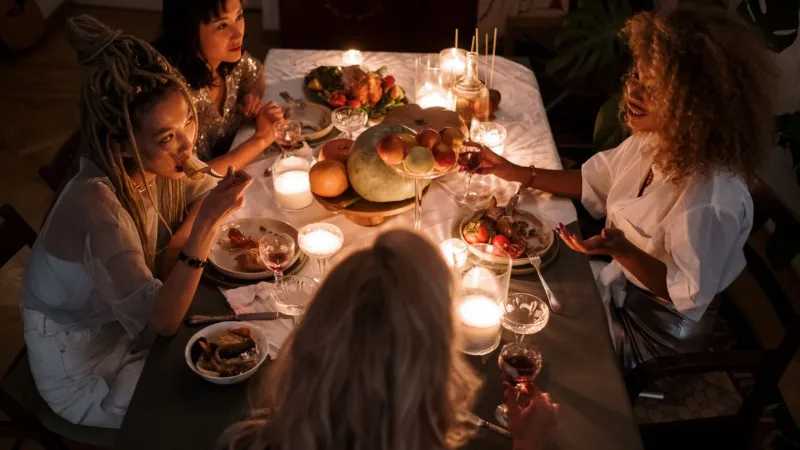
Ask around and many people describe the same scene. A secret address arrives by message a few hours before dinner. A long table stands in someone’s apartment, a chef nobody has heard of yet is at the stove, and a dozen guests who have never met take their seats.
In this version, the supper club is a child of the 2010s, born on social media and raised in kitchens too small for the crowd. It is a lovely picture, and it is only half the story.
The dictionary tells a different tale, and so does history. Long before it meant a hidden table, the phrase described a place with a glowing sign out front and a slab of prime rib on the plate. An honest answer to “what is a supper club” has to hold both images at once: the roadhouse and the living room. It also has to explain why one name ended up covering two very different evenings.
Both traditions share something rare. They turn dinner into a destination rather than a stop along the way. What follows sets them face to face. It covers the legal line that separates a generous host from an unlicensed restaurant, along with practical thinking for anyone tempted to open their own door to paying strangers.
One name, two very different evenings
Start with the definition that still sits in the reference books. In its main dictionary entry, Merriam-Webster defines a supper club as a nightclub. That definition has no secret address and no strangers squeezed around a borrowed table. It describes a venue where dinner and a night out belonged together. That is the traditional meaning, and in the American Midwest it remains very much alive.
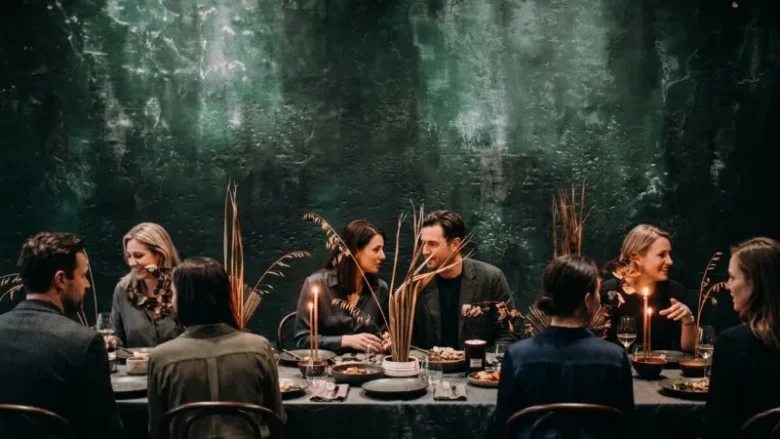
The second meaning arrived much later. According to Wikipedia, a newer use of the term emerged in the 2010s to describe underground restaurants. The same format also goes by home bistros, guerrilla diners, secret restaurants, paladares, puertas cerradas, pop-ups and guestaurants. The list reads like a passport stamped in several languages, with each stamp marking a culture that found its own way to invite strangers in for a meal.
Here, the focus falls mostly on that contemporary sense, with a firm boundary. A supper club in this modern meaning is a dinner people pay to attend, shared mostly with strangers, held in a home or an unexpected venue.
A meal for friends at your place is something else, however elaborate the menu or carefully dressed the table. It may be beautiful. It still lacks the two ingredients that give the modern format its tension and its charm: money changing hands, and faces you have never seen before.
The distinction matters well beyond semantics. Payment turns a guest into a customer, and customers bring rules with them, such as hygiene standards, registration and sometimes licensing. Strangers turn a meal into a small social experiment, with all the risk and electricity that implies. Both facts shape everything that follows, the menu included, and the paperwork too.
The original supper club: prime rib and a whole evening
The classic version has a surprisingly specific origin story. As reported by the Wisconsin Academy of Sciences, Arts & Letters, the Wisconsin Historical Society credits Lawrence Frank with opening the first supper club.
Frank was a Milwaukee native, yet he opened it far from home, in Beverly Hills, California, in the 1920s. By that account, the format did not begin in the state that would later wear it as part of its identity. A Wisconsin man carried it west.
Popular memory tells it differently, and the sources do not fully agree. Some accounts trace supper clubs back to Prohibition-era roadhouses, and Wikipedia notes that some of them had earlier been Prohibition-era roadhouses before becoming dining destinations.
That means some of them, not all. The two stories can coexist: an idea that took shape in California, and a scattering of rural roadhouses ready for reinvention once alcohol was legal again.
A menu without ornament
Frank’s original menu would not survive a modern tasting-menu culture, and that is part of its poetry. It offered prime rib, potatoes, cooked vegetables and Yorkshire pudding. Nothing was foraged or fermented, and nothing arrived on a slate. Its generosity lay in abundance and in the promise of a long night. Surprise was never the point.
Traditional American supper clubs became popular in the 1930s and 1940s as “destination” venues. People did not drop in for a quick bite. They spent the entire evening there, opening with cocktails and closing with after-dinner entertainment. The meal was the spine of a social ritual, and the building itself was designed to hold that ritual for hours.
The license hidden in the name
The story has a bureaucratic layer, too. Some U.S. states and municipalities offer a restricted liquor permit known as a “supper club license.” The Wisconsin Academy piece suggests the term probably dates back to the first liquor licenses issued after Prohibition. Under that kind of license, more than half of an establishment’s sales must come from food.
That ratio says a great deal about what a supper club was meant to be. It was never a bar that happened to serve steak. It was a restaurant where a drink was welcome as a companion. The law encoded a hierarchy, food first, and the culture followed. A century later, the underground version keeps a faint echo of that rule: the plate is the reason you come, and everything else orbits around it.
Architecture for a long night
The buildings tell their own story. Jim Draeger, deputy state historic preservation officer at the Wisconsin Historical Society, describes two architectural themes in the state’s supper clubs.
The first is “programmatic” design: eye-catching, sometimes theatrical architecture meant to be spotted from the road and remembered afterward. The second is what he calls “home-away-from-home,” a vocabulary borrowed from residential styles so that the building looks warm and family-friendly.
Those two impulses, spectacle and domesticity, never really disappeared. The contemporary underground supper club has simply flipped them. The roadside venue dressed itself as a home to feel welcoming. The new version takes a real home and dresses it as a destination.
A living room becomes a dining room for one night, and a studio, a greenhouse or a rooftop becomes a stage. The architecture of hospitality still swings between signaling and sheltering. Anyone who designs interiors will recognize the tension at once.
The underground turn
The second life of the term grew from a simpler premise. Wikipedia describes an underground restaurant, “sometimes known as a supper club or closed door restaurant,” as a social dining restaurant run out of someone’s home.
Such places generally bypass local zoning and health-code regulations, and they usually spread by word of mouth rather than through advertising. That last trait is part of the allure. You hear about it from someone who was there, and the invitation feels like a small piece of insider knowledge.
Why would anyone pay to eat with people they do not know? The answer that keeps coming up is the strangers themselves. Guests cite social interaction with unfamiliar people over food as one of the biggest draws. Restaurants seat you at your own table, separated from everyone else by a polite invisible wall. The underground model removes the wall.
You pass the bread to an architect, argue about a film with a retired sailor, and leave with two new phone numbers. The food opens the conversation, and the conversation keeps the evening going.
For hosts, the motivations are more pragmatic, as the same entry reports. They earn money and experiment with cooking without investing in restaurant property. A home cook with ambition, a chef between projects, or an artist who thinks in flavors can test ideas on real diners without signing a lease.
In that sense, underground dining works as a laboratory as much as a business. It is a place to fail cheaply, adjust quickly and find out whether an idea deserves a permanent address.
A format that travels
The model adapts easily to local culture. In the Netherlands, these venues are known as “huiskamer restaurants,” or living-room restaurants, a name that captures the whole idea in one compound word. In 2013, a members-only version called SecretEATS appeared in Cape Town. Guests requested an invitation online, and the locations stayed undisclosed.
Each variation turns the same dials: how open the door is, how much the host reveals in advance, and how closely the experience imitates a restaurant. Some versions feel like a friend of a friend’s kitchen.
Others behave like a private club with a gatekeeper. Between those poles lies a wide field of formats, and the host’s choice among them carries legal consequences as well as aesthetic ones.
Where generous hospitality meets the law
Legality depends on two variables above all: where you are, and whether the dining is paid and regular. Underground restaurants may be illegal depending on local law. No universal answer exists, and anyone who promises one is guessing. The same evening that is perfectly acceptable as an occasional gathering can become a regulated commercial activity once tickets are sold and the dates start repeating.
France offers a clear example. According to a French food-hygiene reference on home dining status, a home restaurant that serves outside paying customers counts as a full commercial restaurant activity.
The operator must register with the DD(ec)PP, the departmental food-safety authority, before opening, and operating without that registration is illegal. In practical terms, a host in Paris who sells seats to strangers every Saturday is running a restaurant in the eyes of the administration, whatever the décor.
The same guide places home-based food businesses under EU Regulations 178/2002 and 852/2004, often called the “hygiene package.” For commercial restaurants, at least one staff member must hold food hygiene training. The source points to Article L. 233-4 of the Code rural et de la pêche maritime and to Decree 2011-731 of June 24, 2011.
A regular, non-occasional table d’hôte must also be declared to the DD(ec)PP. Because this guide is a secondary summary of the rules, check the current official texts on service-public.fr and Légifrance before opening.
Spain works differently, and the answer depends on local and regional rules. Before charging a single guest in Marbella or Madrid, ask the town hall how activity licensing applies to your space.
Then ask the regional health authority, in Andalusia or the Community of Madrid, how food-handling rules apply to what you plan to serve. Taxes deserve the same care, since income from ticketed dinners is still income.
This is general information, not legal advice. If you are moving beyond the occasional experiment toward regular paid evenings, talk to a lawyer, an accountant or the relevant local authority before the first invitation goes out. A short consultation can help you avoid problems before the first service.
How to host a supper club with intention
Questions about how to host a supper club usually start with the menu. They should start somewhere else. The most memorable underground evenings are designed experiences, with an arc, a space and a cast. The food is the protagonist, but the protagonist needs a set. The following sequence is a general suggestion and leaves room for personal style.
- Settle the legal question first. Decide whether this is a one-off experiment or a recurring project, then check the rules that apply where you live before you announce anything.
- Define the scale. Count how many people your table, your oven and your nerves can genuinely handle, and design for that number rather than for the guest list you would like to have.
- Draw the room. Decide whether you want one long table that forces conversation or several smaller ones that let it breathe. Plan seating so that strangers sit beside strangers, because that friction is the whole point.
- Write a menu that tells a single story. A clear thread, such as a season, a place or a memory, reads better than a parade of techniques.
- Set the terms in advance. Share price, timing, cancellation policy and the questions about allergies and dietary needs before payment, not at the door.
- Choose how guests find you. Word of mouth, a mailing list and an online request form each build a different kind of room.
- Choreograph the evening. Plan the arrival drink, the moment you introduce people, the pace of courses and the signal that the night is ending.
- Treat hygiene as part of the hospitality. Allergen awareness, safe storage and clean surfaces are care made visible, and in some places they are also a legal duty.
One objection comes up often: a home kitchen is not a professional one, so why would anyone pay? Because guests are not paying for the equipment. They are paying for a point of view and for a room they could not otherwise enter. A modest kitchen paired with a clear vision can be more compelling than a sophisticated one with nothing to say. Frank built a whole tradition on roast beef and pudding.
A second objection concerns awkwardness. What if the strangers do not talk? The host’s job is to make silence unlikely. Assigned seats, a shared dish that has to be passed, a short story about each course or a single question printed on the place card can break the ice without turning the evening into a team-building exercise.
Supper club ideas with a point of view
The strongest supper club ideas share one quality: they would not make sense anywhere else. They grow from the host’s world, whether that is a profession, a favorite place, a collection or an obsession. The list below sketches directions. These are starting points rather than recipes, meant to be bent to your own voice.
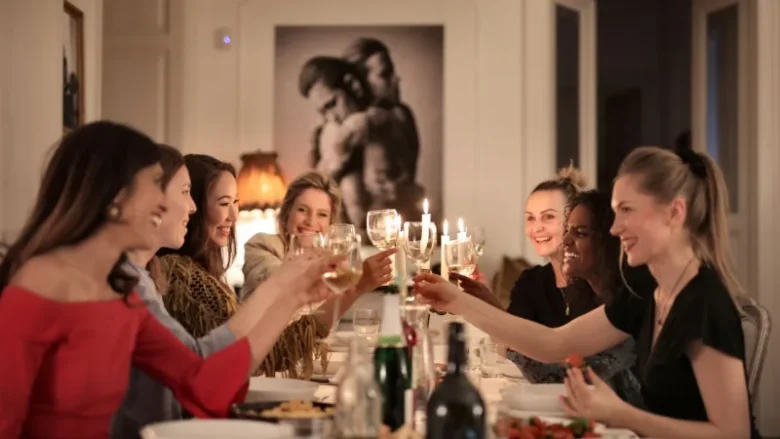
- A single-ingredient evening. Build every course around one product at its peak, so guests leave seeing a tomato, an olive or a citrus fruit differently.
- A reread classic. Take Frank’s 1920s menu of prime rib, potatoes, vegetables and Yorkshire pudding, and rewrite it through a contemporary lens without losing its generosity.
- The studio table. Host in a designer’s workshop or an architect’s office after hours, with the work in progress forming part of the scenery, provided the venue allows it.
- The programmatic doorway. Borrow the roadside spirit with one striking gesture at the entrance, such as a light installation, a hand-painted sign or a scent, so the evening begins before anyone sits down.
- A bilingual table. Introduce each course in two languages and seat guests so that conversations cross linguistic borders.
- A dinner in dialogue with a book or an exhibition. Let the menu respond to a text, a painter or a recent show, and leave a copy or a print on each chair.
- A menu built around a place. Trace a walk, a coastline or a mountain route course by course, with tableware and textures that echo the terrain.
Notice what these approaches avoid: costumes, gimmicks and decoration for its own sake. The aim is coherence. When the space, the food and the guest list all point in the same direction, the evening acquires the kind of emotion people try to describe for weeks afterward and never quite manage to.
The visual side deserves the same rigor as the cooking. Lighting does more than any centerpiece. Mismatched chairs can feel intentional or accidental, depending on whether they share a palette. Table linen, ceramics and glassware can come from local makers, turning the dinner into a quiet showcase of contemporary design. In this format, the interior is part of the menu.
Choosing your format
The right choice depends on what you are looking for, and the criteria differ for guests and hosts.
As a guest, ask yourself what you want from the night. If you crave ritual, warmth and a menu that will not surprise you, the classic supper club still delivers, with its booths, its relish trays and its long tradition.
If you want to be unsettled in the best sense, to share bread with strangers and taste a cook’s experiments, look for underground dining in your city. In practice, that means following chefs, designers and artists whose work you admire, because invitations tend to travel through those circles.
As a host, three questions settle most of the decision. First, how often do you plan to open your door: once, seasonally or every week? Second, are you willing to register, train and comply with food-safety rules where they apply? Third, what do you want the evening to say? An occasional experiment carries different obligations from a weekly ticketed service. A declared home dining project gives you the freedom to grow in the open, and it allows a waiting list to become a reputation.
For brands, studios and galleries, the format offers something advertising rarely does: a few hours of complete attention from people who chose to be there. A collaboration with a respected host can introduce a collection, a material or a building in a way no screen can match.
Credibility depends on the same rules as any other supper club, though. The food has to be good, the space has to be honest, and the commercial message has to sit quietly at the table rather than shout from the head of it.
Beyond the plate
The arc from Lawrence Frank’s Beverly Hills dining room to a Dutch living room or an undisclosed address in Cape Town is not a straight line. It looks more like a loop. A century ago, hospitality built roadside places that pretended to be homes.
Today, homes pretend, for one night, to be places. Both versions answer the same old hunger, for food and for company, and for an evening long enough to change your mind about something.
That loop between past, present and future is exactly what interests us. NEOMANÍA Magazine is an independent, bilingual magazine. Our Living section covers cooking, nature and travel alongside architecture, design, art and fashion, with news on exhibitions, books and trends, exclusive interviews with designers and downloadable issues. For brands that want to reach this conversation, our media kit is available on request.
Subscribe to read every issue and article with the same blend of poetry and emotion, and if you would like to advertise with us, get in touch with our team and we will set a place for your story at the table.