There’s a quiet rebellion brewing. It’s not happening in the streets with loud protests, but in the quiet corners of our lives: in the decision to close the laptop at 5 p.m., in choosing a book over a notification, in realizing that the relentless pursuit of ‘more’ has left us with less of what truly matters.
For years, the prevailing cultural narrative has been one of hustle, of optimization, of climbing a ladder that seems to extend infinitely into the clouds.
We were told that success was measured in sleepless nights, overflowing calendars, and the ability to function on caffeine and ambition alone. But a collective exhaustion has set in, a deep, soul-level fatigue from running a race with no finish line.
This exhaustion has given birth to a powerful counter-narrative. It’s a conscious, deliberate turning away from the glorification of busyness and a turning toward something simpler, more intentional, and profoundly more human.
It’s about redefining success not by the noise you make, but by the peace you cultivate. This isn’t a call for apathy or resignation; it is, in fact, a radical act of self-preservation and personal sovereignty. It’s about asking a fundamental question: What if the goal isn’t to have it all, but to have enough?
This shift is more than a fleeting trend; it’s a deep cultural undercurrent reflecting a change in our collective values. We are beginning to understand that a life rich in experience, connection, and well-being is a truer measure of wealth than a life rich in possessions and accolades.
It’s a movement that champions rest as a right, not a reward, and sees tranquility as a strength, not a weakness. It’s the art of building a life that feels as good on the inside as it might look on the outside, a life designed by you, for you.
The anatomy of a gentler existence
At its core, this philosophy is about intentionality. It’s the practice of consciously choosing peace, ease, and well-being over stress, chaos, and a perpetual sense of obligation.

The popular term for this is the soft life, a concept that has been both celebrated and misunderstood. It’s often mistaken for a life of pure luxury and idleness, a fantasy of endless spa days and brunch dates.
While it can certainly include moments of indulgence, its true essence lies in the reduction of hardship and the cultivation of a low-stress environment in all facets of life.
It’s less about avoiding work and more about avoiding work that drains your soul. It’s less about opulence and more about alignment.
This approach is a direct response to the burnout epidemic that has defined the last decade. The constant pressure to perform, to be “on” 24/7, and to monetize every hobby has created a generation that is successful by traditional metrics but emotionally and spiritually bankrupt.
The pursuit of a gentler path is an attempt to heal from this collective trauma, to reclaim our time, our energy, and our mental health.
It’s about creating systems and boundaries in our lives that protect our inner peace, allowing us to engage with the world from a place of fullness rather than depletion. It’s a proactive design for living, not a passive retreat from it.
Beyond the hashtag: what it truly means
To truly understand this movement, we must look past the curated images on social media. The aesthetic of linen dresses, artisanal bread, and sun-drenched apartments is merely the visual shorthand for a much deeper set of principles.
At its heart, this is a philosophy of subtraction. It’s about identifying and removing the sources of friction, stress, and unnecessary complexity from your life.
This could mean leaving a toxic job, ending a draining relationship, automating bill payments, or simply unsubscribing from emails that clutter your inbox and your mind.
It’s also a philosophy of addition, but not in the material sense. It’s about adding more of what genuinely nourishes you: more time in nature, more meaningful conversations, more creative expression, more moments of quiet reflection.
It’s about prioritizing your well-being not as an afterthought or a weekend luxury, but as the central organizing principle of your life. This requires a profound level of self-awareness.
You have to know what brings you peace and what brings you stress. You have to be honest with yourself about your own needs, desires, and limits, and then have the courage to build a life that honors them, even if it looks different from the lives of those around you. It’s a deeply personal and ongoing process of curation and refinement.
Historical echoes of intentional living
This yearning for a simpler, more meaningful existence is not new. Throughout history, philosophers and thinkers have grappled with the same questions we face today.
The ancient Greek philosopher Epicurus argued that the greatest good was to seek modest pleasures in order to attain a state of tranquility and freedom from fear.
He championed a life of simplicity, friendship, and reflection, a far cry from the hedonism his name is often mistakenly associated with.
Similarly, the Stoics, like Seneca and Marcus Aurelius, taught the importance of focusing only on what is within our control and accepting the rest with equanimity.
Their teachings are a masterclass in cultivating inner peace amidst external chaos, a core tenet of the modern gentle living movement.
Centuries later, the American Transcendentalists like Henry David Thoreau took this idea into the natural world. His retreat to Walden Pond was a deliberate experiment in “living deep and sucking out all the marrow of life,” to reduce his existence to its simplest terms and discover its essential truths.
He sought to prove that a life of purpose and fulfillment was not dependent on societal approval or material wealth. These historical threads show us that the desire to trade complexity for meaning, and hustle for harmony, is a timeless human impulse.
The current movement is simply the 21st-century expression of this ancient wisdom, adapted for an age of digital overload and unprecedented burnout.
The modern catalyst: burnout culture and the digital backlash
So why is this philosophy resonating so deeply right now? The answer lies in the unique pressures of our modern world. The rise of “hustle culture” in the 2010s glorified overwork to a pathological degree.
We were inundated with messages that we should be grinding, side-hustling, and optimizing every second of our day. Sleep was for the weak, and self-care was a hashtag, not a practice.
This, combined with the hyper-connectivity of the digital age, created a perfect storm for widespread burnout. Our work followed us home in our pockets, and our social lives became a performance of curated perfection online.
The global events of the early 2020s acted as a powerful accelerant, forcing a collective pause and a mass re-evaluation of priorities. People began to question the systems they had been participating in.
Was the long commute really necessary? Was the high-stress job worth the toll on their mental health? This period of reflection led to phenomena like the “Great Resignation” and “quiet quitting,” where individuals began to set firm boundaries to reclaim their lives from their jobs.
The movement towards a gentler existence is the natural, proactive evolution of this sentiment. It’s not just about pushing back against what we don’t want; it’s about actively and joyfully building what we do want: a life defined by peace, purpose, and presence.
Crafting your narrative of ease
Adopting a lifestyle of intentional ease is not a one-size-fits-all formula. It’s a creative act, a process of designing a life that is uniquely tailored to your own values, needs, and circumstances.
It begins with a shift in mindset, moving from a reactive state of constantly putting out fires to a proactive state of cultivating a peaceful environment.
This isn’t about achieving a static state of perfection, but about embracing a dynamic process of continuous alignment. It requires introspection, courage, and a willingness to defy conventional expectations.
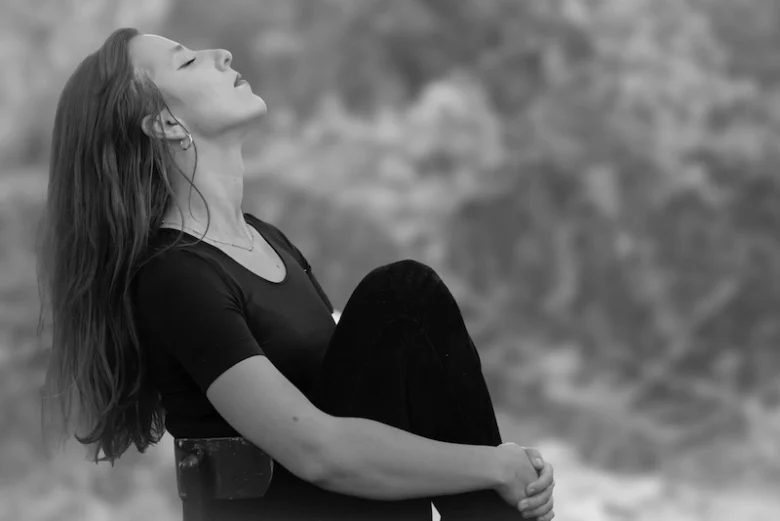
The journey starts with giving yourself permission. Permission to rest without guilt. Permission to say “no” to things that don’t align with your goals. Permission to define success on your own terms.
This internal shift is the most critical first step. From there, you can begin to make small, tangible changes in your daily life that, over time, compound to create a profound sense of well-being.
It’s about building a supportive structure for your life, one that minimizes friction and maximizes flow. Think of yourself as the architect of your own experience, carefully selecting the materials and designing the blueprint for a life that feels like home.
Curating your environment for peace
Your physical environment has a significant impact on your mental and emotional state. A cluttered, chaotic space can contribute to a cluttered, chaotic mind.
Conversely, a calm, organized, and beautiful environment can foster a sense of peace and clarity. Curating your space is a powerful way to support your journey toward a more serene life.
This isn’t about expensive renovations or minimalist austerity; it’s about making your surroundings a source of comfort and inspiration.
Start by decluttering. The act of letting go of things you don’t need or love can be incredibly liberating. It creates physical and mental space. Pay attention to sensory inputs.
How does your home sound, smell, and feel? Consider incorporating elements that soothe your senses, such as soft lighting, natural textures, calming scents from essential oils, or a playlist of gentle music.
Bringing nature indoors is another powerful technique. Plants not only purify the air but also have a documented calming effect on our nervous systems.
The goal is to create a sanctuary, a place where you can truly relax and recharge, a physical manifestation of the inner peace you are cultivating.
- Elements of a serene space:
- Natural light: Maximize sunlight wherever possible. It boosts mood and regulates circadian rhythms.
- Order and simplicity: Designate a home for every item. A clear space supports a clear mind.
- Comforting textures: Incorporate soft blankets, plush rugs, and natural fibers like linen and cotton.
- Personal touches: Surround yourself with objects that hold meaning and bring you joy, like art, photos, or cherished books.
- A designated “calm zone”: Create a small corner with a comfortable chair, a plant, and good lighting, dedicated solely to relaxation, reading, or meditation.
The currency of time and attention
In our hyper-connected world, the most valuable resources are no longer just financial; they are our time and our attention.
The battle for our focus is relentless, with every app, ad, and notification vying for a piece of our cognitive real estate.
Reclaiming control over your time and attention is perhaps the most radical act in the pursuit of a gentler life. It means being fiercely protective of your calendar and your mental bandwidth.
This starts with setting boundaries. Learn the power of a graceful “no.” You do not have to accept every invitation, take on every project, or respond to every message immediately.
Time blocking can be a transformative practice: intentionally scheduling blocks of time for deep work, rest, and play. This prevents your day from being dictated by the whims of others and the tyranny of the urgent.
A digital detox, even a small one, can also work wonders. Designate tech-free hours or even a full day each week to disconnect from screens and reconnect with yourself and the world around you.
By treating your attention as the precious, finite currency it is, you begin to invest it only in things that truly matter, leading to a richer, more focused, and far more peaceful existence.
This is the kind of deep-dive analysis we are committed to at Neomania Magazine, exploring the cultural shifts that redefine our modern lives.
Financial frameworks for a less stressful life
Financial stress is one of the biggest obstacles to a peaceful existence. It’s difficult to feel serene when you’re worried about paying bills or saving for the future.
Therefore, creating a financial framework that supports a life of ease is not just practical; it’s essential. This isn’t about becoming wealthy in the traditional sense.
It’s about achieving financial stability and freedom by aligning your money with your values. It’s about defining what “enough” means to you, rather than endlessly chasing more.
This process begins with mindfulness. Track your spending not to judge yourself, but to understand where your money is actually going.
Are you spending on things that align with your vision of a gentle life, or are you spending out of habit, boredom, or social pressure? Create a budget that prioritizes your well-being.
This might mean allocating more money to experiences over things, building a robust emergency fund to create a sense of security, or investing in services that save you time and energy, like a meal delivery service or a house cleaner.
Automating your savings and bill payments can also dramatically reduce mental load. The goal is to make money a tool that serves your life, not a master that dictates it.
By building a solid financial foundation, you create the freedom and security to make choices from a place of desire, not desperation.
The aesthetic and its shadow
Like any cultural movement, the pursuit of a gentler life has a complex and sometimes problematic side, particularly in how it is portrayed online.
The aesthetic that has come to represent this lifestyle—a world of neutral tones, minimalist interiors, and slow-motion videos of pouring tea—is undeniably beautiful.
It’s calming, aspirational, and visually coherent. However, it’s crucial to distinguish this curated aesthetic from the underlying philosophy.
The danger lies in mistaking the picture for the practice, believing that you need a certain look or a specific set of products to achieve inner peace.
This visual language can be both an inspiration and a trap. It can provide a beautiful blueprint for creating a serene environment, but it can also set an impossibly high standard, leading to feelings of inadequacy if one’s own life doesn’t match the filtered perfection seen on screen. The true work of building a life of ease is internal.

It’s about setting boundaries, managing your energy, and cultivating self-compassion. These things are invisible and cannot be captured in an Instagram post.
It’s vital to engage with the aesthetic critically, drawing inspiration from it without letting it become another form of pressure or a new standard against which to judge ourselves.
The visual language of tranquility on social media
The online aesthetic of the soft life is a masterclass in visual branding. It relies on a specific set of codes to communicate peace, control, and effortless elegance.
The color palette is almost always muted: beige, cream, sage green, and soft grays dominate. Natural materials are key, with an emphasis on wood, linen, ceramic, and stone.
Lighting is soft and diffuse, often capturing the “golden hour” glow of early morning or late afternoon. The content itself often focuses on slow, deliberate rituals: the meticulous preparation of a pour-over coffee, the arranging of fresh flowers, the journaling in a pristine notebook.
This visual language is powerful because it taps into a deep-seated desire for order and calm in a chaotic world. It presents a fantasy of a life where everything is clean, beautiful, and under control.
The “effortless” look is, of course, the result of significant effort in styling, lighting, and editing. Recognizing this artifice is key.
The goal isn’t to perfectly replicate these images, but to understand the feeling they are trying to evoke—serenity, mindfulness, appreciation for simple beauty—and find ways to cultivate that feeling in your own, real, and sometimes messy life.
The privilege of peace: an honest conversation
One of the most important critiques of this movement is that it often ignores the role of privilege. The ability to quit a stressful job, to afford organic groceries, or to spend afternoons reading in a sun-drenched nook is not accessible to everyone.
For a single parent working multiple jobs, a person struggling with systemic inequality, or someone facing a health crisis, the idea of a “soft” existence can feel like a distant and unattainable fantasy. To ignore this reality is to render the conversation incomplete and exclusive.
However, it would also be a mistake to dismiss the entire philosophy as a product of privilege. While the aesthetic may be exclusive, the core principles can be adapted and applied across different socioeconomic circumstances.
Setting a boundary can be as simple as not answering a non-urgent work email after hours. Finding a moment of peace might be five minutes of deep breathing on a bus commute, not a week-long yoga retreat.
Cultivating ease could mean simplifying a weekly meal plan to reduce decision fatigue, not hiring a private chef. The challenge is to decouple the principles from the privileged aesthetic.
The universal truth is that everyone, regardless of their circumstances, deserves moments of peace and has the right to reduce unnecessary hardship in their life, however that may look for them. The goal is to democratize the concept of well-being.
When self-care becomes another pressure
There is a subtle but significant danger in the way this lifestyle is sometimes presented: the risk of turning self-care into another item on an ever-expanding to-do list.
The pressure to have the “perfect” morning routine, to meditate daily, to journal consistently, and to maintain a perfectly serene home can become a new source of stress.
When the pursuit of ease starts to feel like hard work, something has gone wrong. It can become another form of performative wellness, where we are more concerned with looking like we are at peace than with actually feeling it.
The antidote to this is self-compassion and flexibility. A truly gentle life has room for messiness, for bad days, for choosing to watch trashy TV instead of doing yoga.
It’s about listening to your body and mind and giving them what they truly need in the moment, not what a wellness influencer says you should need.
If your elaborate 10-step morning routine is causing you to wake up stressed, it’s not serving you. True ease is not about rigid adherence to a set of rules; it’s about creating a flexible, supportive container for your life that allows you to thrive.
- Red flags: when ease becomes effort
- Guilt: Feeling guilty when you miss a “self-care” activity or can’t maintain a perfect routine.
- Comparison: Constantly comparing your life or your space to idealized versions online and feeling inadequate.
- Performativity: Choosing activities based on how they will look to others rather than how they make you feel.
- Rigidity: Becoming stressed or anxious if your carefully planned schedule is disrupted.
- Expense: Believing you need to buy specific products or services to achieve a state of well-being.
This journey is not about achieving a flawless, aesthetically pleasing state of being. It’s a messy, beautiful, and deeply personal process of unlearning the toxic narratives of hustle and relentless striving.
It is the brave and continuous act of choosing a different path, one that leads not to the top of a mythical ladder, but to a profound and sustainable sense of inner peace. It is about crafting a narrative for your life that feels authentic, nourishing, and true.
These are the conversations that move us, the stories that challenge our perspectives and inspire new ways of being. This exploration of a cultural shift is more than just an analysis; it’s an invitation to reflect on the very design of your own life.
If this narrative transported you, if it sparked a new question or offered a moment of clarity, then you understand the essence of what we do. We believe in content that does more than inform—it resonates.
To continue this journey with us and discover more stories that question, provoke, and inspire, we invite you to become a part of the community at Neomania Magazine.