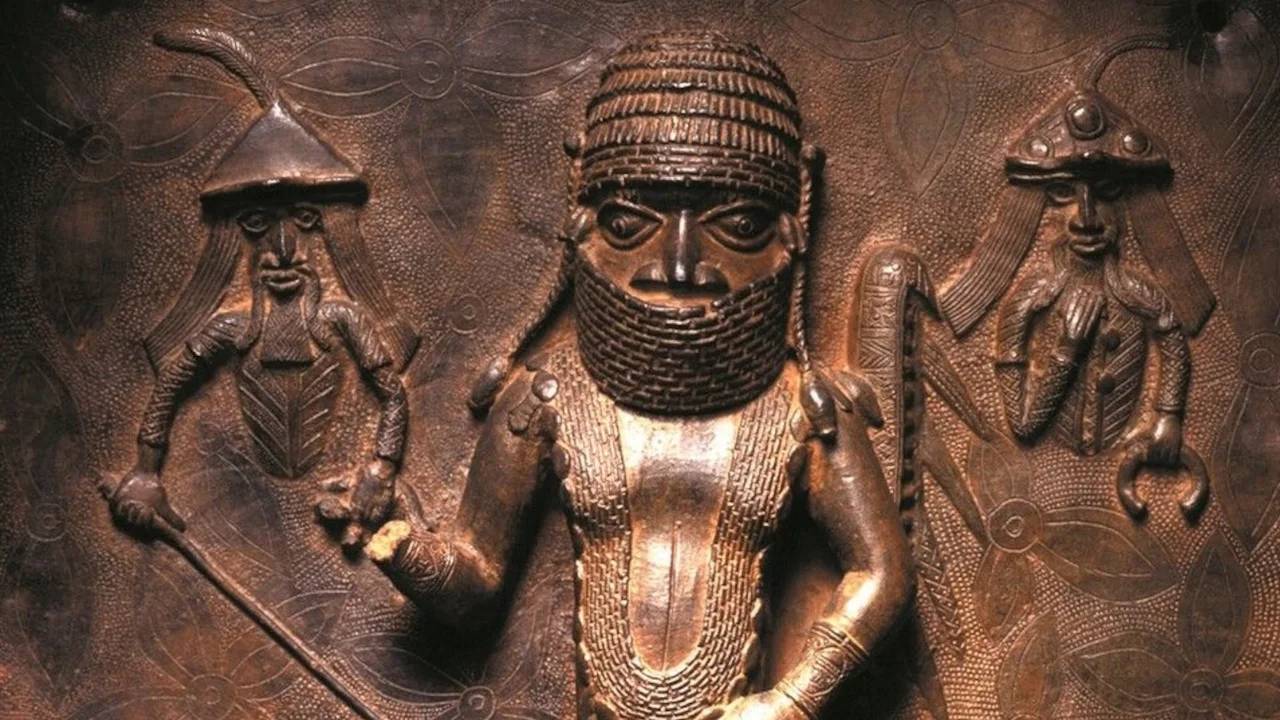
The Benin bronzes are among the most beautiful artistic expressions on the entire African continent. A small portion has been returned from museums to Nigeria in the last few years.
The Benin Bronzes: a heating debate
Originating from the Kingdom of Benin, in present-day Nigeria, these bronze sculptures and plaques demonstrate exceptional technical mastery.
Created from the 13th century onward using the lost-wax casting technique, they often depict kings, “Obas”, dignitaries, ceremonial scenes or symbolic motifs that reflect the social and religious organization of the kingdom.
The history of the Benin bronzes is inextricably linked to colonial times in Africa.
In 1897, following a diplomatic conflict with King Ovonramwen Nogbaisi, the British Empire ordered reprisals for the deaths of several officers.
British troops launched a punitive expedition against the Kingdom of Benin. The city and the palace were looted and burned.
Thousands of works of art were stolen from the royal palace.
The monarch was exiled to an island.
This was a cultural plundering perpetrated by an empire to eliminate a kingdom that had become inconvenient.
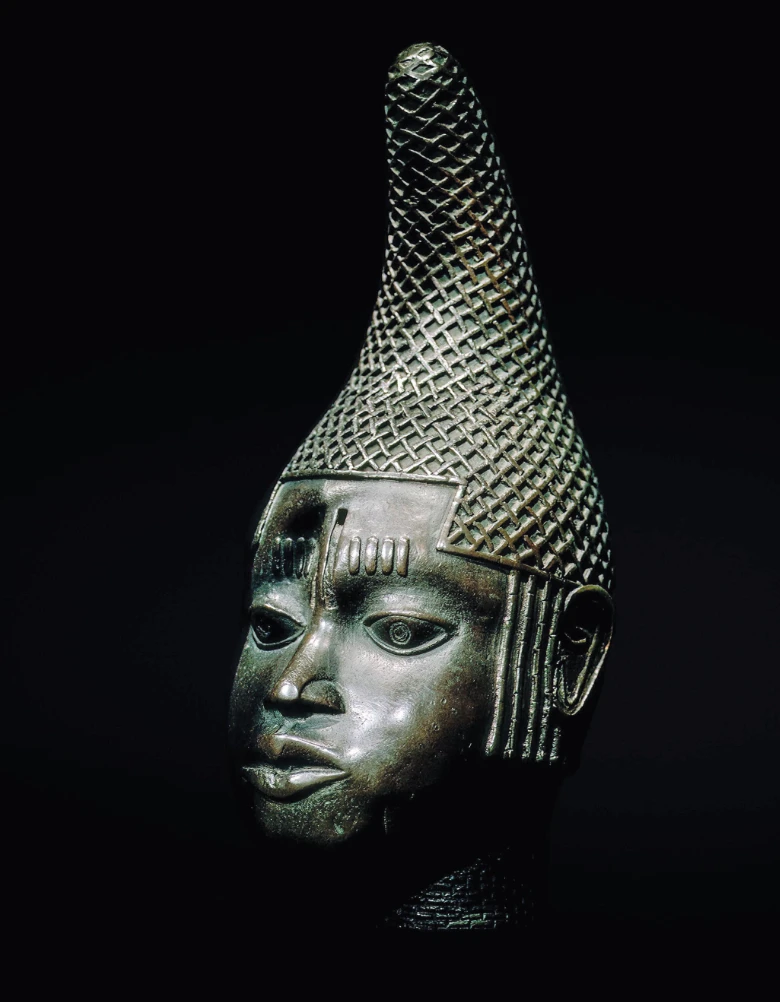
Thousands of objects, plaques, and bronze sculptures were confiscated and then sold to art dealers or acquired directly by European and American museums and collectors.
This is how masterpieces can be found in London, Paris, New York and even in Sydney, Australia.
Several continents hold Benin bronzes, some of them priceless.
The British Museum possesses the world’s largest collection, with 900 pieces. It stubbornly refuses to return them, despite repeated protests from activists who accuse it of holding stolen property.
The Ethnological Museum of Berlin possesses more than 500 bronzes, the Weltmuseum in Vienna 200 and the Leiden Museum (Netherlands) more than 130 pieces.
A 2020 study lists 161 institutions holding these bronzes in three continents.
Among them are the British Museum in London, Metropolitan Museum in New York, Art Institute of Chicago, Los Angeles County Museum, Victoria & Albert Museum in London, Musée du Quai Branly in Paris, Vatican Museums in Rome, Ethnological Museum of Berlin, Sydney Museum in Australia, Osaka Museum in Japan, and Louvre Abu Dhabi in the United Arab Emirates.
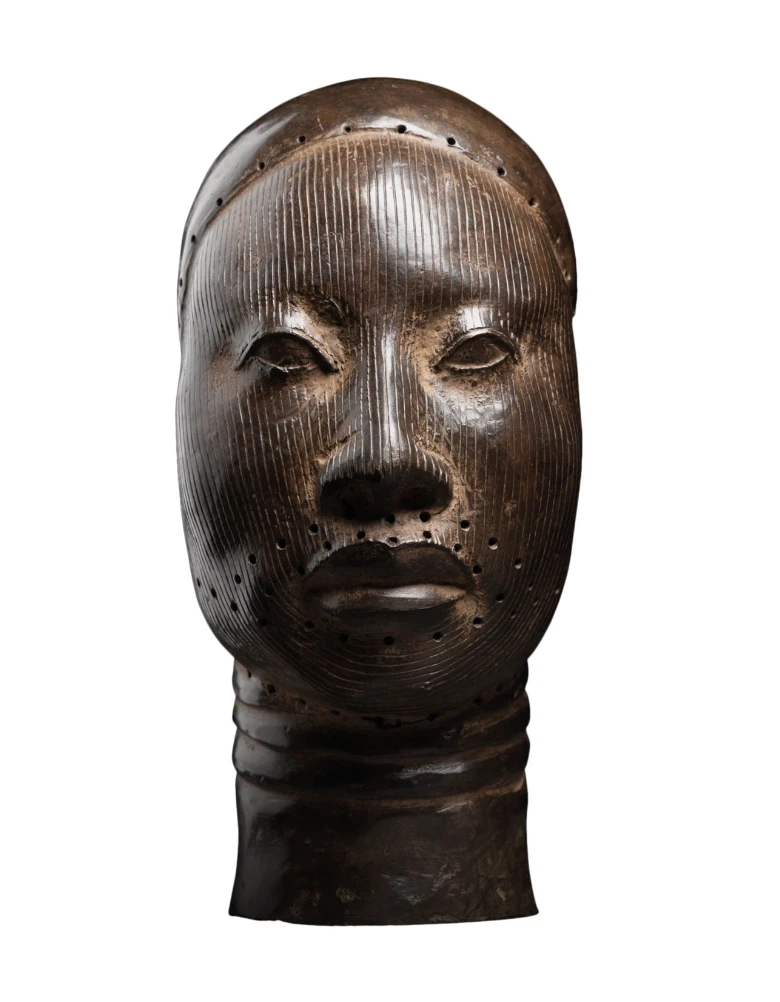
There are also 45 other British and 38 American institutions. And these are just a few examples among the many museums, galleries and private collections worldwide.
Since the beginning of the 21st century, efforts to recover these works of art have intensified.
African researchers, activists, and governments are calling for their restitution.
Several museums have undertaken inventories and, in some cases, they have proceeded with restitutions.
Germany has returned several bronzes to Nigeria and other institutions have done the same after reviewing their acquisition policies. In France and the United Kingdom, the debate continues without a resolution.
This movement, still developing, marks an important step in the recognition of colonial injustices and the restitution of a precious cultural heritage.
Nigeria has been demanding the return of Benin bronzes since 1960, but it is only recently that these demands have increased significantly.
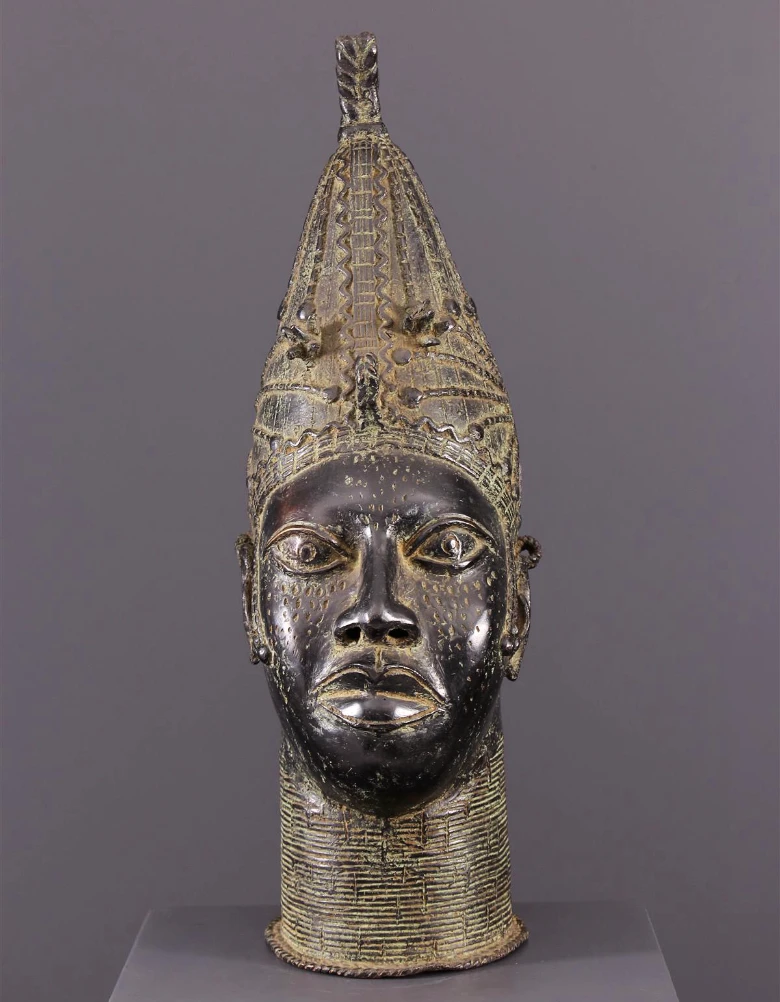
The first two institutions to commit to return looted Benin bronzes were two British universities. Later some museum followed in the repatriation campaign.
In 2022, the Glasgow Museum (UK), Smithsonian Museum in Washington and Rhode Island Museum (USA) repatriated Beninese works from their collections. The German government has been the most generous, transferring ownership of 1,100 bronzes to Nigeria.
The debate is more heated than ever, as the current King of Benin, grandson of the former Oba who reigned at the time of the looting, claims ownership of all the artworks.
He opposes either the restitution being entrusted to the museum created for this purpose in Benin or the transfer of the works to the Nigerian state. This situation further complicates an already complex and sensitive issue.
Created in 2022, Digital Benin is the first digital platform to compile and provide detailed information on each piece.
Available online, Digital Benin catalog is the result of a collaboration with 131 museums and presents information on more than 5,240 works of art.
The initiative was launched by the Rothenbaum Museum of Culture and Art in Hamburg.
Currently, these works are scattered among Western institutions, from the British Museum in London to the Brooklyn Museum in New York.
Fortunately, visitors to the digital catalog of Benin can access high-resolution images, detailed descriptions, and the location of each piece.
An interactive map and a collection of oral testimonies from Beninese artisans and elders offer a deeper understanding of the historical context of this art.
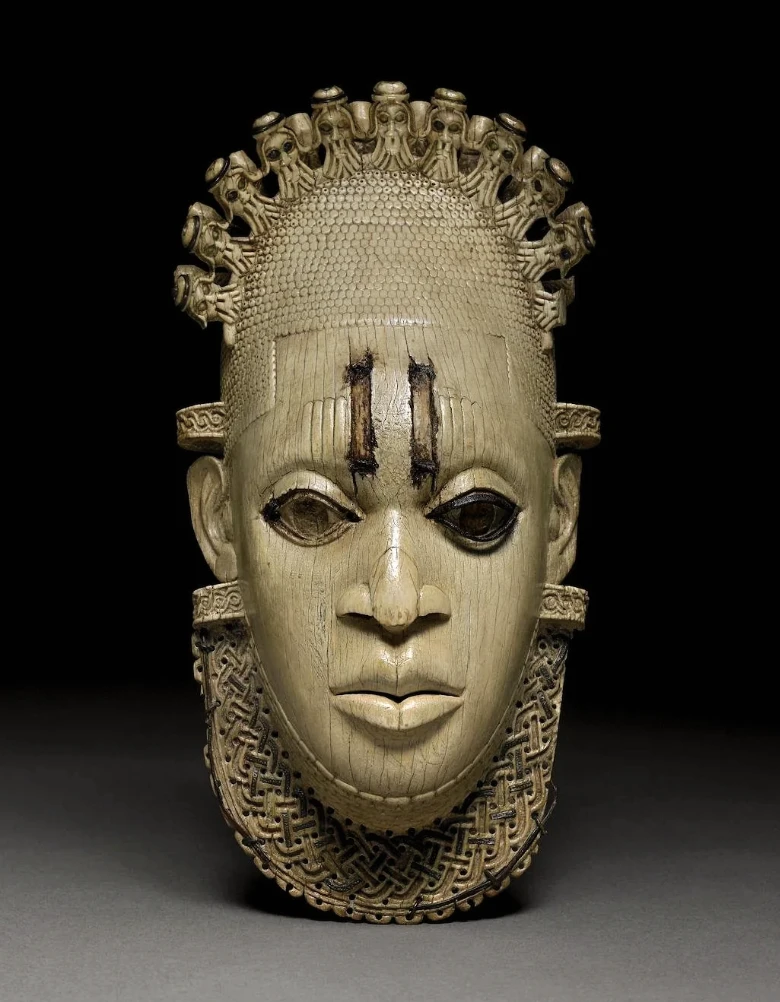
Beyond their aesthetic beauty, Benin bronzes are historical documents. They illustrate the diplomatic relations, court rituals, and political structures of a once powerful and sophisticated kingdom.
Evidence of the topic’s relevance is the number of books published on these ancient African art:
- 1932 — Fine Benin Bronzes and Ivory Carvings and West African Native Wood Carvings and Curios; Foster & Son
- 1935 — Bronzes and Ivories from the Old Kingdom of Benin; Knoedler & Co.
- 1934 — A Short History of Benin — Jacob U. Egharevba; Church Missionary Society Press
- 1963 — Nigerian Images — William Buller Fagg; Lund Humphries
- 1970s ~ 1980s — Various museum catalogues
- 1987 — Royal Benin Art from the National Museum of African Art — Bryna Freyer; Smithsonian Books, National Museum of African Art
- 1992 — Royal Art of Benin: Perls Collection in The Metropolitan Museum of Art — Kate Ezra; Abrams
- 2000s — Scholarly collections & catalogues) — Several large exhibition publications
- 2007 — Bénin: Cinq siècles d’art royal – Barbara Plankensteiner; Snoeck
- 2010 — The Art of Benin — Nigel Barley; British Museum Press
- 2020 — The Benin Bronzes, Colonial Violence and Cultural Restitution — Dan Hicks; Pluto Press
- 2021 — Blood and Bronze: The British Empire and the Sack of Benin — Paddy Docherty; Hurst Publishers
- 2022 — Loot: Britain and the Benin Bronzes — Barnaby Phillips; Oneworld Publications
- 2022–2023 Reports & collected stories — Various academic journal special issues and museum reports. The New Yorker
- 2024 — Returning the Benin Bronzes: Horniman’s Restitution — Nick Merriman; Springer Nature / Palgrave
- 2020 … 2025 — Collection surveys & short museum guides by British Museum, Quai Branly, Met, Horniman, Staatliche Museen…