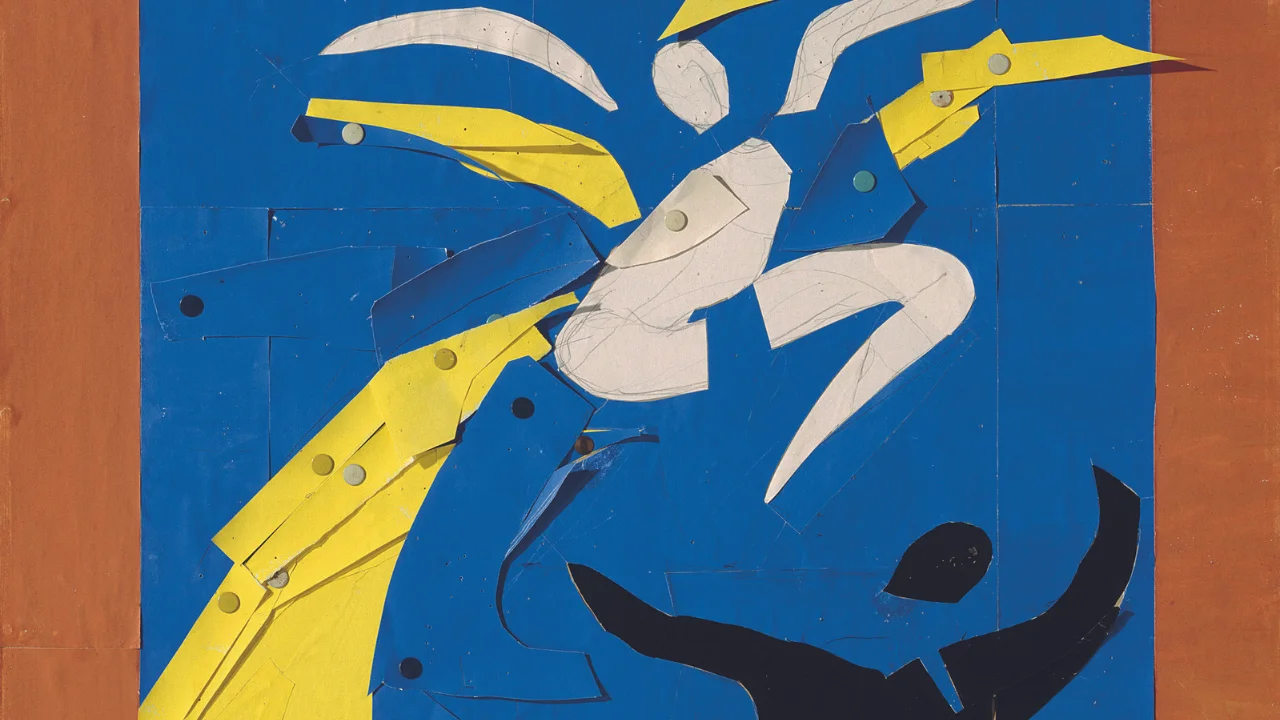
Paris celebrates a well-deserved tribute to Matisse at his most brilliant, dedicating a major exhibition to his final years, when the artist took a radical turn, reinventing his art. Far from being his twilight, it represents a high point in 20th-century art.
At 72, weakened by illness, Henri Matisse (1869–1954) could have abandoned his brushes. But he did the opposite: he chose to create a new art, from 1941 until his death in Nice.
Bedridden and suffering from insomnia, Henri leaped into a new dimension, fixing colourful forms to the walls of his room like butterfly wings.
This extraordinary metamorphosis is the subject of “Matisse, 1941–1954” at Grand Palais in collaboration with Centre Pompidou (March 24–July 26, 2026). It is the most ambitious event dedicated to Matisse in France, featuring 230 works from museums and private collections worldwide.
A leader of Fauvism, he dedicated his life to seeking harmony between drawing and colour.
During World War II, he left his native Paris and separated from his wife, Amélie, to settle in Nice.
Lidia Delektorskaya, a Siberian migrant, became the key woman in his life from then on.
He was 63 and she was 22. She went from being his assistant to his muse. It was a complex relationship that lasted 22 years.
Lidia remained by his side throughout his life despite tensions with Matisse’s wife.
In 1941, he survived intestinal surgery that left him severely weakened. Lidia cared for him, but he never again painted standing up. For the artist, there was a before and after.
He wrote to his son Pierre:
“My operation was extraordinary on a mental level. It balanced my mind and clarified my ideas. It’s like the dawn of a second life, but I don’t think it will last long”
He set up his studio in former Hotel Regina, on the shores of the Mediterranean.
Free and detached from the past, Matisse reinvented himself, embarking on a new stage, a brief resurgence into life. He felt his days were numbered and created countless sketches.
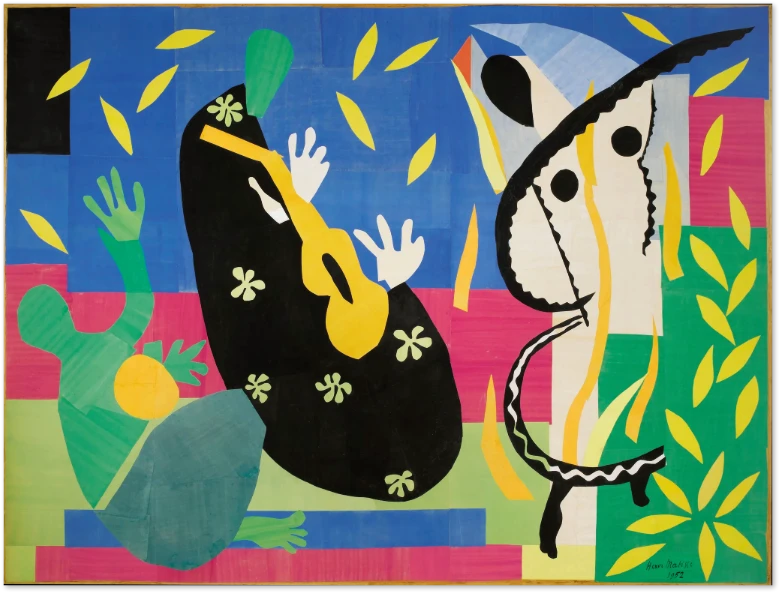
With his new technique (paper coloured with gouache, cut with scissors, assembled and glued), he managed to sculpt the raw material with colour and preserve the freshness of his youthful creativity.
“I draw with scissors”
He invented découpages (cut-out collages).
Matisse achieved a unique synthesis of line and colour: the fundamental tension throughout his artistic life.
Unable to paint, he used scissors as his only brushes. Standing was painful, but he had never been so productive.
Tériade publishing proposed that he create a manuscript of modern paintings. He chose jazz music and dance as his subject and conceived his works in watercolour and gouache.
According to Claudine Grammont, Centre Pompidou expert, decoupage was not a temporary solution imposed by his illness, but rather his crowning achievement.
“There is no break between my early paintings and my cut‑outs”
His Jazz album was established as his first masterpiece created using this process (1943).
Formats vary: charcoal and ink drawings of extreme spontaneity. Pierre Schneider defined them as new masterpieces of Fauvism.
Decoupage, cut‑out gouache, became a creation in itself, a new form of mobile art, alive and ethereal.
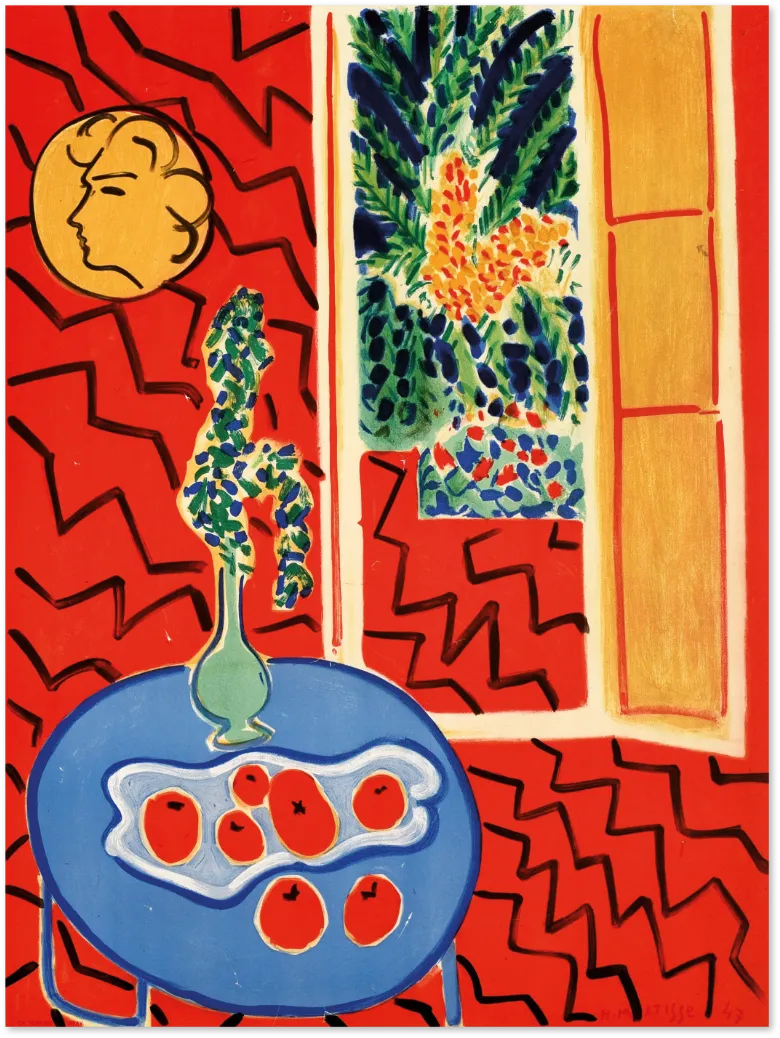
The exhibition brings together a treasure trove of masterpieces and unprecedented loans from Barnes Foundation (Philadelphia), Pinacoteca Agnelli (Turin), National Gallery and Phillips Collection (Washington).
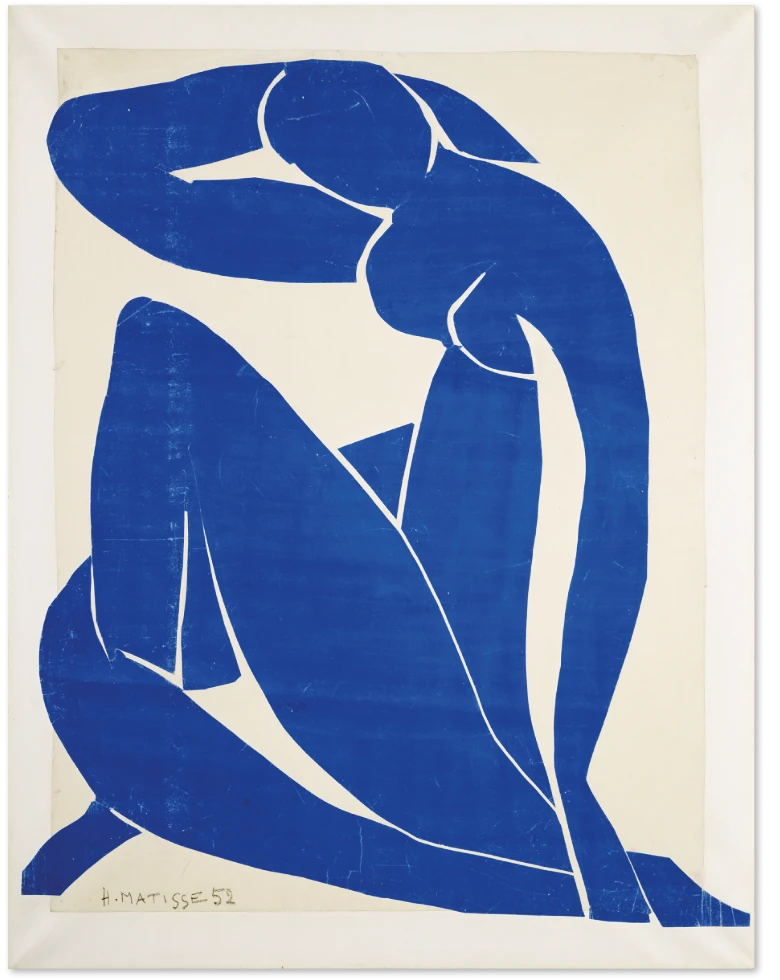
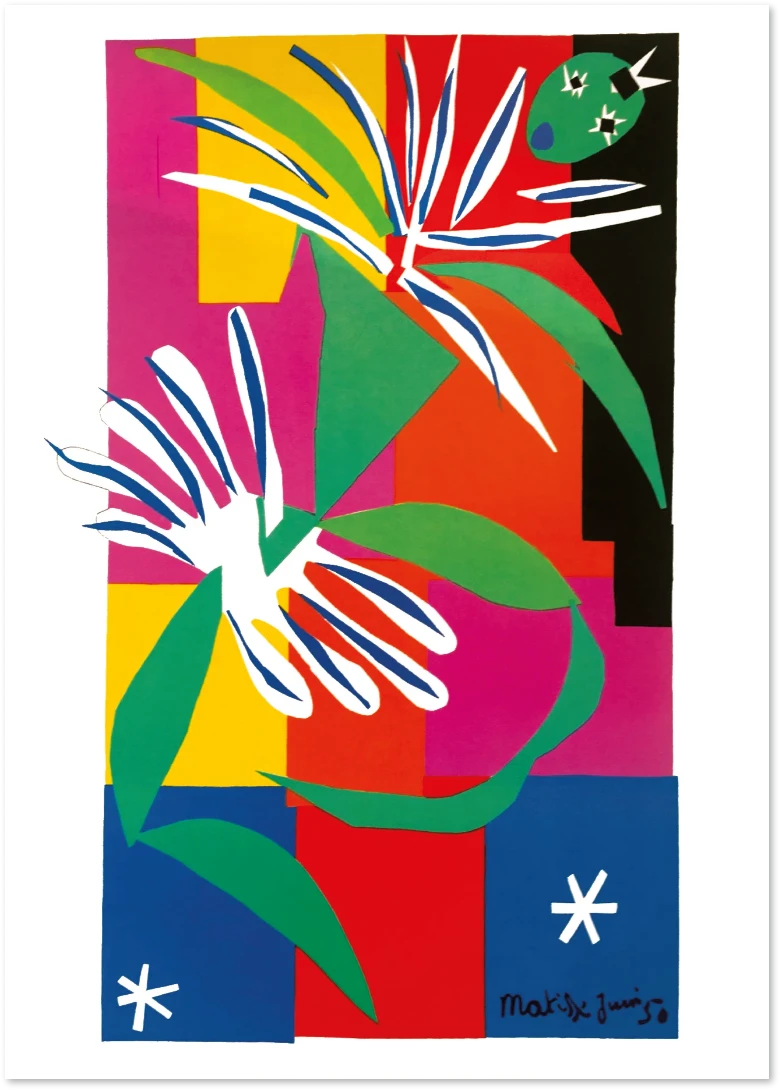
Blue Nudes and Creole Dancer are reunited for the first time. Another premiere: the stained-glass window The Vine, donated to Centre Pompidou.
At 72, after being on the brink of death, Matisse began a second life with Lydia, reinventing his art with new techniques in an exuberant, groundbreaking style.
After fifty years of creation, this flourishing allowed him to develop a method of serial drawing, published in Drawings, Themes and Variations (1943) with text by Louis Aragon.
They are 158 drawings exploring drawing methods, in charcoal and variations with pencil or ink.
Matisse worked on his model, Lidia, very consciously, learning her by heart.
His works unleash an explosion of energy with a single stroke, without hesitation. He described them as cinema of sensations. Each sequence was finished without corrections.
Matisse created decoupages for Dance in Philadelphia (1933) and to illustrate magazine covers (Cahiers d’Art, Verve) but he sublimated in Jazz.
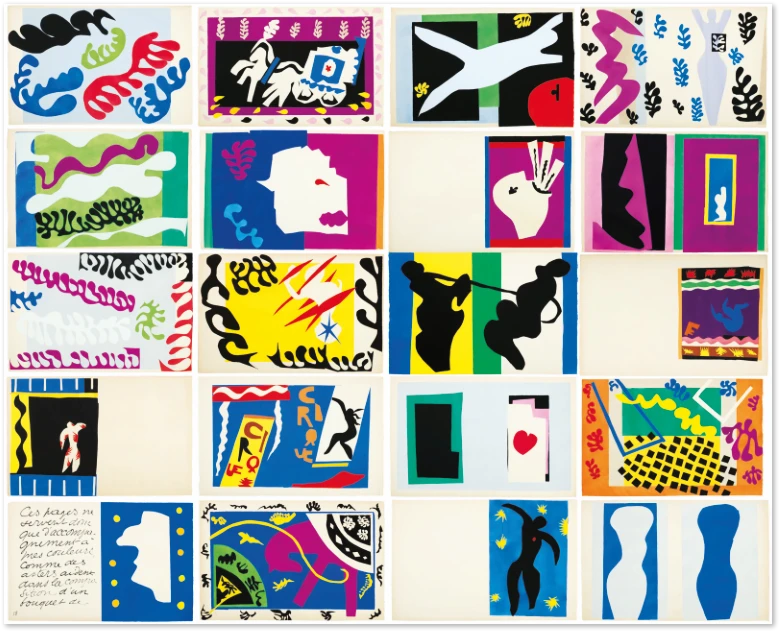
The Grand Palais presents plates from the album, compositions in planes of pure color from which emerge, memories of the circus, travels and folk tales.
The violence of war is present in Fall of Icarus with yellow suns, stars, explosions and projectiles.
The cut‑outs ceased to be simple intermediate steps in his creation and became an autonomous means of expression.
They were perfect for books and purely decorative projects such as tapestries, stained glass, ceramics, fabrics…
Matisse perfected this technique in the Chapel of the Rosary in Vence (1950). Conceived as a total work of art, it encompassed furniture, liturgical vestments, iconography, stained glass, ceramics, chasubles… in perfect harmony.
He painted large-format: Memory of Oceania, King’s Sorrow…
To express inner light, the artist returned in 1948 to his former studio in Nice.
Its dimensions allowed him to work to scale and create enormous sketches for stained glass windows directly on the walls, gluing cut‑out papers.
Pale blue panes display an explosion of coloured algae against a geometric background.
A garden behind a colonnade allows us a glimpse of the sky.
This Tree of Life is inspired by his own life experience: the rebirth of a vibrant life after the shadows of illness.
To break free from the past and ascend to the realm of paradise, it is necessary to sever all ties.
Pablo Picasso, his eternal friend and rival, felt a love‑hate relationship with Henri that culminated in profound admiration. Before dying, he confessed:
“There is only Matisse”
Nothing can inspire the intensity of life like these absolutely groundbreaking creations.
An elderly and ailing Matisse was reborn in the twilight of his life to invent a new art, entirely unique and innovative, a source of inspiration for future generations to this day.