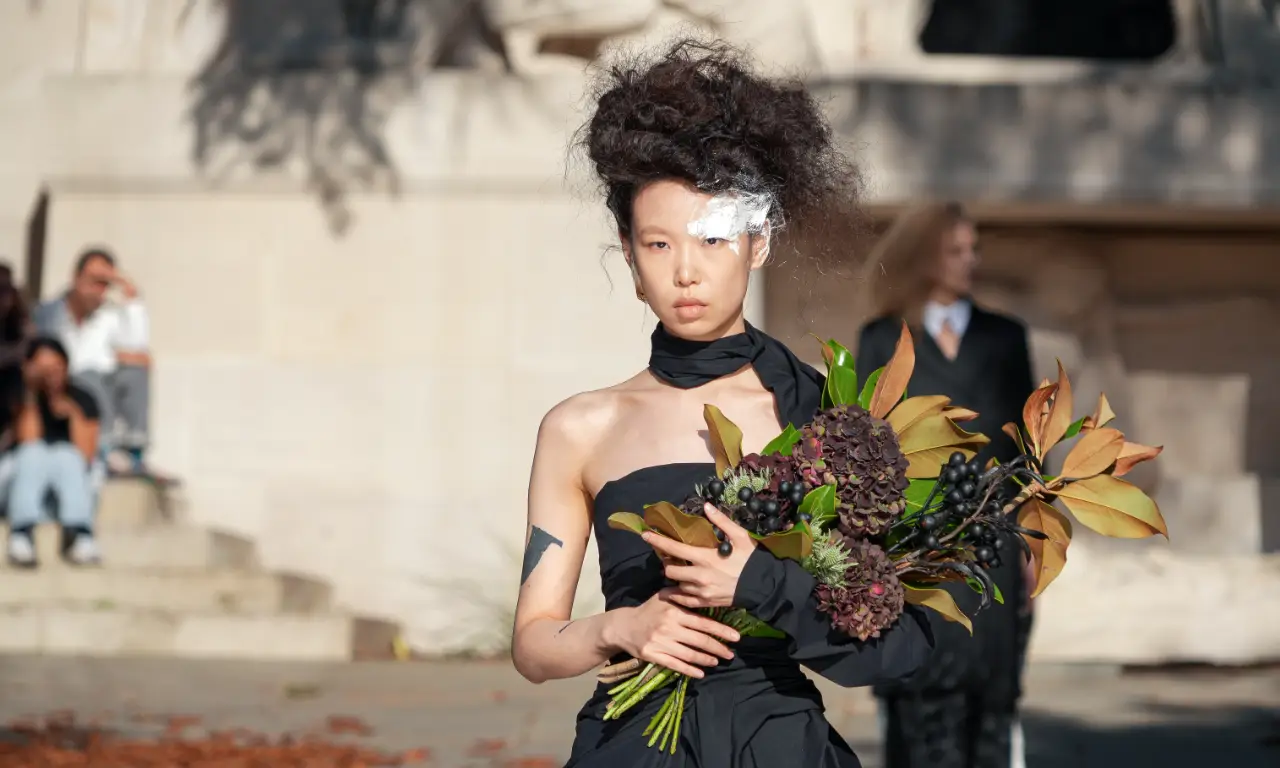
Mossi Traoré returned to Père-Lachaise, where he had already presented a collection fourteen years earlier, with a spring/summer 2027 show that changes the way he thinks about his label.
Dried hydrangeas, magnolia leaves and black berries. A model carried them in her arms, as if about to lay them on a grave. Her black strapless dress, draped, reached the floor; a scarf was knotted at her neck, and a smudge of white make-up sat over one eye. The paving stones gleamed beneath a wet sheet of plastic, with dry leaves heaped along the edges. The soundtrack was made up of the sounds of the animals that live among the graves, recorded on site.
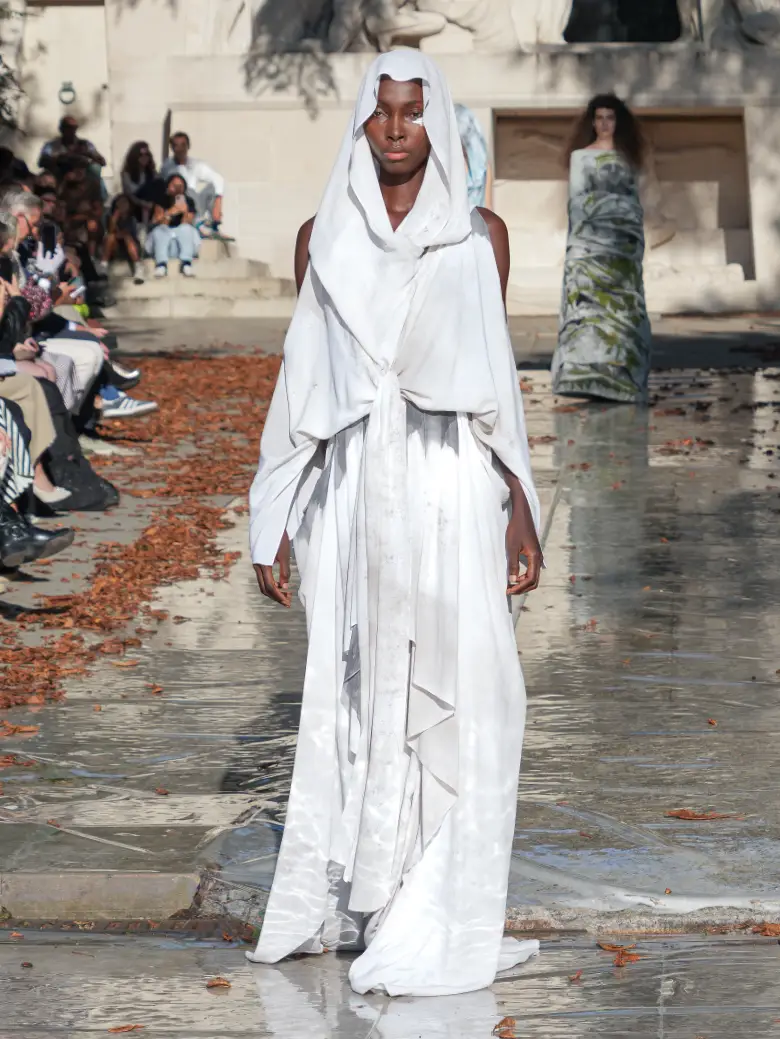
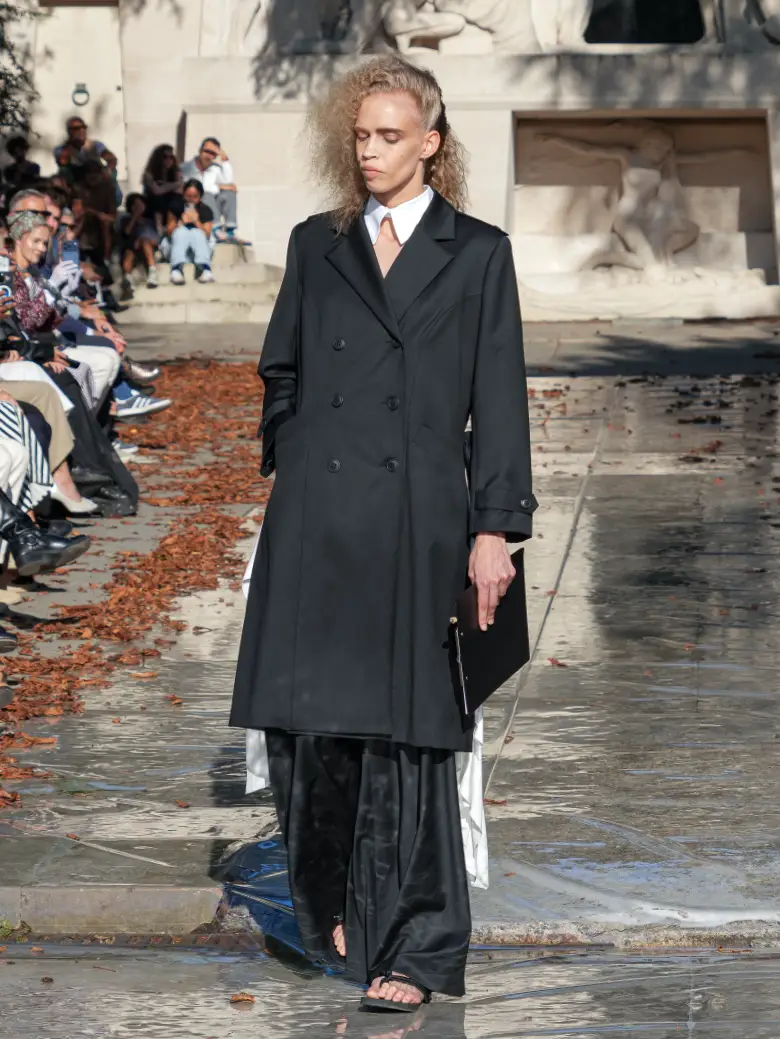
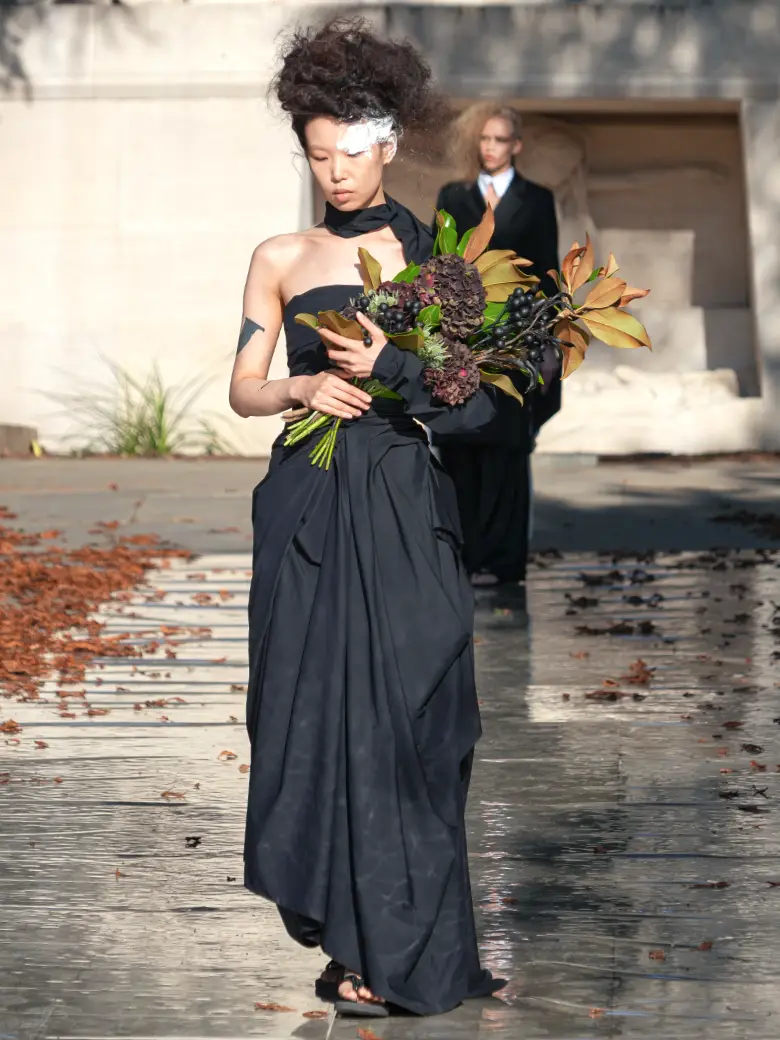
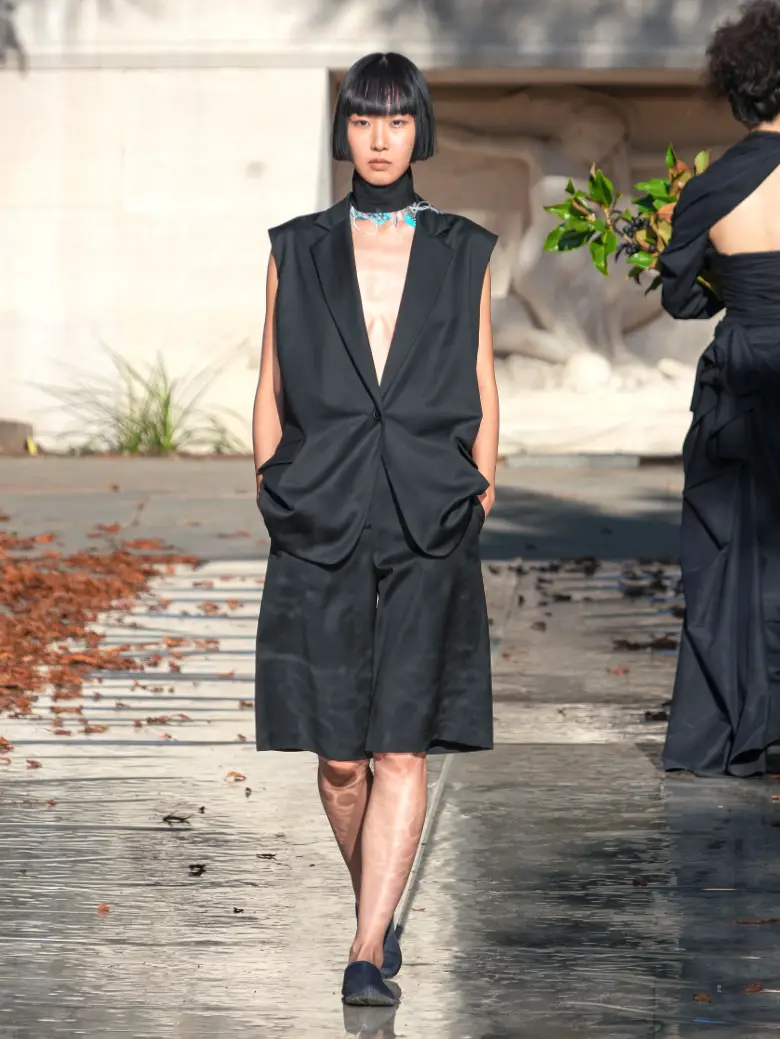
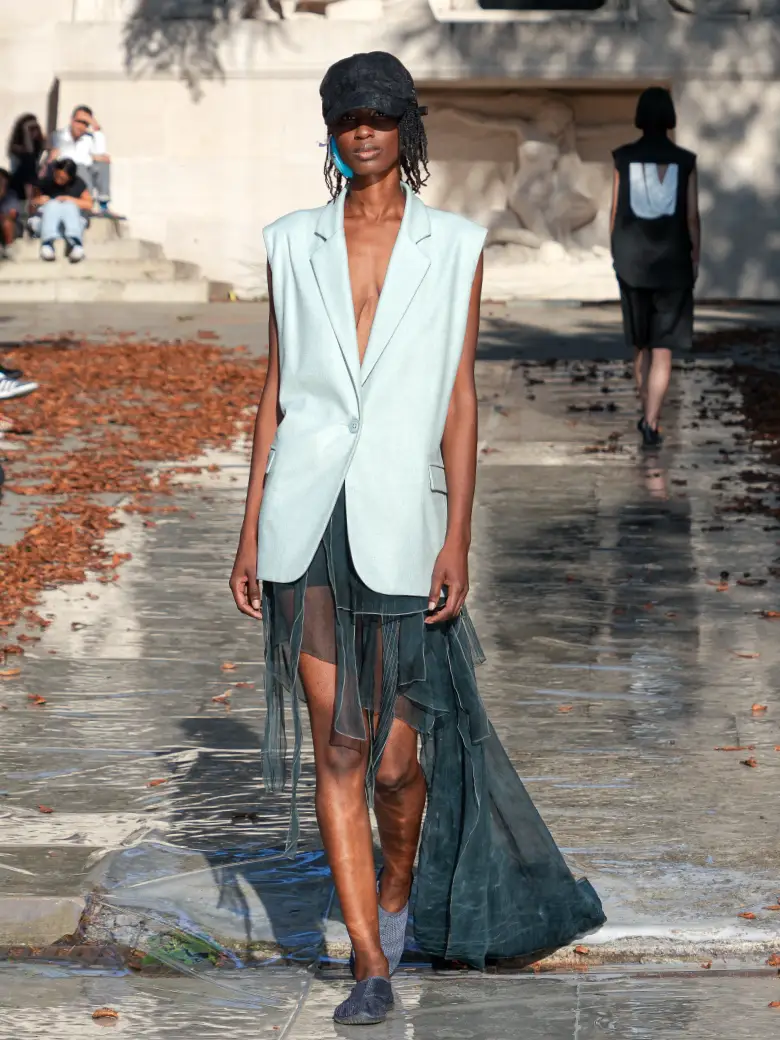
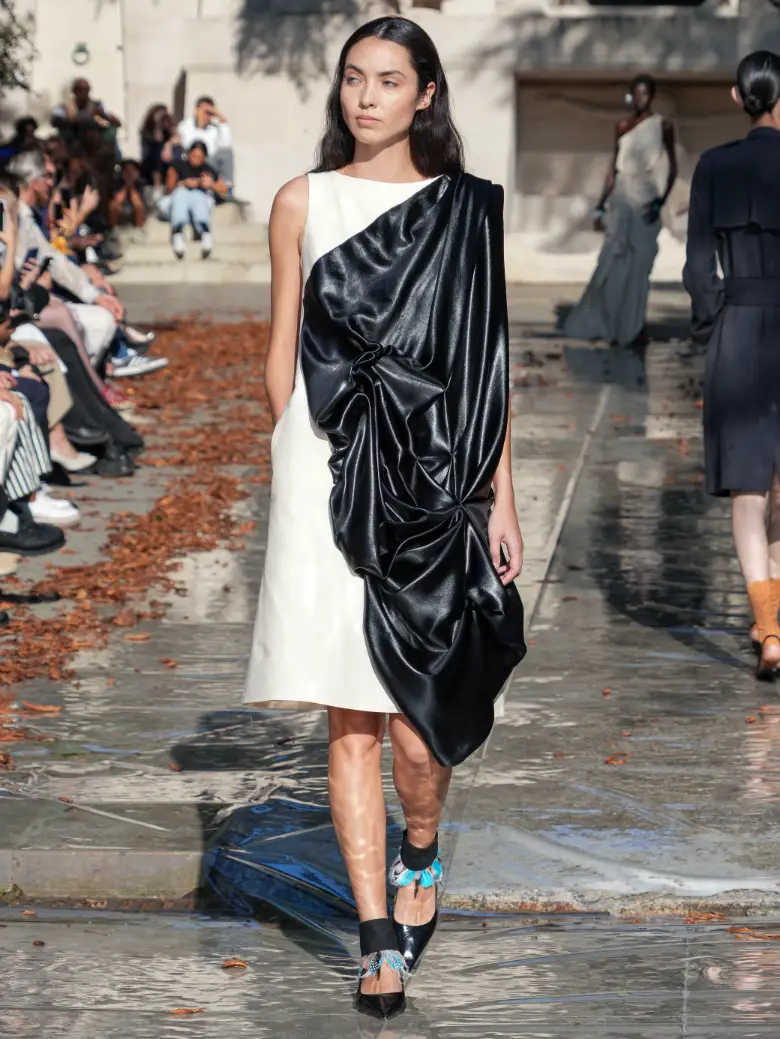
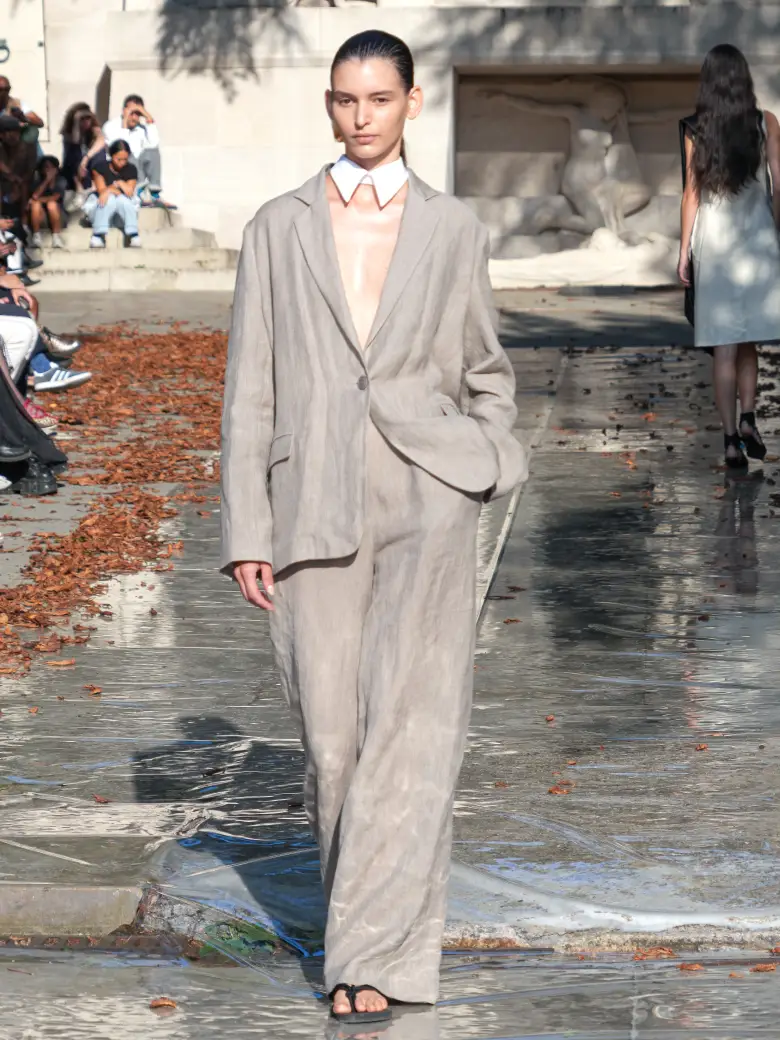
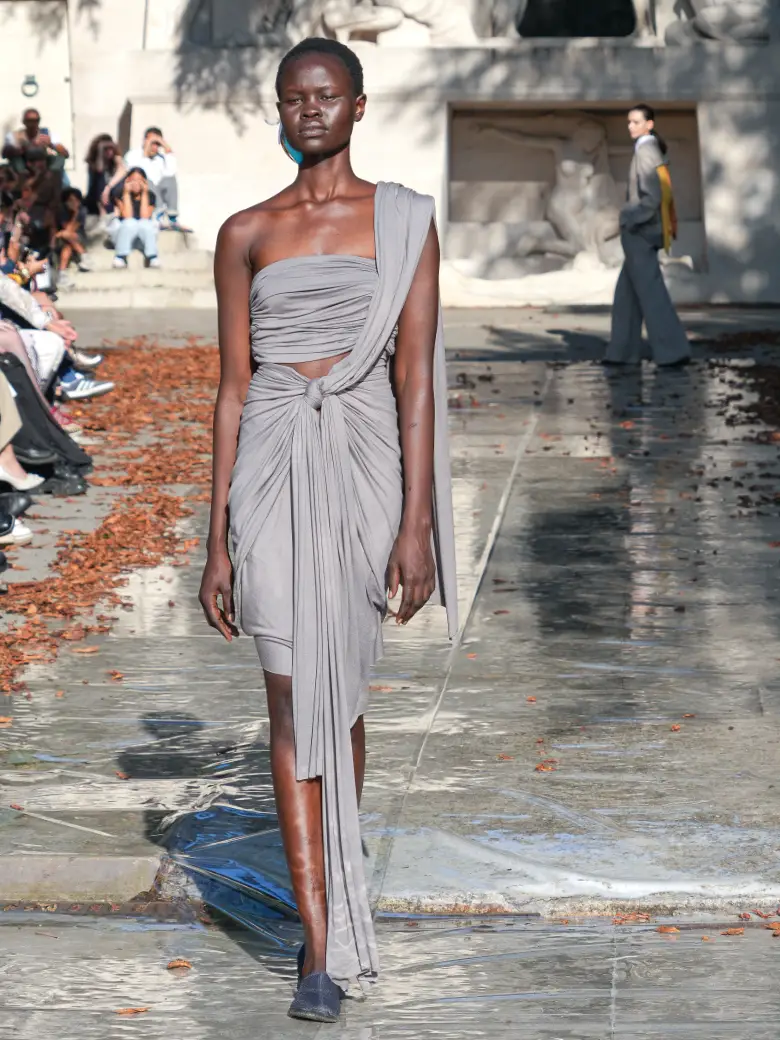
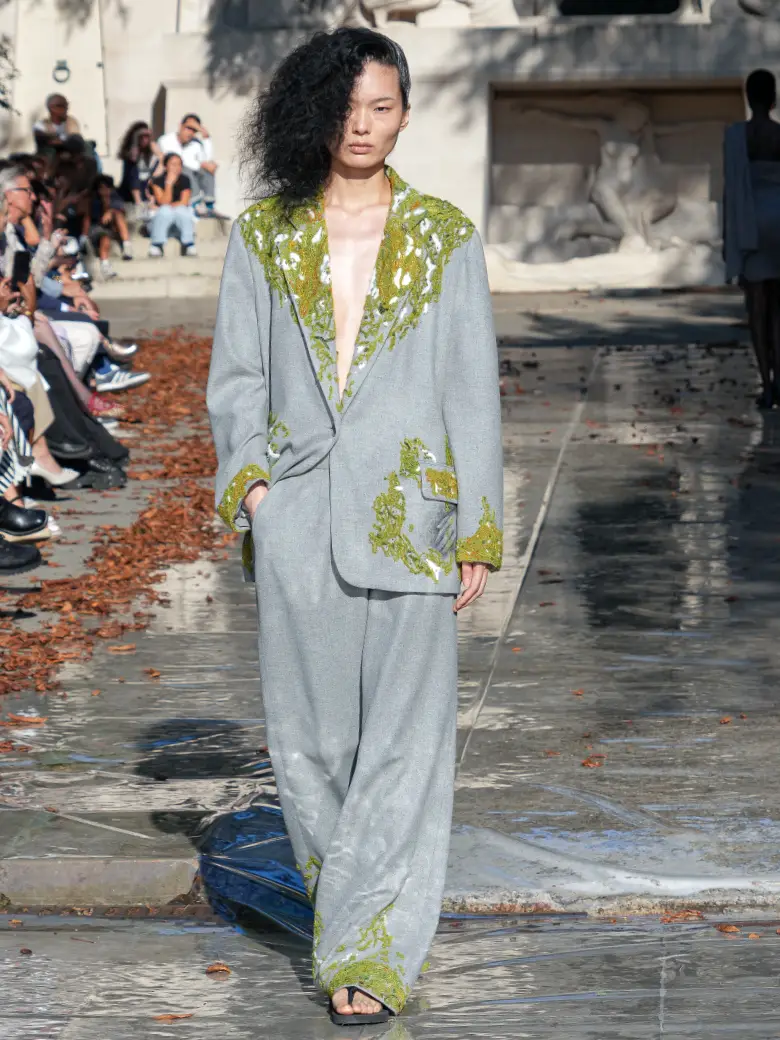
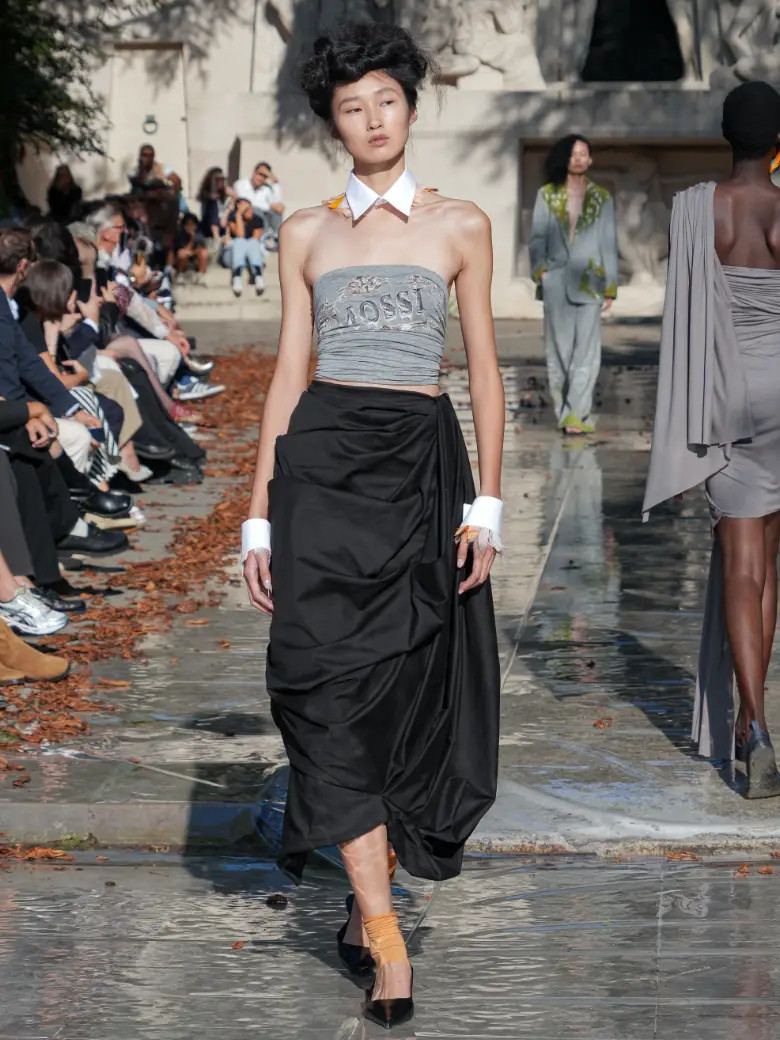
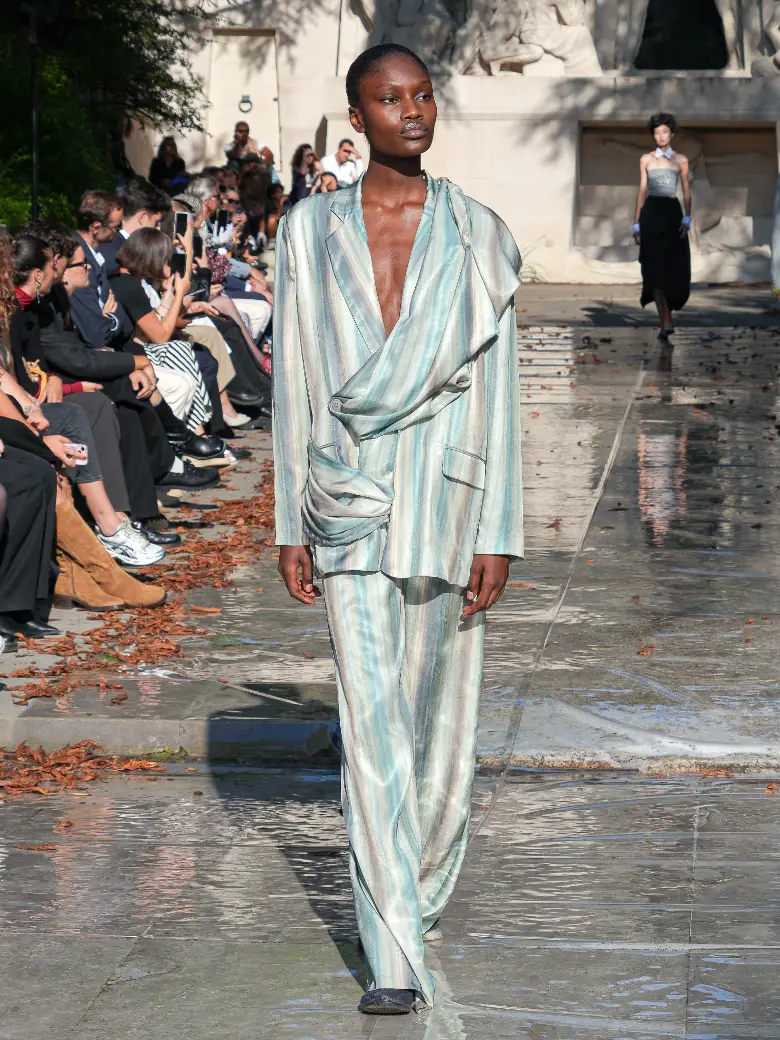
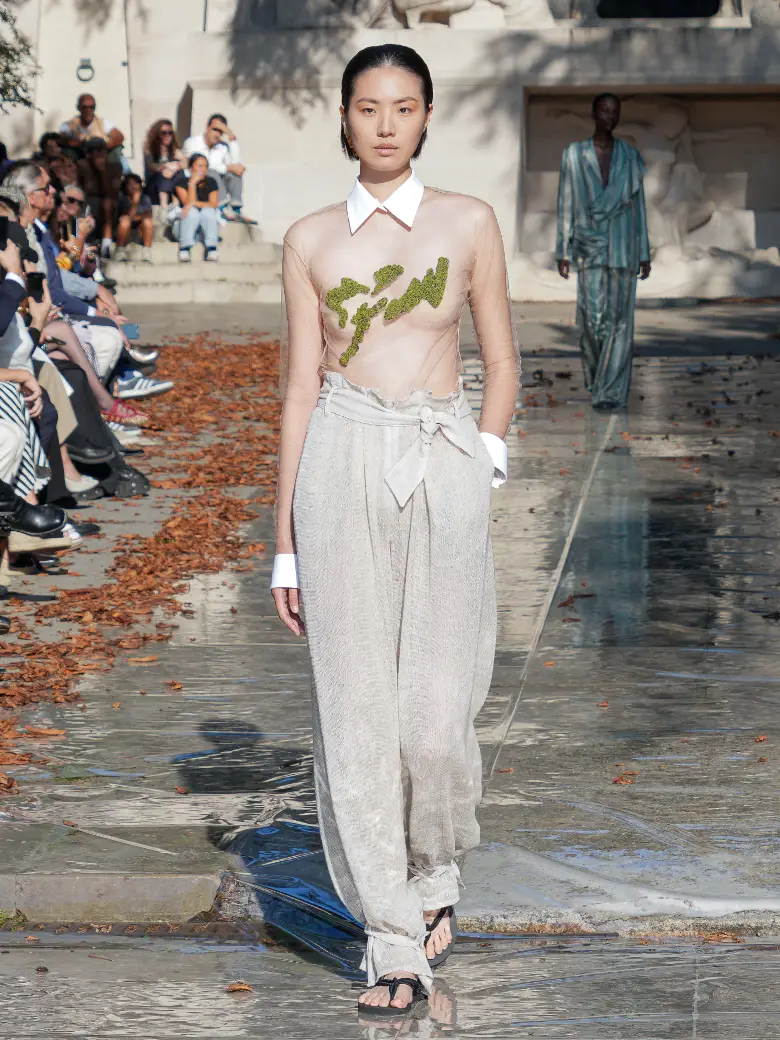
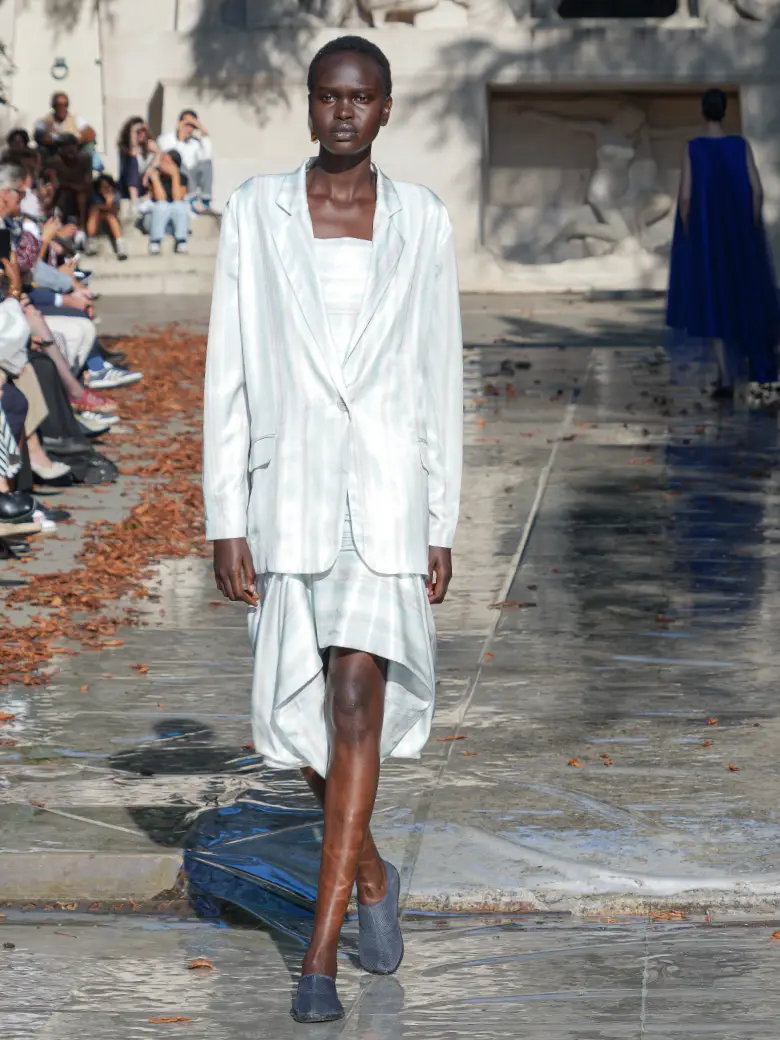
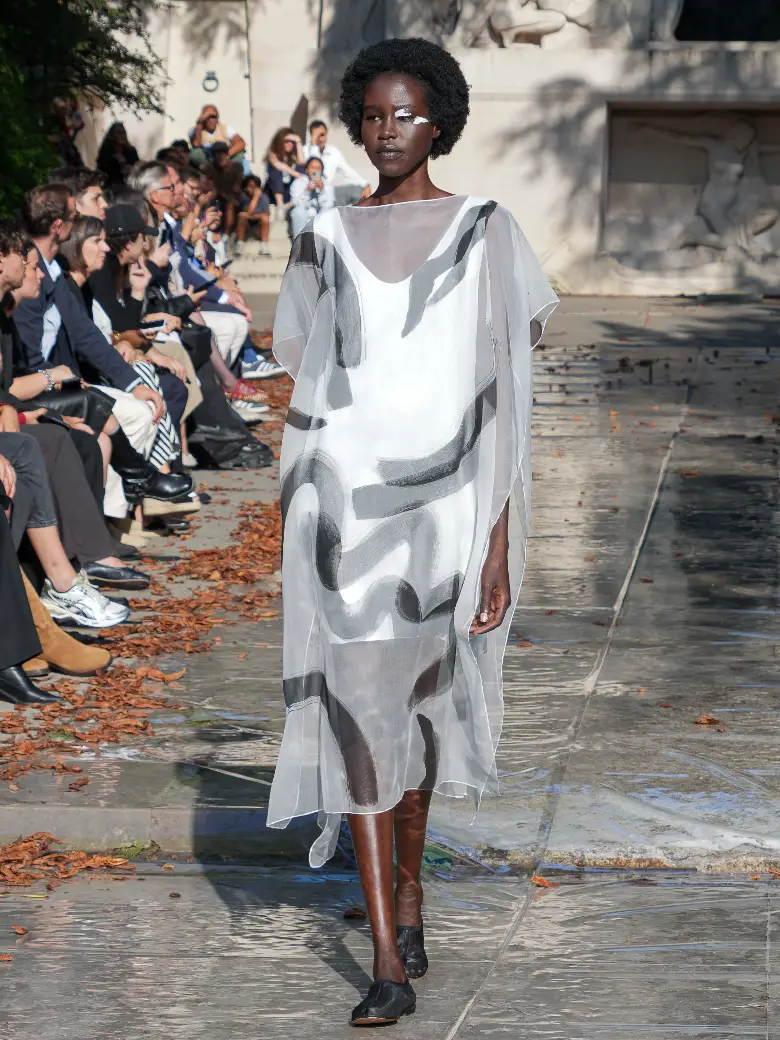
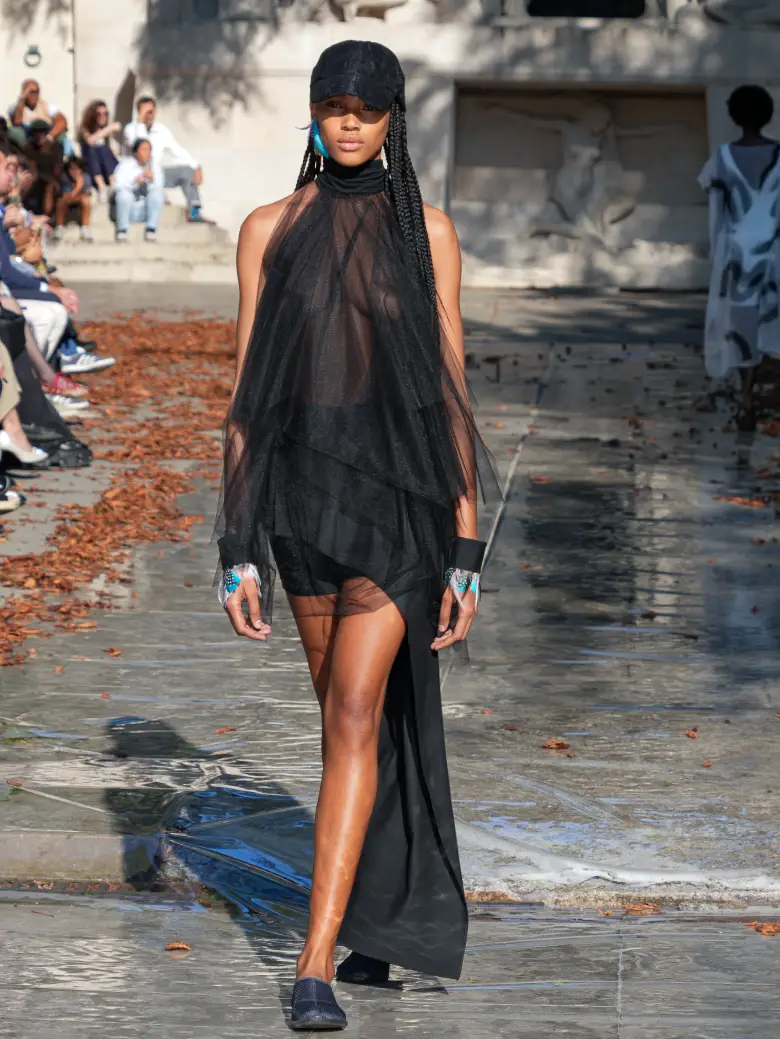
The show took place on Sunday 4 October at 4pm, on the main avenue facing the principal entrance of Père-Lachaise, and was open to the public. This collection will not be sold. Mossi has stepped away from ready-to-wear for multi-brand stores, and his label is now, in his words, a ‘shop window’, a ‘laboratory for experimentation’ and a ‘field of expression’.
The collection starts from the graves, from their ornaments and the marks that time leaves on them. Mossi drew on La Vie au cimetière, the book by Benoît Gallot, the cemetery’s curator, and speaks of death as a friend ‘we will all meet one day’. He links it to his Muslim faith: ‘Death is not an end in itself. Behind death, there is life.’
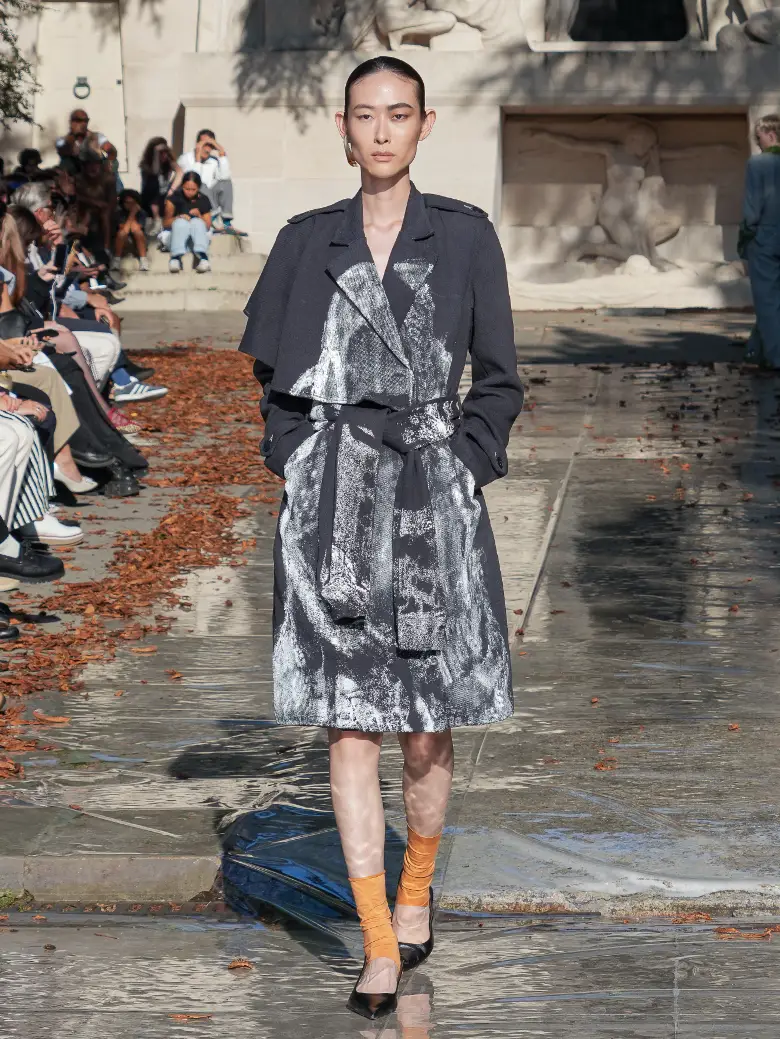
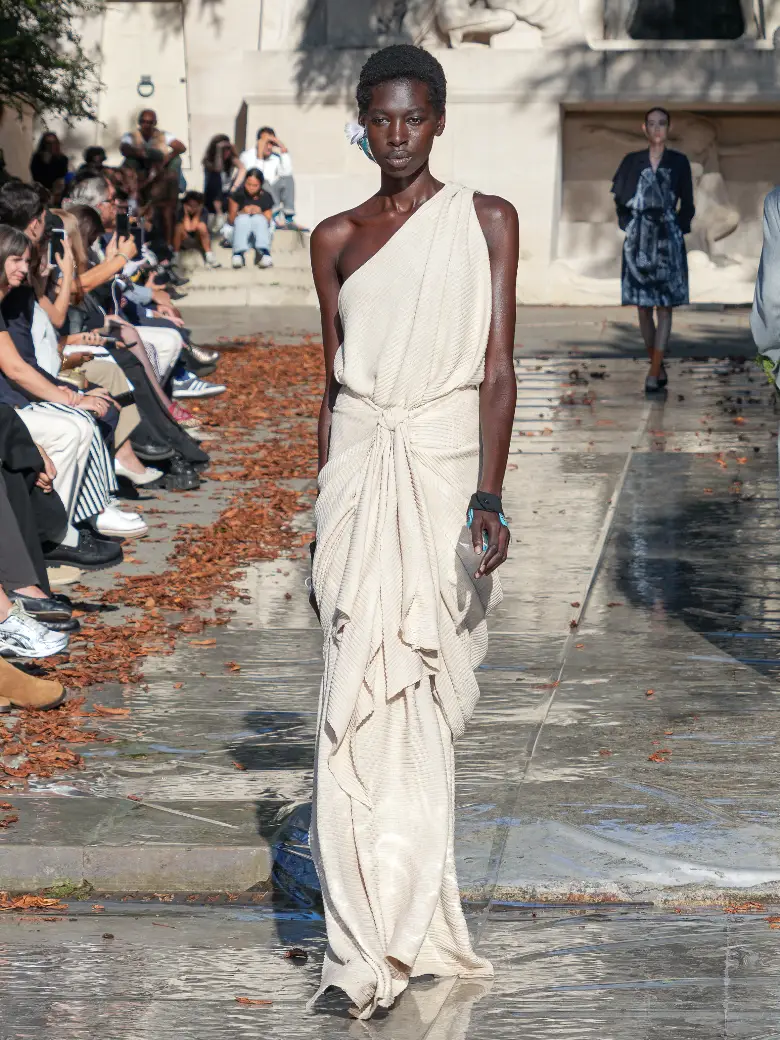
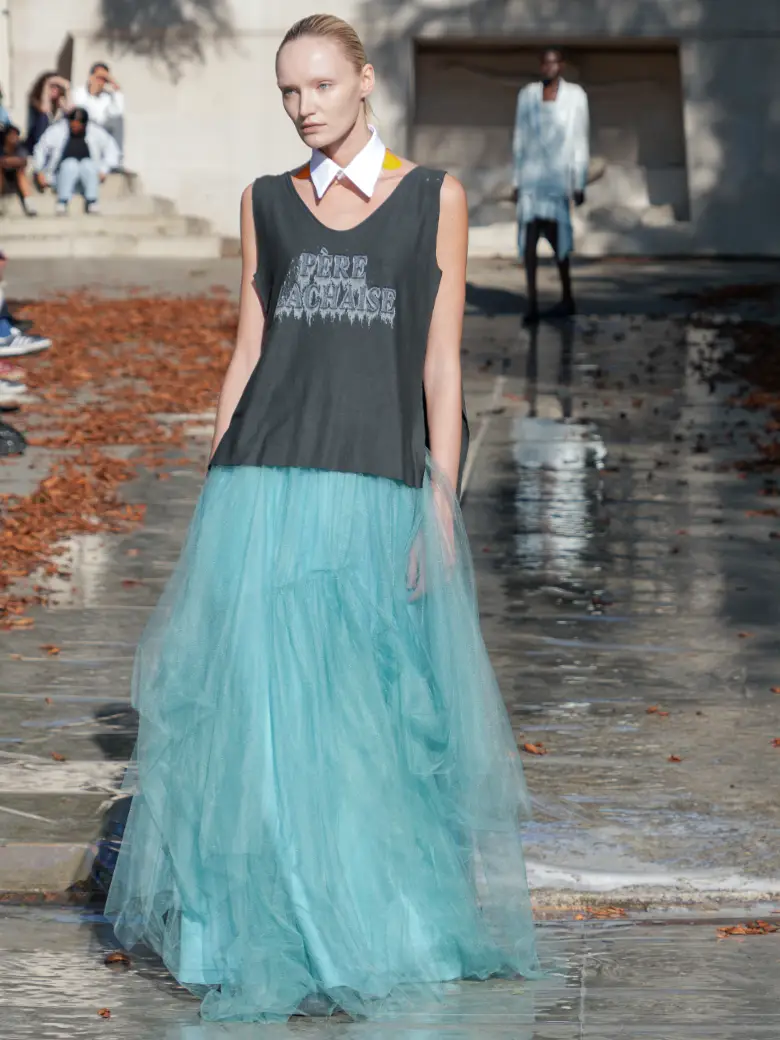
The greys come from the stone. A belted black trench coat carries a white rubbed print that mimics its texture, and two dresses are knotted at the waist: one grey and strapless, short, with a strip of fabric falling from the shoulder to the floor, the other ecru and one-shouldered, reaching the feet. The name of the place is printed in Gothic lettering on a vest top worn over a long turquoise tulle skirt; in the same typeface, a grey top bears the label’s.
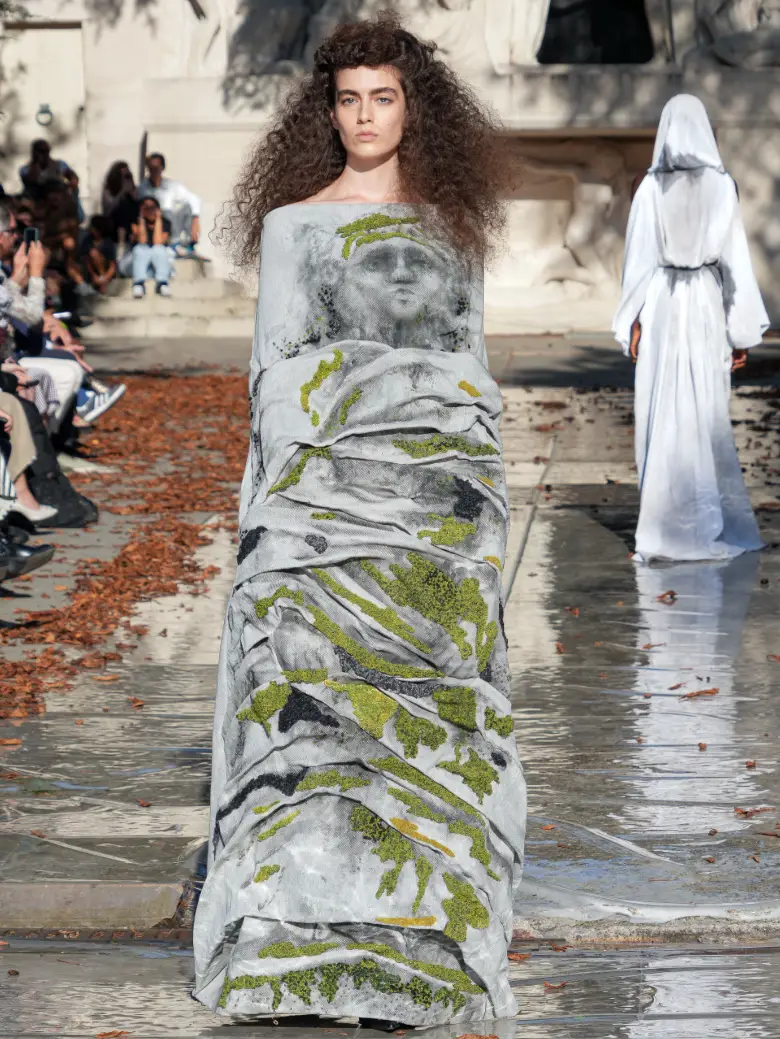
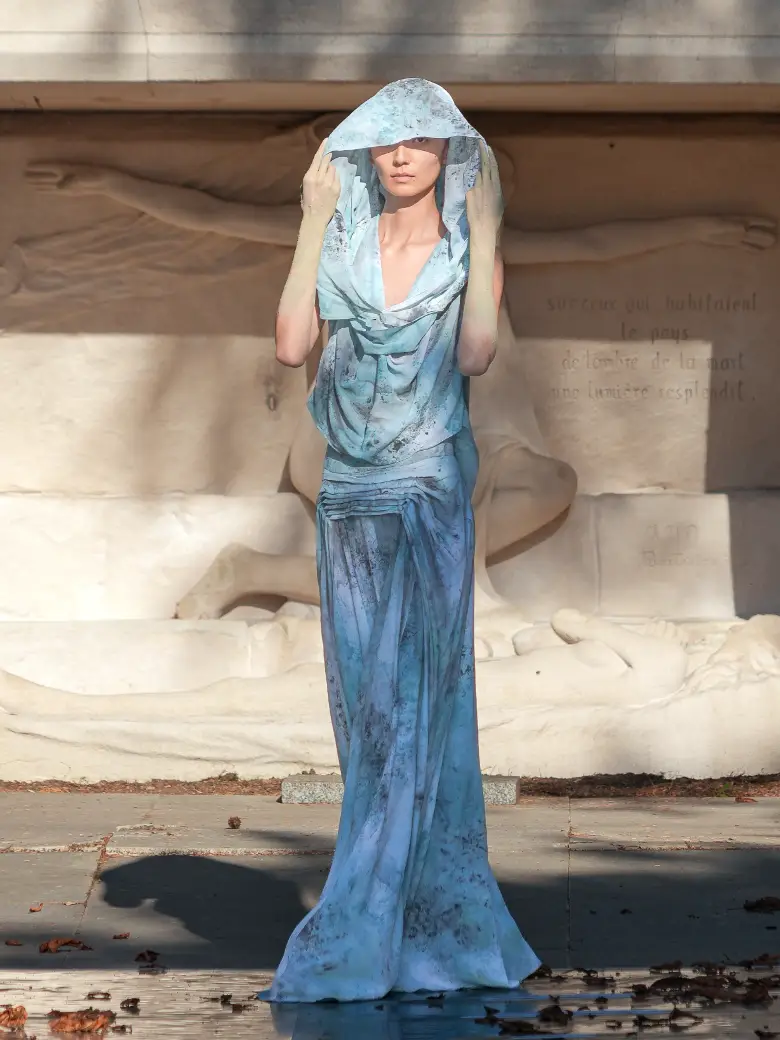
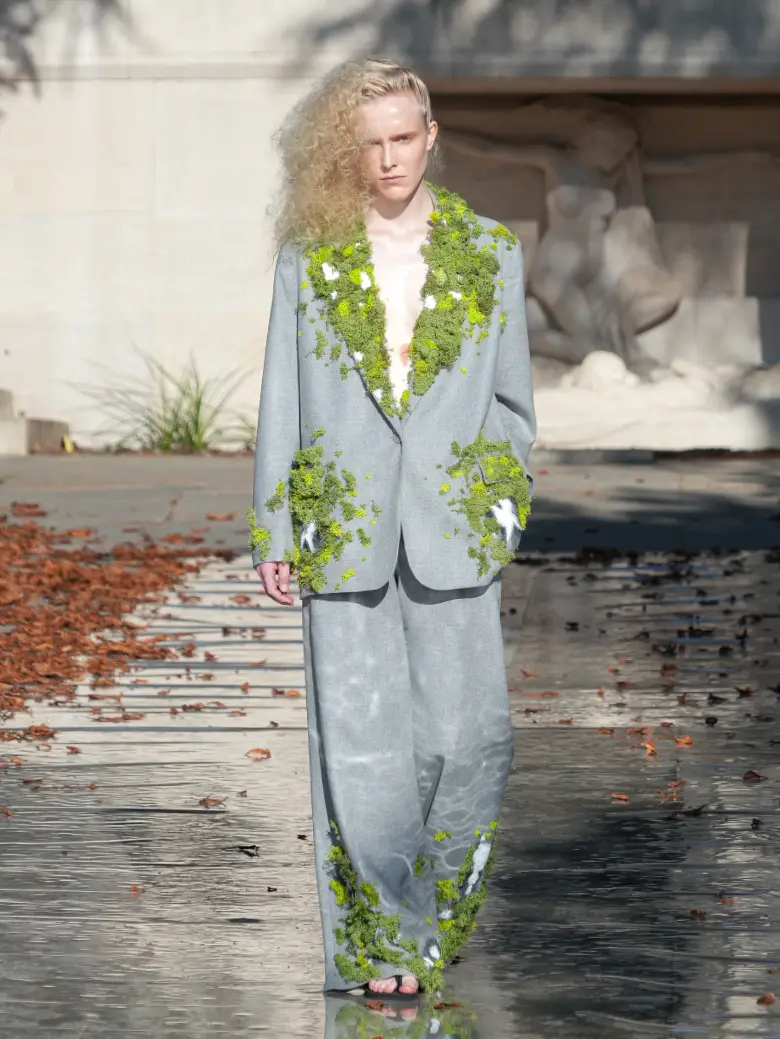
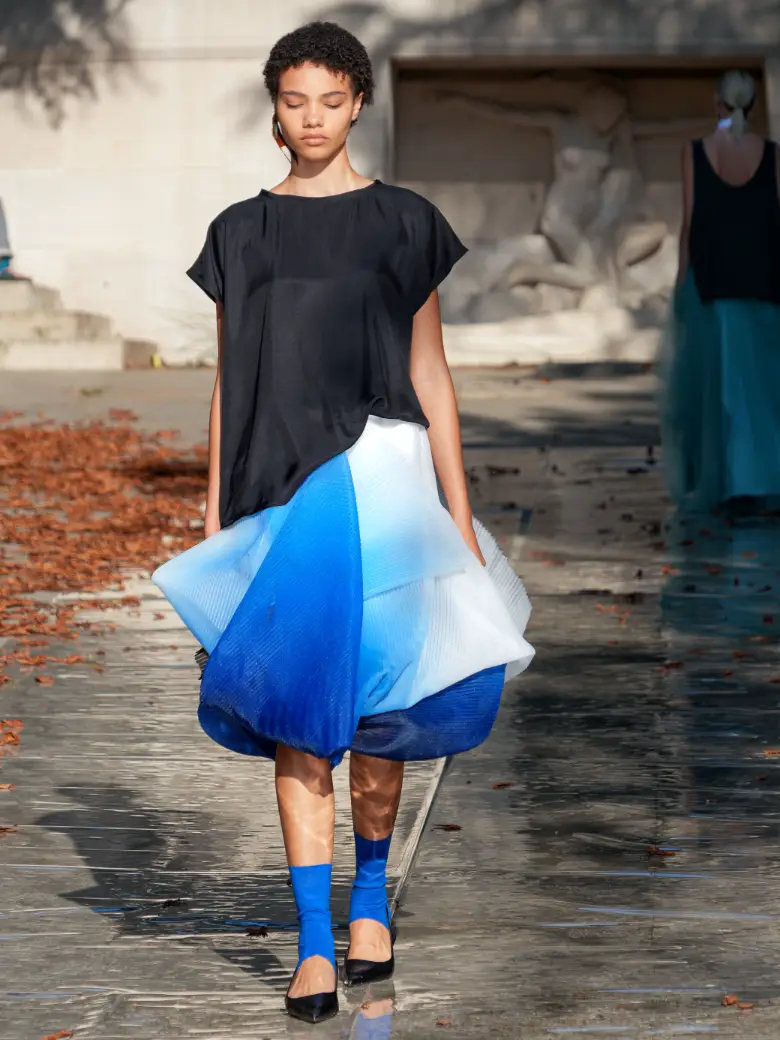
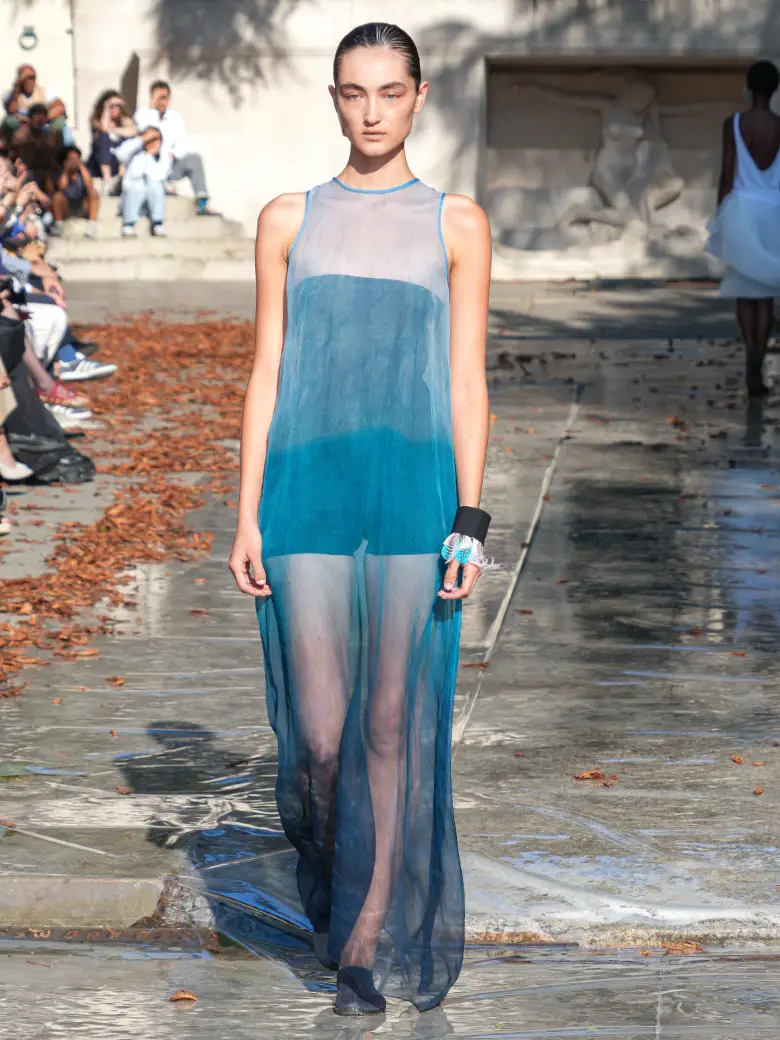
Over that grey grows the green of the vegetation that covers the tombs. On two grey suits with wide trousers, a botanical embroidery that looks like moss spreads across the lapels and the trouser hems, flecked with white patches. On a flesh-coloured tulle blouse, it covers only the chest. There are also gradients, from grey to petrol blue on a chiffon dress and from white to electric blue on a pleated skirt. For the collection, Mossi worked with embroiderers, featherworkers and dye specialists.
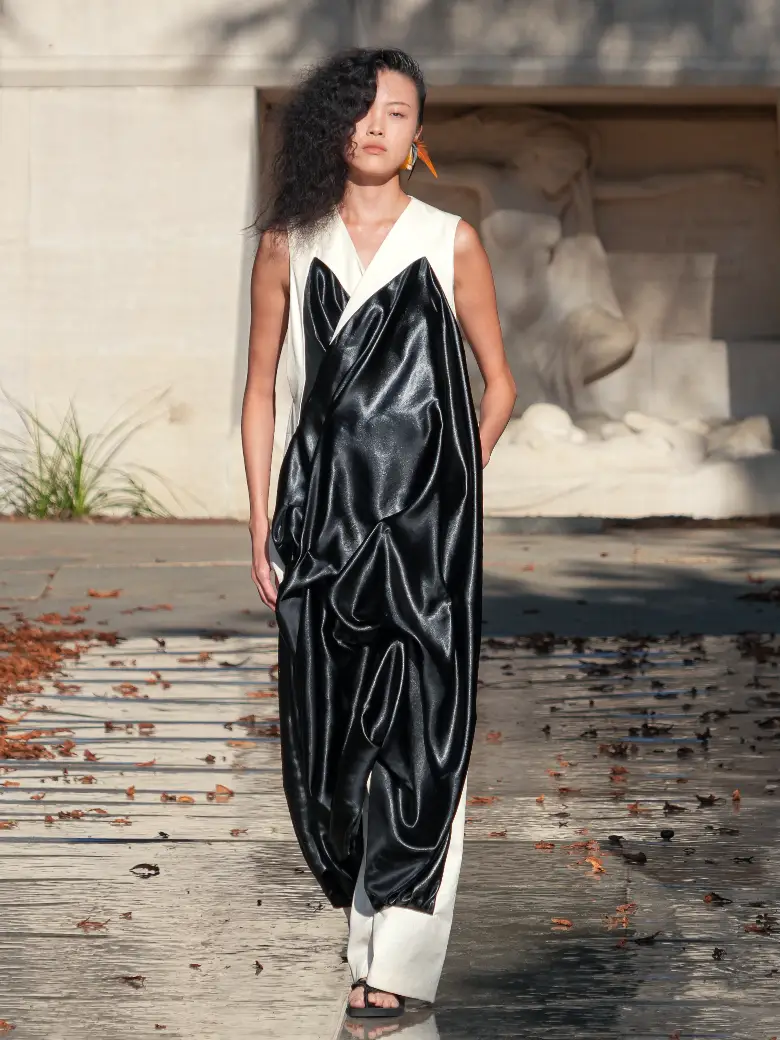
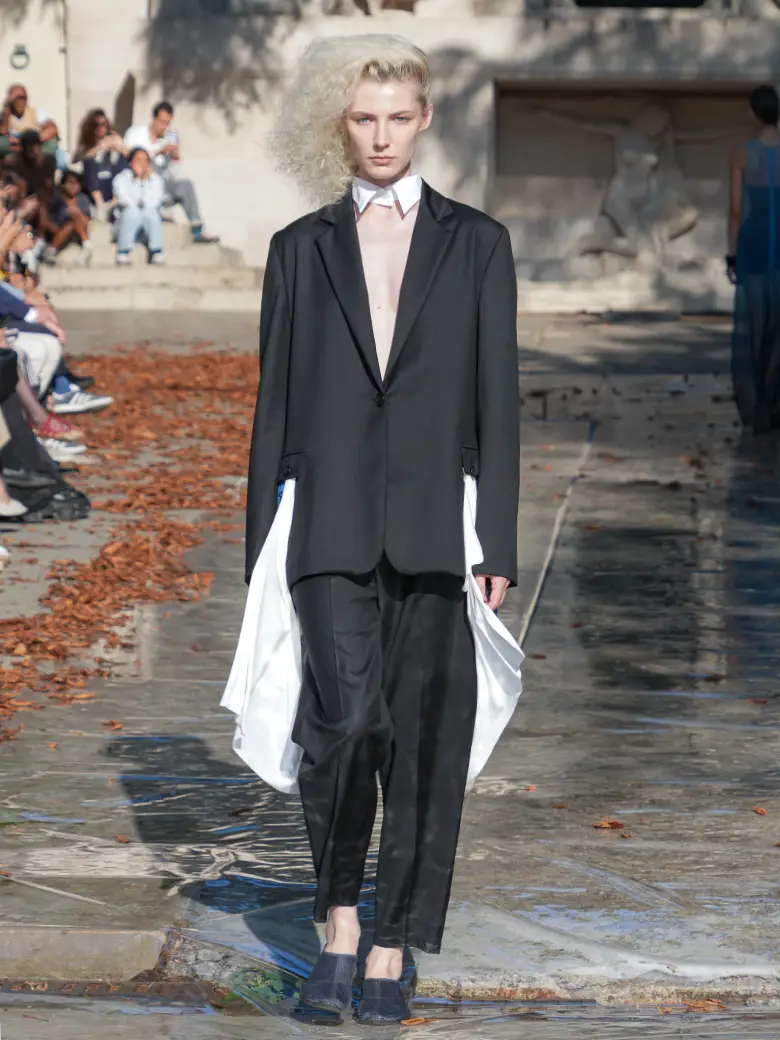
The tailoring is loose, in black, beige, grey or aqua, with roomy jackets, long sleeveless waistcoats and wide trousers. Two models wear only the collar of a white shirt against a bare chest. In other looks, a piece of glossy black satin is gathered diagonally across a white dress or white trousers.
The project also looks to training. In 2015, in Villiers-sur-Marne, where he grew up, Mossi founded Les Ateliers Alix, a school of haute couture techniques which, with Chanel’s support, covers 65 per cent of its students’ tuition fees, according to him.
In front of the monument’s relief, a model in a sky-blue hood, mottled like lichen-covered stone, posed. Another was wrapped to the feet in a grey column dress, covered in the same green embroidery, with the face of a statue printed across the chest. Carved into the stone is part of an inscription: ‘…upon those who dwelt in the land of the shadow of death, a light has shone.’