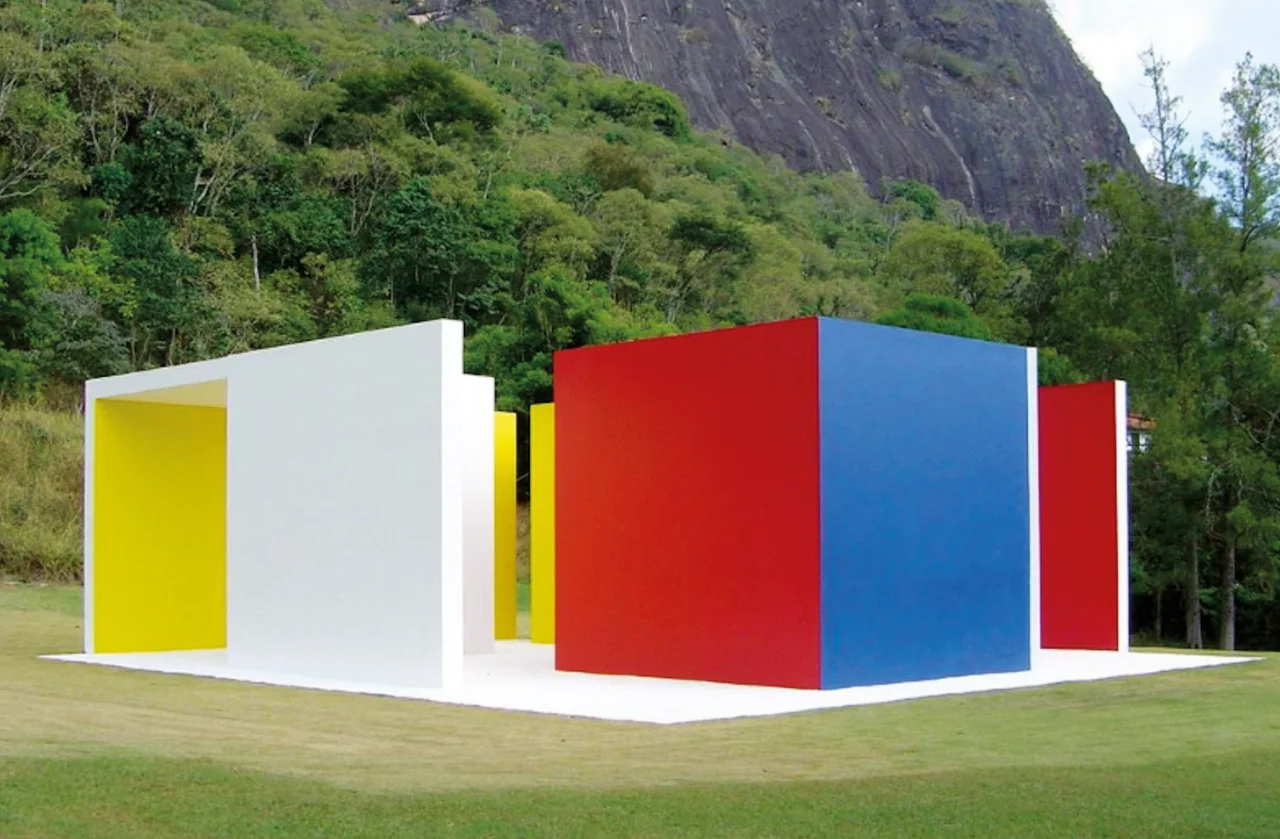
Constructivism and Neo-Plasticism were the two art currents that fed Concrete Art, a very complex international art movement.
It traces its earliest roots to Russian Constructivists, which emerged with Russian Revolution in 1917.
Artists like Kazimir Malevich, Naum Gabo and Vladimir Tatlin sought to break down traditional picture planes and redefine sculptural forms.
In Russia’s charged political atmosphere, non-figurative art became a metaphor for revolutionary thought.
Artists rejected emotional expression, instead using non-figurative art to represent the objective, scientific and mathematical forces configuring the universe.
Simultaneously, a geometric abstraction with a more spiritual, less politicised ethos was developing in Netherlands.
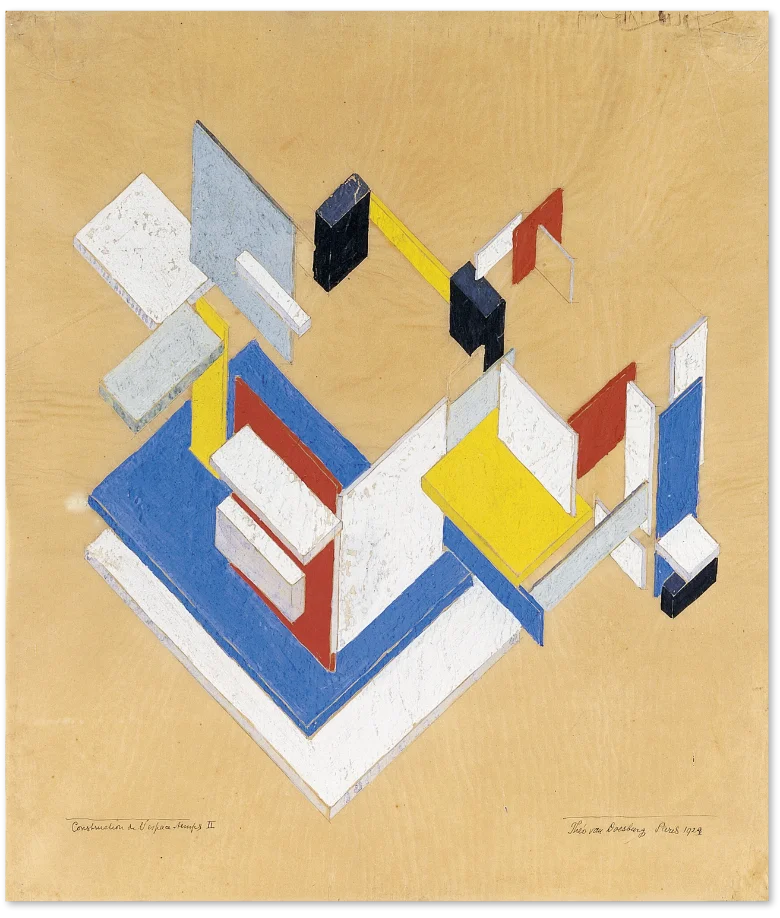
Neo-Plasticism was pioneered by Dutch painter Piet Mondrian within De Stijl movement.
Spearheaded by Mondrian and Theo van Doesburg, this movement culminated in the founding of De Stijl Magazine (1917).
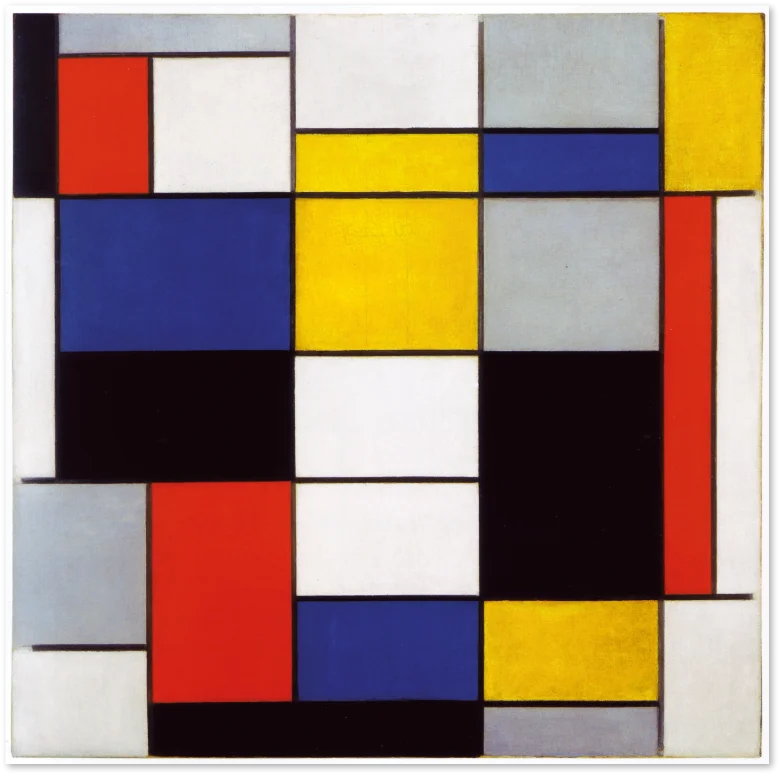
Concrete Art stripped away the spiritual and sentimental. In Philosophy, Neo-Plasticism had a spiritual core, while Concrete Art was strictly rational.
Mondrian pioneered Neo-Plasticism, a style advocating a universal art language based on strict, non-symmetrical arrangements of vertical and horizontal lines, using only primary colours alongside black and white.
A pictorial element has no other meaning than itself. It completely divorced itself from perceptual reality, emotional impulses or spiritual Symbolism.
Neo-Plasticism supplied the foundational principles of rational, geometrical abstraction to Concrete Art. However, they emerged as a distinct movement when Theo van Doesburg rejected Mondrian’s strict visual rules and spiritual motivations, pushing instead for an art form of pure, mechanical rationality that signified absolutely nothing beyond its own physical construction.
Van Doesburg, influenced by Constructivist ideologies of the Bauhaus School in Germany, grew frustrated with strict dogmas. He founded Elementarism (1926) introducing diagonals and mixed colours to his work, which prompted Mondrian to leave the group in protest.
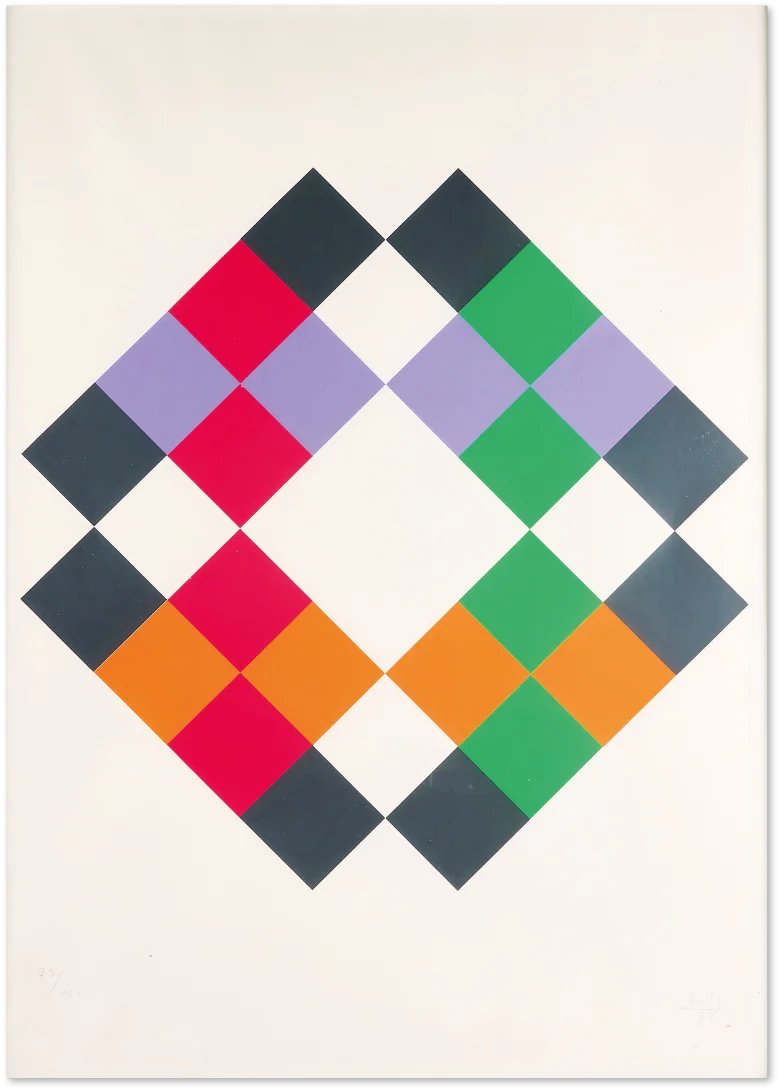
Art Concret Manifesto
By 1920s, Paris was a hub for Surrealism which embraced the anti-rational and inexplicable.
In collective opposition, a counter-movement of artists committed to rational, Abstract Art began to form. Aiming to unite artists dedicated to stringent geometric abstraction, van Doesburg formed the short-lived collective Art Concret (1930).
In the group’s journal issue, van Doesburg published the “Basis of Concrete Painting”, a foundational Manifesto.
“Art must be entirely conceived and formed by the mind and sought to exclude all drama, lyricism and symbolism.”
He declared that art is universal and must be entirely conceived by the mind before execution, receiving nothing from nature, sensuality or sentimentality.
They proclaimed painting must be constructed purely from plastic elements, planes, colours and technique must be mechanical, exact, anti-impressionistic.
Concrete Art was a language of pure form signifying nothing but itself.
Van Doesburg died of a heart attack, leaving his utopian vision to the next generation.
European Expansion
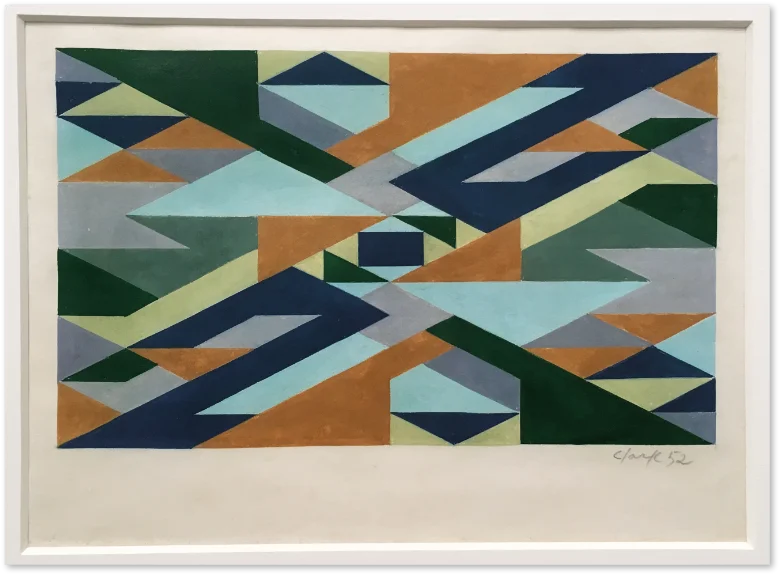
Max Bill, Swiss artist and Bauhaus alumnus, emerged as the movement’s new figurehead.
Heavily influenced by his extraordinary teachers, like Wassily Kandinsky and Josef Albers, Max sought to express scientific and mathematical formulas in intuitive, tangible forms, entirely devoid of emotional subjectivity.
Max formed the Allianz Group to promote Concrete Art in Switzerland (1937).
Protected by Swiss neutrality during World War II, the group thrived, creating vibrantly coloured works based on methodical visual arrangements of algebraic formulas and spatial theories.
Max Bill organised the first International Exhibition of Concrete Art in Basel, cementing the style’s global recognition (1944).
Concrete Art groups organically sprouted across Europe from Milan to Copenhagen.
In 1953, Max co-founded Hochschule für Gestaltung (HfG) in Ulm, West Germany.
A successor of Bauhaus, HfG integrated Concrete Art aesthetics with functional design and architecture, principles that influenced new generations of interdisciplinary creators.
Latin America art hub
While post war Europe rebuilt, Concrete Art found its most dynamic advancements in Latin America (1945-1960).
Shielded from the war’s devastation and benefiting from booming economies, Argentina and Brazil welcomed fleeing European avant-garde artists and embraced forward-thinking aesthetics.
In Argentina, groups like the Asociación Arte Concreto- Invención and Arte Madí formed in 1940s.
Influenced by De Stijl, they adopted pure geometric abstraction and inherited the political vigor of Russian Constructivism.
They viewed art as a blueprint for new social organisations in a rapidly industrialising continent.
Brazil became the epicentre. Collectives such as Grupo Frente in Rio de Janeiro with Lygia Clark and Hélio Oiticica and Grupo Ruptura in São Paulo, deeply shaped the art scene (1952).
The pinnacle of the movement’s influence in South America was the construction of Brazil’s new capital, Brasilia (1956), designed by Oscar Niemeyer on principles aligned with Constructivism and Concrete Art.
By 1950, the strict, rationalist boundaries began to fracture, giving rise to successor movements:
Brazilian Neo-Concretism
Frustrated by acute rationalism and rigid colonialist rules of Europeans, Brazilian artists published “Neo-Concrete Manifesto” (1959).
Artists like Lygia Clark and Hélio Oiticica began prioritising intuitive, sensory interactions between artwork, space and viewer.
They prefigured the global shift toward interactive, conceptual art.
Kinetic Art
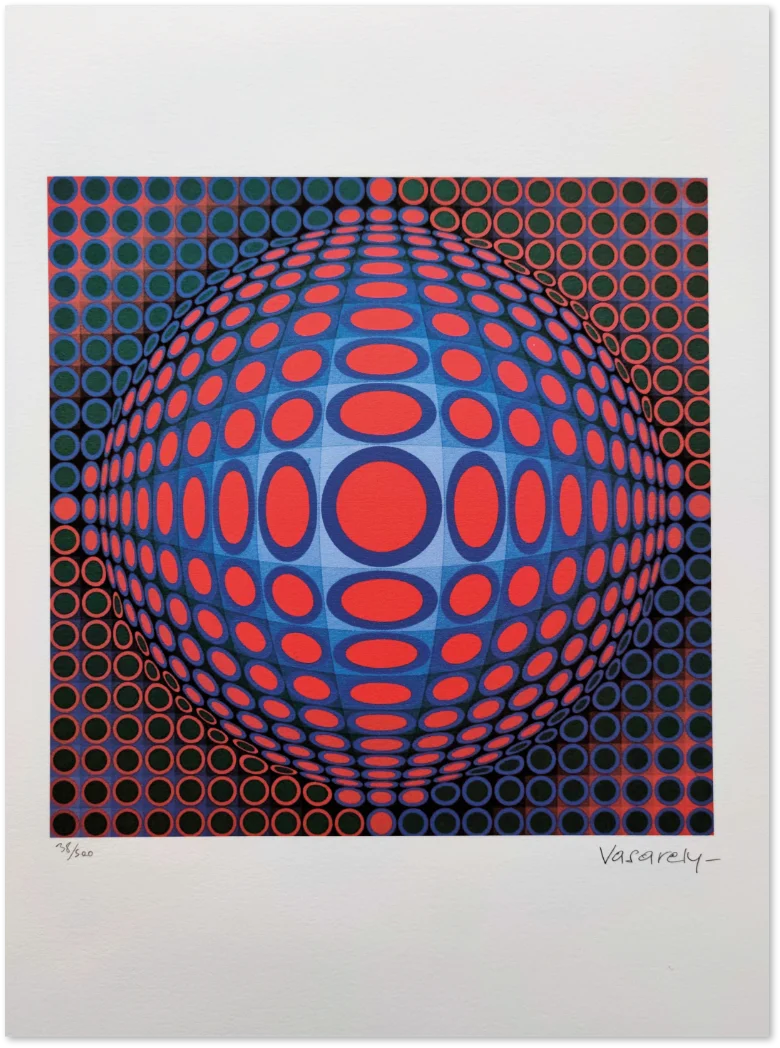
As Concrete Art waned, artists like Victor Vasarely, Alexander Calder and Nicholas Schöffer extended Constructivist principles into the realm of time and motion.
By creating artworks that gave the illusion of movement, literally moved or responded to external stimuli via computers, they broke down the established boundaries of static geometric Abstraction.
Concrete Poetry
Fulfilling the dream of transcending artistic mediums, Concrete Poetry emerged (1950).
Pioneered by Eugen Gomringer (Switzerland) and Noigandres Collective (Brazil), this literary movement treated words as purely visual, compositional elements.
Poems were constructed following logical and spatial patterns of Concrete painting, referring to nothing outside of their own structural logic.
USA Influence
In 1950…60, a fraction of American artists rebelled against the emotional angst and mythology of Abstract Expressionism such as Jackson Pollock.
Influenced by European émigrés like Josef Albers, native movements such as Hard-Edged Painting and Minimalism fully embraced the clarity, impersonality and internal compositional dynamics.
While Concrete Art began as a strict, highly localised experiment in pure geometric rationalism, its legacy still resonates globally.
By striving to divorce art from natural reality and individual emotion, Concrete Art laid the essential groundwork for modern functional design, interactive kinetic art, visual poetry and the postmodern aesthetic art landscape of today.