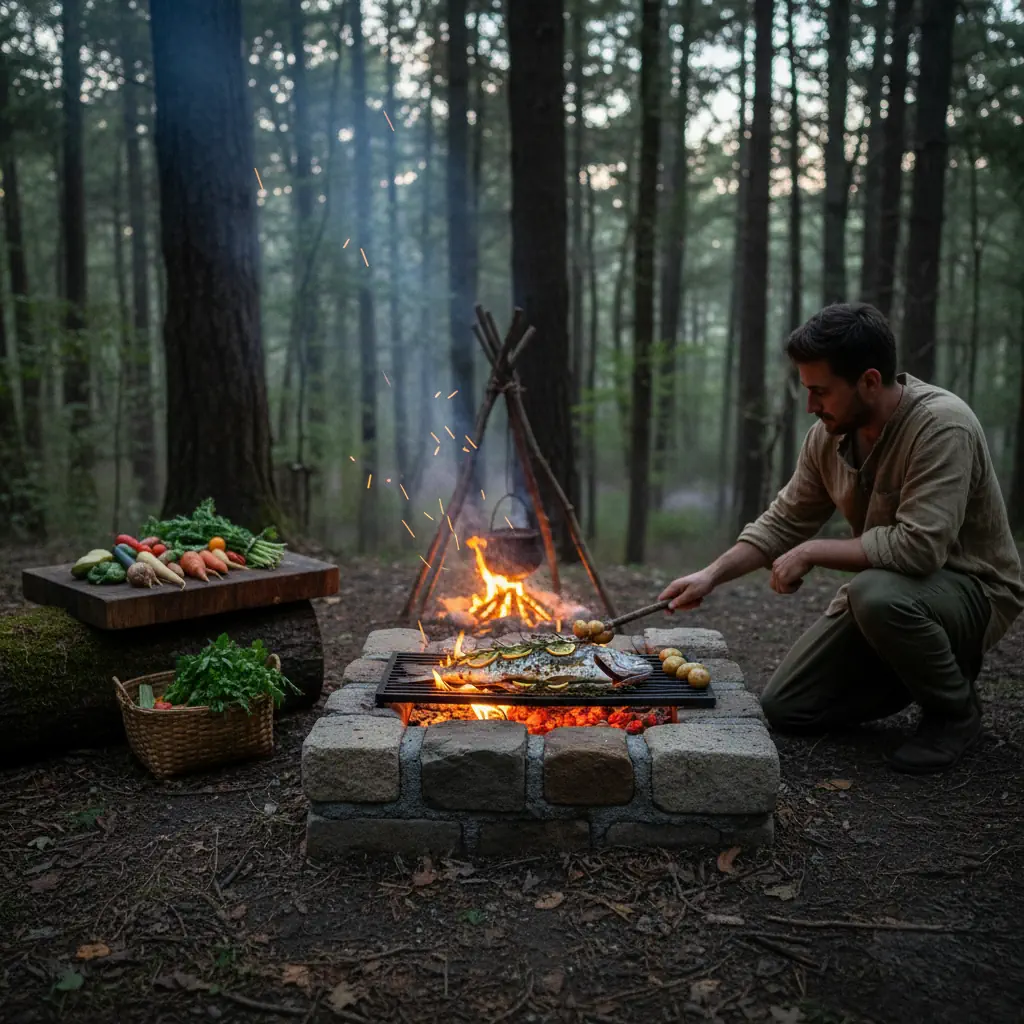
In a culinary landscape increasingly defined by smart ovens, sous-vide machines, and digital recipe books, there’s a compelling, almost primal whisper calling us back to the very beginning.
It’s a quiet but powerful return to the elemental forces that first transformed sustenance into cuisine: to the open flame, the heat of stone, and the transformative power of smoke.
Primitive cooking techniques are not mere relics of a forgotten past. They are, in fact, experiencing a profound renaissance, captivating chefs, artists, designers, and home cooks alike.
This movement isn’t about Luddism or rejecting technological progress; it’s about a deeper exploration of flavor, texture, and connection.
By embracing these ancient methods, we seek to create food that feels physical, honest, and deeply human – a stark contrast to the often-aseptic precision of modern kitchens.
This rediscovery is driven by a desire for authenticity, a yearning for the profound sensory experience that only fire, earth, and time can impart.
This journey back to the elemental is more than just a culinary trend; it’s a philosophical stance. It’s an acknowledgment that some of the most profound flavors and most satisfying cooking experiences arise from the simplest, most direct interactions with nature.
From the smoky char of an open grill to the earthy embrace of a pit oven, these techniques offer a radical departure from the conventional, inviting us to engage with our food and our environment in a way that is both ancient and entirely new.
It is an exploration of the aesthetics of simplicity, revealing how rough edges and unpredictable variables can yield a sophistication that modern technology often struggles to replicate.
What are primitive cooking techniques?
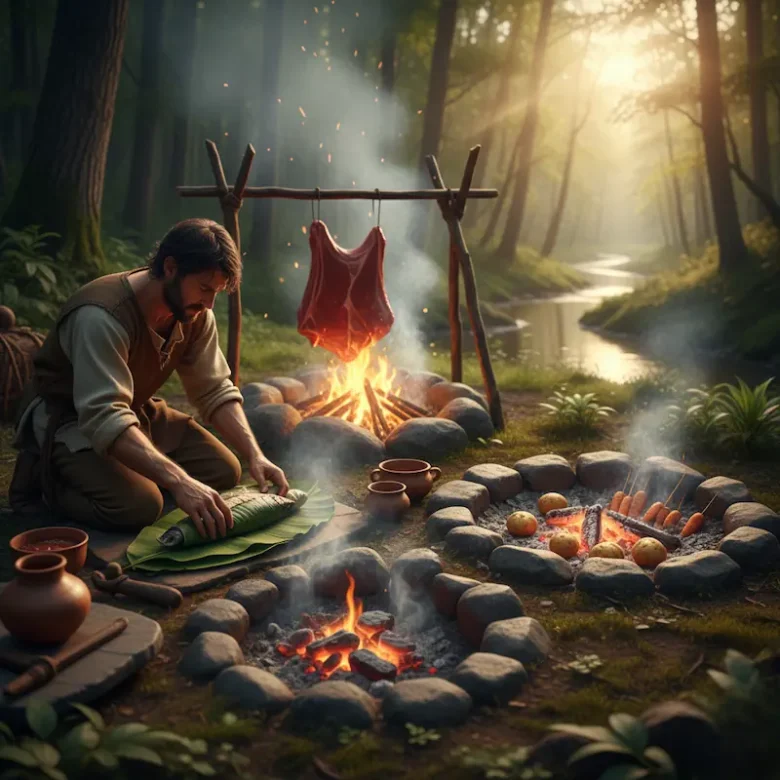
To understand the resurgence of primitive cooking, we must first define its essence. It’s about more than just cooking outdoors; it’s about stripping away layers of complexity and reconnecting with the fundamental principles of heat transfer and material interaction that our ancestors mastered.
Before tools, there was instinct
Primitive cooking refers to the earliest ways humans prepared food—methods developed over millennia, often with minimal specialized tools and maximal connection to the natural elements.
Before the advent of pottery, metal implements, or controlled indoor hearths, early humans relied on ingenious methods to tenderize, preserve, and flavor their food.
These techniques were born out of necessity, observation, and an intimate understanding of their environment. They represent a testament to human adaptability and ingenuity, transforming raw ingredients into nourishing and delicious meals using only what nature provided. This foundational knowledge forms the bedrock of all culinary traditions that followed.
Key methods include:
The spectrum of primitive cooking techniques is vast, reflecting diverse cultures and landscapes. However, several core methods stand out for their simplicity, effectiveness, and the unique flavors they impart:
Open-fire grilling:
Perhaps the most iconic, this involves cooking food (often meat, but also vegetables) directly over, or adjacent to, an open flame.
The direct radiant heat, the licking flames, and the rising smoke combine to create distinct charring, a smoky crust, and a deeply savory flavor profile. This method is as old as controlled fire itself.
Pit cooking (Earth Oven):
A truly ancient and ingenious method where food is cooked by burying it in a pre-heated pit. Hot stones or coals are placed in the pit, food (often wrapped in leaves or natural fibers) is added, and then covered with more hot material and earth.
The ground acts as an insulated oven, slow-cooking food to incredible tenderness while infusing it with earthy, smoky notes. Examples include the Māori hāngī, the Hawaiian imu, and the Andean pachamanca.
Clay baking:
This technique involves encasing ingredients (fish, poultry, vegetables, or even bread) directly in a layer of wet clay, which then hardens around the food. The clay-encased package is then placed directly into hot embers or a fire.
The clay acts as a natural pressure cooker, steaming the food inside while protecting it from direct flame, resulting in exceptionally moist and flavorful results. Once cooked, the hardened clay shell is cracked open to reveal the perfectly cooked contents.
Stone boiling:
A method used before the advent of fireproof pottery. Water is placed in a non-fireproof vessel (like a woven basket, a skin, or a wooden trough) along with food.
Rocks are then heated directly in a fire until scorching hot and carefully transferred into the water using tongs or sticks. The hot stones quickly bring the water to a boil, cooking the food. This technique is surprisingly efficient and demonstrates remarkable early engineering.
Ash roasting:
This is arguably the simplest and most direct form of cooking. Food (such as root vegetables, eggs, or even small fish) is placed directly into the hot embers or ashes of a dying fire.
The ash creates a protective, insulating layer, slow-roasting the food while imparting a unique, subtle smokiness and a distinct earthy flavor. The charred outer layer is often peeled away to reveal a tender, intensely flavored interior.
These are not just techniques; they’re immersive rituals of transformation. They demand presence, patience, and a deep understanding of natural processes.
The sensory power of primitive cooking
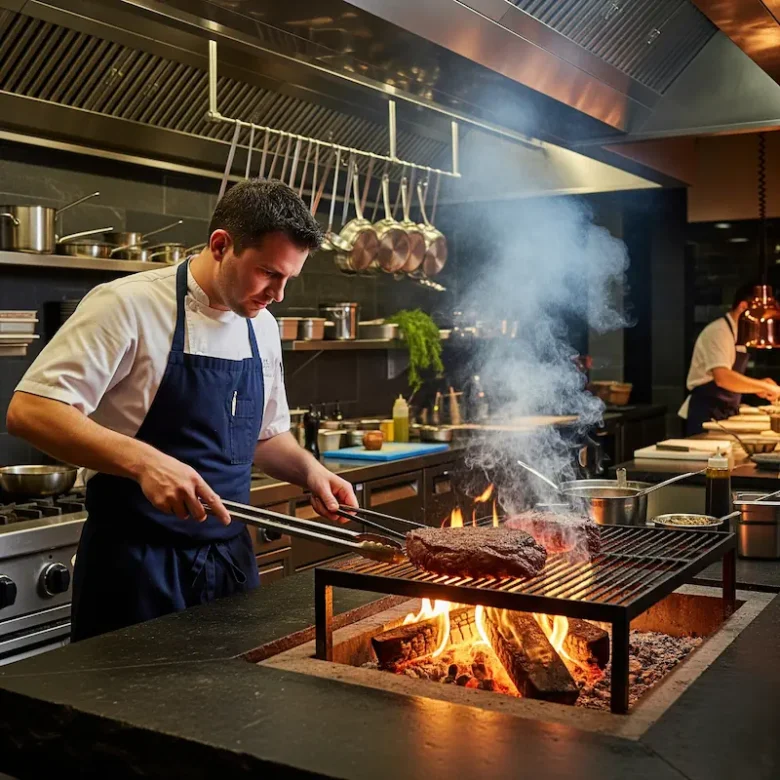
Modern cooking often seeks to eliminate variables and standardize outcomes. Primitive cooking, by contrast, embraces them, transforming inconsistencies into opportunities for unique sensory experiences. This direct interaction with elemental forces awakens senses often dulled by conventional methods.
Fire as flavor
At the heart of primitive cooking is fire, which acts as both an essential tool and an irreplaceable ingredient. The complex interplay of smoke, char, and radiant heat creates textures, aromas, and depths of flavor that no modern appliance can truly mimic.
Think of the crust of a sourdough bread baked in a wood-fired oven – it has a chewiness and a subtle char that is utterly unique.
The flame itself, whether from oak, mesquite, or fruitwoods, imparts distinct flavor notes. Smoke penetrates the food, adding layers of savory, sweet, or pungent aroma.
The direct, intense radiant heat caramelizes sugars and proteins on the surface, creating the Maillard reaction that is so crucial to deliciousness.
This primal engagement with fire means that cooking is not just an application of heat, but an orchestration of elemental forces, where slight variations in flame height, coal density, or wood type can dramatically alter the final flavor. The char is not a flaw; it is a signature, a testament to the raw power and beauty of cooking with fire.
Hands-on preparation
Primitive cooking is, by its very nature, intensely tactile. It demands a direct, unmediated engagement with both the ingredients and the cooking medium. There are no precise digital readouts or pre-programmed cycles. Instead, your hands become the primary interface.
You knead dough on a stone slab, wrap fish in large, aromatic leaves, bury food in the warm earth, or carefully flip meat over an open flame. Your body becomes the timer, the thermometer, and the guide.
The subtle feel of the heat emanating from the coals, the yielding texture of food as it cooks, the changing aroma of smoke—these are the cues you rely on.
This haptic involvement fosters a deeper connection to the food. It transforms cooking from a cerebral exercise into a physical, intuitive dance.
The cook must observe, listen, and feel, developing a sense of intuition that modern gadgetry often replaces. This intimate contact, this reliance on innate human senses, is not just about technique; it’s about presence. It grounds the cook in the moment, making the act of preparing food a meditative and deeply satisfying experience.
Primitive meets modern: a culinary synthesis
Far from being confined to archaeological reenactments, primitive cooking techniques are being powerfully reinterpreted in contemporary contexts, demonstrating their enduring relevance and innovative potential.
This synthesis bridges the ancient and the avant-garde, bringing elemental forces into the most refined culinary spaces and rewilding the domestic experience.
Stone-Age techniques in high-end kitchens
In the world of haute cuisine, where innovation often pushes boundaries, some of the most celebrated chefs are looking to the past for inspiration.
Restaurants renowned for their groundbreaking approaches are embracing fire pits, coals, and clay to elevate rustic methods into sophisticated, highly sought-after experiences.
Noma in Copenhagen, frequently ranked as the world’s best restaurant, is famous for its use of fermentation, foraging, and cooking with fire, emphasizing natural ingredients and elemental preparation.
Their dishes often feature a distinct smokiness or char that is central to the flavor profile, connecting diners directly to the raw power of nature.
Asador Etxebarri in the Basque Country of Spain, under the helm of Victor Arguinzoniz, takes the art of grilling to an almost spiritual level.
Every dish, from fresh seafood to prime cuts of meat, is cooked over custom-built grills using a variety of specific woods, each chosen for its unique aromatic contribution.
Arguinzoniz’s mastery lies in his ability to control nuanced temperatures and distances from the flame, transforming simple ingredients into complex, unforgettable flavors.
Similarly, Hartwood in Tulum, Mexico, is built around a massive wood-fired oven and grill, using locally sourced ingredients cooked with a primal directness that celebrates the regional flavors and sustainable practices.
These establishments demonstrate that the profound simplicity of fire and earth can be the foundation for extraordinary culinary artistry, proving that “primitive” can indeed be “pinnacle.”
Rewilding the domestic kitchen
The allure of primitive cooking is also permeating home design, as individuals seek to bring this elemental connection into their daily lives.
Designers are now creating innovative solutions that blend ancient functionality with contemporary aesthetics, effectively “rewilding” the domestic kitchen.
This includes the integration of indoor fire pits, designed with advanced ventilation systems to allow for safe, controlled open-flame cooking within modern homes.
Wood-fired ovens, once exclusive to pizzerias or outdoor patios, are being incorporated into custom kitchen designs, allowing for the baking of artisanal breads, slow-roasted meats, and smoky vegetables.
Outdoor hearths, once simple campfires, are now elaborate, multi-functional installations that serve as social hubs, complete with grilling surfaces, rotisseries, and even areas for pit cooking.
These design elements are more than just cooking tools; they are focal points that invite gathering, storytelling, and a more deliberate engagement with the act of food preparation.
They transform the kitchen from a purely utilitarian space into a dynamic, sensory environment that honors both our ancient past and our modern sensibilities.
Cultural roots of primitive cooking
The techniques we now celebrate as “primitive” are not abstract concepts; they are living traditions, deeply embedded in the cultural fabric of communities around the world.
Understanding these roots is crucial, reminding us that this culinary renaissance is built upon centuries of inherited knowledge and profound cultural respect.
Indigenous knowledge
Many of these sophisticated, elemental cooking techniques originate from First Nations and Indigenous communities across continents. These methods are the result of generations of observation, experimentation, and an intimate understanding of local ecosystems.
Passed down through oral traditions, practical demonstrations, and ceremonial practices, they represent a vast, invaluable archive of sustainable food preparation.
For these communities, cooking is often more than sustenance; it is a spiritual act, a connection to the land, and a powerful reaffirmation of cultural identity.
From the complex smokehouses of Pacific Northwest tribes to the ingenious use of hot stones by various Aboriginal groups, Indigenous knowledge systems offer a profound lesson in living harmoniously with nature.
Their techniques often emphasize resourcefulness, minimizing waste, and utilizing every part of an ingredient. This wisdom is a precious inheritance, underscoring the responsibility to approach these methods not merely as culinary curiosities, but as vital expressions of human heritage that demand respect, acknowledgment, and careful stewardship.
A living archive
Primitive cooking methods serve as a “living archive,” preserving ancestral memory through the very elements of smoke and soil. Each time these techniques are employed, they echo centuries of practice, stories, and communal life.
Consider the Māori hāngī from New Zealand: a feast cooked in an earth oven, where hot rocks are laid in a pit, food (meat and vegetables) is placed on top, and the whole assembly is covered with wet cloths and soil, allowing the food to steam and smoke slowly. The hāngī is not just a meal; it’s a social event, a celebration, and a powerful link to the ancestors.
Similarly, the Peruvian pachamanca (literally “earth pot”) involves cooking various meats and native potatoes, corn, and beans over preheated stones in a pit. It’s a communal ceremony, a tribute to Pachamama (Mother Earth), reflecting a deep spiritual connection to the land and its bounty.
In Hawaii, the imu is a similar earth oven, central to traditional luau feasts, symbolizing hospitality and celebration. These examples are more than just cooking methods; they are cultural touchstones.
They embody collective memory, community bonds, and a profound respect for the earth’s gifts, reminding us that food is inextricably linked to identity and heritage.
Tools that connect Us to the past
In a primitive cooking context, the tools themselves are a testament to the philosophy of simplicity and resourcefulness. They are extensions of the landscape, not technological marvels, fostering a deeper sensory involvement that modern implements often preclude.
Stones, leaves, clay, and sticks
The primitive kitchen eschews stainless steel and specialized gadgets in favor of natural, readily available materials. Stones, for instance, are not merely rocks; they are heat conductors, cooking surfaces, and grinding tools.
Flat, heat-retaining stones can become griddles for flatbreads or hot plates for searing. Larger stones, heated in fire, are the heart of earth ovens and stone boiling.
Leaves from plants like banana, plantain, or corn husks become natural wrappers, imparting subtle flavors and protecting food from direct flame while steaming it. Clay, a fundamental material, transforms into a protective casing for baking or is shaped into rudimentary vessels.
Simple sticks, carefully selected from certain woods, become skewers for roasting or implements for turning food. This direct interaction with natural tools creates a more intimate, sensory cooking experience.
There’s a tactile connection to the earth, a recognition of the material’s origins, and a primal satisfaction in using what nature provides. This engagement transforms the act of cooking into a direct conversation with the environment.
The vessel as environment
In primitive cooking, the concept of a “vessel” extends far beyond a pot or pan. Often, the earth itself becomes the oven, providing insulation, imparting moisture, and contributing to the unique flavor profile. The fire, rather than being confined to a burner, is a constant, living presence, its heat radiating, its smoke infusing.
Tools are not separate from the environment; they are extensions of it. A sharpened stick is an extension of the tree it came from, a flat stone a piece of the ground.
This holistic approach means that the entire cooking setup—the pit, the fire, the chosen tools, and the surrounding landscape—forms a single, integrated environment.
This deeper engagement with the “vessel as environment” fosters a profound understanding of how natural forces interact to cook food. It encourages adaptability, problem-solving, and a respect for the elemental powers that are harnessed in every meal.
Design and aesthetics of primitive cuisine
The culinary philosophy of primitive cooking naturally translates into a distinctive design and aesthetic that challenges conventional notions of presentation.
It moves beyond sterile perfection, embracing roughness, authenticity, and the raw beauty of ingredients transformed by elemental forces.
Raw plating and elemental presentation
Forget the meticulous, almost architectural precision plating of many modern fine-dining establishments. Primitive cuisine champions a “raw plating” aesthetic, where the presentation is grounded, organic, and poetic.
Food is often served directly on unglazed ceramics that showcase the potter’s hand, on slabs of natural stone that reflect the earth, or on charred wooden boards that echo the fire. These serving vessels are not just containers; they are part of the story, connecting the dish back to its origins.
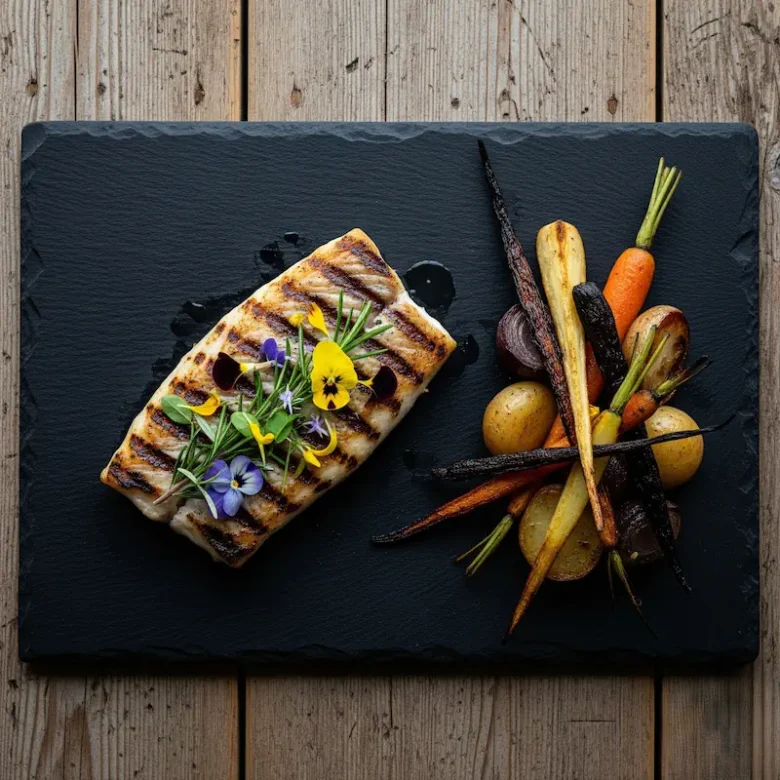
The arrangement is often deliberately unfussy, allowing the textures and colors of the food to speak for themselves. A perfectly roasted root vegetable, with its blistered skin and earthy aroma, might be simply placed on a piece of slate.
A piece of smoked fish, flaky and glistening, could rest on a bed of fresh, wild herbs. This approach celebrates the inherent beauty of natural forms and the visible traces of the cooking process—a smidge of ash, a glint of fat, the rough cut of a vegetable. It’s an aesthetic that is both humble and profoundly impactful, drawing the diner into a primal, visceral experience.
Texture, smoke, and color
Primitive cooking creates dishes that look and feel intensely alive. The transformative power of fire and earth imparts unique visual and tactile qualities.
Blistered skins on roasted vegetables, glistening fat on slowly rendered meats, the deep, dark hues of embers and ash-tinted roots—these are the hallmarks of this cuisine.
The color palette often leans towards earthy tones: the rich browns of caramelized surfaces, the deep greens of wild herbs, the vibrant reds of fresh produce against the muted backdrop of natural plating.
Smoke itself becomes a visible element, sometimes clinging subtly to the food, or hinted at through the char. Texture is paramount: the crispness of a charred exterior giving way to a tender, smoky interior; the chewiness of slow-cooked meat; the delicate flakiness of fish baked in clay.
These sensory cues are not accidental; they are inherent to the cooking methods. They create a multi-layered experience that engages not just the taste buds, but also the eyes, the nose, and the hands, making each bite a journey of discovery and a celebration of elemental transformation.
Emotional and philosophical resonance
Beyond the tangible sensory experiences, primitive cooking taps into deeper emotional and philosophical currents. It offers a counter-narrative to the hurried pace of modern life, inviting us into a space of reflection, patience, and profound connection.
Time as technique
Perhaps the most potent ingredient in primitive cooking is time. You don’t rush these methods. Pit cooking requires hours; slow simmering demands a morning or an afternoon; building a fire and allowing it to develop perfect coals is a patient art.
Waiting, in this context, becomes an active part of the ritual. It forces a slowing down, a surrender to natural rhythms that often feel alien in our instant-gratification culture.
This embrace of slowness creates a depth that cannot be rushed. Flavors meld, textures transform, and the ingredients themselves undergo a profound metamorphosis.
But beyond the culinary outcome, the act of waiting cultivates patience, mindfulness, and a heightened appreciation for the eventual reward.
It transforms cooking from a chore into a meditative practice, where the journey is as significant as the destination. This deliberate pace, this intentional slowness, is not just a technique; it is a philosophy that permeates the entire experience, fostering a deep sense of presence and connection.
Reconnecting with food’s origin
Primitive cooking fundamentally removes the filters that separate us from our food. There are no buttons, no dials, no digital displays. Just heat, time, and presence.
This directness forces a reconnection with food’s origin, making the entire process feel like a communion with the natural world.
It invites us to consider the story of each ingredient: where it came from, how it grew, and the elemental forces that transform it. Cooking over an open fire, feeling the heat, smelling the wood smoke, watching the flames dance—these experiences are deeply visceral.
They awaken a primal memory, a sense of belonging to an unbroken chain of human activity that stretches back to our earliest ancestors. It’s a powerful reminder that food is not just fuel; it’s a gift, a connection, a story.
This unmediated engagement with the elements fosters a profound sense of gratitude and respect for the earth and its bounty.
Sustainability and natural rhythm
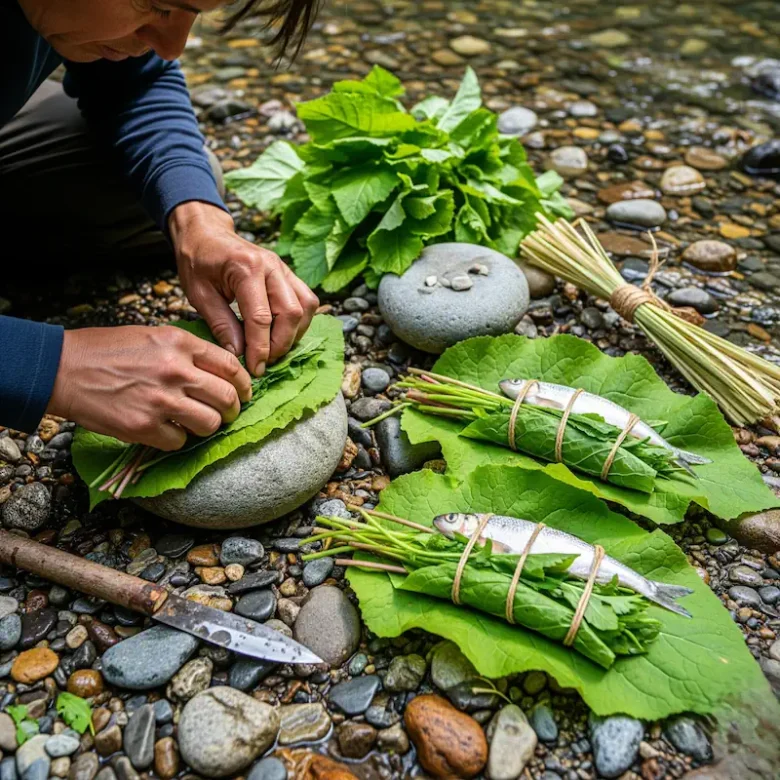
In an era increasingly concerned with environmental impact and sustainable living, primitive cooking techniques offer compelling models for a more ecological approach to food preparation. They inherently lean towards low-tech, low-waste solutions that resonate deeply with natural rhythms.
Low-tech, low-waste
Primitive cooking is, by its very nature, an exercise in sustainability. It requires minimal specialized equipment, relying instead on found materials and fundamental tools. There’s no need for electricity, gas, or complex machinery.
The primary fuel, wood, can often be sourced locally and sustainably. This low-tech approach dramatically reduces the environmental footprint associated with modern cooking, cutting down on manufacturing, transportation, and energy consumption.
Furthermore, primitive methods often encourage a low-waste philosophy. Techniques like pit cooking, where food is wrapped in leaves, eliminate the need for disposable packaging.
The emphasis on whole ingredients and nose-to-tail, root-to-stem utilization, often driven by necessity in ancient times, is inherently ecological.
It fosters a mindset of resourcefulness and appreciation for every part of an ingredient, rather than discarding what isn’t immediately convenient. This simple, direct approach is a powerful reminder that truly sustainable cooking is often the oldest form of cooking.
Rhythms of the environment
Engaging in primitive cooking is a powerful way to reconnect with nature’s tempo. Unlike cooking in a climate-controlled kitchen with perfectly calibrated appliances, these methods demand an awareness of the surrounding environment.
You learn to cook based on variables like wood type, which burns at a specific temperature and imparts unique flavors; wind speed, which affects the intensity of the flame; and even humidity, which can influence how food cooks and how smoke infuses.
This adaptability to natural conditions fosters a profound connection to the rhythm of the environment. You become an observer, attuned to subtle shifts in air, temperature, and material.
This isn’t about overriding nature with technology; it’s about listening to it, working with it, and allowing its forces to guide the cooking process.
It’s a return to a more symbiotic relationship with the earth, where the kitchen extends beyond four walls and embraces the dynamic forces of the natural world.
This rhythmic engagement transforms cooking into a deeply ecological practice, aligning our culinary actions with the broader patterns of life on Earth.
Challenges and responsibility
While the allure of primitive cooking is strong, embracing these techniques also comes with significant responsibilities and challenges, particularly regarding cultural sensitivity and the acceptance of imperfection.
Cultural appropriation and authenticity
As primitive cooking gains popularity, it’s crucial to approach these techniques with a deep sense of cultural awareness and respect, especially when drawing from Indigenous practices.
Many of these methods are not merely “recipes”; they are integral parts of living cultures, often tied to ceremonies, social structures, and spiritual beliefs. Simply replicating a technique without understanding its historical, social, and spiritual context can lead to cultural appropriation.
Authenticity, in this context, means more than just using the right ingredients or tools. It demands humility, research, and a willingness to acknowledge the origins of these practices.
When learning or adapting these methods, it’s essential to seek out and credit Indigenous teachers, sources, and communities.
Engaging in respectful dialogue, understanding the stories behind the food, and, where possible, supporting Indigenous enterprises are vital steps. This ensures that the rediscovery of primitive cooking is a journey of appreciation and education, not exploitation.
Learning through humility
Primitive cooking is inherently messy, unpredictable, and often imperfect. Unlike the sterile precision of a modern kitchen, where every variable is controlled, cooking with fire and earth involves constant adaptation.
Flames can be fickle, embers shift, and the ground can hold heat unevenly. This unpredictability can be challenging for those accustomed to exact measurements and guaranteed outcomes.
However, this very unpredictability is where the deepest learning occurs. Primitive cooking is not about mastering nature; it’s about listening to it. It teaches humility, patience, and resilience. Mistakes are not failures but opportunities to observe, adapt, and understand the elements more deeply.
The charred piece of vegetable, the slightly undercooked root, the overly smoky flavor—these are lessons learned through direct experience.
This hands-on, often imperfect, process fosters a deeper connection to the craft, reminding us that true mastery comes not from flawless execution, but from a lifelong dialogue with the raw materials and elemental forces that shape our food. It’s a journey of continuous learning, guided by the wisdom of fire and earth.
Primitive cooking techniques strip food preparation down to its bare essentials—fire, patience, instinct, and presence. In their beautiful simplicity, they paradoxically offer a profound complexity of flavor and texture.
In their inherent roughness, they reveal a unique kind of refinement. And in their deliberate slowness, they offer a new kind of luxury: a luxury rooted not in extravagance, but in truth, connection, and mindful engagement.
This isn’t about merely going backward in time to cook as our ancestors did. It’s about going deeper. It’s an invitation to pause, to listen to the whispers of smoke and earth, and to rediscover the primal joy of creating food with our hands, our senses, and an open heart. By embracing these ancient methods, we don’t just cook; we connect.
We don’t just eat; we commune. And in doing so, we find a rich, elemental satisfaction that nourishes not only the body but also the soul. This is the enduring power and timeless appeal of primitive cooking: a path back to the fundamental magic of food.