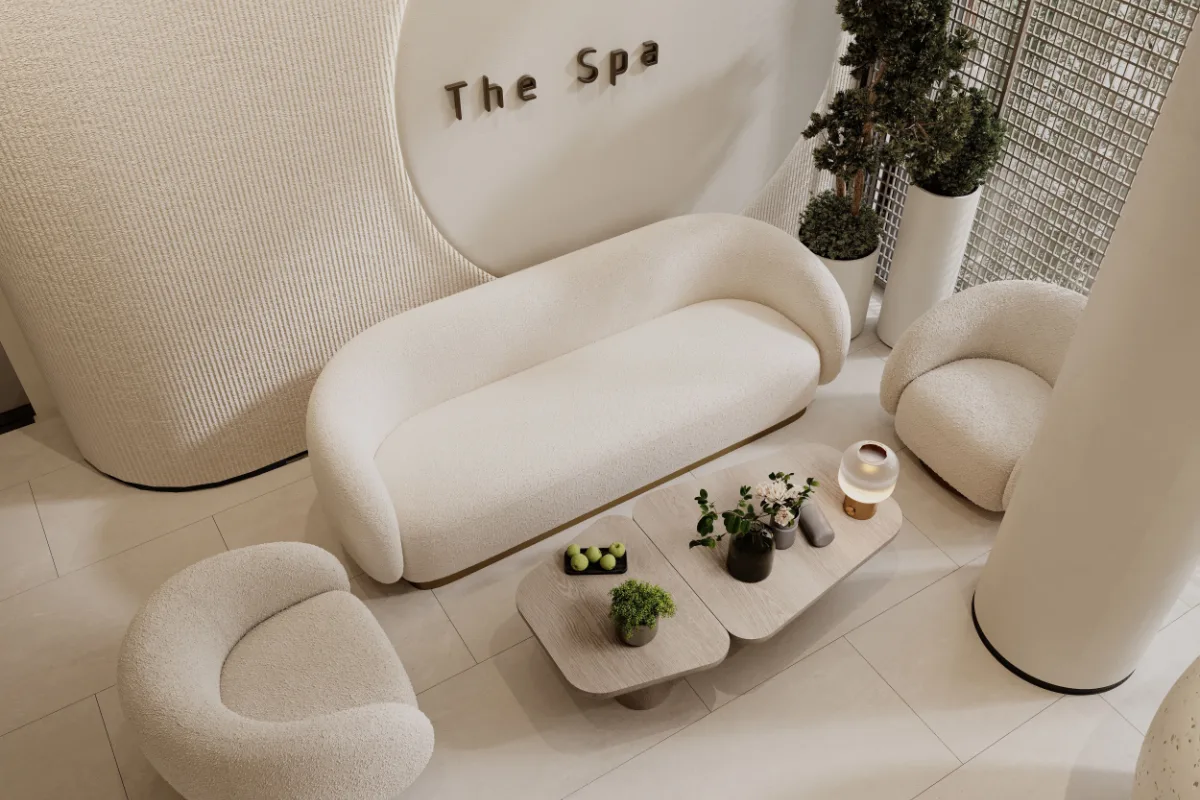
There’s a quiet shift happening in the spaces we inhabit. After years dominated by the clean, almost sterile lines of minimalism and the raw, industrial edge of exposed materials, a softer, more human-centric aesthetic is taking hold. It’s a design language that speaks not just to the eyes, but to the sense of touch.
It prioritizes comfort, warmth, and a feeling of sanctuary. At the heart of this movement is a textile with a storied past and an undeniable presence: a nubby, looped yarn that invites you to slow down, to connect, and to feel. This is not just about a trend; it’s about a collective yearning for spaces that feel like a gentle embrace.
This material, with its distinctive curly, knotted surface, has become a shorthand for sophisticated comfort. It bridges the gap between the impeccably curated and the genuinely livable. Its texture is both visually interesting and profoundly comforting, a combination that has secured its place in the pantheon of timeless design elements. We see it draping the sensuous curves of statement armchairs and anchoring living rooms on grand, inviting sofas.
Its appeal lies in its inherent contradiction: it is at once luxurious and understated, playful and elegant. It doesn’t shout for attention; it whispers of quality and enduring style, making it a compelling subject for anyone fascinated by the intersection of aesthetics and emotion in design.
The thread of history: Unraveling its origins
To fully appreciate the current resurgence of this iconic textile, one must trace its journey through the annals of design history. Its story is not one of a single, linear progression but rather a series of pivotal moments where it captured the imagination of creative visionaries.
From the high-fashion ateliers of Paris to the pioneering architectural studios of mid-century America, its path reveals a remarkable adaptability and a timeless appeal that transcends decades and disciplines.
From Parisian couture to American modernism
The narrative often begins in the world of high fashion. In the 1940s, the textile gained prominence, most famously associated with Coco Chanel’s iconic jackets. The material offered a unique combination of structure and softness, allowing for tailoring that was both sharp and comfortable—a perfect embodiment of her revolutionary approach to womenswear.
However, its journey into our homes was championed by a different set of innovators. Architect and designer Eero Saarinen was looking for a fabric that could upholster his groundbreaking 1948 Womb Chair, a piece designed at the request of Florence Knoll to be a “chair that was like a basket full of pillows.” He needed a material that could stretch and conform to the chair’s complex, organic curves without bunching or losing its integrity.
The slightly elastic, highly textural nature of this looped fabric proved to be the ideal solution. This collaboration marked a turning point, cementing the material’s status as a staple of modern interior design.
The mid-century modern embrace
The Saarinen-Knoll collaboration was just the beginning. The post-war era was a time of immense creativity and optimism in design, and this textile fit perfectly with the prevailing ethos. Mid-century modernism celebrated honest materials, organic forms, and furniture designed for a new, more casual way of living.
Designers like Pierre Paulin saw its potential, using it to upholster his famously biomorphic and sculptural pieces, such as the Groovy Chair (F591) and the Ribbon Chair. The fabric’s nubby texture added a layer of visual warmth and tactile appeal to these avant-garde forms, making them feel inviting rather than intimidating.
A well-crafted boucle chair from this era became a symbol of progressive taste, a piece that was both a functional object and a work of art. It represented a departure from the stiff, formal furniture of the past and a move towards something more human, more comfortable, and more expressive.
A quiet hibernation and a powerful return
Like many design trends, the fabric’s popularity waned in the latter part of the 20th century. The sleek leathers of the 80s and the patterned chintzes of the 90s pushed its quiet charm to the background. Yet, its legacy endured in classic pieces that never truly went out of style. Its recent comeback is not simply a wave of nostalgia; it’s a response to our contemporary needs.
In a world saturated with digital screens and smooth, cold surfaces, there is a renewed appreciation for texture and materiality. The rise of “Japandi” and “organic modern” aesthetics, which emphasize natural materials, neutral palettes, and a sense of calm, has created the perfect environment for its revival.
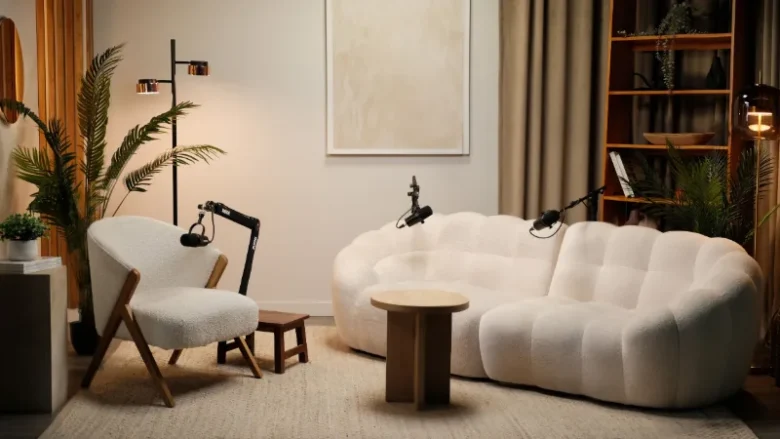
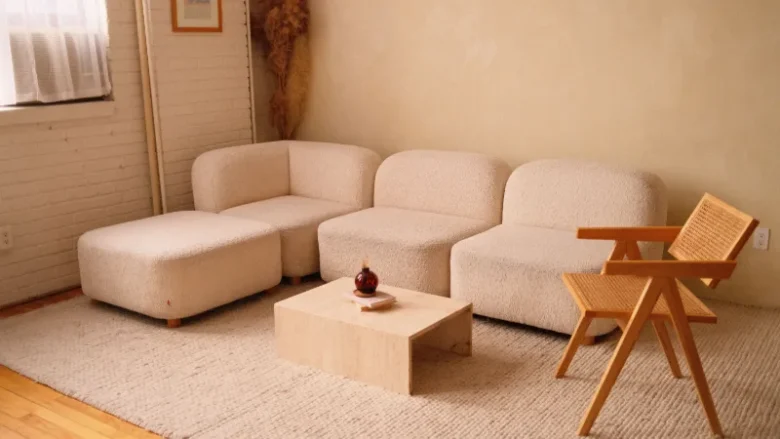
Contemporary designers are reinterpreting it for a new generation, using it in oversized, cloud-like sofas and minimalist armchairs, proving its versatility once again. It feels less like a retro throwback and more like a timely rediscovery of a material that perfectly answers our modern desire for comfort and tactile connection.
The anatomy of an icon: Weaving comfort and style
What gives this particular textile its enduring magic? The answer lies in its unique construction and the sensory experience it provides. Its name, derived from the French word for “curled” or “ringed,” perfectly describes its defining characteristic.
Understanding the mechanics behind its creation helps explain why it has captivated designers and homeowners for nearly a century. It’s a testament to how a simple structural idea—the loop—can create such a rich and complex result.
What is boucle and how is it made?
At its core, the textile is a yarn and a fabric made from that yarn. The process begins by creating a looped or curled yarn. This is typically achieved by plying together at least two strands, with one strand being held at a looser tension than the others as it is wound. This difference in tension is what causes the looser strand to form the characteristic loops along the length of the yarn.
The size and frequency of these loops can be varied to create different textures, from fine and subtle nubs to large, pronounced curls. Traditionally, wool was the fiber of choice, prized for its natural softness, warmth, and resilience.
Today, while wool remains a premium option, the fabric is also made from cotton, linen, alpaca, and even synthetic fibers like polyester and acrylic, which can offer enhanced durability and different price points. Once the yarn is created, it is woven into a fabric, resulting in a surface that is dense, soft, and irresistibly tactile.
The psychology of texture in design
The appeal of this material goes far beyond its technical specifications. It taps into a fundamental human need for sensory stimulation and comfort. Texture plays a powerful role in how we perceive and experience a space. Smooth, hard surfaces can feel clean and efficient but also cold and impersonal.
Soft, textured surfaces, by contrast, evoke feelings of warmth, safety, and relaxation. The looped weave of this fabric is particularly effective at this. It visually breaks up flat planes, adding depth and interest to a piece of furniture. It invites touch, creating a multi-sensory experience that a flat-weave fabric cannot replicate.
In a living room, a sofa upholstered in this material doesn’t just offer a place to sit; it offers a place to curl up, to decompress, and to feel grounded. This psychological impact is a key reason for its resurgence in an age where our homes have become our primary sanctuaries from a chaotic outside world. The material’s soft, irregular surface helps to absorb sound, contributing to a quieter, more serene acoustic environment.
Color, form, and the modern palette
While historically associated with the creamy whites and off-whites of mid-century modernism, the contemporary application of this textile embraces a much broader color spectrum. The classic ivory and ecru tones remain popular, evoking a sense of serene luxury and pairing beautifully with natural woods and stones. However, designers are now experimenting with a range of sophisticated neutrals and bold accent colors.
- Warm neutrals: Shades of oatmeal, sand, and mushroom gray are increasingly common. These colors maintain the fabric’s calming quality while adding a bit of earthy depth, making them versatile choices for a variety of interior styles.
- Earthy tones: Moss green, terracotta, and rich ochre are being used to create statement pieces that feel both contemporary and grounded in nature. These colors highlight the fabric’s texture and create a cozy, enveloping atmosphere.
- Deep hues: For a more dramatic effect, deep navy, charcoal, and even black are appearing. On a material this textured, dark colors take on a new dimension, absorbing light in a way that emphasizes the loops and curls, creating a look that is both moody and incredibly chic.
The fabric’s ability to hug curves makes it a perfect match for the sculptural, rounded furniture forms that are currently in vogue. The combination of soft, continuous lines and a highly textural surface creates furniture that feels almost like a natural formation—a smooth, comforting pebble in the river of a room.
Living with looped luxury: A practical analysis
Beyond the aesthetic allure and historical significance lies the practical reality of incorporating this material into a home. It’s one thing to admire a piece in a showroom or a magazine, but another to live with it day in and day out.
For those considering an investment in a piece of furniture upholstered in this distinctive textile, a clear-eyed look at its performance, care requirements, and suitability for different lifestyles is essential. The conversation around a boucle sofa pros cons is nuanced, balancing its undeniable beauty against the realities of maintenance and durability.
Durability and everyday performance
One of the most common questions revolves around how well the fabric holds up to daily use. The answer depends heavily on the fiber content and the quality of the weave. High-quality versions, particularly those made with a high percentage of wool, are surprisingly resilient.
Wool is naturally durable, elastic, and resistant to wrinkling and staining. The tight, looped weave of the fabric also contributes to its strength, making it less prone to snagging than one might assume, although sharp objects—like pet claws or jewelry—can still pose a risk.
Synthetic blends, such as those incorporating polyester or acrylic, can offer enhanced stain resistance and durability, often at a more accessible price point. However, it’s worth noting that the looped texture can be a magnet for dust, crumbs, and pet hair, which can get trapped within the weave. Regular, gentle vacuuming with an upholstery attachment is a non-negotiable part of its upkeep to keep it looking fresh.
Care and maintenance considerations
Proper care is paramount to preserving the beauty and longevity of this textile. It is not a “wipe-and-go” surface like leather or a simple flat-weave. Spills should be addressed immediately by blotting—never rubbing—with a clean, dry cloth to absorb as much liquid as possible.
For more stubborn spots, a water-based cleaning solution may be used, but it’s crucial to test it on an inconspicuous area first. Given its textured nature, professional cleaning is often recommended for deep cleaning or significant stains.
- Regular vacuuming: Use a soft brush attachment to gently lift away dust and debris from the loops without abrading the fibers.
- Immediate spill response: Blot liquids immediately. For solids, gently scrape away any excess before treating the spot.
- Avoid harsh chemicals: Bleach and solvent-based cleaners can damage the fibers and cause discoloration. Always opt for gentle, upholstery-specific products.
- Professional cleaning: For an overall refresh or to tackle difficult stains, entrusting the piece to a professional upholstery cleaner is the safest and most effective option.
This level of care means it might not be the most practical choice for a household with very young children or pets prone to accidents, unless one opts for a high-performance synthetic blend specifically designed for heavy use.
The enduring resonance of tactile design
The story of boucle fabric is more than just a chapter in the history of textiles; it’s a reflection of our evolving relationship with our personal spaces. Its journey from a functional solution for a mid-century chair to a global symbol of cozy sophistication speaks volumes about what we seek from our interiors.
It’s a material that doesn’t just occupy a room; it transforms it, infusing it with a sense of warmth, personality, and understated luxury that feels both timeless and perfectly suited to our present moment.
Its power lies in its ability to engage our senses and ground us in the physical world. In an era of digital detachment, the simple act of running a hand over a textured surface can be a small moment of mindfulness, a reminder of the beauty in the material world. This is the kind of design that resonates on a deeper level, creating spaces that support not just our bodies, but our well-being.
The pieces it adorns are not merely furniture; they are invitations to pause, to connect, and to find comfort in the everyday. They are the quiet anchors in the narrative of our homes.
Here at Neomania Magazine, we are endlessly fascinated by these stories—the threads that connect an object’s form to its function and its history to its future. We believe that the most compelling design is that which sparks a conversation, challenges perception, and stirs emotion. If this exploration of texture, history, and the quiet power of a well-chosen material has resonated with you, it is just a glimpse into the world we curate.
We invite you to continue the journey with us, to discover more narratives that provoke thought and inspire a deeper connection to the world of design. Subscribe to our publication for stories that go beyond the surface, delivering a refined and direct look into the art that shapes our lives.