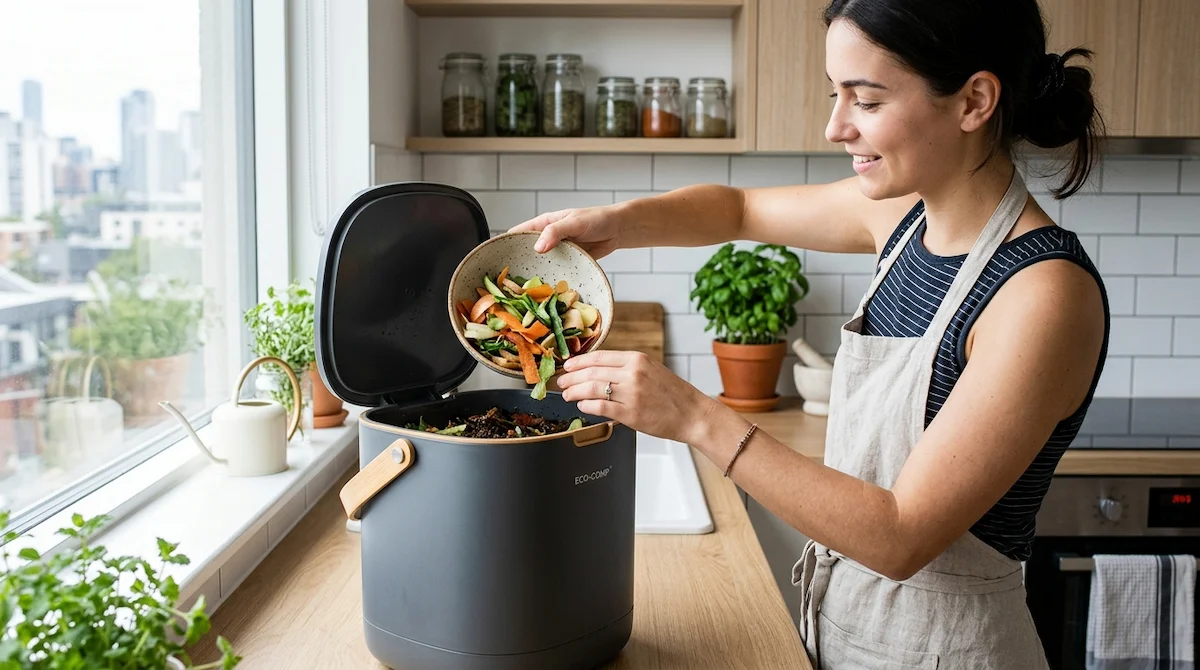
There’s a silent, transformative process that connects the end of one life cycle to the beginning of another. It’s an act of alchemy that happens not in a hidden laboratory, but in a quiet corner of a garden, a balcony, or even right under a kitchen sink.
We’re talking about the deliberate and beautiful act of decomposition, a practice that turns the mundane—the coffee grounds, the apple cores, the wilted lettuce—into something profoundly valuable: rich, dark, living earth.
This isn’t just about reducing waste; it’s about participating in a fundamental story of renewal. It’s a subtle rebellion against the disposable culture, a hands-on philosophy that redefines our relationship with what we consume and what we discard.
This practice is a microcosm of the planet’s own genius. In nature, nothing is ever truly thrown away. Every fallen leaf, every withered branch, becomes nourishment for new growth.
By embracing this cycle within our own homes, we do more than just divert organic matter from landfills. We become active curators of a small ecosystem, fostering a universe of microbial life that works tirelessly to create fertility from decay.
It’s a powerful reminder that we are not separate from these natural processes, but intrinsically part of them. The journey of transforming scraps into soil is a narrative of patience, observation, and connection.
It’s a story that unfolds slowly, teaching us about balance, the needs of living systems, and the surprising beauty that can be found in what is often overlooked. It’s a quiet revolution, one that starts with a single peel.
The forgotten art of decomposition
For most of modern history, we’ve been conditioned to see waste as an endpoint. Something to be bagged, tied, and removed from our sight as quickly as possible.
This linear model of “take, make, dispose” has created a deep psychological and physical distance between us and the consequences of our consumption.
We’ve forgotten the ancient, cyclical wisdom that our ancestors understood intuitively: that the end of one thing is simply the raw material for another. Reclaiming the art of decomposition is about closing that loop and rewriting our personal narrative around waste.
Beyond the bin: a new philosophy of waste
The first step in this journey is a mental one. It requires a shift in perspective, from seeing kitchen scraps as “garbage” to seeing them as “resources.” An orange peel is no longer trash; it’s a future source of nitrogen.
Eggshells are not waste; they are a slow-release offering of calcium for future tomato plants. This simple reframing changes everything. It turns a daily chore into a mindful practice.
Every time you choose the compost pail over the trash can, you are making a conscious decision to participate in a creative act rather than a destructive one.
This new philosophy extends beyond the kitchen. It encourages a more holistic view of the materials that flow through our lives. We start to question packaging, to consider the full lifecycle of the products we buy. The compost pile becomes a tangible, daily reminder of our impact and our potential.
It’s a living monument to a more thoughtful way of being, a testament to the idea that we can be producers of life, not just consumers of goods.
This is the foundation of a truly sustainable living model, one built not on grand, abstract gestures, but on small, consistent, and meaningful actions that ripple outward. It’s about taking responsibility for our own small corner of the world and, in doing so, transforming it.
The choreography of microbes
What appears to be a static pile of organic matter is, in reality, a bustling, vibrant metropolis of microscopic life. This is where the true magic happens.
An army of bacteria, fungi, actinomycetes, and other microorganisms are the unsung heroes of the decomposition process. They are the choreographers of this intricate dance of decay and renewal.
The initial phase is led by psychrophilic and mesophilic bacteria, which thrive in cooler temperatures and begin breaking down the most easily digestible materials. As they work, they generate heat, a sign that the process is well underway.
This heat signals the next wave of workers to take the stage: the thermophilic bacteria. These heat-loving organisms are powerhouses of decomposition, rapidly breaking down proteins, fats, and complex carbohydrates.
The temperature in an active pile can reach 130-160°F (55-70°C), hot enough to kill weed seeds and pathogens, effectively sanitizing the material. As the thermophiles exhaust their food source, the pile begins to cool, and another group of microorganisms, along with larger players like earthworms, mites, and sowbugs, move in to finish the job.
They refine the material, breaking it down further and creating the stable, nutrient-rich substance we call humus. Understanding this microbial choreography allows us to see our compost pile not as a heap of refuse, but as a living, breathing ecosystem that we are privileged to nurture.
Reconnecting with natural cycles
Our modern lives are often disconnected from the rhythms of the natural world. We live in climate-controlled homes, buy produce that is out of season, and measure time by deadlines and calendar alerts rather than by the turning of the seasons.
Engaging in the process of home composting is a powerful antidote to this disconnection. It forces us to slow down and observe.
We become attuned to the changing seasons, noticing how the pile behaves differently in the heat of summer versus the cool of autumn. We learn the rhythm of turning the pile, of adding water when it’s dry, of waiting patiently for the transformation to complete.
This practice grounds us in the fundamental cycles of life, death, and rebirth. We witness firsthand how decay is not an end to be feared, but a necessary and beautiful prelude to new life.
There is something deeply satisfying and centering about this. It’s a tangible link to the earth, a way of participating in its timeless processes.
This connection fosters a sense of stewardship and a deeper appreciation for the intricate web of life that sustains us. It’s a form of meditation, a quiet act of reverence for the planet’s resilience and ingenuity. By tending to our compost, we are, in a very real sense, tending to our own roots.
Curating your pile: the raw materials of transformation
Creating excellent compost is much like being a chef or an artist; it’s about understanding your materials and combining them in the right proportions to achieve a desired result.
The pile is your canvas, and the kitchen scraps and yard trimmings are your palette. The goal is to create a balanced environment where the microbial workforce has everything it needs to thrive: food, water, and air.
This isn’t about rigid rules, but about developing an intuitive feel for the process, learning to “read” the pile and respond to its needs.
The greens and browns: a recipe for life
The foundation of any healthy compost pile is the balance between two types of materials: nitrogen-rich “greens” and carbon-rich “browns.” This is often referred to as the Carbon-to-Nitrogen (C:N) ratio.
A good target is roughly 25-30 parts carbon to 1 part nitrogen by weight, which often translates to about two or three parts brown material for every one part green material by volume.
This ratio provides the perfect diet for the microorganisms, giving them both the energy they need to work (carbon) and the protein they need to build their bodies and reproduce (nitrogen).
- Nitrogen-Rich “Greens” (The Activators): These are materials that are typically fresh, moist, and full of life. They provide the essential proteins and enzymes that kickstart the heating process in the pile.
- Fruit and vegetable scraps
- Coffee grounds and tea bags
- Fresh grass clippings
- Eggshells (crushed for faster breakdown)
- Seaweed and kelp
- Manure from herbivores (chicken, rabbit, cow)
- Carbon-Rich “Browns” (The Fuel): These materials are typically dry, woody, and provide the bulk and energy source for the microbes. They also ensure good aeration, preventing the pile from becoming a slimy, anaerobic mess.
- Dried leaves
- Straw or hay
- Shredded newspaper or cardboard (uncoated)
- Wood chips or sawdust (from untreated wood)
- Pine needles
- Dryer lint (from natural fibers like cotton or wool)
Achieving this balance is an ongoing dance. Too many greens can lead to a smelly, slimy pile, while too many browns will slow the decomposition process to a crawl.
The key is to layer them or mix them as you add them, creating a well-blended environment for your microbial partners.
The forbidden ingredients: what to leave out of the narrative
Just as a curator carefully selects which pieces to include in an exhibition, a composter must be selective about what goes into the pile.
While most organic matter will eventually break down, some materials can cause problems, attracting pests, creating foul odors, or introducing harmful pathogens.
Excluding these items ensures a smooth, pleasant, and safe composting experience. The goal is to create a healthy narrative of renewal, and some elements simply don’t fit that story.
Think of this as an editorial choice. You are guiding the process toward a specific outcome: rich, safe, and beneficial soil amendment. Therefore, it’s best to leave the following materials out of your backyard system:
- Meat, fish, and bones: These will decompose, but they are notorious for attracting rodents, raccoons, and other unwanted pests. They can also produce extremely unpleasant odors.
- Dairy products and grease: Similar to meat, these attract pests and can create an oily, water-resistant layer in your pile, disrupting airflow and moisture distribution.
- Diseased plants or weeds with seed heads: The heat of a well-managed pile can kill many pathogens and seeds, but it’s not a guarantee. It’s safer to avoid introducing them in the first place, so you don’t inadvertently spread problems back into your garden.
- Pet waste (from dogs or cats): This can contain harmful parasites and pathogens that are not reliably eliminated in a typical home system and can pose a health risk.
- Chemically treated wood or yard waste: Sawdust from pressure-treated lumber, or grass clippings from a lawn treated with herbicides, can introduce harmful chemicals into your finished compost, which you definitely don’t want in your garden soil.
From a zero-waste kitchen to a thriving ecosystem
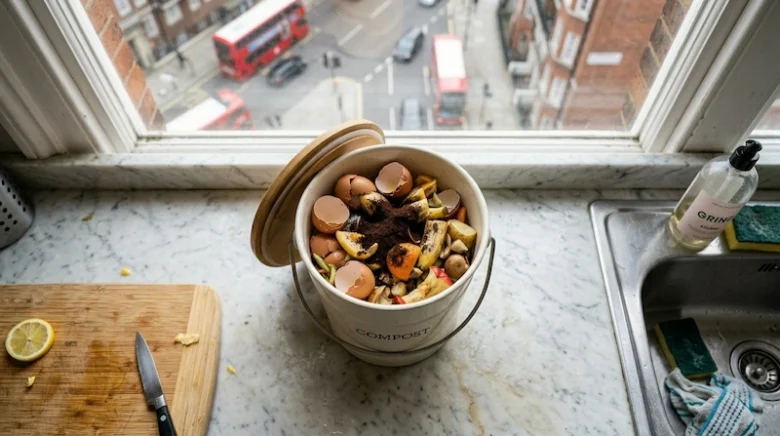
The practice of separating your organic materials fundamentally changes the way you operate in your kitchen. Suddenly, the countertop compost pail becomes as essential as the sink or the cutting board.
This simple habit is the cornerstone of a zero-waste kitchen, dramatically reducing the volume of trash you send to the curb. It fosters a sense of resourcefulness and mindfulness about food, encouraging you to use up vegetables before they wilt and to appreciate the full value of every part of the plant.
This connection doesn’t end at the kitchen door. The compost you create becomes the lifeblood of your garden, balcony pots, or houseplants. It’s a closed-loop system that you have designed and nurtured.
The nutrients from your past meals are cycled back into the soil to feed your future ones. This creates a tangible link between your consumption and your production, turning your home into a small but thriving ecosystem.
You are no longer just a resident; you are a participant, a steward of the land, however small your patch may be. This deepens your connection to your food and the soil it comes from, creating a cycle of nourishment that is both practical and profoundly spiritual.
The vessel and the process: choosing your stage
The physical structure that holds your compost is less important than the process itself, but choosing the right vessel can make the experience more enjoyable, efficient, and suited to your specific living situation.
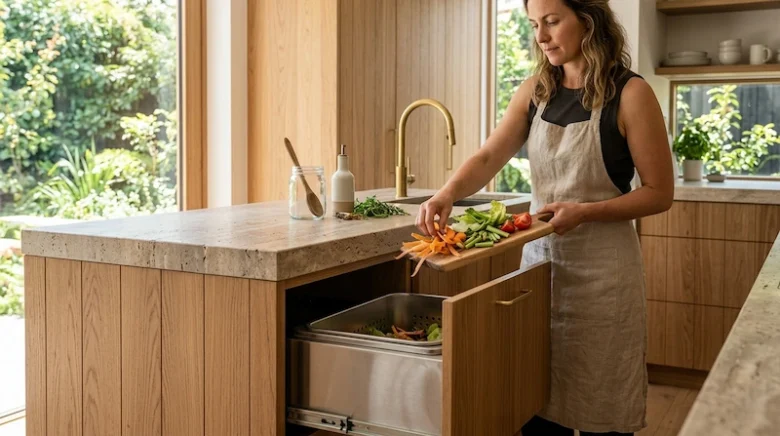
Think of the compost bin as the stage upon which the drama of decomposition unfolds. Whether it’s a simple, rustic pile or a sleek, modern tumbler, its purpose is the same: to contain the materials and provide an optimal environment for the microbial actors to do their work. The choice of stage depends on your space, your budget, and your aesthetic preferences.
The minimalist approach: open piles and tumblers
For those with ample backyard space, the open pile is the most straightforward and time-honored method. It can be as simple as a designated heap in a discreet corner of the yard, or it can be contained by a structure made of wire mesh, wooden pallets, or concrete blocks. The key advantage of an open pile is its capacity and simplicity.
It allows for easy turning with a pitchfork and can handle large volumes of yard waste like leaves and grass clippings. It’s a method that feels deeply connected to the earth, as the pile is in direct contact with the ground, allowing beneficial organisms like earthworms to migrate in and out freely.
For a more contained and often faster process, compost tumblers are an excellent option. These are sealed drums, typically made of recycled plastic, that are mounted on a frame so they can be rotated.
Turning a crank or spinning the drum mixes and aerates the contents, which can significantly speed up decomposition. Tumblers are tidy, keep pests out, and are a good choice for suburban settings where a neat appearance is important.
They require a bit more attention to moisture levels, as they are not open to the rain, but they can produce finished compost in as little as a few weeks under ideal conditions.
The urban solution: worm farms and bokashi
Living in an apartment or a home without a yard doesn’t exclude you from this transformative practice. There are ingenious solutions designed specifically for small spaces. Vermicomposting, or worm farming, is one of the most popular.
It uses a special type of earthworm (typically red wigglers) in a contained bin to process kitchen scraps. The worms work quickly and efficiently, producing not only a rich, dark compost called “worm castings” but also a liquid fertilizer known as “worm tea.”
A worm bin can be kept on a balcony, in a garage, or even under a kitchen sink, and it’s a fascinating way to observe a living ecosystem up close.
Another innovative method for urban dwellers is the Bokashi system. Originating in Japan, Bokashi is technically a fermentation process rather than a composting one. Kitchen scraps are layered in an airtight bucket with an inoculant of beneficial microbes. The microbes pickle the waste, preventing it from rotting and creating odors.
After a couple of weeks, the fermented material can be buried in a garden, a planter, or even a “soil factory” bin, where it will break down into rich soil very quickly.
The Bokashi method has the added advantage of being able to handle materials that traditional composting can’t, like meat and dairy, making it a highly efficient indoor option.
The sensory experience: sight, smell, and touch
Engaging with your compost pile is a full sensory experience that deepens your connection to the process. There is the visual transformation, watching as vibrant orange peels, green lettuce leaves, and brown cardboard slowly meld and darken, losing their individual identities to become a uniform, crumbly black.
It’s a slow-motion film of decay giving way to creation. You learn to read the pile with your eyes, noticing if it looks too dry or too wet.
Then there is the smell. A healthy, well-managed compost pile does not smell like garbage. It has a rich, pleasant, earthy aroma, like a forest floor after a rain.
This scent is the smell of life, of geosmin produced by actinomycetes bacteria—the same compound that gives soil and beets their characteristic scent. If the pile develops a sour, ammonia-like odor, it’s a sign that something is out of balance, usually too much nitrogen or not enough air.
Your nose becomes a diagnostic tool. And finally, there is the touch. The feel of the finished product is the ultimate reward: cool, crumbly, and moist, like a rich chocolate cake.
Sifting it through your fingers is a deeply satisfying, tactile confirmation of the successful transformation you have helped to orchestrate.
The harvest: the profound reward of patience
After weeks or months of patient tending, the moment of harvest arrives. This is the culmination of the entire process, the point at which you reap the tangible rewards of your collaboration with nature’s microscopic workforce.
The finished product, often called “black gold” by gardeners, is more than just a soil amendment. It is a symbol of the completed cycle, a testament to the power of transformation, and a gift you can give back to the earth. The harvest is not just a physical act; it is a moment of reflection and deep satisfaction.
Recognizing the finished product: the texture of new earth
Knowing when your compost is ready is a skill learned through observation. Mature compost is a thing of beauty. It will be dark brown or black in color and have a fine, crumbly texture.
Most of the original materials you added will be unrecognizable, having been completely broken down into their constituent parts.
There might be a few tougher items, like avocado pits or corn cobs, that remain, but these can simply be tossed back into the new pile to continue their journey.
The most telling indicator is the smell. Finished compost has that wonderful, earthy scent mentioned earlier. It should smell fresh and clean, with no hint of rotting garbage or ammonia.
When you pick up a handful, it should feel moist but not soggy, and it should hold its shape when you squeeze it lightly, without dripping water.
This final product is humus, a stable, complex organic material teeming with beneficial microorganisms, and it is one of the most valuable resources you can add to your soil. It is the very texture of new earth, ready to begin the cycle of life all over again.
The application: feeding your soil, feeding your soul
Using your homemade compost is where the true joy lies. There are numerous ways to apply this nutrient-rich material to your garden and plants.
You can spread a one- or two-inch layer on top of your garden beds as a mulch, which will slowly release nutrients, suppress weeds, and help retain moisture in the soil. You can also mix it into the soil when planting new vegetables, flowers, or shrubs, giving them a powerful boost of organic matter and microbial life right at their roots.
For container plants, you can create a premium potting mix by blending your compost with perlite or vermiculite and a base like coconut coir. This creates a medium that is both nutrient-dense and well-draining.
The act of spreading your own compost, of feeding the soil that will in turn feed your plants, is deeply rewarding. It’s a moment of reciprocity, of giving back.
This is the essence of organic gardening, a partnership with the land that fosters health and vitality from the ground up. It feeds your plants, but on a deeper level, it feeds your soul.
A reflection on a more sustainable living model
The journey of creating and using compost offers a powerful metaphor for a more thoughtful and sustainable way of life. It teaches us the value of patience in a world that demands instant gratification.
It demonstrates the power of small, consistent actions to create significant, positive change. It reminds us that there is no such thing as “away” when we throw something out; there is only “somewhere else.” By taking responsibility for our own organic “waste,” we are actively choosing to be part of the solution.
This single practice can be a gateway to a broader consciousness about our consumption patterns and our place in the ecosystem. It is a hands-on education in biology, chemistry, and ecology.
As we’ve explored here at Neomania Magazine, the most profound trends are often not the loudest, but the ones that quietly reshape our daily habits and our fundamental perspectives. This is one of them.
It is a quiet, personal, and yet profoundly revolutionary act that has the power to heal our soil, reduce our environmental footprint, and reconnect us to the beautiful, intricate cycles of the natural world.
The narrative of turning decay into life is one of the oldest and most essential stories on Earth. It’s a story of resilience, renewal, and the interconnectedness of all things.
By choosing to participate in it, you are doing more than making soil; you are cultivating a deeper understanding of the world and your place within it. The rich, dark earth you hold in your hands is a reflection of your care and attention.
It’s a story that unfolds not on a screen or a page, but in your own backyard—a story that we believe is worth telling. If this exploration of process, aesthetics, and the deeper meaning behind our daily actions resonates with you, then you’ll find a home with us.
We invite you to subscribe to Neomania Magazine, where we continue to uncover the provocative and inspiring stories that shape our world, one thoughtful act at a time.