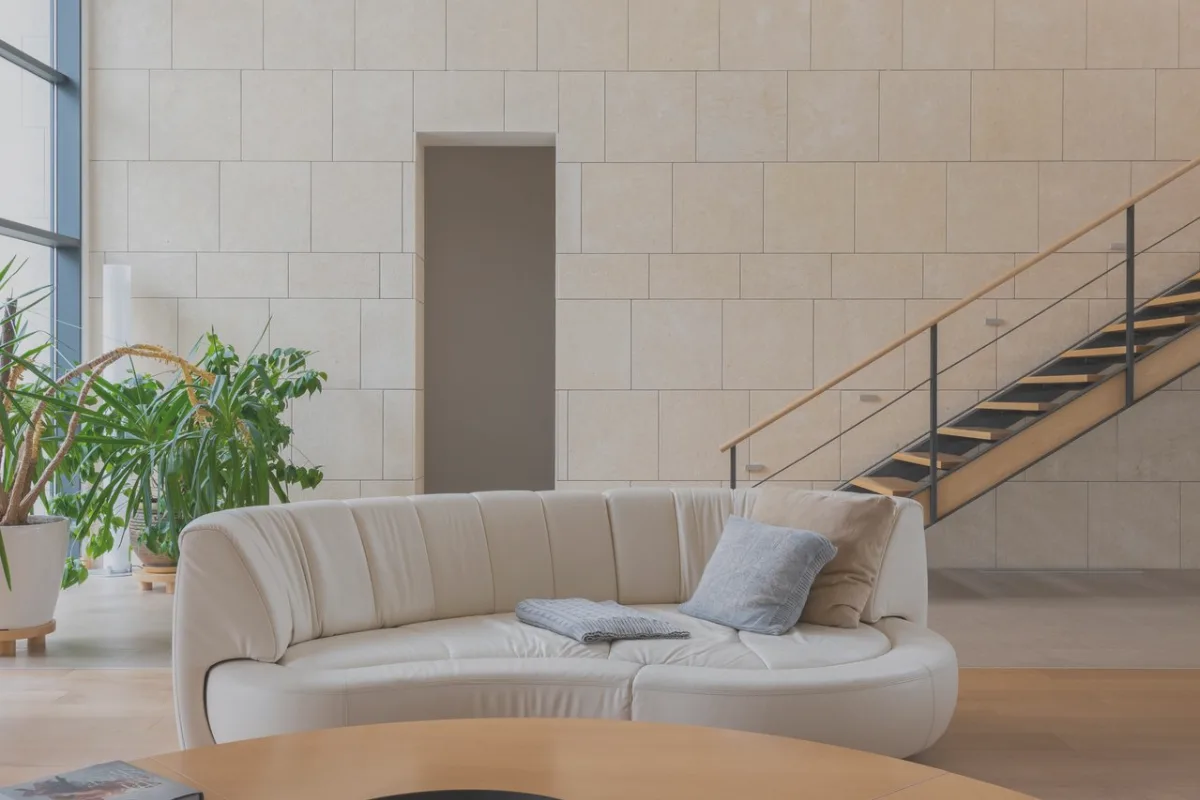
There is a certain quiet confidence to travertine. It doesn’t shout for attention like the dramatic veining of Calacatta marble, nor does it present the industrial coolness of polished concrete. Instead, it offers a soft, tactile warmth, a story etched in its porous surface.
For decades, this sedimentary limestone was relegated to the beige-on-beige palettes of the 1980s and 90s, often associated with Tuscan-inspired kitchens and sprawling, impersonal hotel lobbies. But to dismiss it as a relic of the past is to miss one of the most significant and subtle shifts in contemporary aesthetics.
The material is experiencing a powerful renaissance, championed by designers who understand that true luxury isn’t about gloss and glamour, but about texture, history, and a connection to the natural world. This is not just a trend; it’s a recalibration of what we value in our personal spaces.
The current fascination with this stone is rooted in a collective desire for authenticity and tranquility. In a world saturated with digital noise and synthetic perfection, the imperfect, pitted surface of travertine feels grounding. Each piece is a geological record, formed over millennia by mineral springs, its voids and color variations telling a unique story.
Architects and interior designers from Kelly Wearstler to Vincent Van Duysen are leveraging this narrative quality, using the stone not as a mere surface but as a sculptural element that shapes light and mood.
They are looking past its previous associations and seeing its potential for creating spaces that are both monumental and intimate, raw and refined. This renewed appreciation is about understanding the material on its own terms, celebrating its inherent character rather than forcing it into a preconceived stylistic box.
Beyond the beige: Recontextualizing a classic material
The journey of travertine from ancient Roman aqueducts to the minimalist lofts of today is a testament to its versatility. The Colosseum, a symbol of enduring strength, is largely constructed from it. The colonnade of St. Peter’s Square in Vatican City showcases its monumental grace.
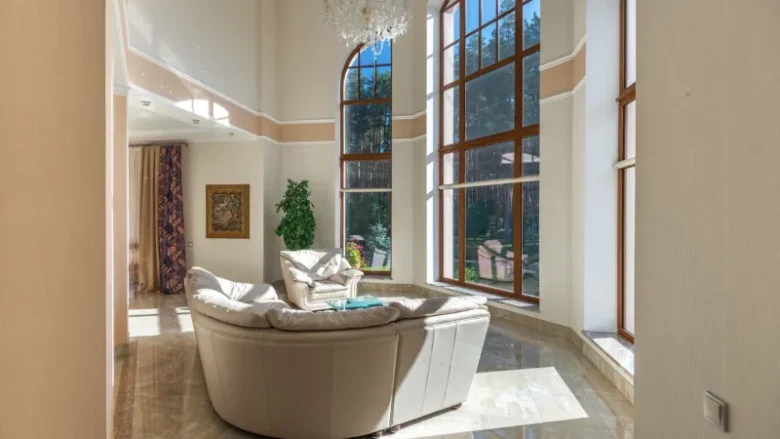
Yet, the same stone can feel incredibly intimate when used for a simple hearth or a monolithic kitchen island. The key to its modern revival lies in this recontextualization. Designers are stripping away the ornate, heavy-handed applications of the past and embracing the stone’s elemental beauty.
It’s no longer about polished, filled travertine floors stretching as far as the eye can see. It’s about a single, honed slab that forms a piece of furniture, or a wall clad in rough, unfilled tiles that plays with shadow and light.
The language of texture and tone
One of the most compelling aspects of contemporary travertine interior design is the focus on finish. The choice between filled or unfilled, honed or polished, can completely transform the material’s character. Unfilled travertine, with its natural pits and voids, offers a raw, organic texture that feels connected to the earth.
It’s a choice that embraces imperfection, adding a layer of visual and tactile interest to a space. Honed finishes provide a soft, matte surface that diffuses light beautifully, creating a serene and understated atmosphere.
This is a far cry from the high-gloss, reflective polish popular in previous eras, which often made the stone feel cold and formal. Today’s preferred finishes are all about subtlety and sensory experience.
The color palette has also expanded. While classic creamy beige and walnut tones remain popular, designers are exploring silver, gray, and even deep red varieties, opening up new possibilities for mood and expression.
From structural element to sculptural object
The modern application of travertine often treats it less like a building material and more like a piece of sculpture. We are seeing a rise in monolithic forms where the stone’s mass and presence become the focal point of a room.
Think of a solid block of travertine carved into a sink, a massive, low-slung coffee table that anchors a living area, or a freestanding bathtub that feels as if it were hewn from a single quarry block. This approach highlights the stone’s inherent beauty and weight, creating a sense of permanence and stability.
The furniture pieces of designers like Angelo Mangiarotti and Carlo Scarpa, who masterfully worked with stone in the mid-20th century, are finding new relevance. A well-crafted travertine coffee table, for instance, does more than serve a function; it acts as a central art piece, its quiet presence commanding the space around it. This shift from surface covering to standalone object is central to the material’s renewed appeal.
Pairing with purpose: Creating material dialogues
The success of travertine in a contemporary setting often depends on what it’s paired with. The old formula of travertine with dark wood and wrought iron has been replaced by more nuanced and unexpected combinations.
The stone’s warm, earthy tones create a beautiful counterpoint to cooler materials like blackened steel, bronze, and glass. A travertine floor can soften the hard edges of a minimalist interior, while a travertine wall can provide a rich, textured backdrop for sleek, modern furnishings.
The dialogue between materials is what creates a dynamic and sophisticated space. Imagine a kitchen with rough, unfilled travertine walls, sleek stainless steel countertops, and warm oak cabinetry.
Each material enhances the qualities of the others, creating a balanced and harmonious whole. This thoughtful curation of textures and finishes is what elevates the use of travertine from a simple design choice to a powerful aesthetic statement.
The intimate application: Crafting personal sanctuaries
While travertine can be used to create grand, architectural statements, its true power in the current design landscape may lie in its ability to craft intimate, personal spaces. Its warm palette and tactile nature make it uniquely suited for rooms where we seek comfort and refuge, such as bedrooms and bathrooms.
The stone has a calming effect, its natural patterns providing a subtle form of visual meditation. It connects us to a sense of deep time, a welcome antidote to the fast-paced, ephemeral nature of modern life.
Using this material in our most private spaces is a way of creating a sanctuary, a place to disconnect and recharge. It’s about building an environment that nurtures the senses and soothes the soul, a core principle of thoughtful design.
The bathroom as a modern grotto
The concept of the bathroom as a purely functional space is long gone. Today, it is envisioned as a private spa, a retreat for wellness and self-care. Travertine is the perfect material for this transformation. A complete travertine bathroom, with walls, floors, and even a custom-carved sink or tub made from the same stone, can create a seamless, immersive experience. The effect is that of a modern grotto, a space that feels both luxurious and elemental.
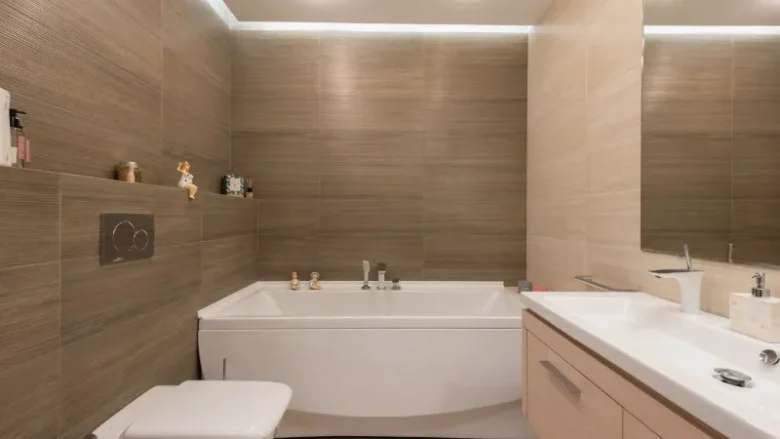
The stone’s porous nature means it must be properly sealed in wet environments, but this technical consideration is a small price to pay for the aesthetic reward. The way water interacts with the stone’s surface, the soft echo of sound, the gentle warmth underfoot—all contribute to a multi-sensory experience that a sterile, all-white tile bathroom simply cannot replicate. It’s about creating an atmosphere of serene indulgence.
Warm minimalism in living spaces
Minimalism has often been criticized for feeling cold and sterile. The “warm minimalism” movement seeks to counter this by incorporating natural materials, rich textures, and a soft, neutral palette. Travertine is a cornerstone of this aesthetic. In a living room, it can be used for a fireplace surround, creating a focal point that is both modern and timeless.
A low credenza or a series of floating shelves made from the stone can add a touch of organic elegance without overwhelming the space. The key is to use it selectively, allowing its natural beauty to shine.
A single, well-chosen piece, like the aforementioned travertine coffee table, can be enough to ground an entire room, lending it a sense of substance and quiet sophistication. It proves that a minimalist space doesn’t have to be devoid of character or warmth; it just needs to be edited with intention.
Integrating travertine with biophilic design
Biophilic design, the practice of connecting people and nature within our built environments, is another major force shaping contemporary interiors. Travertine, as a product of the earth, is a natural fit for this philosophy.
Its earthy tones and organic patterns resonate with our innate connection to the natural world. Pairing travertine with other natural elements, such as wood, linen, and an abundance of indoor plants, can create a space that feels both restorative and alive. Imagine a sunroom with a honed travertine floor, large windows framing a view of the garden, and comfortable linen sofas.
The stone floor would feel cool in the summer and could be warmed with rugs in the winter, its texture providing a constant, subtle link to the outdoors. This integration of natural materials helps to blur the line between inside and out, creating a seamless and holistic living environment that supports our well-being.
The discerning choice: Travertine in context
Choosing a natural stone for a project is a significant decision, involving considerations of aesthetics, performance, and budget. While travertine is enjoying a well-deserved moment, it’s not a one-size-fits-all solution.
A discerning approach requires understanding its unique properties and how it compares to other popular materials, particularly its geological cousin, marble. The conversation around travertine vs marble is not about which is “better,” but which is more appropriate for a specific application and desired aesthetic.
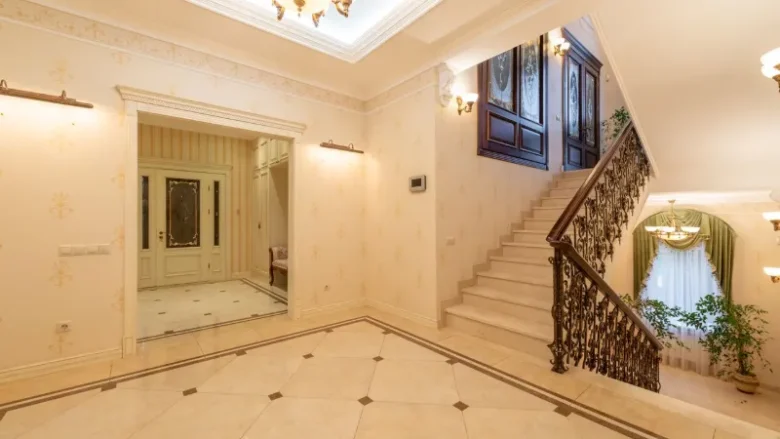
It’s a choice that speaks volumes about the project’s intent—whether it prioritizes polished perfection or textured authenticity. Making an informed decision is the hallmark of a well-conceived design.
Understanding the material’s character
Travertine and marble are both metamorphic rocks, but they are formed under different conditions and have distinct characteristics. Travertine is a form of limestone deposited by mineral springs, especially hot springs.
This process creates the characteristic pits and troughs in the stone, which are the result of carbon dioxide bubbles being trapped as the rock formed. Marble, on the other hand, is limestone that has been subjected to immense heat and pressure, causing the calcite crystals to recrystallize and form a denser, less porous stone with the elegant veining it’s known for.
This fundamental difference in formation leads to their different personalities:
- Porosity: Travertine is naturally more porous and softer than most marbles. This makes it more susceptible to staining and etching from acidic substances like lemon juice or wine. Proper sealing is absolutely necessary, especially in kitchens and bathrooms, and requires regular maintenance.
- Appearance: Travertine’s look is defined by its pitted surface and subtle, cloudy patterns in earthy tones. Marble is known for its dramatic, flowing veins and a wider range of colors, from pure white to deep black.
- Feel: Travertine has a warm, rustic, and ancient feel. Marble often reads as more formal, classical, and opulent.
The choice between them often comes down to the desired emotional tone of the space. Are you aiming for the quiet, understated warmth of a Roman villa or the polished grandeur of a Parisian apartment?
Living with imperfection
Perhaps the most modern aspect of choosing travertine is the acceptance of its imperfections. A homeowner who selects unfilled travertine for their floor or a solid, honed travertine countertop understands that it will evolve over time. It will acquire a patina.
It might get a small scratch or a subtle etch mark. In our view, this is not a flaw; it is a feature. This evolution is what makes the material feel alive and personal. It records the history of the home, the story of the lives lived within it.
Opting for a material like this is a conscious move away from the pursuit of flawless, unchanging surfaces and toward an appreciation for materials that age gracefully and tell a story. It’s a philosophy that values character over perfection, a sentiment that resonates deeply with the ethos here at Neomania Magazine. It’s about embracing the beauty of the wabi-sabi, the perfectly imperfect.
The return of travertine is more than a fleeting trend. It represents a deeper shift in our relationship with the spaces we inhabit. It is a quiet rebellion against the synthetic and the superficial, a turn towards materials that are honest, tactile, and imbued with history. This stone doesn’t demand your attention; it invites it.
It asks you to look closer, to feel its texture, to appreciate the subtle variations in its surface. It offers a canvas for a life that is authentic, considered, and deeply connected to the natural world. These are the kinds of stories—etched in stone and woven into the fabric of our daily lives—that we seek to tell.
If this exploration of texture, history, and quiet luxury resonates with you, it’s just a glimpse into the world we curate. We believe that design should provoke thought and stir emotion, offering new ways of seeing the world around us. To continue the conversation and receive our most compelling stories directly, we invite you to subscribe to our journal.