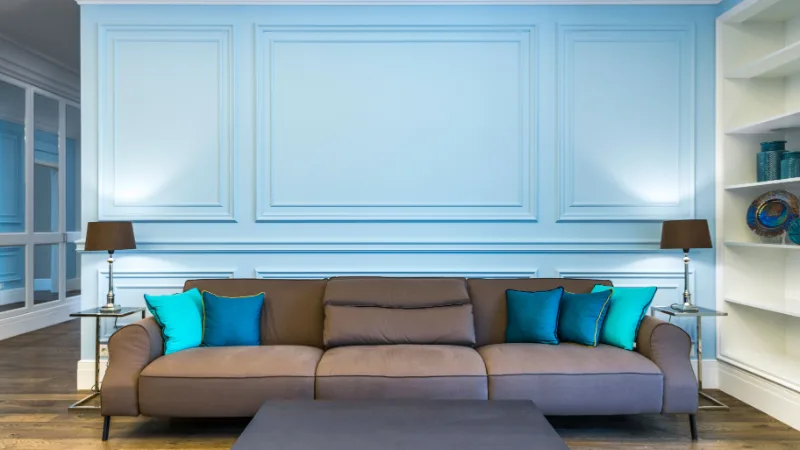
Walls have long been the silent witnesses of our lives, the passive backdrops to our daily dramas. We paint them, hang art on them, and then largely forget they exist. But a subtle yet profound shift is underway in interior architecture. The flat, unassuming wall is being re-envisioned not as a boundary, but as a dynamic canvas for texture, light, and narrative.
This isn’t about decoration in the traditional sense; it’s about integrating the vertical plane into the very soul of a space, making it an active participant in the story of a home or a public environment. It’s a move away from the purely ornamental and a step toward the architectural, where surfaces do more than just enclose—they express.
This movement challenges our perception of what a wall can be. Instead of a simple coat of paint, designers and homeowners are turning to structured panels, geometric reliefs, and materials that play with shadow and depth.
The result is an environment that feels more considered, more tactile, and deeply personal. It’s an approach that values sensory experience over fleeting trends, creating spaces that resonate on an emotional level. We are witnessing the rise of the wall as a statement of intent, a piece of integrated sculpture that shapes not only the room but also our experience within it.
The focus is on materials that feel authentic and forms that create a dialogue with the light that fills the room, transforming the mundane into something memorable.
The material renaissance: Redefining texture and form
The current exploration of wall treatments is deeply rooted in a renewed appreciation for materiality. It’s a departure from synthetic, mass-produced finishes toward materials that have inherent character and a story to tell. This isn’t about rustic nostalgia; it’s a sophisticated, modern reinterpretation of natural and industrial elements.
The goal is to create surfaces that invite touch and engage the senses, adding a layer of complexity and warmth that flat paint simply cannot achieve. This material-forward approach is about honesty and letting the inherent qualities of a substance—its grain, its imperfections, its reaction to light—become the central feature.
Light woods as architectural skin
The conversation around wood wall panels has shifted dramatically. Gone are the days of heavy, somber libraries. Today’s approach favors light woods like white oak, ash, and birch, used not as cladding but as an architectural skin. These lighter tones bring warmth and a connection to nature without overwhelming a space.
They are often applied in clean, linear arrangements, such as vertical slats or geometric patterns, that emphasize form and structure. The beauty of this application lies in its versatility. In a minimalist apartment in Stockholm, thin oak battens can create a serene, rhythmic backdrop that enhances the sense of height. In a coastal home in California, bleached maple can evoke the feeling of sun-drenched driftwood, adding a soft, organic texture that complements the natural surroundings.
The key is in the finish and the form; matte or satin finishes preserve the wood’s natural feel, while precise joinery and installation elevate it from a simple covering to a work of integrated craftsmanship. This method is about creating a sense of calm and order, using the natural grain of the wood to add subtle visual interest.
The new composite language
Beyond traditional materials, a new generation of composites is offering unprecedented creative freedom. Materials like plaster, microcement, and solid surface composites allow for seamless, sculptural forms that would be impossible to achieve with conventional methods.
These are not imitations; they are advanced materials with their own distinct properties. Plaster, for instance, can be hand-troweled to create soft, undulating surfaces that catch the light in beautiful and unpredictable ways, lending a space a wabi-sabi-inspired imperfection. Microcement, applied in thin, continuous layers, can cover walls, floors, and even furniture, creating a monolithic, cave-like environment that feels both ancient and futuristic.
These materials speak a language of fluidity and minimalism. They are perfect for creating spaces that feel unified and serene, where the focus is on form and light rather than on pattern or color. A designer in Tokyo might use a polished plaster to create a luminous, gallery-like living space, while an architect in Mexico City could use pigmented microcement to craft a home that feels carved from a single block of earth. This is where technology meets artistry, resulting in surfaces that are as durable as they are beautiful.
Acoustic materials as aesthetic elements
In our increasingly noisy world, acoustic comfort has become a form of luxury. This has led to the rise of materials that are chosen for their sound-absorbing properties as much as for their visual appeal. Felt, cork, and specialized acoustic fabrics are now being used to create wall treatments that are both beautiful and functional. Instead of being hidden away, these materials are celebrated.
Large panels of thick, industrial felt in charcoal gray or deep ochre can be used to create a feature wall that brings softness, texture, and silence to a busy open-plan office or a minimalist home. Cork, with its natural warmth and unique texture, can be used in sheets or geometric tiles to add an organic, earthy feel.
The innovation lies in treating these functional materials with the same design consideration as marble or wood. They are being cut into intricate patterns, layered to create three-dimensional effects, and used as a canvas for subtle color-blocking. This approach acknowledges that a truly well-designed space should appeal to all the senses, providing a sanctuary of peace and quiet in addition to visual delight.
Form and rhythm: The geometry of the modern wall
Once the material is chosen, the next consideration is form. The contemporary approach to wall paneling ideas is less about ornate carving and more about the power of rhythm, repetition, and clean geometry. It’s a design language that draws from modernism, minimalism, and even digital art, using simple shapes to create complex and engaging visual effects.
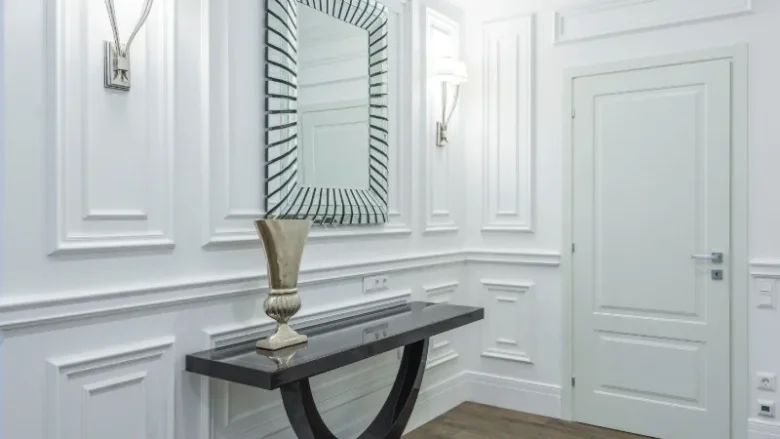
The wall becomes a canvas for a play of light and shadow, where the design changes throughout the day as the sun moves across the sky. This focus on geometry is about creating a sense of order and intention, transforming a simple surface into a dynamic architectural feature.
The evolution of fluted and reeded surfaces
The concept of fluted wall panels is experiencing a major resurgence, but with a modern twist. Inspired by classical columns and Art Deco detailing, these vertical grooves create a beautiful sense of rhythm and height. Unlike their historical predecessors, today’s versions are often more subtle and refined.
They can be crafted from a variety of materials, from the aforementioned light woods to plaster, MDF, and even solid surface materials. The profile of the flutes can vary, from soft, rounded reeds to sharp, angular grooves, each creating a different effect. In a compact urban apartment, a wall of fine, reeded paneling can create the illusion of a higher ceiling and add a touch of sophisticated detail without cluttering the space. In a commercial setting, like a boutique hotel lobby, large-scale fluted plaster can create a dramatic, sculptural statement.
The effect is particularly powerful when washed with light from above or below, which accentuates the shadows and highlights the rhythmic pattern. It’s a technique that adds texture and depth in a very controlled and elegant way.
Wainscoting reimagined for contemporary spaces
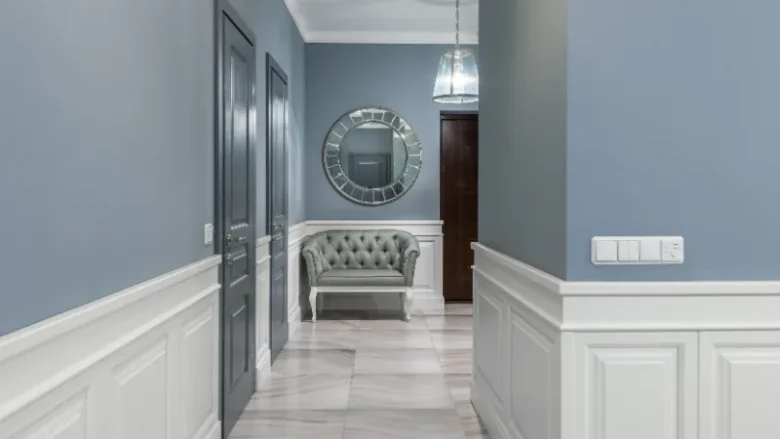
Wainscoting has a long history, but its modern iteration bears little resemblance to the traditional, heavy paneling of the past. Modern wainscoting is all about clean lines, subtle relief, and creative proportions. Instead of the standard chair-rail height, designers are experimenting with new applications.
A low-profile wainscot that runs just a foot or so from the floor can ground a room and provide a durable base, while an extra-tall application that reaches two-thirds of the way up the wall can create a dramatic, enveloping effect.
The style of the paneling has also been simplified. Shaker-style panels with their clean, unadorned frames are a popular choice, as are simple board-and-batten designs. The key is to use these traditional forms in a fresh, contemporary way.
Painting the wainscoting and the wall above it in the same color, but in different finishes (e.g., satin on the paneling, matte on the wall), can create a subtle, textural contrast that is incredibly sophisticated. This new approach treats wainscoting not as a historical reproduction, but as a versatile design tool for adding architectural interest and a sense of structure to any room.
Parametric design and the digital influence
At the cutting edge of wall design is the influence of parametricism and digital fabrication. Using computer algorithms, designers can create complex, non-repetitive patterns that evoke natural forms like sand dunes, water ripples, or crystalline structures. These designs are then precisely cut from materials like plywood, solid surface, or metal using CNC machines or 3D printers.
The result is a wall that feels alive and organic, a frozen moment of a dynamic process. This approach moves beyond simple geometry into the realm of pure sculpture. A parametric wall can serve as the focal point of a corporate headquarters, a university building, or a futuristic home, creating a truly unique and immersive experience.
While still a niche application, the principles of parametric design—fluidity, complexity, and a connection to natural systems—are beginning to influence more mainstream designs, leading to a greater interest in asymmetrical and organic forms. It represents a fascinating intersection of technology and craft, pushing the boundaries of what a vertical surface can be.
The psychology of space: How textured walls shape experience
The choice to move beyond a flat, painted wall is more than an aesthetic one; it has a profound impact on the psychology of a space and our experience within it. Textured and dimensional walls engage our senses on a deeper level, influencing our mood, our perception of scale, and even our behavior.
This is the point where interior design transcends decoration and becomes a form of scenography, carefully crafting an environment to evoke a specific feeling or response. A well-designed wall can make a large room feel more intimate, a small room feel more expansive, or a sterile space feel more human and inviting.
Creating intimacy and focus
In large, open-plan spaces, it can be challenging to create zones of intimacy and focus. This is where architectural wall treatments can be incredibly effective. A wall of vertical wood slats behind a seating area, for example, can visually define that zone, creating a “room within a room.”
The texture and warmth of the wood draw you in, making the space feel more sheltered and conducive to conversation. Similarly, in a bedroom, a soft, upholstered or felt-paneled wall behind the bed can create a cocoon-like effect, enhancing feelings of comfort and security.
The acoustic properties of these materials also play a role, dampening ambient noise and contributing to a calmer, more serene atmosphere. By using texture and form to delineate space, we can guide behavior and create environments that better support their intended function, whether it’s relaxation, concentration, or social interaction.
The interplay of light and shadow
One of the most compelling aspects of dimensional walls is their dynamic relationship with light. A flat wall reflects light uniformly, but a textured surface catches it, holds it, and casts shadows, creating a constantly shifting visual landscape throughout the day.
A wall with horizontal grooves will look completely different in the morning, when the sun is low, than it will at midday. This interplay of light and shadow adds a layer of life and movement to a room, preventing it from feeling static or dull.
Designers often use this to their advantage, strategically placing lighting to graze across a textured surface and accentuate its form. This could be a concealed LED strip at the top of a fluted wall or an uplighter at the base of a plaster relief.
This thoughtful integration of light and surface is what elevates a design from good to extraordinary, creating a space that feels both intentional and alive. It turns the wall into a timepiece, subtly marking the passage of the day.
- Direct sunlight: Creates sharp, defined shadows that emphasize the geometry and depth of the paneling. The effect is dramatic and changes rapidly.
- Diffused ambient light: Produces soft, gentle shadows that create a more subtle and serene textural effect. The overall look is softer and more uniform.
- Artificial grazing light: Light placed close to the wall and aimed along its surface (up or down) is the most effective way to highlight texture, creating long, dramatic shadows that reveal the full depth of the design.
Guiding movement and perception
The lines and patterns on a wall can also be used to subtly guide movement and influence our perception of a room’s proportions. Vertical lines, as seen in fluted or slatted panels, draw the eye upward, making a ceiling feel higher than it actually is. This is a classic technique used to add a sense of grandeur or airiness to a space.
Conversely, horizontal lines can make a room feel wider and more expansive, leading the eye around the space. A diagonal pattern can create a sense of energy and dynamism, making it a good choice for a space that is meant to feel active and vibrant.
An architect might use a series of vertical fins along a long corridor to create a sense of rhythm and pace, breaking up the monotony and making the journey more engaging. By understanding these principles, we can use wall treatments as a powerful tool to correct awkward proportions and enhance the overall flow of a space.
Practical considerations and implementation
While the aesthetic and psychological benefits of architectural wall treatments are clear, their successful implementation requires careful planning and consideration of practical factors. The most beautiful design can be undermined by poor execution or an inappropriate choice of material for the given environment.
This is where the expertise of designers, architects, and skilled craftspeople becomes invaluable. Thinking through the entire lifecycle of the wall, from installation to long-term maintenance, is crucial for ensuring a result that is not only visually stunning but also durable and livable.
Material suitability and maintenance
The first practical question to ask is whether a material is appropriate for its intended location. For example, while natural wood is beautiful, it may not be the best choice for a high-moisture environment like a bathroom, where a porcelain tile or a solid surface composite would be more durable.
Similarly, a soft material like felt might be perfect for a bedroom headboard but would be impractical in a high-traffic hallway where it could get stained or damaged. Maintenance is another important factor.
A complex, deeply grooved wall will collect more dust than a smooth one and may require special cleaning tools. It’s important to have a realistic understanding of the upkeep required for any given material and to choose a finish that aligns with the client’s lifestyle and the space’s function.
The table below offers a simplified comparison of some of the material types we’ve discussed, highlighting their common applications and maintenance considerations.
Installation and craftsmanship
The final quality of any dimensional wall is heavily dependent on the skill of the installer. Unlike painting, which can be a DIY project, installing complex paneling, plastering, or composite surfaces is a job for a professional. Precise measurements, seamless joints, and a perfect finish are what separate a high-end result from an amateurish one.
For example, with wood wall panels, ensuring that the grain matches and the spacing between slats is perfectly consistent requires a high level of craftsmanship. With plaster or microcement, achieving a smooth, flawless surface without trowel marks or inconsistencies is an art form.
It’s wise to invest in experienced tradespeople who specialize in these types of installations. We always recommend reviewing a potential installer’s portfolio and speaking to their previous clients to ensure they are capable of delivering the desired level of quality. The most brilliant design concept can be let down by subpar execution.
Budgeting for dimension
It is important to acknowledge that creating a feature wall with architectural panels or custom finishes is a significant investment compared to a simple coat of paint. The cost includes not only the materials themselves but also the specialized labor required for installation. However, it’s helpful to view this not as a simple decorating expense but as an investment in the architectural quality of the home.
A well-designed and executed feature wall can add significant value, both in terms of market price and, more importantly, in the daily quality of life for the inhabitants. When budgeting, consider the impact. Instead of spreading the budget thinly across many small decorative items, concentrating it on one significant architectural gesture, like a feature wall, can have a much greater transformative effect on the space. It creates a powerful focal point and sets the tone for the entire interior.
The walls that surround us are more than just structures; they are opportunities. They offer a canvas for expressing personality, for shaping emotion, and for transforming a simple box into a place of sanctuary and inspiration.
The current movement toward textured, dimensional, and material-rich surfaces is a testament to our collective desire for spaces that are more engaging, more tactile, and more human. It’s a quiet revolution, but one that is fundamentally changing the way we experience the spaces we inhabit. The stories told by these new surfaces are deep, resonant, and just beginning.
At Neomania Magazine, we believe that design should provoke thought and stir the senses. The narratives embedded in these emerging architectural forms are precisely the kinds of conversations we seek to explore.
If you feel compelled by the idea of spaces that communicate through texture, light, and form, and wish to continue this journey into the essence of contemporary design, we invite you to become part of our community. Subscribe to our publication for a perspective that goes beyond the surface, into the very heart of what makes a design truly meaningful.